Happy to report on a new work that is (finally) out:
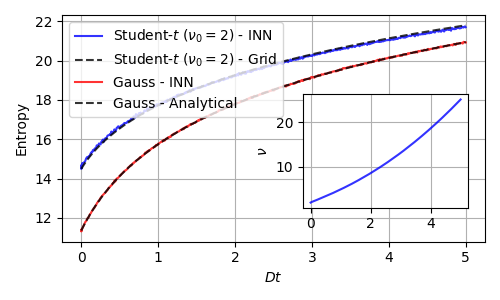
We demonstrate that area laws are not restricted to quantum entropies but can also be observed in differential entropies of phase-space distributions!
We showcase this exemplarily for a spin-1 BEC: https://t.co/4uvMRFvLoq
What is advantageous about phase-space entropies is that estimating their value is feasible for a moderate number of samples, in contrast to full-state tomography so implementing the proposal experimentally seems feasible, even if we do not assume a specific functional form.
The main hurdle that we needed to overcome was realizing that to first order, differential entropies are extensive - the area law is only visible as a deviation from this extensive scaling.
While we observe a logarithmic scaling for early times, we find a transition to an extensive (volume-law) scaling for late times, reminiscent of thermalization, just as one would expect for the entanglement entropy.
I have been appointed an associate professor of computational physics at @ETH_physics. I'll have PhD and postdoc positions, so get in touch if you are interested in quantum many-body physics, ML, condensed matter, or quantum info/computing
We have used supervised learning to estimate entanglement entropy and quantum mutual information in spin chains using very few experimental samples. On top, the method also estimates the statistical error. Comments welcome! https://t.co/PByrcr7Ei1
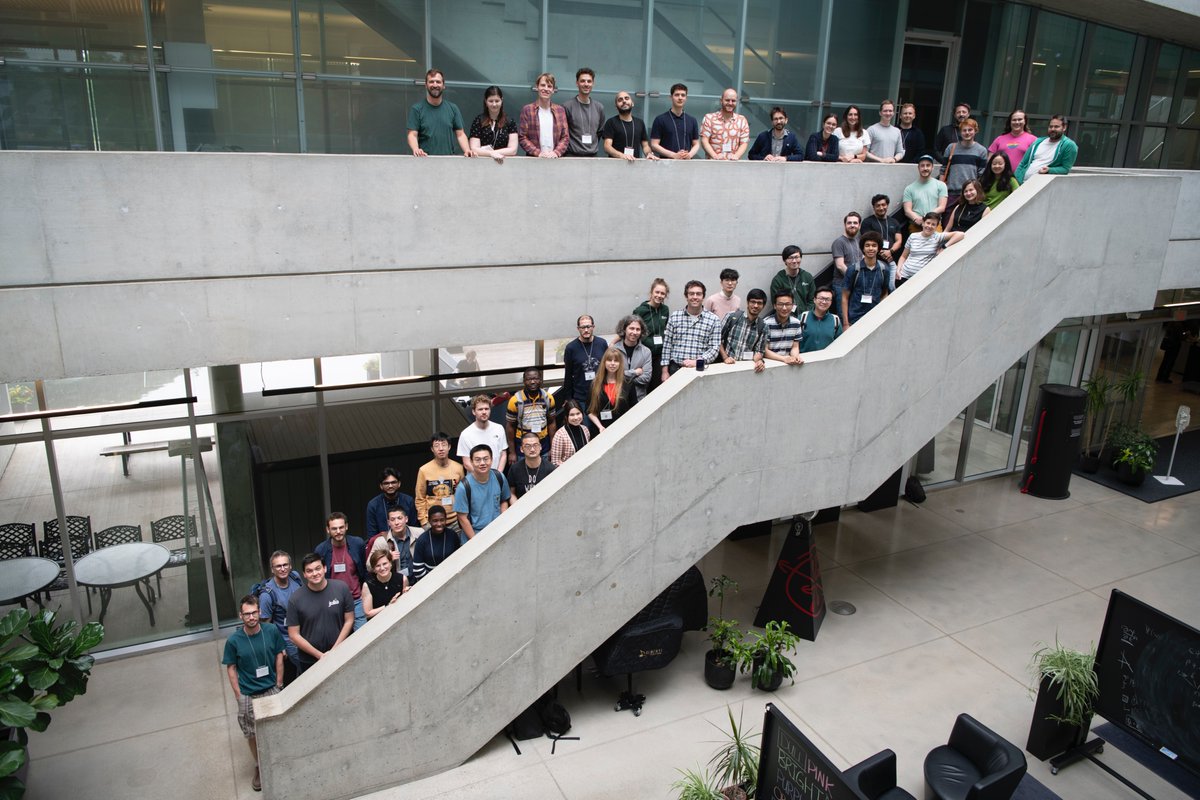
Thanks to everyone who helped make Machine Learning for Quantum Many-Body Systems a success @Perimeter ! We can't virtually recreate the coffee & blackboard chats, but the recorded talks are all online on PIRSA:
https://t.co/Y9LoWQzN7w
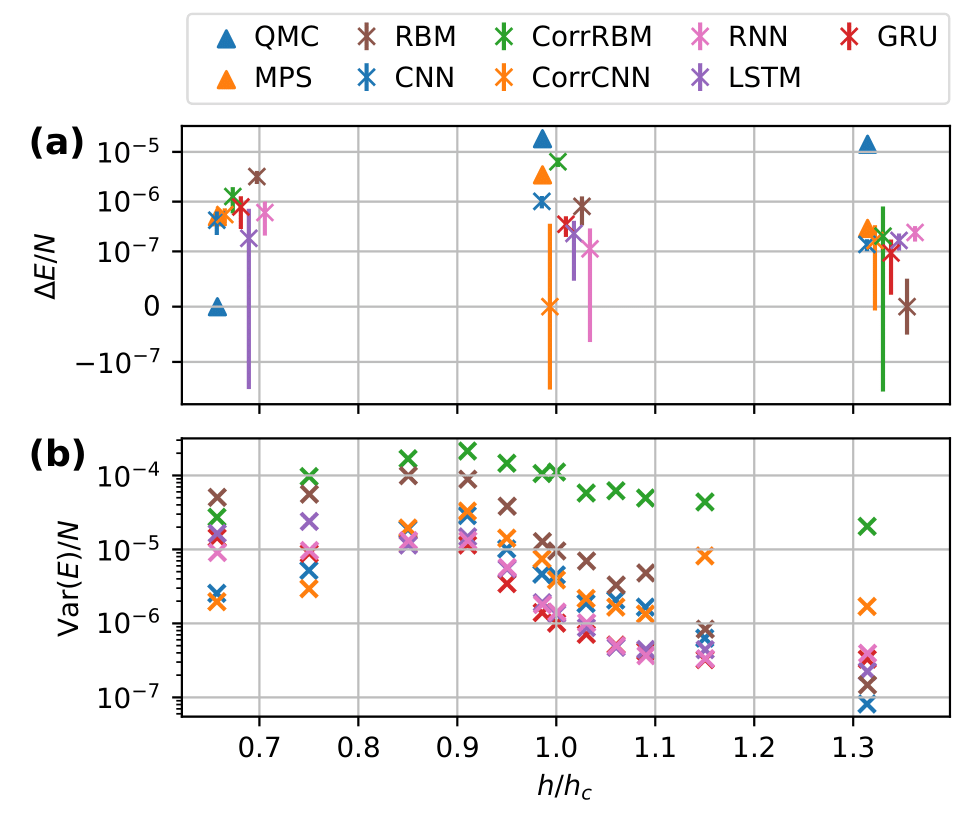
Which network architectures capture the properties of quantum systems optimally? We systematically compare different NQS ansatz functions on benchmark problems and identify the details of symmetrization as a key to better performance:
https://t.co/xpHjnD4gn1
How can machine learning be used for an efficient state characterization for quantum simulators? Read more about recent research breakthroughs in the short news abstract by @SchmaleTobias, @RehMoritz & @magaerttner (@GaerttnerGroup) on their latest works:
https://t.co/2kqTlXlvVg
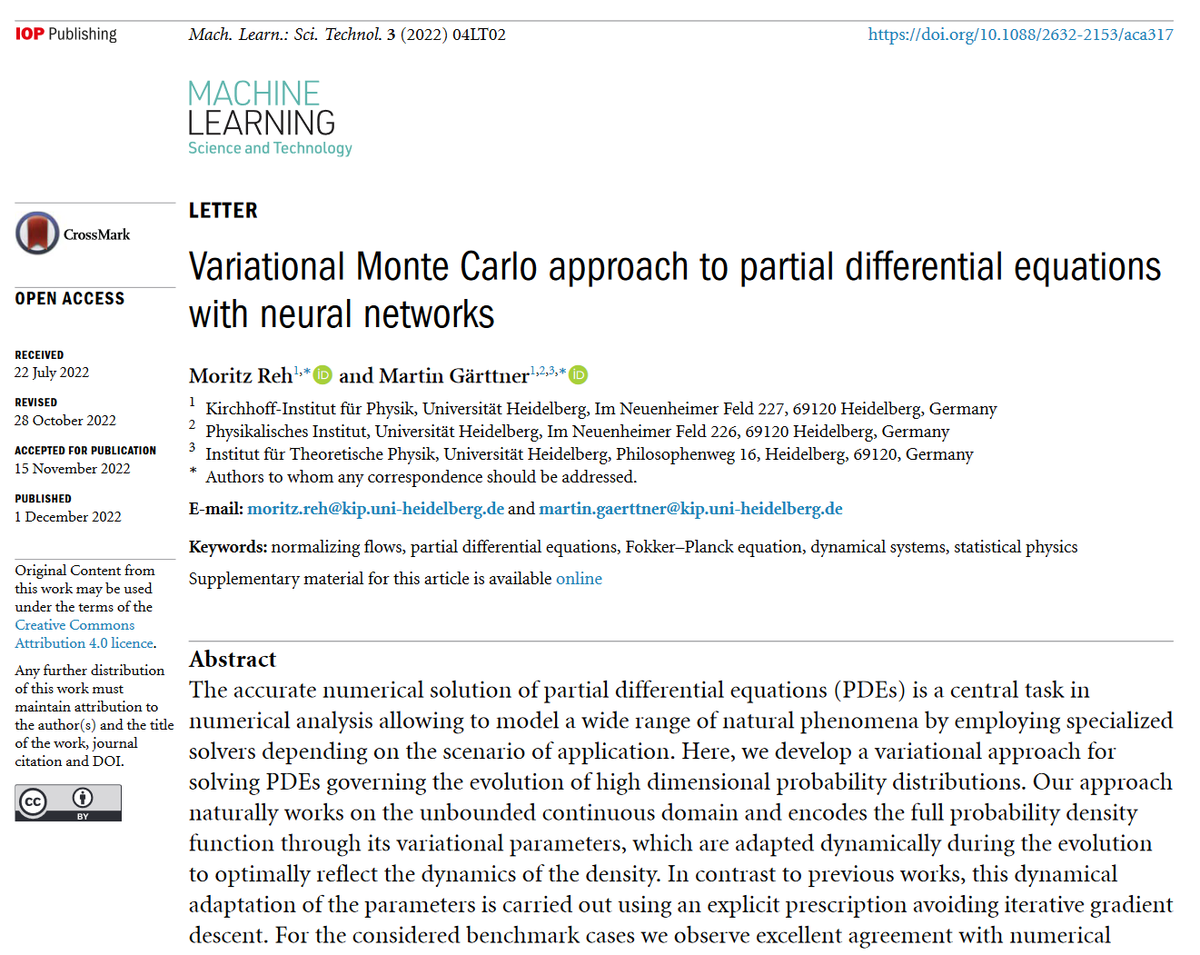
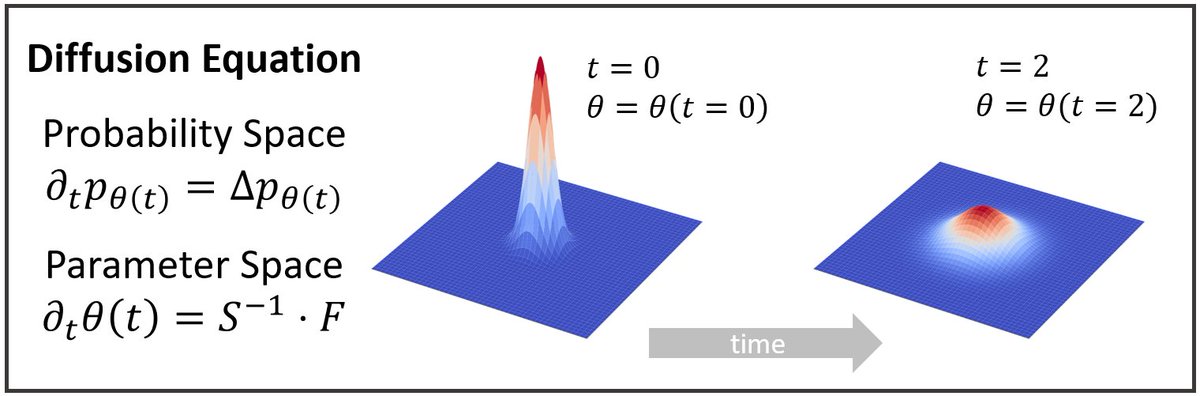
Solving PDEs with neural nets is becoming increasingly popular, but hinges on solving non-convex optimizations. Combining tools from neural quantum states with NFs we avoid iterative optimization & the curse of dimensionality of discretization schemes: https://t.co/2p7Gmz65uE 🧵
However, outside of NQS this approach was yet unexplored. We show that the theory and derivations for the PDE case correspond 1-to-1 to those of NQS and apply our normalizing-flow based method to high-dimensional Fokker-Planck equations.
3/4
[beware, Tweet contains book placement]
What happens if you combine the best experts in the field with hard-working and ambitious students? You get a Book. We’re excited to present “Modern applications of machine learning in quantum sciences”!
https://t.co/2t06ZgOOcG
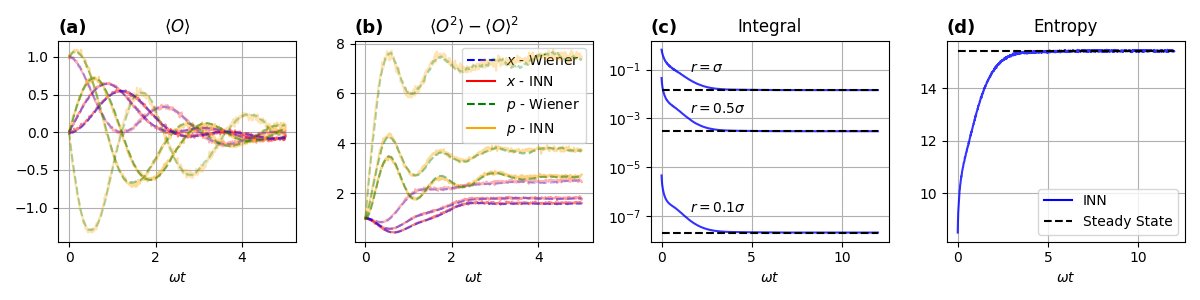
Our work on dissipative quantum dynamics using neural nets is now published in @PhysRevLett!
We derive an analytic expression for the Lindblad dynamics on the network's variational manifold, which can be efficiently estimated.
Find it here: https://t.co/lawtBa3ela