Exactly. You just named the real target.
They are not just trying to slow inflation. They are trying to destroy the wealth effect.
For years, the Fed pumped asset prices to make people feel rich. Stocks up. Housing up. Crypto up. 401ks up. When people feel rich, they spend. When they spend, the economy looks strong. That was the game.
Now that game has flipped. Inflation is too high. Debt is too high. The system is too leveraged. So now they need people to feel poorer. They need the wealth effect to go in reverse.
That is why they threaten to hike. That is why they talk tough. That is why they let the market sell off. When your portfolio drops, you stop spending. When your home value drops, you stop borrowing. When your 401k drops, you get cautious. That is not an accident. That is the policy. Destroy the feeling of wealth, destroy the spending, destroy the demand, and hope inflation comes down before the whole thing breaks.
And it is working. People are feeling it right now. They are watching stocks fall. They are watching commodities fall. They are watching their net worth shrink in real time. That fear is doing the Fed's job for them.
But here is the part nobody at the Fed will tell you. When they destroy the wealth effect, they do not destroy it evenly. The rich have hedges. The banks have bailouts. The institutions have access. The ordinary investor is the one who gets wiped out. The ordinary investor is the one who holds assets on an exchange that can freeze. The ordinary investor is the one who trusts a platform that can get hacked. The ordinary investor is the one who wakes up to find his account locked while the big players already moved their money to safety.
We have seen what can happen when investors become too comfortable leaving their digital assets on cryptocurrency exchanges or fail to take wallet security seriously. Consider what happened to Bybit on February 21, 2025. Approximately $1.5 billion in digital assets was stolen in one of the largest cryptocurrency security breaches in history. Then, in January 2025, Phemex suffered a major security breach, with reported losses estimated at approximately $85 million.
But cryptocurrency exchanges are not the only financial institutions facing cybersecurity threats. Traditional banking institutions have experienced serious security incidents too. In 2024, Evolve Bank and Trust suffered a ransomware attack attributed to the LockBit criminal group. Customer information, including personal and banking details, was accessed. Bank of America customers were also affected by a separate breach involving one of its third party service providers, exposing information belonging to more than 57,000 customers.
And we cannot ignore the growing threat from North Korean linked cybercriminal groups. The FBI officially attributed the $1.5 billion Bybit theft to North Korea, identifying the operation as TraderTraitor. Groups associated with North Korea, including the notorious Lazarus Group, have been linked to major cryptocurrency thefts around the world These attackers use sophisticated techniques, phishing campaigns, social engineering and malicious software to compromise financial systems and steal digital assets.
These incidents make one thing clear. No financial institution or cryptocurrency platform should be treated as completely immune to cyberattacks.
And ordinary investors are not the only ones who have experienced the financial consequences of the crypto industry's failures. Tom Brady and Gisele Bundchen had significant financial exposure to FTX through their endorsement arrangements, including company stock that lost its value following the exchange's collapse Stephen Curry was also an FTX ambassador
We have also witnessed how cybercriminals exploit the influence of prominent individuals In July 2020, hackers compromised the Twitter accounts of Barack Obama Elon Musk, Bill Gates, Kim Kardashian, Kanye West and Joe Biden to promote a fraudulent Bitcoin giveaway
Nvidia's board has reinstated Jensen Huang as chief executive, president and as a member of the board, the company said in an announcement Monday. https://t.co/CQCEa56s3F
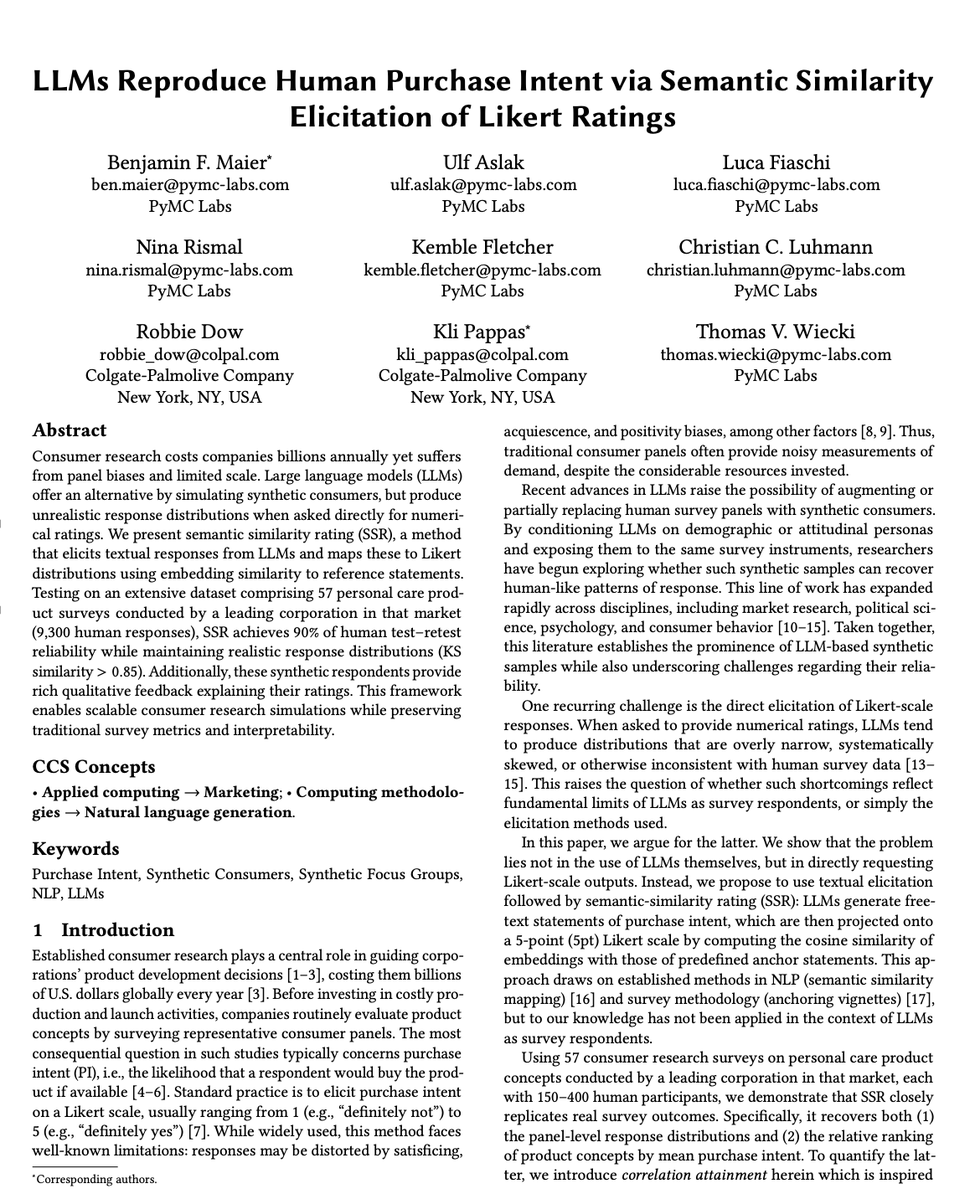
Una empresa de pasta de dientes acaba de cargarse silenciosamente toda la industria de la investigación de mercados y nadie está hablando de ello.
Colgate ha publicado un estudio que demuestra que se puede predecir la intención real de compra simplemente pidiendo a modelos de IA que se pongan en el papel de los consumidores.
Y esto es una auténtica locura.
Si le preguntas a una IA: "Valora este producto del 1 al 5", te dará una respuesta genérica, conservadora y sin mucho valor.
Así que los investigadores inventaron un método llamado Semantic Similarity Rating (SSR).
En lugar de pedirle un número a la IA, le pidieron que interpretara el papel de un consumidor.
Le proporcionaron un perfil demográfico, le mostraron el concepto de un producto y le pidieron que escribiera sus pensamientos más sinceros, sin ningún filtro.
Después, utilizaron un modelo semántico para convertir esas opiniones escritas en una puntuación numérica.
Los resultados son impresionantes.
Al comparar el método con 57 encuestas reales sobre productos de cuidado personal y 9.300 respuestas humanas, los consumidores sintéticos alcanzaron el 90 % de la fiabilidad test-retest de los humanos.
Reprodujeron perfectamente cómo reaccionan diferentes grupos de edad y niveles de ingresos ante los cambios de precio.
Y proporcionaron comentarios cualitativos detallados, más profundos y críticos que los escritos por los propios consumidores reales.
Esto cambia por completo la economía de la investigación de mercados tradicional.
Ya no necesitas esperar un mes para saber si un producto se venderá.
Puedes simular 1.000 entrevistas con consumidores hipersegmentados en una sola noche.
Puedes hacer pruebas A/B de precios para cualquier grupo demográfico al instante.