Focus on relative strength/weakness-based position building strategies from the past decade. Continuously share the stocks I am monitoring and choosing to trade
From a 300% Surge in 90 Days to the Next Trading Plan: The "Structural Breakout" Logic Born of 15 Years of Real-World Experience 🧵📈🚀
Wall Street never lacks "shooting stars"—fleeting traders—but it is desperately short on hardcore traders capable of navigating both bull and bear markets with mastery.
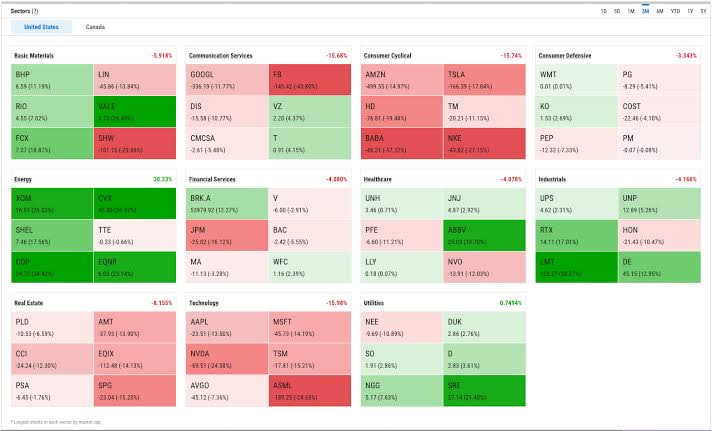
Over the past quarter, the market witnessed a pullback in high-valuation tech stocks and a shakeout in AI infrastructure plays. By keenly tracking macro cycles and upstream supply chain data, I achieved a net asset value surge of over 300% in actual trading over a 90-day period.
US markets spend 80% of the time range-bound and 20% of the time in explosive breakout mode. With over 15 years of experience in short-to-medium-term US equity trading and asset management, I deeply understand this: True risk control isn't about sitting in cash; it’s about identifying absolute structural advantages—situations involving "structural realignment" combined with "unlimited upside potential."
🎯 [The Next 90 Days: 300%–400% Structural Capture Plan Officially Launches]
Trading is a rigorous game of probability and odds. If you want to break free from the cycle of passively chasing highs and panic-selling lows, join me in capitalizing on the explosive opportunities of the next 90 days.
#USStocks #RealWorldTrading #AlphaReturns #TechnicalAnalysis #AIStocks #StockTrading #InvestmentAdvisor
🚨 The S&P 500 is on the verge of a brutal plunge. This is exactly what I’ve been warning you about. Stock prices are currently at all-time highs, while the 200-day moving average remains far below current levels. History tells us one thing: in 16 of the last 17 midterm election years, the same pattern has played out—a sharp sell-off. In the last 30 minutes alone, $250 billion in U.S. stock market value has evaporated. Tech stocks are taking another heavy hit.
U.S. stocks edged lower today, with the technology sector continuing to experience a valuation squeeze and high turnover at elevated price levels.
Meanwhile, the interest rate market has seen a clear easing, with the benchmark 10-year U.S. Treasury yield retreating to around 5.09%. As market bets on further Federal Reserve rate hikes later this month have cooled significantly, the period of the most aggressive "hawkish" pricing—which drives the macro discount rate—is now passing.
The stabilization of the 10-year Treasury yield near 5.09% serves as a leading indicator that the market decline may be bottoming out. As the "tail risk" of further Fed rate hikes is cleared away, the deep pullback in the tech sector is creating an asymmetric opportunity to accumulate shares in high-quality, industry-leading companies. A turnaround for tech stocks is only a matter of time; holding onto your positions now could lead to profitable gains when the rebound arrives.
#USStocks #USTreasuryYields #FederalReserve #TechStocks #Nasdaq #StockMarketStrategy #RiskControl #AlphaReturns
🚨【Morning Briefing, Oct 16】: Former Federal Reserve Governor Kevin Warsh has characterized artificial intelligence (AI) as the most profound economic transformation of his lifetime. He further noted that the impact of AI on the demand side is likely to manifest before any improvements emerge on the supply side. While Warsh’s remarks reinforce the view that cutting-edge AI technology will fundamentally reshape the economy over the long term, he offered no commitment regarding a pause in interest rate hikes this October. For the global semiconductor sector—which has recently faced intense sell-offs and entered a corrective phase—the silver lining is that Warsh did not further fuel expectations for near-term rate hikes. However, whether U.S. Treasury yields can continue to cool, and whether stocks linked to AI computing power—as well as the broader semiconductor and technology sectors—can mount a recovery, will ultimately depend on simultaneous improvements in inflation, corporate financing conditions, and the realization of actual earnings from AI.
$APLD
🚀⚡ As the tech sector stages a strong reversal after hitting support levels, market risk appetite is rapidly shifting back toward assets with high growth elasticity—specifically those in AI computing infrastructure. Among these, $APLD—a developer of next-generation, high-performance data centers—has emerged as a highly compelling opportunity, offering an attractive risk-reward ratio following a period of overselling and market capitulation.
✅ In my view, now is the right time to enter a position.
🚨 Market Close Summary: U.S. stock indices continued to fluctuate and consolidate. As the market digests persistent macroeconomic inflation data, capital is rapidly rotating out of high-valuation AI-related trades and shifting toward defensive and value-oriented assets—securities characterized by resilient cash flows and a margin of safety.
The imbalance between commercial monetization and capital expenditure (CapEx) has become the eye of the market storm. AI giant Anthropic reported that its third-quarter revenue climbed to $16.8 billion; however, despite this impressive absolute figure, traders remain concerned that the growth rate is insufficient to justify the lofty valuation premiums previously assigned to major hardware and chip manufacturers. Consequently, the pressure on the return on investment (ROI) for AI ventures continues to intensify.
$LYB
I previously pointed out that a pullback in $LYB shares to below $60 would present an excellent asymmetric risk-reward ratio and a prime signal to initiate a position.
I executed a precise entry at $59.70; my position has now moved well clear of the cost basis and is firmly in profitable territory!
For those who followed our lead and entered $LYB below $60—how are your positions performing now?
#USStocks #LYB #ChemicalStocks #USStockStrategy #ValueInvesting #AlphaGeneration #RiskRewardRatio
$LYB
$LYB is presenting an exciting dual-opportunity window characterized by "solid fundamentals" and a "strong margin of safety." The company is accelerating the divestiture of its low-margin traditional refining operations to focus entirely on high-value-added circular polymers and eco-friendly recycling technologies. Wall Street investment firms are currently re-evaluating the stock, shifting its valuation benchmark upward to reflect its status as a "specialty chemicals/environmental technology" company.
Do you think $LYB will lead the charge in the major upward trend of the green chemical industry transformation? What is the optimal entry point right now? If you would like to discuss the best strategies for $LYB, please feel free to contact me.
#USStocks #LYB #ChemicalSector #ValueInvesting
$ASTS
Today, $ASTS shares dipped toward the $40 level, only to be met by a massive surge in buying volume—triggering a strong V-shaped reversal!
✅ I’ve established a position at $40. My initial target for the rebound is the $50–$53 resistance zone.
#USStocks#ASTS #SatelliteCommunications #TechnicalAnalysis #AlphaReturns #RiskRewardRatio
In early U.S. trading, the three major indices showed sharp divergence. Tech stocks remained under pressure for the second consecutive session, with the Nasdaq plunging 1.23%—a move that has thrust the year’s high-flying "AI trade" into the spotlight of a systemic stress test.
The intensifying sell-off is fundamentally driven by a "triple threat" of negative factors: macroeconomic interest rates, credit spreads, and fundamental returns.
This stress test does not necessarily signal the end of the broader trend; rather, it serves as a necessary purge of high-leverage positions and speculative, concept-driven capital. From a tactical standpoint, investors should avoid "buying the dip" in AI-themed stocks characterized by high debt or excessive leverage. Instead, focus on industry leaders with robust balance sheets, stable gross margins, and strong, self-generated cash flow—while waiting for signs that credit spreads are narrowing and the market has begun to stabilize.
#USStocks #Nasdaq #NDX #AIComputing #CPI #USStockStrategy
[October 15 Morning Briefing] The Producer Price Index (PPI) for September is set to be released on Thursday at 8:30 AM. Ahead of the November midterm elections and the Federal Reserve’s upcoming policy decision, this data will serve as a key forward-looking indicator for Wall Street to gauge supply-chain costs and the risk of a second wave of inflationary pressure.
Although the Consumer Price Index (CPI) has shown some stickiness, a more significant storm in production-side costs is brewing within the PPI pipeline—the sharp surge in diesel prices since August has yet to be fully reflected in previous PPI readings.
I anticipate that the year-over-year figures for September and October could see a notable uptick. This is precisely why Thursday’s PPI release is drawing such attention: the market will be looking beyond the headline index to determine whether rising diesel costs are beginning to exert a broader impact on producer selling prices.
All three major U.S. stock indices closed lower on Wednesday, with the semiconductor and chip sector continuing its recent trend of volatility and liquidation.
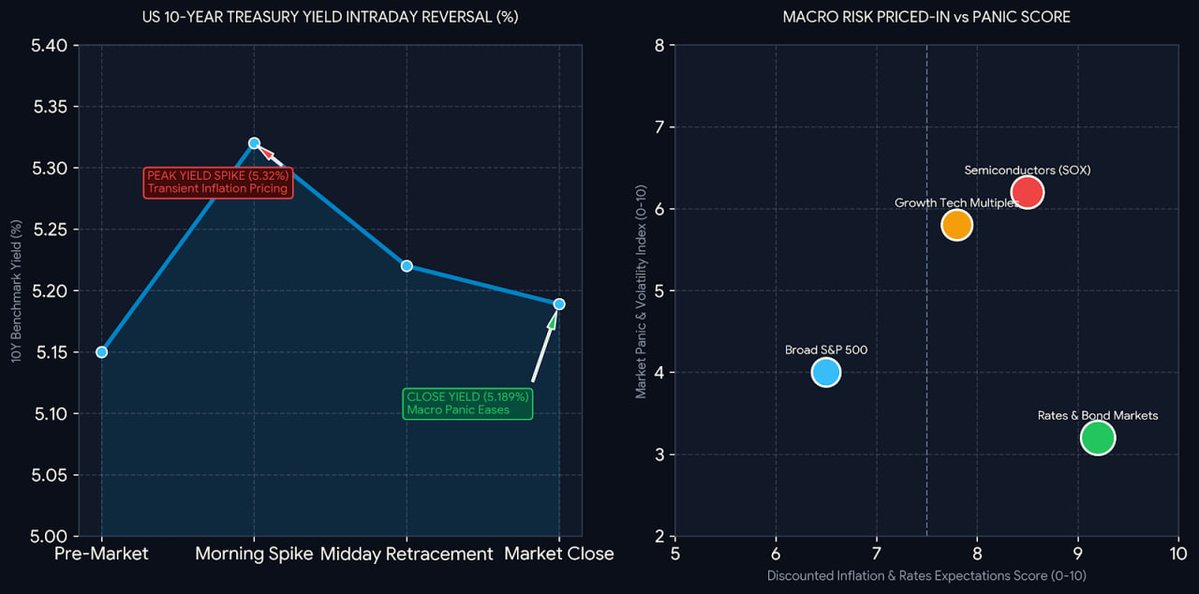
In the debt market, the yield on the benchmark 10-year U.S. Treasury note briefly surged past 5.32% during early trading, driven by inflation concerns. However, the move triggered strong buying interest, pushing the yield back down to close at 5.189%—a classic pattern of an initial spike followed by a pullback as market sentiment recalibrated.
The prevailing view is that neither the stock market nor the bond market is "overly concerned," as the recent uptick in inflation is seen as "transitory," and macroeconomic risks are already fully priced in.
$CRWV
$CRWV plunged over 14% during intraday trading. A new convertible bond financing plan ignited deep market anxiety regarding equity dilution and high balance-sheet leverage.
A violent repricing in the credit markets ensued: yields on $CRWV’s senior bonds maturing in 2032 spiked into the high-risk 15% range. A single comment from Musk—"Yikes"—thrust this "compute cloud" financing crisis into the global spotlight, dragging down the entire Neocloud sector in a collective sell-off.
Faced with 15% bond yields and concerns over convertible bond dilution, do you view this $CRWV pullback as the inevitable "growing pains" of AI compute capacity expansion, or as a harbinger of a looming crisis for the high-leverage compute cloud model?
#USStocks #CRWV #AICompute #ConvertibleBonds #BondYields #Neocloud #USStockStrategy
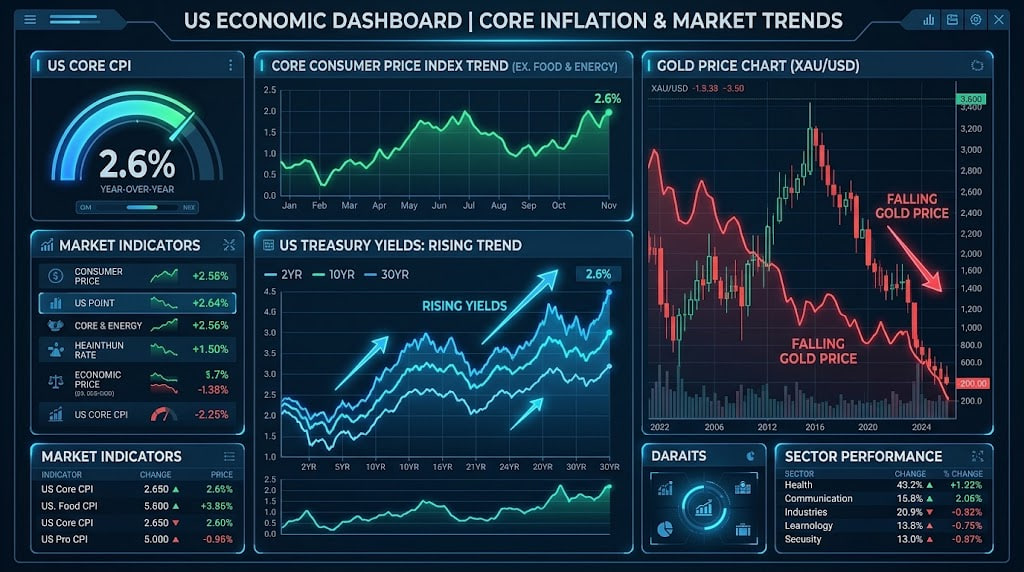
The U.S. non-seasonally adjusted core CPI rose 2.6% year-on-year in September—marking a high since June and exceeding the expected 2.5%—while the month-on-month core CPI increased by 0.3%, surpassing the forecast of 0.2%.
Following the data release, the logic driving global cross-asset trading rapidly shifted toward a strongly hawkish outlook: U.S. Treasury yields surged, the U.S. Dollar Index skyrocketed, and prices for gold, silver, and other precious metals plummeted; meanwhile, money markets saw an explosion in bets on the probability of the Federal Reserve implementing three additional rate hikes by the end of 2027.
$AAOI
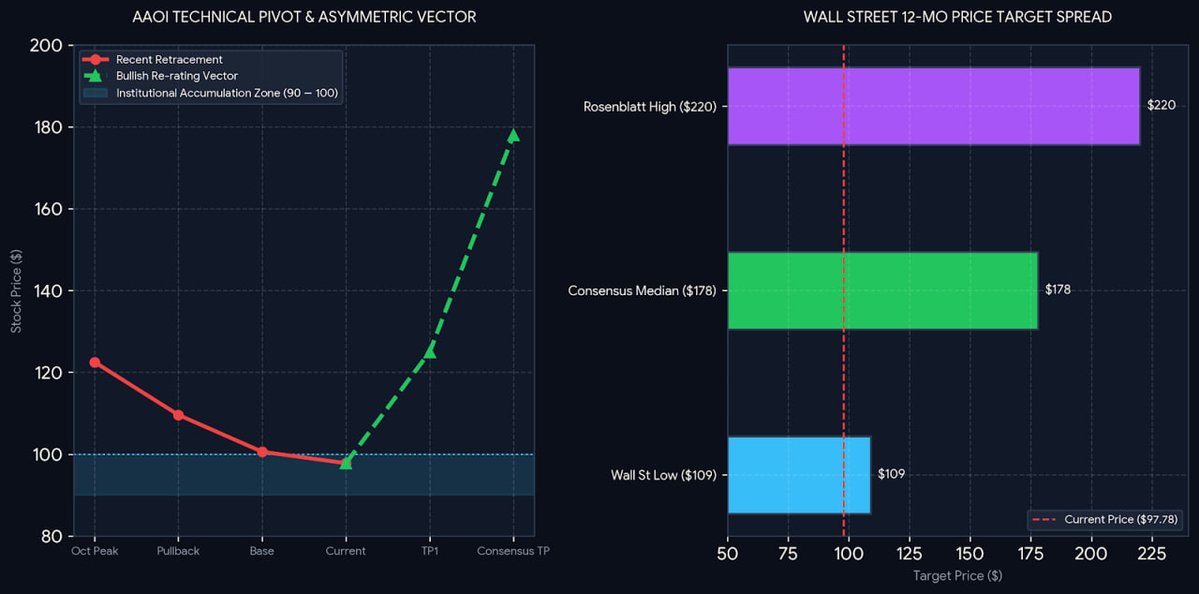
Following a recent pullback driven by market sentiment, $AAOI’s share price has dipped below the key psychological support level of $100.
Given the company's robust fundamentals—with production capacity for 800G/1.6T optical transceivers fully booked through early 2029—this pullback offers long-term institutional investors an excellent entry window with a highly favorable asymmetric risk-reward profile.
With $AAOI having dropped below $100, do you view this as a prime opportunity to accumulate shares in the AI optical communications sector, or do you think the stock will go on to test the $90 level?
#USStocks #AAOI #800GOpticalModules #StockTechnicalAnalysis #AlphaReturns #RiskRewardRatio
Major US stock indices closed lower across the board, with the memory chip sector remaining under pressure due to spillover selling from overseas markets. As early industry leaders release their earnings, the market is navigating high expectations to identify key themes for the fourth quarter. 🧵📊📉
Three factors will likely shape investor sentiment during this earnings season:
🔹1: The banking sector (reflecting the health of consumers and businesses);
🔹2: Big Tech (progress on the commercialization of AI);
🔹3: The energy sector (sustainability of oil-driven profits).
Moreover, against a backdrop of sustained high interest rates, elevated corporate costs, and slowing macroeconomic growth, this earnings season serves not only as a test of earnings figures but also as a rigorous assessment of profit margins and balance sheet health across industries.
#USStocks #EarningsSeason #Macroeconomics #AI #BankingSector
$SPCX
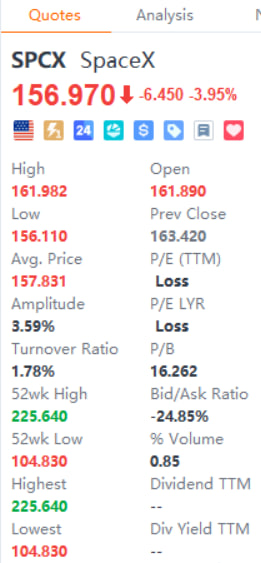
$SPCX came under pressure early in the session, falling approximately 4% to trade at $156.97.
According to reports, following weeks of wrangling over subpoenas, SpaceX has confirmed it will appear before the New York City Council’s Committee on Technology this Friday to face live questioning regarding safety risks associated with its AI algorithms and automation. This development places the AI segment—a critical pillar underpinning the company's lofty $2 trillion valuation—firmly in the spotlight of both local and federal regulatory scrutiny.
A "wait-and-see" sentiment leading up to Friday's hearing is likely to keep the stock price volatile. Investors will be closely monitoring the tone and details of the questioning during the session, anticipating potential trading opportunities once the hearing concludes.
#USStocks #SpaceX #SPCX #Musk #AI #StockStrategy
US Market Update: Earnings season off to a rocky start amid memory chip sector spillover and diverging results among major banks 🧵📉
📗 All three major US indices are under downward pressure. The market is grappling with two competing forces: digesting a flurry of Q3 earnings reports from major banks like JPMorgan Chase, Citigroup, and Goldman Sachs, while also contending with negative sentiment spilling over from the overnight plunge of South Korean memory chip giants.
➡️ With the sell-off in memory chips triggered by the slump in Korean stocks and the mixed earnings results from major banks, will tech stocks face a shakeout? Let’s discuss.
#USStocks #USEarnings #Semiconductors #ChipStocks #JPMorgan #RiskManagement
$AAPL
$AAPL hits an all-time high: Market cap crosses the $5 trillion milestone! HomeView launches a new narrative for the smart home and AI ecosystem 🧵🍏🚀
$AAPL surged nearly 2% in early trading, once again hitting a record high and successfully crossing the historic $5 trillion market cap threshold—a milestone in the history of global capital markets.
With $AAPL standing at this historic $5 trillion starting point, where do you think its next valuation target lies?
#USStocks #AAPL #HomeView #AI #StockMarketStrategy
📊 Closing Summary: Divergent Index Performance
• Dow Jones: 51,850.55 (+0.38%) ⬆️ Leading the market
• S&P 500: 7,807.24 (-0.06%) ↔️ Fluctuating at high levels
• Nasdaq: 27,245.90 (-0.44%) ⬇️ Tech stocks under short-term pressure
The market's core logic remains clear: robust corporate earnings growth continues to be the bedrock of this bull market.
📌 Two key milestones to watch for short-term trends:
1️⃣ Wednesday's CPI Data: Driven by rising energy prices, headline CPI for September is likely to face upward pressure, testing expectations for Federal Reserve rate cuts.
2️⃣ Major Bank Q3 Earnings: Banking sector results will serve as the first litmus test for the "US economic soft landing" narrative and consumer resilience.
#USStocks #Stocks #Investing #CPIData $SPY
$ASTS
After an emotional sell-off triggered by the delay of Blue Origin’s New Glenn launch, $ASTS staged a strong intraday rebound of over 5%. Today, Deutsche Bank officially upgraded the stock from "Hold" to "Buy"!
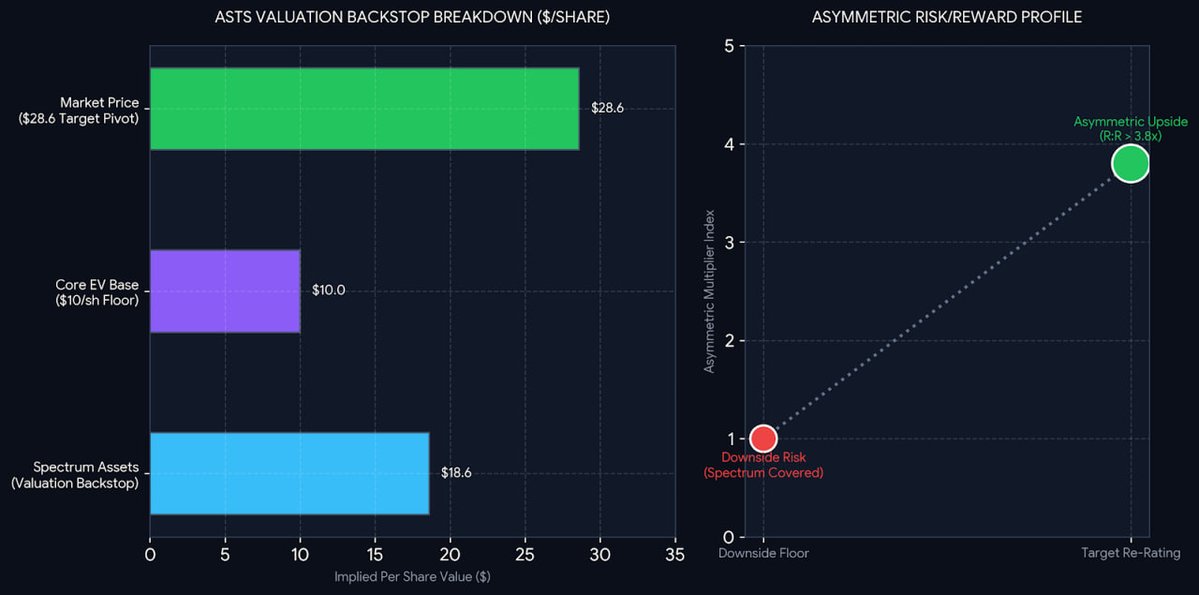
Deutsche Bank’s valuation model highlights that the value of $ASTS’s space-based communications spectrum is sufficient to cover the portion of its enterprise value exceeding the $10-per-share core baseline.
In the commercial space "Direct-to-Cell" sector, $ASTS’s spectrum holdings and patent moat remain the top choice for institutions seeking high-alpha returns.
With Deutsche Bank turning bullish and the $10+ per-share spectrum assets providing a valuation floor, are you staying on the sidelines or choosing to buy?
#USStocks #ASTS #CommercialSpace #DeutscheBank #StockAnalysis #AlphaReturns #StockTrading
Intraday Macro Analysis: US and Japanese stock markets are exhibiting a pattern of "wait-and-see" sentiment alongside sectoral divergence. With the three major indices showing mixed results, institutional capital is pulling back and awaiting a clear market direction ahead of two major macro catalysts:
🔹 Macro Focus 1: Wednesday's September CPI release. Expectations point to headline CPI rising to 3.6%–3.7%, while core CPI is projected to slow to 2.5%. This structural divergence in inflation data will directly anchor the Federal Reserve's interest rate decision later this month and is the fundamental reason for today's subdued trading volume.
🔹 Macro Focus 2: High expectations for the Q3 earnings season. Financial giants such as JPMorgan Chase, Goldman Sachs, and Wells Fargo are set to report. S&P 500 Q3 earnings growth forecasts have been revised upward to the 25%–30% range, making the market highly sensitive to earnings guidance.
The computer hardware sector slumped 2.5% intraday, with stocks like $MU, SK Hynix, and SanDisk falling 2%–3%. This pullback validates the pressure—stemming from ChangXin Memory Technologies' recent technological breakthrough—to reshape the supply landscape and short-term price premiums for memory chips.
➡️ I expect the trend of volatility with a bearish bias to persist through the close. The underlying logic behind the "strong Dow, weak Nasdaq" dynamic is the inverse correlation between crude oil prices and tech stock valuations. In the final hour of trading, close attention should be paid to oil price fluctuations and turnover in chip stocks: a spike in oil prices would intensify the pullback pressure on the Nasdaq, whereas rising expectations for bank earnings will continue to provide a "value floor" for the Dow.





![ReidThorntytjp's tweet photo. [October 15 Morning Briefing] The Producer Price Index (PPI) for September is set to be released on Thursday at 8:30 AM. Ahead of the November midterm elections and the Federal Reserve’s upcoming policy decision, this data will serve as a key forward-looking indicator for Wall Street to gauge supply-chain costs and the risk of a second wave of inflationary pressure.
Although the Consumer Price Index (CPI) has shown some stickiness, a more significant storm in production-side costs is brewing within the PPI pipeline—the sharp surge in diesel prices since August has yet to be fully reflected in previous PPI readings.
I anticipate that the year-over-year figures for September and October could see a notable uptick. This is precisely why Thursday’s PPI release is drawing such attention: the market will be looking beyond the headline index to determine whether rising diesel costs are beginning to exert a broader impact on producer selling prices.](https://pbs.twimg.com/media/HUrKMR7acAAi_sN.jpg)