Any form of DRT is very dependant on the level of convenience for users, planners and providers. A concept of the ICT solution for integrated routing, booking, ticketing and payment planning has the potential to significantly improve the cost-effectiveness of the service.💵
Demand responsive transport (#DRT) services are often completely separated from regular public transport in terms of routing, booking, ticketing etc, affecting users and providers. A solution could be an integrated, more automized system. Read more: https://t.co/tSXry5LQUJ
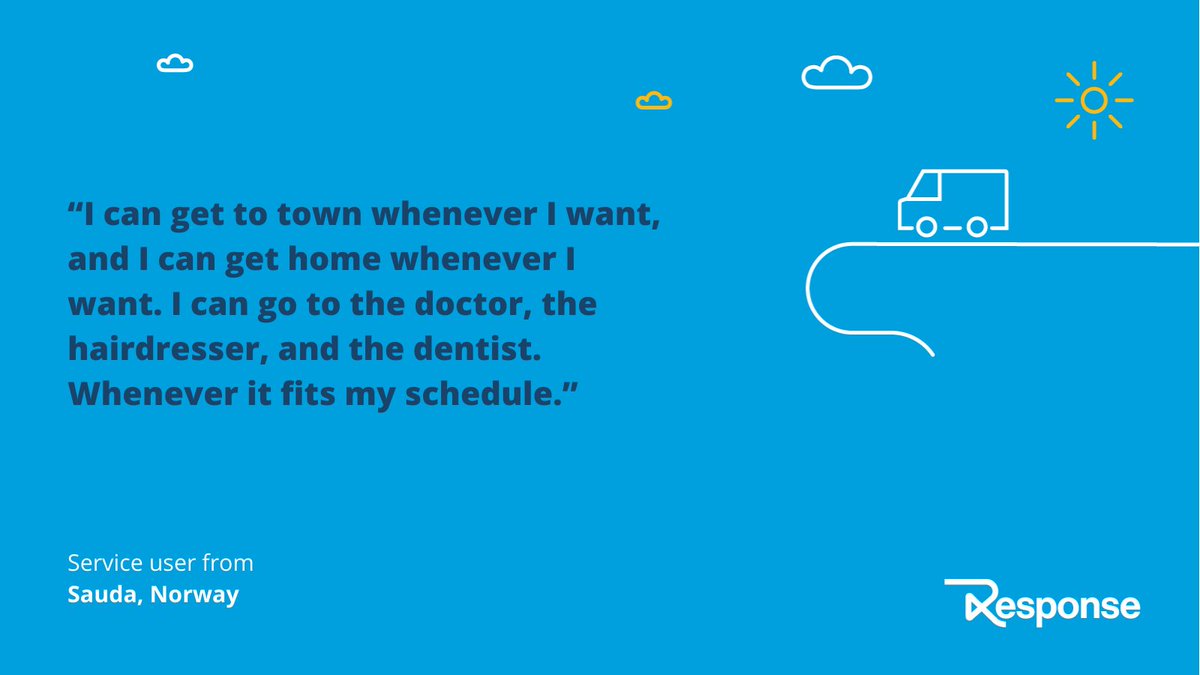
A demand-responsive transportation pilot in Sauda, Norway aimed to provide door-to-door service in a region where there are few travellers and where people are not happy because of the low frequency of the local bus. 🚌 See how they did: https://t.co/vPYXqVpOt7
A #DRT pilot in Innland, Norway involved two sets of routes, allowing children and youth to travel to/from the training centre by public transport. It enabled kids to practice independence and socialise with other children. 🧑🤝🧑 More about the pilot: https://t.co/2D4bJ48ir3
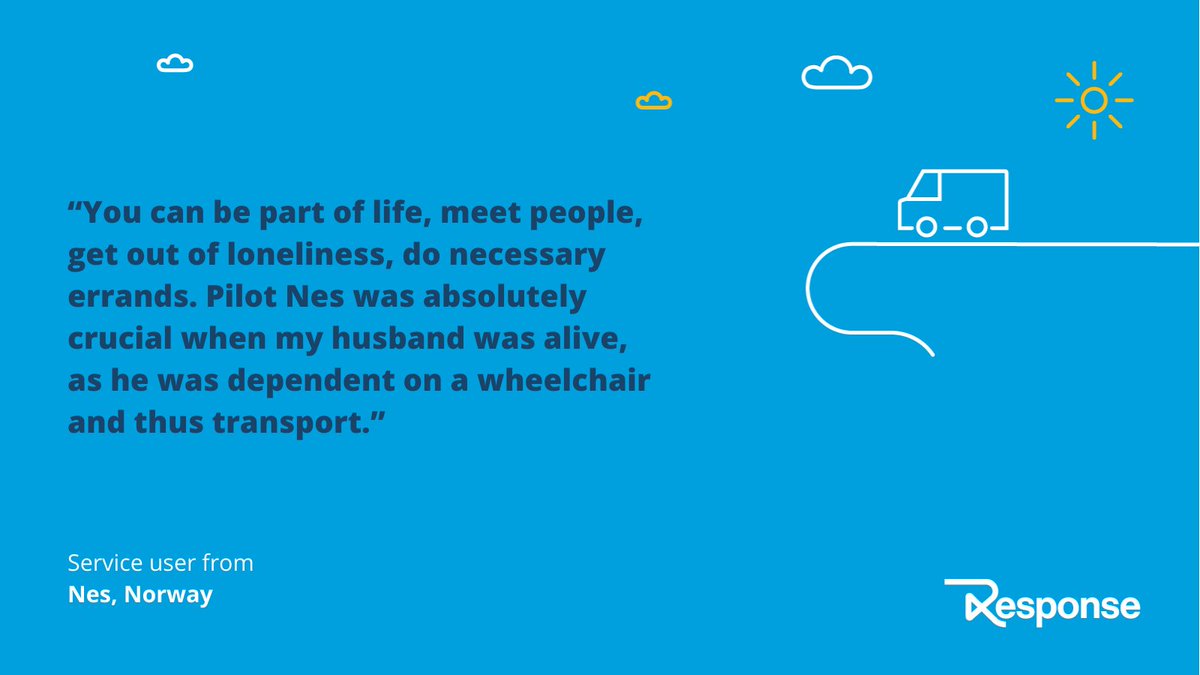
Demand-responsive transportation pilot in Nes, Norway set out to increase freedom for elderly people, improve their health, social participation and quality of life, reduce loneliness, and let them live at home longer. 🧓 See how they did: https://t.co/wCTNMd5r5l
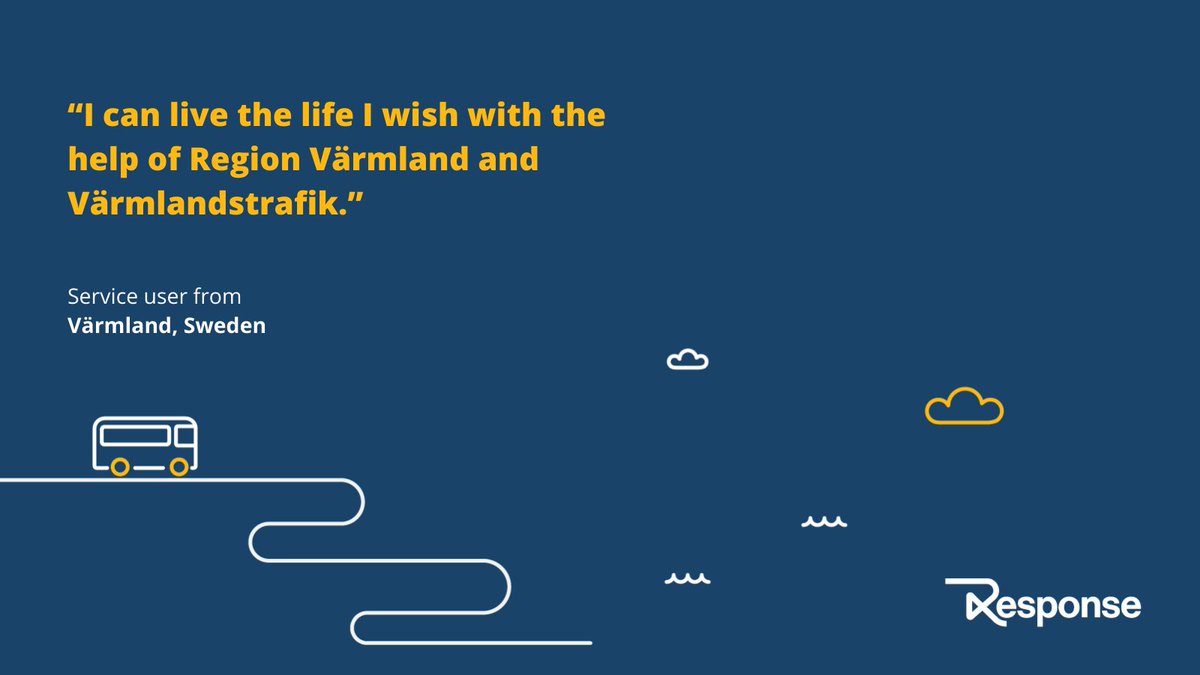
Users of demand-responsive transportation pilot projects often felt that DRT allows them to have more flexibility in their lives. Read more about the pilot in Värmland, Sweden: https://t.co/ejlgrx9QF2
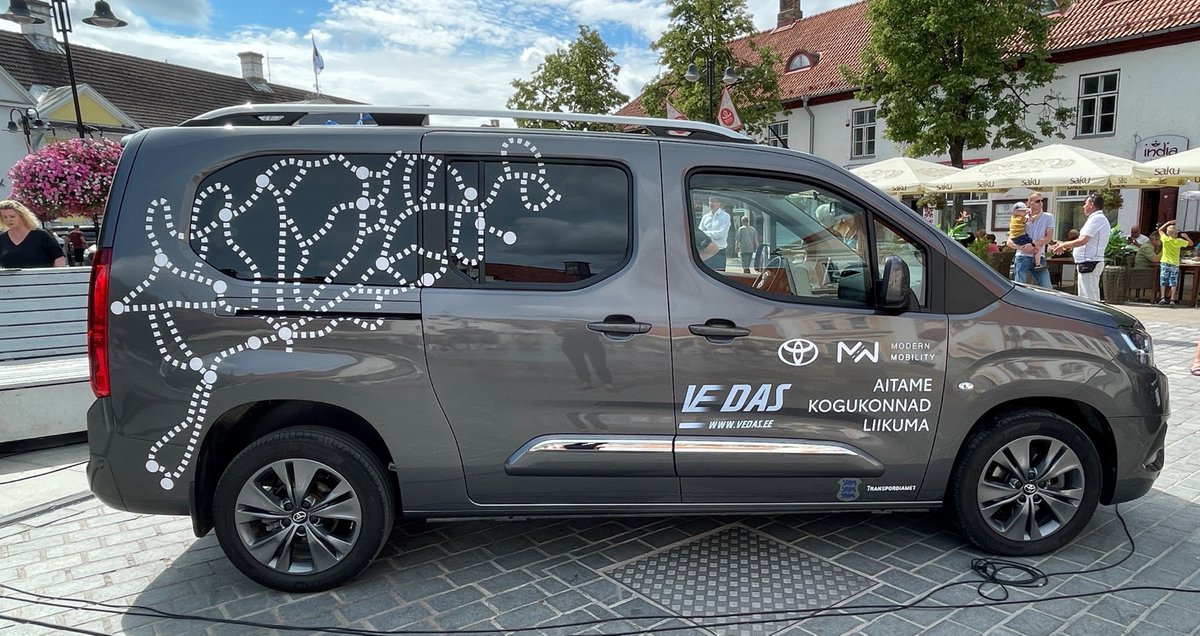
People in Saaremaa used demand-responsive transport (#DRT) to spend their spare time, to go shopping, to get to work, for tourism, to catch a long-range coach, and also to go to a doctor, get to school, visit events etc. Read more about the pilot: https://t.co/Vjes8FFiF4
We have three new reports on using public data for uniform transportation modelling. 📊They suggest designing a generic data warehouse, deriving knowledge from the database, and visualizing it for better #DRT. 🗺️ All reports available in RESPONSE library: https://t.co/Rj0glTawPF
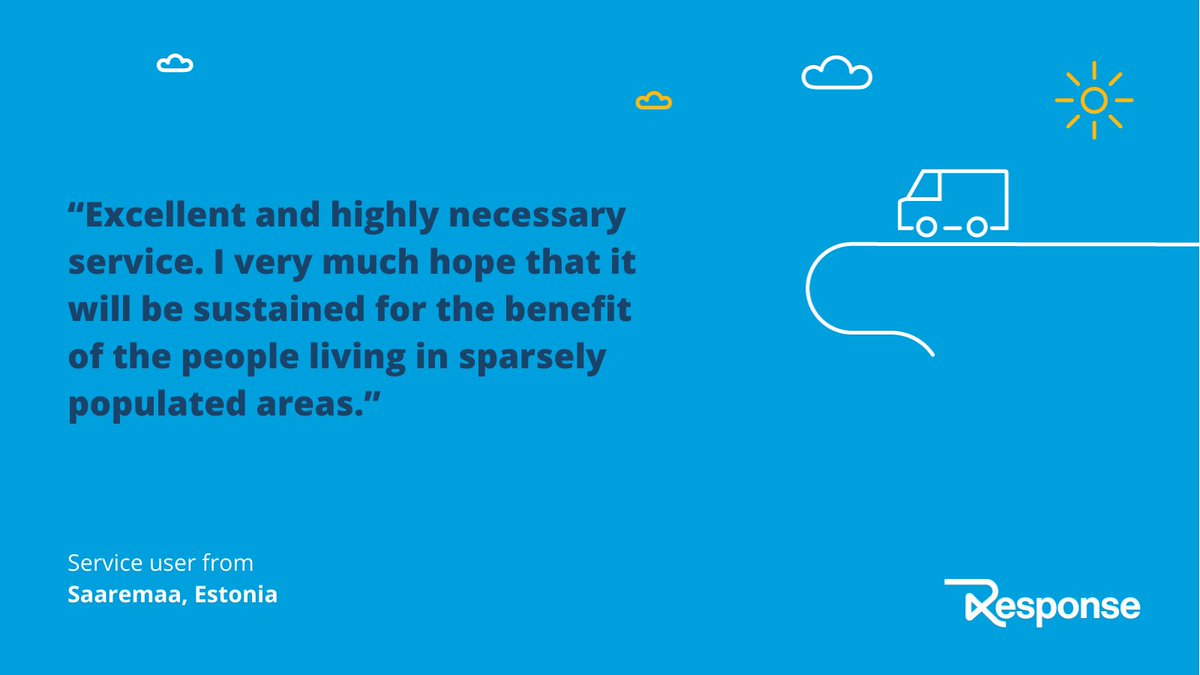
The inhabitants of Sõrve, Saaremaa would gladly continue to use demand-responsive transport. 🚐 Out of 50 DRT users 49 answered affirmatively. The service received a very high rating of 6.62 on a 7-grade scale. More conclusions about the Saaremaa pilot: https://t.co/9BLDEjUwYp
A new cost and demand prognostication tool is available for public use! 👩🔧 The network simulation tool can be used to run quick and informative transit simulations and be a great help for anyone planning demand-responsive transportation. Find it here: https://t.co/gTnfY4IIzE
"The largest savings come from the energy left unspent. The best way to cut transport emissions is to drive when necessary to places necessary," says Estonian environment minister Erki Savisaar, saying DRT could be one of the solutions in climate goals. https://t.co/FZhQGoUhqi
The pilot aims to improve mobility in areas or periods that currently have little or no public transport, and by this address vulnerable groups that today have problems reaching social activities. ⛹️♀️ More info: https://t.co/2D4bJ48ir3
A demand-responsive transportation project from Innland, Norway enables children to take a bus 🚌 home from the sports club, saving the environment, giving parents freedom and letting kids socialize with a sense of achievement.🧑🤝🧑 Everybody wins! #DRT
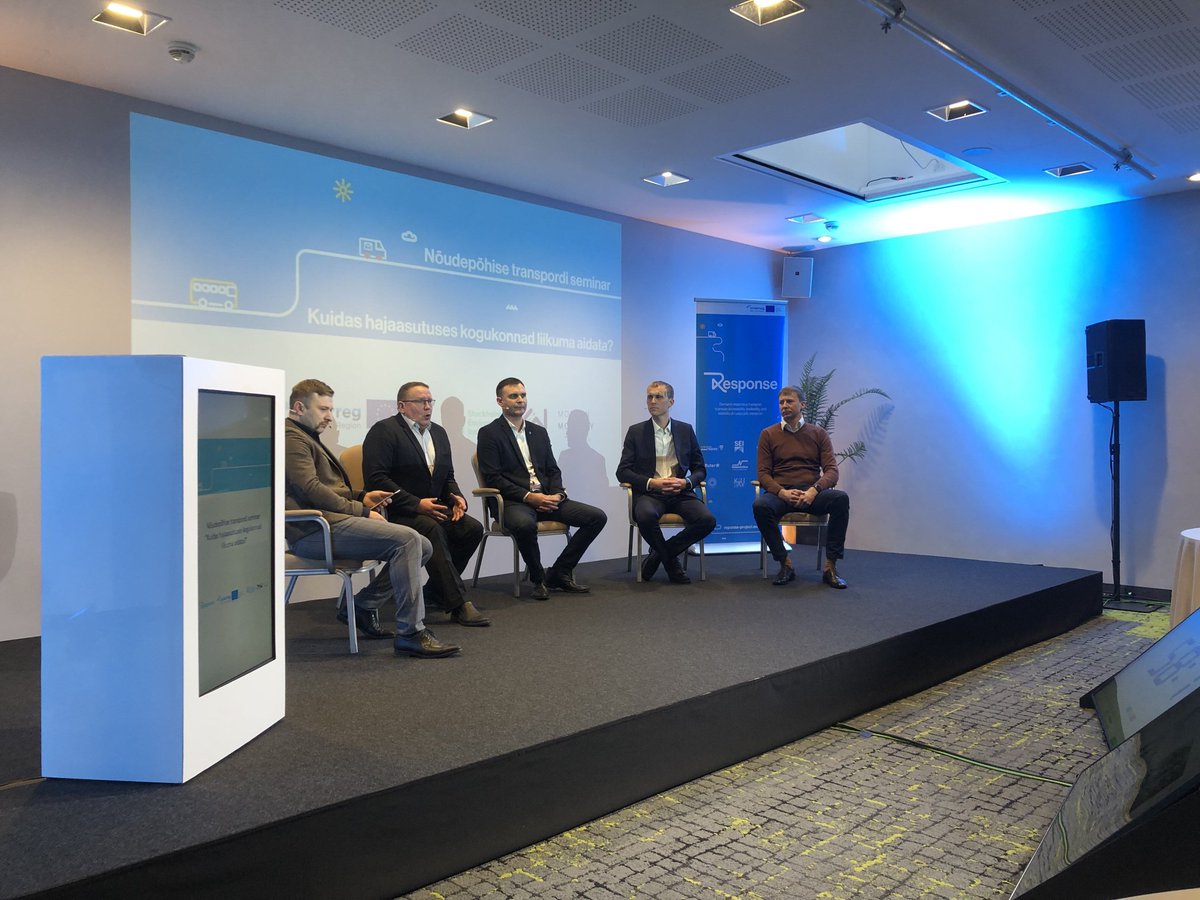
More than 150 Estonian #transportation stakeholders from the local governments, public transport centres, ministries etc. gathered at the @RESPONSE_eu demand-responsive transportation seminar to discuss the potential of #DRT in improving #mobility in sparsely populated areas.
What demand-responsive transport is, how does it work and why is it beneficial? This animation helps to explain this to those who haven´t heard about #DRT before. The animation is available in six languages (🇬🇧🇪🇪🇱🇹🇩🇰🇳🇴🇸🇪).
See more here: https://t.co/jo9USCCtgw
#responseDRT
Estonian biggest island #Saaremaa testing on-demand transportation (#DRT) solutions in the sparsely populated rural areas. Read more: https://t.co/vw6JiJNCpz
A new research paper by @RESPONSE_eu project partner and Norwegian transportation company @Ruter provides an understanding of how to innovate and create new on-demand transportation pilots.
Read more: https://t.co/EfFTdVDrkK
In the framework of the @RESPONSE_eu project, @KaunasCity municipality in Lithuania has launched a #DRT pilot to test out an alternative commute for schoolchildren. Read more: https://t.co/xZulaE1uVF
Providing #publictransport in difficult to reach areas (like steep hillsides etc.), can be provided more efficiently via the use of demand-responsive transport. Using #DRT in these regions allows more people to use public transport. Read more: https://t.co/6K4H23EzA0
In an effort to lessen environmental and climate impacts and to reduce carbon emissions, demand responsive transport (#DRT) plays a great part in #sustainabletransport planning. Read more: https://t.co/3HzfoLX2yy