¿Sabías que hubo una boda en Auschwitz?
Este fue el enlace entre la española Margarita Ferrer y el brigadista internacional Rudolph Friemel. Se conocieron en la Guerra Civil Española, pero se casaron en el campo de concentración y exterminio nazi de Auschwitz.
Breve hilo:
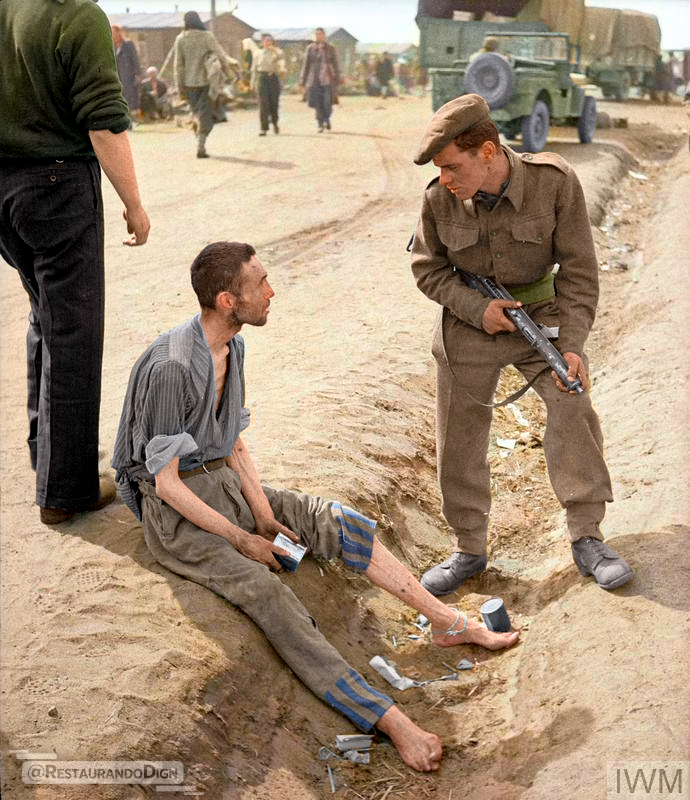
Although the most widespread term was the aforementioned “Muselmann” (because of the posture adopted by the prisoners, which resembled the posture of prostration in Islam), in some camps the terms “Gamel” (from “rotten”) and “Krypel” (from “crippled” or “lame”) were also used.
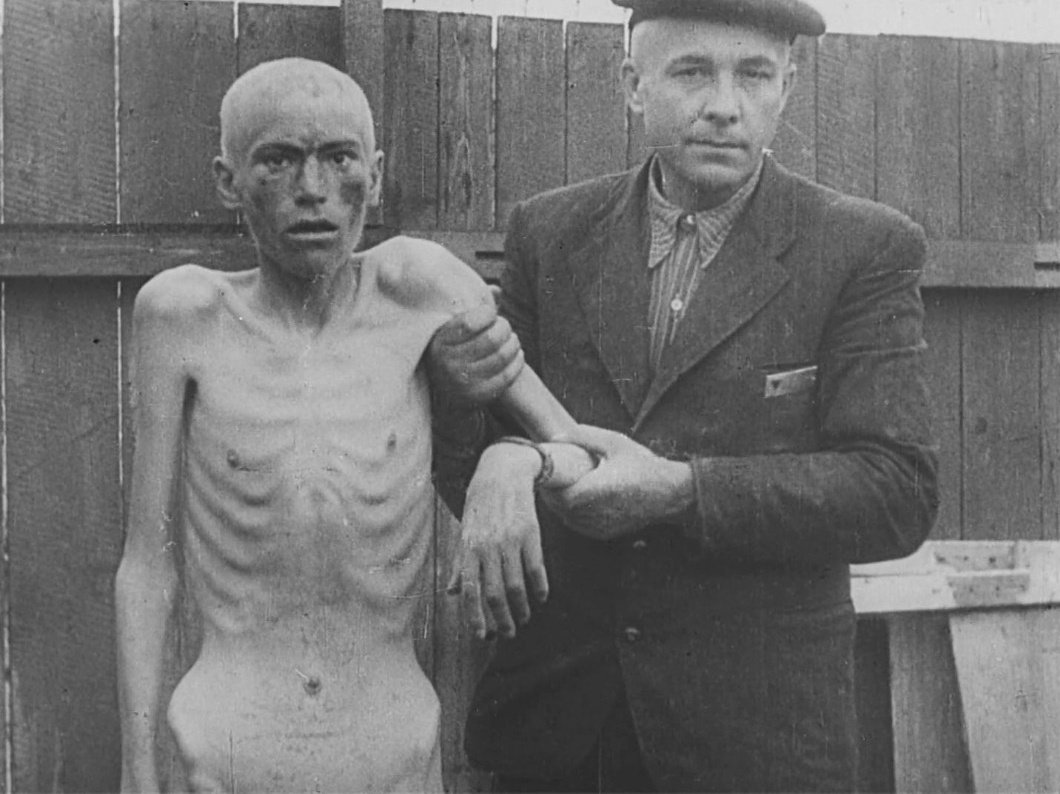
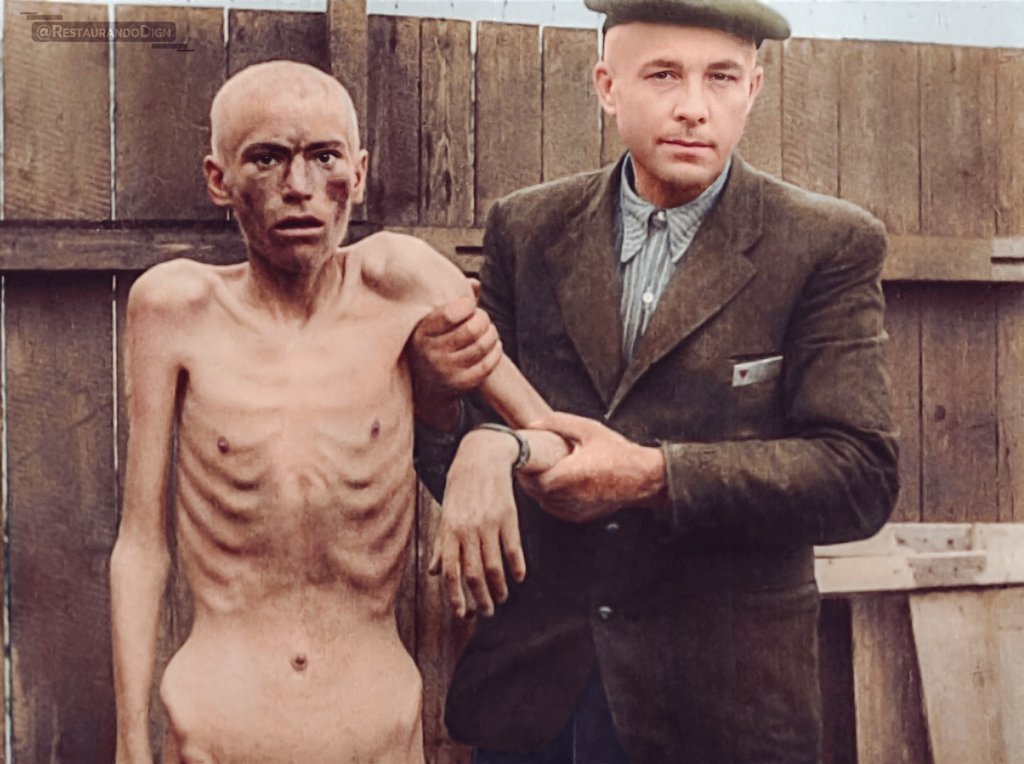
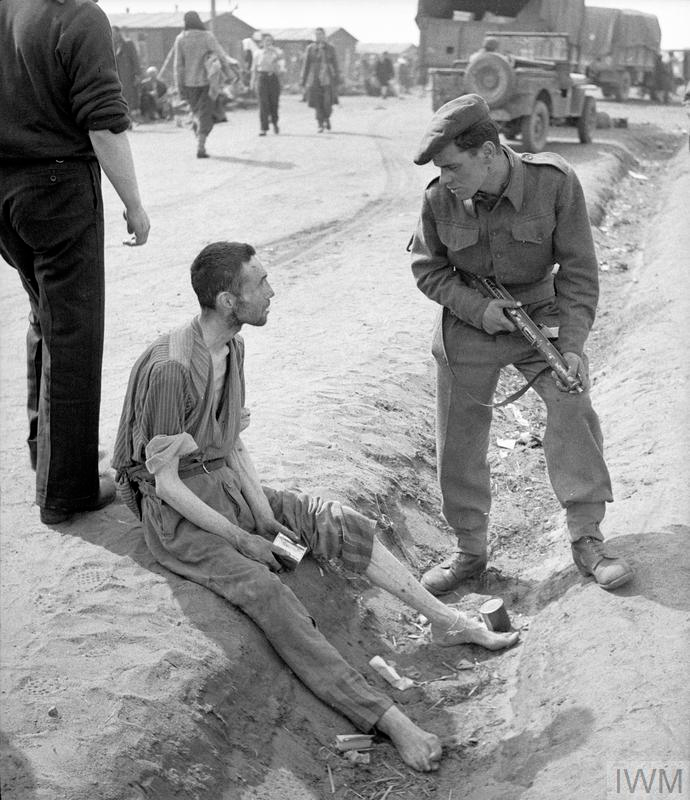
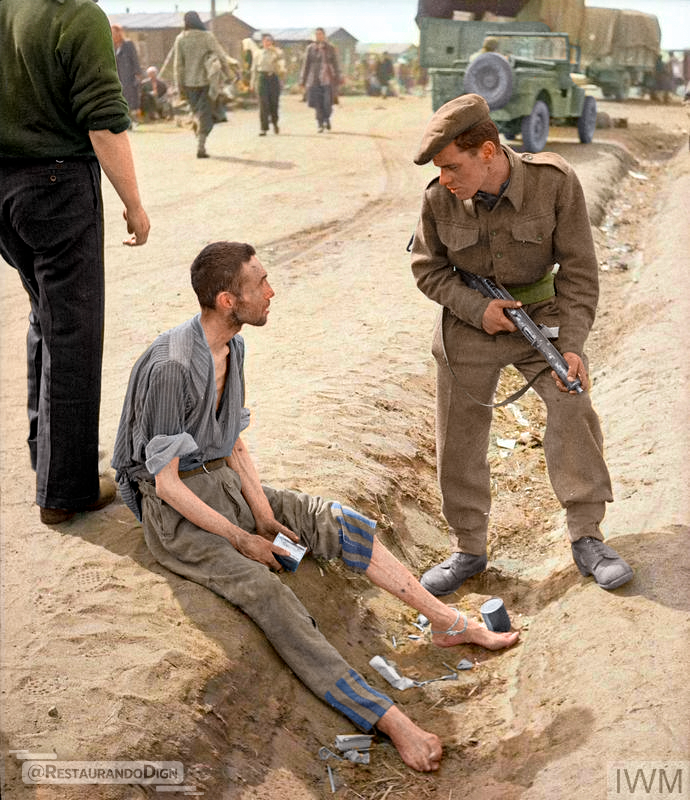
A prisoner in the Nazi concentration camp of Nordhausen shows the pitiful physical condition of one of his fellow inmates.
Prisoners in that state were commonly referred to as “Muselmann”.
Many died in the days following liberation.
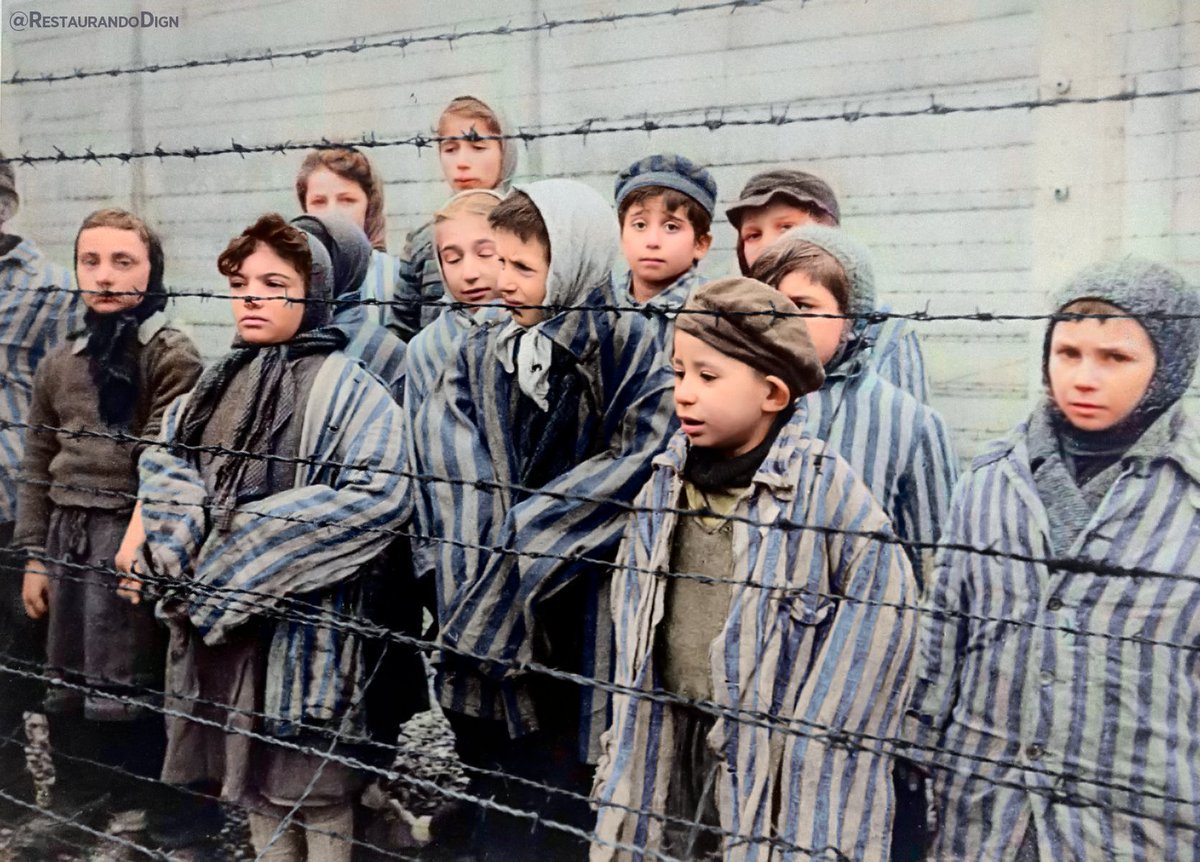
Eighty-one years ago, on January 27, 1945, the Soviet army liberated the Nazi concentration camp at Auschwitz.
More than 1,100,000 people died in the nearly five years that the camp was operational. Nearly 216,000 of them were children.
Never again.
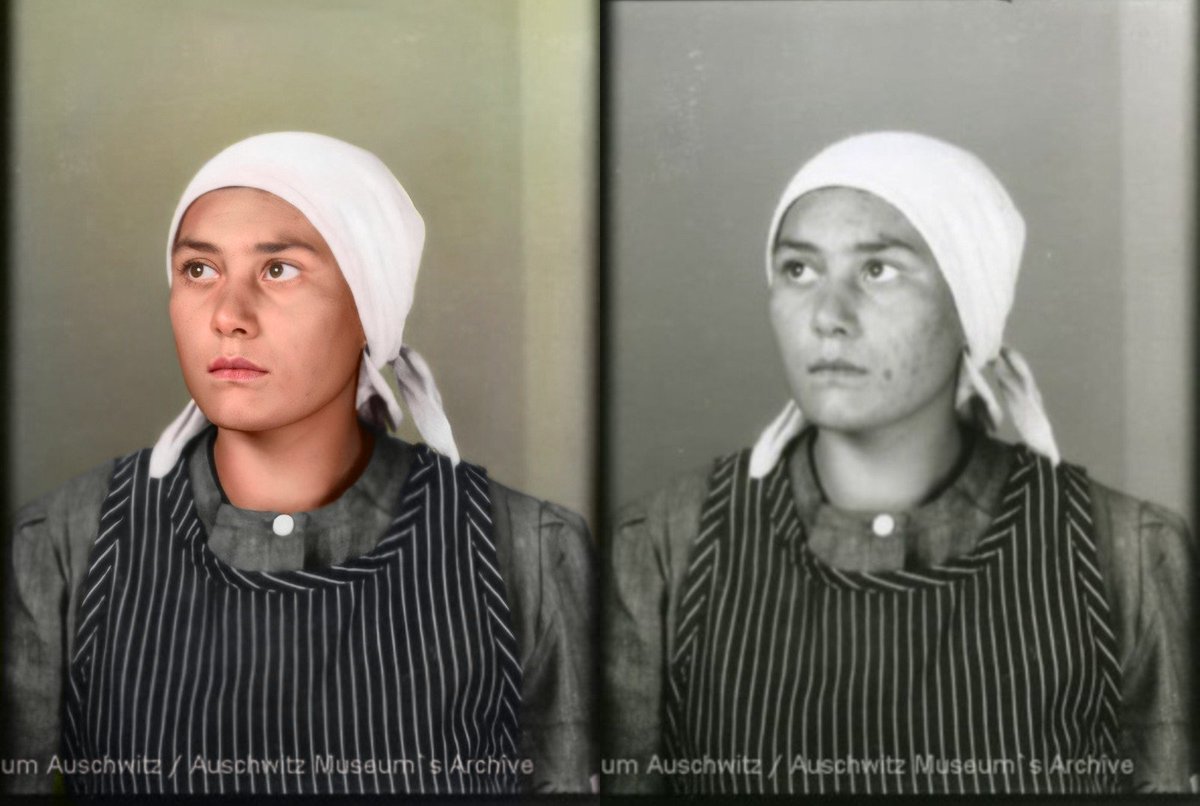
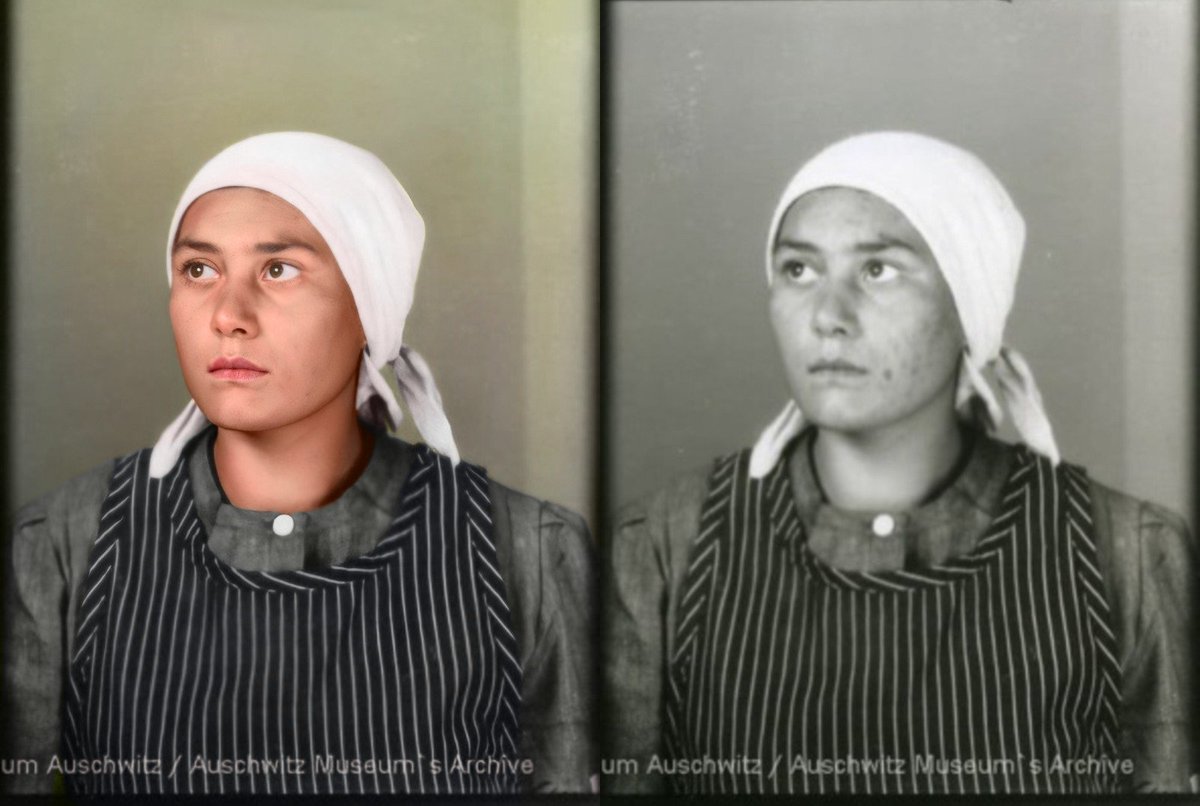
Wanda Ferko-Pawłowska
Born in Zabrzeg (Poland) on March 12, 1926. Roma, at the age of 16 she was deported to the Auschwitz concentration camp and later transferred to the women’s camp of Ravensbrück.
Liberated.
Bergen-Belsen concentration camp, colorized photograph.
The camp was liberated on April 15, 1945. Although it was not an extermination camp and had no gas chambers, more than 50,000 prisoners died there due to the living conditions.
✡️Jeannette Groenteman
Born in Amsterdam on September 2, 1938. From a Jewish family, in 1942 she was deported together with her mother and siblings to the extermination camp of Auschwitz, where they were murdered.
In the photo, Jeannette with Lena and John
✡️Anita Brandeisová
Born in Prague on October 2, 1936. Of Jewish origin, she was deported from the Theresienstadt ghetto to the Auschwitz concentration camp.
She was murdered immediately upon arrival after the Selection.
✡️Anita Brandeisová
Born in Prague on October 2, 1936. Of Jewish origin, she was deported from the Theresienstadt ghetto to the Auschwitz concentration camp.
She was murdered immediately upon arrival after the Selection.
Several SS guards are forced to carry and bury the bodies of dead prisoners at the Bergen-Belsen nazi concentration camp.
Although it was not an extermination camp, more than 50,000 prisoners died there in just under two years.
Wanda Ferko-Pawłowska
Born in Zabrzeg, Poland, on March 12, 1926. A Romani woman, she was deported to the Auschwitz concentration camp at the age of 16 and later transferred to the women's camp of Ravensbrück.
She was eventually liberated.
A prisoner reveals the emaciated condition of his companion at the Nordhausen concentration camp.
In the camps, those in such a state were referred to as "Muselmann" (pl. "Muselmänner")—a term used for those on the brink of death due to starvation and exhaustion.
✡️ Benjamin Bloemendal was born in Amsterdam on May 2, 1938. Coming from a Jewish family, he was deported to Auschwitz with his mother at just four years old. They were both murdered upon arrival.
This is the only known photograph of him.
Her name was ✡️Monique Cofman. She was born on May 3, 1939, in France. She was only 3 years old when the Nazis killed her after the "Selection" at the Auschwitz concentration camp.
Along with her, 773 other people were murdered that day.
Bergen-Belsen concentration camp, colorized photograph.
The camp was liberated on April 15, 1945. Despite not being an extermination camp and having no gas chambers, over 50,000 prisoners died inside due to the living conditions.
Stanisław Szczepanik
Born in Chybie on June 4, 1914. A football player, he was deported to Auschwitz on August 25, 1943. Transferred to Mauthausen in 1944.
He perished.
✡️Eva Salusová
Born in Czechoslovakia on January 30, 1929. Coming from a Jewish family, she was deported along with her mother to Theresienstadt first and later to the Auschwitz concentration camp.
She died. This is the only photo that remains of her.
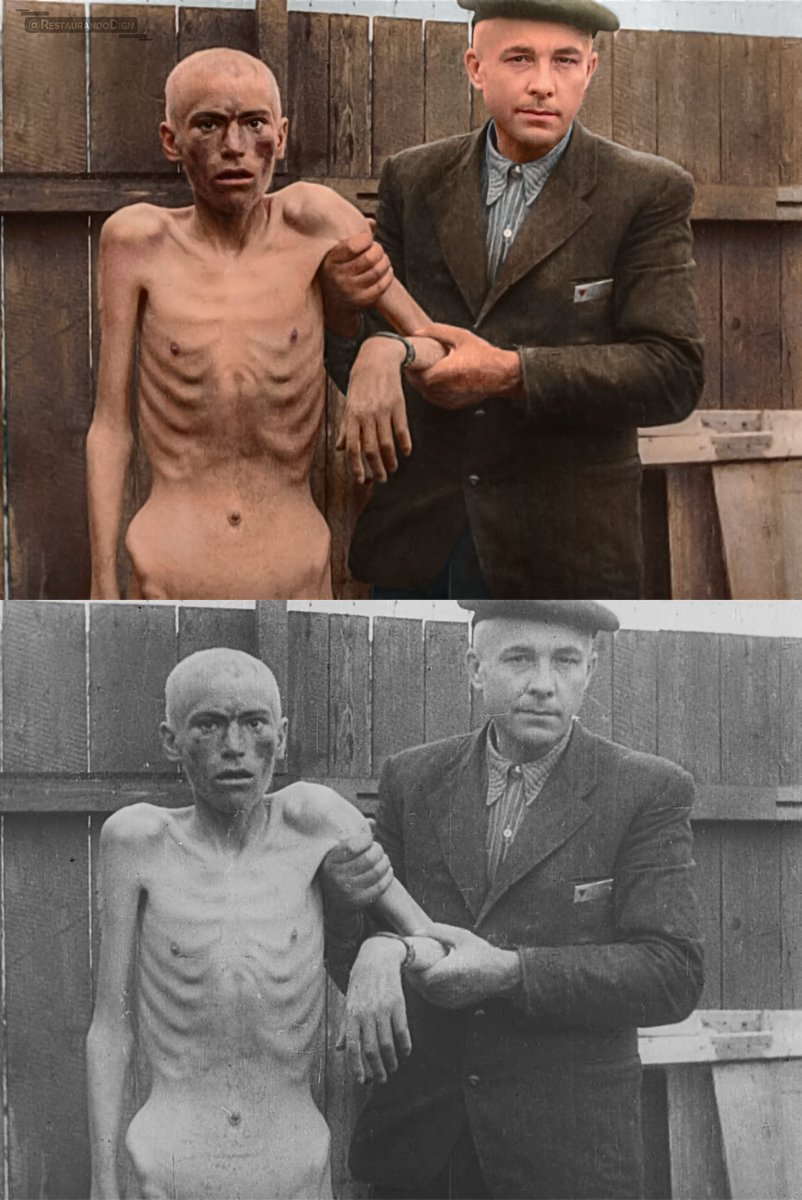
This is one of the hardest photos we’ve restored and colored, and perhaps one of the most necessary.
These two men are showing their liberators what their work was like as part of the Sonderkommando at Dachau camp. But what was the Sonderkommando?
Thread: