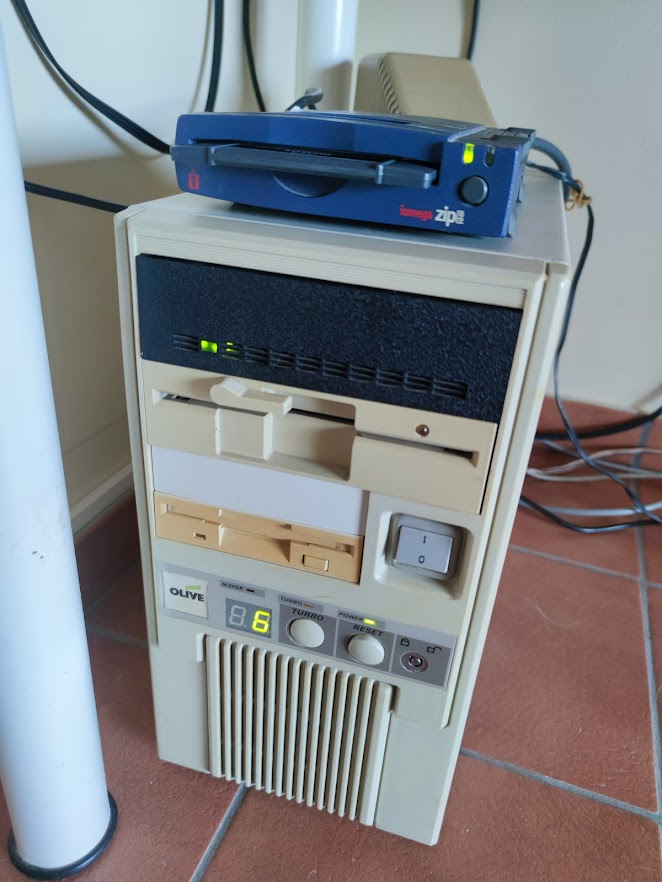
I connected a 3.5'' floppy drive to my @Tesla, and it works.
It's nice that the Linux kernel still supports this subsystem. The system script mounts any detected disk drive (with some exceptions) as external storage for Sentry/Dashcam/media source.
It's even possible to play a single MP3 file from the diskette.
Unfortunately, formatting the diskette to exFAT fails, and it can't be used with Sentry. It's a shame.
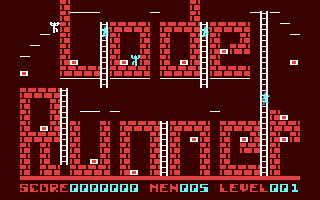
Lode Runner, released in 1983 by Broderbund and designed by 21-year-old University of Washington student Douglas E. Smith, became a mega-seller.
It was the top U.S. computer game of 1983 and Broderbund's second-best-selling title for the C64, following Choplifter. By 1984, it had sold over 300,000 copies and reached 2.5 million worldwide by the end of the decade, with its C64 port developed by Dane Bigham. This game is an easy 10/10 for me.
Lode Runner, released in 1983 by Broderbund and designed by 21-year-old University of Washington student Douglas E. Smith, became a mega-seller.
It was the top U.S. computer game of 1983 and Broderbund's second-best-selling title for the C64, following Choplifter. By 1984, it had sold over 300,000 copies and reached 2.5 million worldwide by the end of the decade, with its C64 port developed by Dane Bigham. This game is an easy 10/10 for me.
@EleonoraSayaka Definetively, climate change issue! By the dates C64 was made, no heatsinks were needed. Now with global warming 🌡️🌡️ I think that even my 286/16 would need heatsink too 🤪
MacGyver and his Commodore 64 - S1, E15, "The Enemy Within" (1986). The coolest dude with a mullet in the '80s just got even cooler when I saw him use his C64. I jumped up and told my parents to come here, MacGyver has a Commodore 64 too!
@TechOperator Yes! Just for looking around few minutes, as it was an expensive call by then. I entered PC-World (or PC-Actual) magazine's BBS on our early modem at home (14.4kbps).
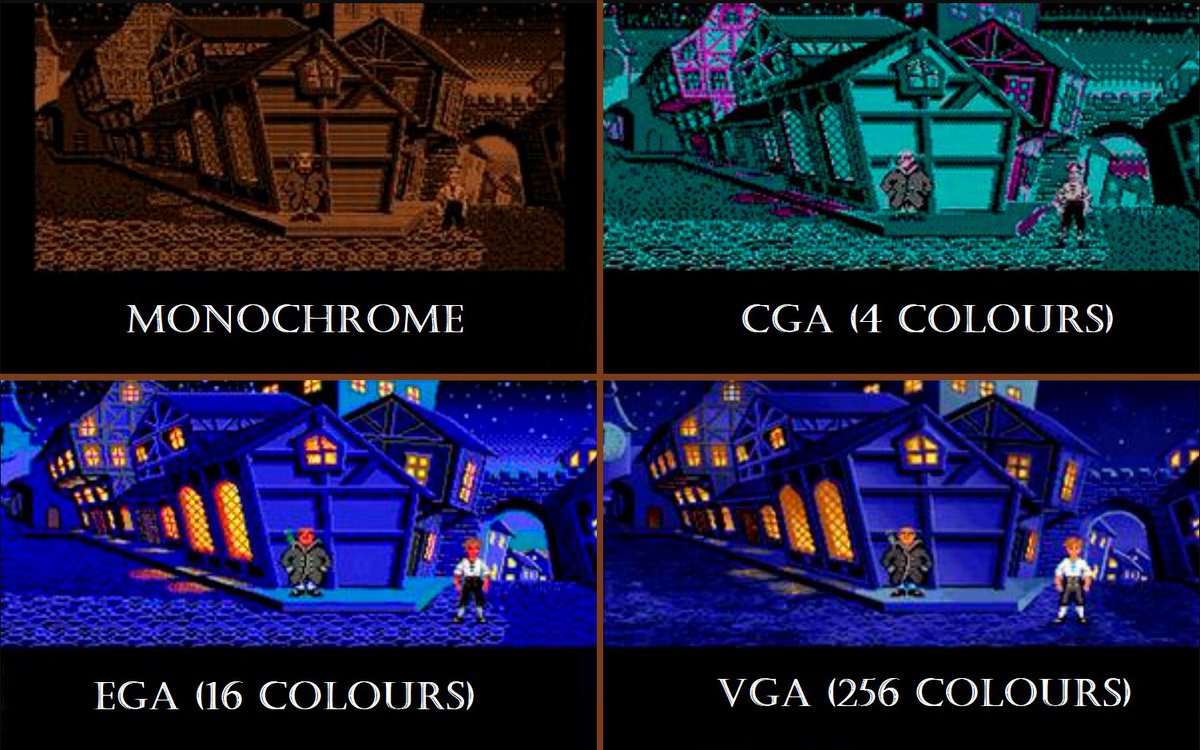
A little history trip from Monochrome to CGA to EGA to VGA. Woud be curious as to what your first PC graphic experience was, mine was EGA. I just missed CGA by one year, so I dodged a bullet there.
The first graphics adapter to bring at least a little life to their screens was the Colour Graphics Adapter (CGA), which is considered the first graphics card from IBM which would set the standard in 1981. This was a step up up from the MDA (Monochrome Display Adapter), which was green text against black.
CGA had a whopping 16kb of memory and connectors for a monitor or a television. It also had a max resolution of 640×200. It wasn’t pretty compared to the competition (8 bit home computer systems), but it got the job done. In 320×200 mode, only 4 colours could be displayed at once. In 640×200 mode, that went down to only 2 colours.
Next up after CGA was EGA in 1984. This time, it could display 16 colours at the same time from a total palette of 64 and cranked the maximum resolution up to 640×350. It was also packed with 64kb of memory (a big leap back then!).
EGA didn’t live long, either, and was quickly put out to pasture by IBM itself with the arrival of VGA in 1987 with an whopping 256 colours. VGA came to represent a number of key developments such as the famous 640×480 resolution or the 15 pin VGA monitor connector... high tech back in the day!
The VGA standard would go on to have a number of other enhancements such as “Super��� VGA. SVGA topped off VGA with a number of additional enhancements such as a 800×600 4-bit pixel resolution which extended on out to 1024×768 8-bit pixels later.
And the best part of this? Any gamer born after 1990 will have no clue what I just talked about...