Reuters175 | 1878: When Baron Herbert de Reuter became managing director at 26, he took on the challenge of leading the agency into a new era. He built strength through editorial focus, deep knowledge & trusted relationships, guiding Reuters through decades of change. #Reuters175
Reuters175 | 1877: As war broke out between Russia and the Ottoman Empire, Reuters placed Sigmund Engländer in Constantinople. Working through censorship and political tension, he used judgement, networks and discretion to deliver critical news when others could not. #Reuters175
Volatility in gas and LNG markets is raising questions about long-term demand, supply disruption and shifting global trade flows.
Join the live interview with GECF Secretary General Dr. Philip Mshelbila on #ReutersGlobalEnergyForum Day 2 at 2:40pm EDT: https://t.co/8JW6FYwhop
Join the Reuters Global Energy Forum in New York on June 23–24, where Reuters reporters cover geopolitics, energy markets and macroeconomic trends. https://t.co/AdpsfWroco
Not in NY? Watch Reuters NEXT Newsmaker interviews livestreamed globally (details below).
Geopolitical tensions, supply disruption and policy pressure are testing the balance between energy security and transition goals.
Join the live interview with U.S. Energy Secretary Chris Wright on #ReutersGlobalEnergyForum Day 2 at 12:35pm EDT: https://t.co/lu8NWE7dF1
Reuters175 | 1873: As the Panic of 1873 unfolded, Reuters delivered near hour‑by‑hour intelligence on bank failures, market panic and government intervention, vital information for navigating the first global financial crisis.
#Reuters175
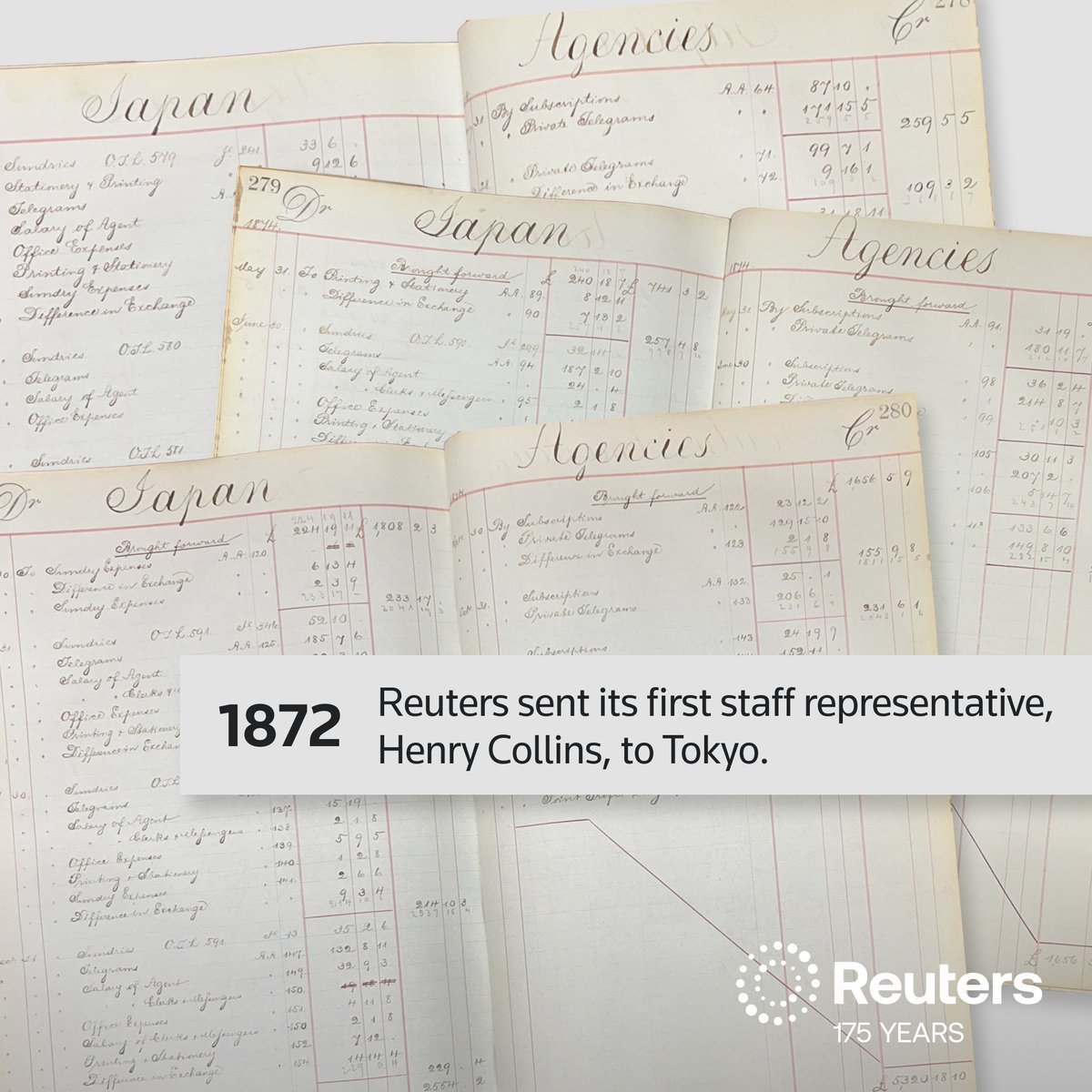
Reuters175 | 1872: Reuters sent its first staff representative to Tokyo. Henry Collins arrived as Japan modernised rapidly, witnessing the build of the country’s first railway, an early Reuters presence at a pivotal moment in history. #Reuters175
Oct 17, 1871: Julius Reuter becomes Baron de Reuter. Title granted by Duke of Saxe-Coburg-Gotha. Motto: "per mare per terras" (by land and sea). Arms show globe between lightning flashes. Recognition for transforming news distribution worldwide
1870: The independence question. During the Franco‑Prussian War, Reuters balanced access to official sources on both sides — confronting an enduring challenge of war reporting: independence under pressure. #Reuters175
1868–1869: Competing with monopoly. Reuters backed the French Atlantic cable to challenge high transatlantic rates, forcing prices down and widening access to fast American news. #Reuters175
1868: Reporting from the frontline. Reuters covered the Abyssinian expedition from with the column itself, transmitting uncensored battlefield reports via military telegraph and sea routes back to London. #Reuters175
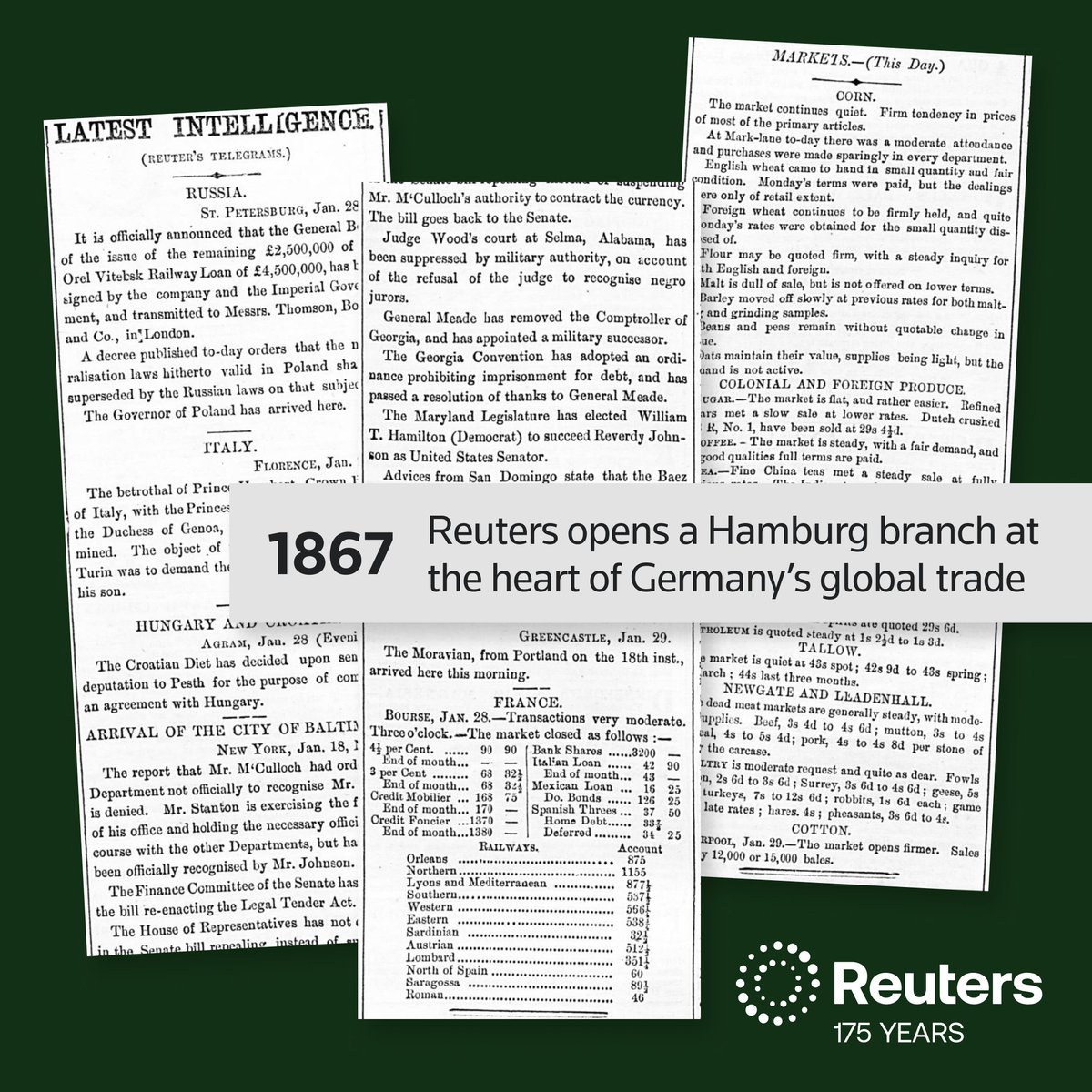
1867: Reuters opened a Hamburg branch at the heart of Germany’s global trade, securing a major contract to supply comprehensive political and commercial intelligence. Its telegrams quickly became central to price‑setting for merchants and newspapers alike. #Reuters175
1866: Conquering the Atlantic. With the first successful transatlantic cable, Reuters sent news from America to London in hours, not days — transforming markets and global understanding. #Reuters175
1865: Breaking news across the Atlantic. Reuters delivered Europe the first news of Abraham Lincoln’s assassination, using boats, canisters and telegraph lines to beat the ship carrying the news. #Reuters175
1864: A name takes shape. An agreement marked the first documented use of the word “Reuters”, as the growing news organisation moved toward the identity it would carry worldwide. #Reuters175
1863: Intercepting news at sea. Reuters built a telegraph line to southwest Ireland and met mail steamers offshore, gaining hours on American news while competitors waited for ships to dock. #Reuters175