Everyone's talking about AI agents like they're the future. They already are the present.
The real question isn't whether agents can execute go-to-market workflows. They can. The question is... can you trust them to?
Because here's what actually happens in most setups nobody warns you about:
Agents get direct access to your tools. Your data. Your systems. No guardrails. No oversight. Just raw execution with nothing standing between an AI decision and a consequential action.
That should make any GTM leader uncomfortable.
So what does safe agentic execution actually look like?
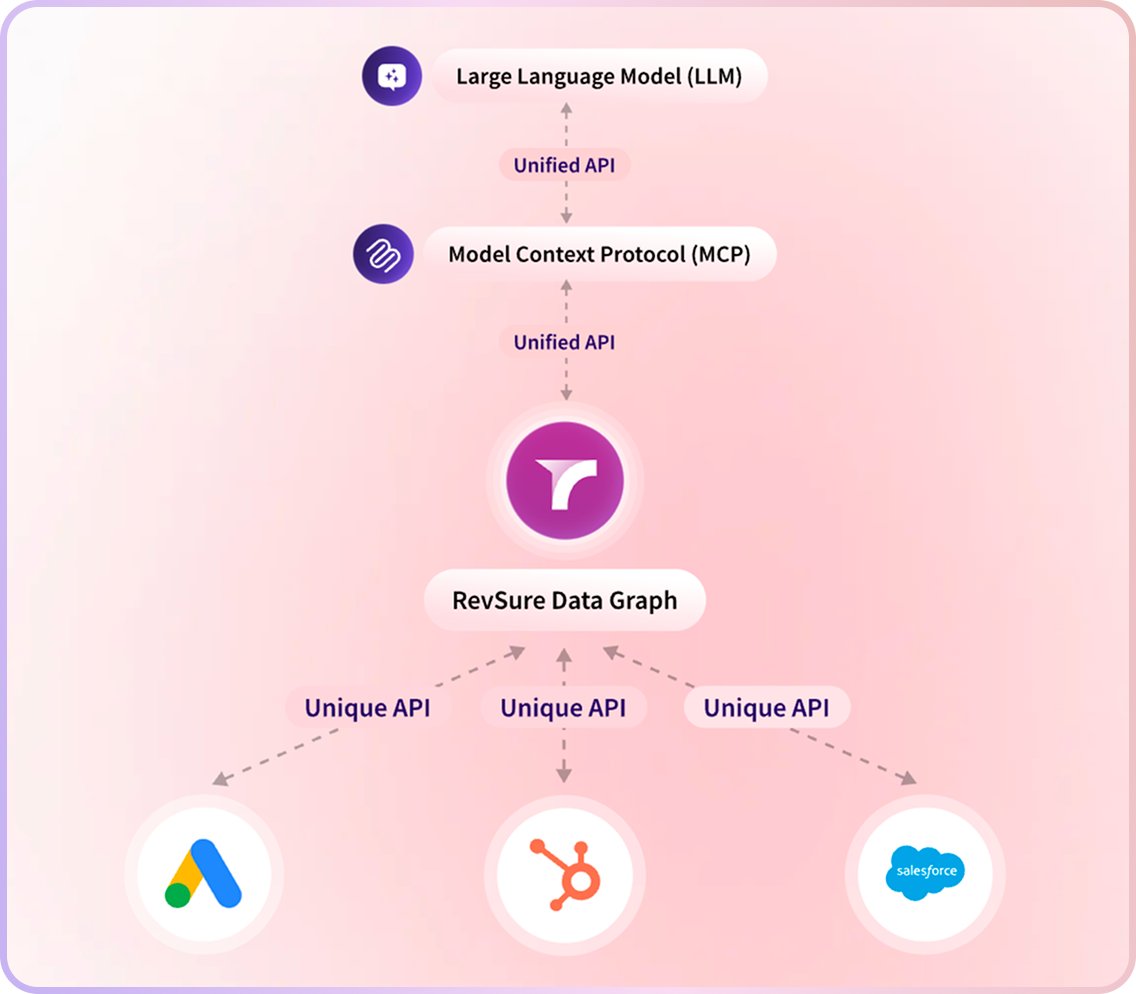
It looks like a layer that sits between your agents and your systems. One that validates every action before it runs. Enforces the rules your enterprise actually set. And logs everything so nothing happens in the dark.
That's exactly what RevSure's MCP Server does.
Real example: An agent spots an account with strong buying intent. Reads the signals. Identifies the buying committee. Then triggers an outbound sequence, but only after MCP validates the request, checks permissions, and approves execution. The team sees who initiated it, what ran, and what happened next.
Full control. Full visibility. No surprises.
And setting this up with ChatGPT Enterprise takes minutes, not a six-month implementation project.
This is the part of agentic AI most vendors skip over.
Execution is easy to demo. Governance is hard to build.
We built it first.
#AgenticAI #GoToMarket #AIExecution #RevSure #SalesAI #MCPServer #AIGovernance #B2BSales #RevenueOperations #GTMStrategy #AIAgents #SalesAutomation #ChatGPTEnterprise
We've been quietly expanding RevSure's integrations over the last few months.
We now connect natively with the tools most B2B GTM teams are already running: Salesforce, HubSpot, Adobe Marketo, 6sense, Outreach, LinkedIn Ads, Google Ads (Google Partner), Snowflake, and a lot more.
The idea is simple: your attribution should live where your data already lives. No manual exports, no stitching spreadsheets together, no revenue blind spots.
A few use cases we're seeing customers get a lot of value from:
👉 Teams using 6sense or Demandbase now see exactly which intent signals preceded pipeline, not just which ones were active.
👉 Reps on Outreach or Salesloft can finally connect sequence activity back to deals, without asking RevOps for a custom report.
👉 Paid teams running LinkedIn + Meta + Google get one view of spend vs. influenced pipeline, across the full funnel.
Over 42 integrations, and we're not stopping here.
Learn More: https://t.co/ttTtmTGywm
#RevOps #DemandGen #B2BMarketing #RevenueAttribution #GTM #MarketingOps #PipelineGeneration #B2BSales #MarTech #SalesAndMarketing
Every quarter, we score every lead in your funnel before the first call is even made. Not after the deals close. Not halfway through the quarter when it's too late to pivot.
Right at the start.
We bucket every lead into three categories. Low. Medium. High. Based on hundreds of signals that tell us which leads are actually ready to move and which ones will drain your team's time and energy.
And then we let the quarter play out.
No tweaking the scores midway. No adjusting after the fact. Just an honest, upfront prediction.
Here is what we found when we ran the numbers across all our customers last quarter.
👉 70% of all closed-won revenue came from the leads we had flagged as high propensity on day one.
👉 High propensity leads were converting at 3 to 8 times the rate of everything else in the funnel.
👉 The teams that leaned into the scores stopped spreading themselves thin. They focused their energy where it actually mattered. And they closed more.
This is how we do it at RevSure. We do not wait for the quarter to tell you what worked. We tell you what will work before it begins.
So your team can stop guessing and start winning.
#RevSure #PropensityScoring #RevenueIntelligence #B2BSales #PipelineManagement #DemandGeneration #GTMStrategy #AIForRevenue #DataDrivenSales #RevenueGrowth
Third-party cookies are going away. And honestly? Good riddance.
For years, marketers have been duct-taping broken tracking together, hoping cookies fill in the gaps, watching attribution fall apart the moment someone uses Safari or clicks "deny all."
That era is ending whether we're ready or not. So we built something that doesn't need cookies at all.
RevSure's cookieless tracking captures every signal across the funnel: page views, clicks, form fills, demo requests, and content downloads, without a single third-party cookie in sight.
When does the browser block client-side tracking? It switches to server-side automatically. When does a journey go anonymous? Fingerprinting stitches it back together. When your team needs the data in HubSpot, Salesforce, or Marketo? It's there, clean, and ready.
GDPR. CCPA. Data residency. All covered.
The teams that figure out cookieless tracking now are going to have a serious edge in 12 months. The ones that wait are going to be making pipeline decisions on vibes.
We broke down exactly how it works in 90 seconds.
👇 Check it out.
#MarketingOps #RevOps #DemandGen #Cookieless #PipelineAttribution
At Inspire UK 2025, Saima Rashid shared a number that hasn't left the conversation since: 20-25% of 6sense's own pipeline was already being AI-triggered.
That was twelve months ago. Every marketing leader we've spoken with this year says the number is now higher, at 6sense and across companies building on signal-led GTM.
AI agents are sourcing pipelines. The sequences moving that pipeline forward, and the scoring deciding what gets prioritised, are largely automated too.
Here's the awkward part: Most CFOs don't know how to defend a pipeline number generated by something that didn't have a human in the loop, and most attribution models were built around touchpoints with names attached, like emails opened, ads clicked, and demos booked. AI-triggered pipelines don't fit that shape.
The 2025 story was: AI can now create pipelines at scale.
The 2026 story: who gets credit for it, and how do we prove it actually happened the way the dashboard says it did?
That's the question we're walking at Inspire UK on 4 June with. If it's on your mind too, find us.
A big milestone for RevSure and an important step forward in how B2B GTM teams measure marketing impact.
We’re now a LinkedIn Marketing Partner for B2B Attribution & Analytics. RevSure has always helped customers connect marketing activity to pipeline and revenue, and now, with our new integration with LinkedIn Company Intelligence, customers can access a complete view of paid and organic touchpoints by company to understand the buyer journey from engagement to closed-won.
With RevSure’s integration with LinkedIn Company Intelligence, our customers can see:
✔️ More complete visibility into campaign influence on pipeline
✔️ Stronger linkage between marketing activity and revenue outcomes
✔️ Improved measurement within existing workflows
If you're looking to improve how you measure the impact of your LinkedIn investment, we’d love to share more.
Learn more: https://t.co/5Ip5ShUjSx
A CMO told us something we hear often: “We’re generating pipeline, but nearly 60% of it never converts, and we don’t know what’s actually driving it or how to fix it.”
The stack looked complete: campaigns running, SDRs outbounding, forecasts in place. But execution was fragmented. Marketing optimized in one system, sales acted in another, and insights came too late to change outcomes.
What’s emerging is not just a better outbound workflow, but a more cohesive system, where data continuously informs execution, and execution continuously adapts to signals.
RevSure operationalizes this through a structured system of agents working across the full funnel:
✅ Marketing Optimization: Continuously improves attribution, reallocates budget, and refines campaign performance in real time
✅ Pipeline Acceleration: Identifies high-intent accounts, surfaces engagement insights, and drives next-best actions
✅ Revenue Predictability: Monitors pipeline health, assesses deal readiness, and flags risks early
All of this runs on a shared data foundation.
RevSure’s recent enhancements across enrichment and agentic workflows bring this model closer to reality, combining deeper data with adaptive execution into a unified outbound motion.
As this shift continues, the advantage won’t come from simply automating tasks. It will come from systems that can:
✔️ Interpret context across the funnel
✔️ Adapt in real time as signals change
✔️ Continuously improve how teams engage and execute
That’s the difference between running outbound and running a system that learns how to win.
Learn more 👉 https://t.co/3mihroBo1b
Live from Vista GTM Success BPSS 2026 in Miami!
Every year, this event reinforces just how sharp and passionate the GTM and revenue leadership community truly is. We've already had some of the most candid, high-quality conversations about pipeline, signal, and what modern revenue teams actually need to win.
Our Headshot Station turned into one of the liveliest corners of Level 2, and attendees lined up, connected, and left with a fresh look for their LinkedIn. Couldn't have asked for a better reception.
Still going strong here in Miami: more sessions, more conversations, more energy ahead. Grateful to be part of it!
#Vista2026 #RevSure #MakeYourFirstImpressionCount #Miami
When your campaign shows strong attributed results, how confident are you that YOU drove that outcome?
If the answer is "not very", you're not alone. Most teams are stuck measuring correlation, not causation.
That's exactly what our upcoming webinar tackles: Driving Campaign Decisions with RevSure's Incrementality & Lift Analysis
Vinay and Francisco will show how teams use controlled experimentation and statistical inference to isolate true campaign impact across conversions, pipeline, and revenue.
You'll walk away knowing how to:
→ Design test vs. control experiments to isolate causal impact
→ Measure incremental lift in conversions and revenue
→ Account for seasonality, demand fluctuations, and audience bias
→ Make confident budget allocation and scaling decisions
Save your spot-https://t.co/2swWL0AMX7
There’s a lot of visibility in GTM today.
But not enough action.
That’s exactly what our CEO & Founder, Deepinder Singh Dhingra, will be diving into in this session.
A live look at how RevSure is moving beyond systems of record and actually helping teams operate the pipeline as a system of action. Not just reporting on what’s happening, but using AI agents to analyze, decide, and execute across the funnel.
If you’ve ever felt like your data tells you what’s wrong, but not what to do next, this will resonate.
📅 May 7th | HSE AI Practice Sessions
Full Funnel as a System of Action with RevSure
Don’t miss it: https://t.co/sBpLniBqQ1
A lot of GTM conversations stop at visibility.
What’s harder, and far more interesting, is what happens after.
At Vista GTM Success BPSS 2026, Deepinder Singh Dhingra and Alex Cox will be there talking about exactly how teams move from insight to actual execution.
If that’s something you’re working through, it’s worth stopping by.
Meet the team. Own the frame.
⭐ Complimentary headshots at the booth.
Most teams don’t have a data problem. They have a timing problem.
Campaigns are running. Performance is being tracked. But ad costs are still pulled manually, reports update monthly, and ROAS shows up long after decisions are made.
So budget shifts lag. What gets scaled is based on what worked, not what’s working.
That’s the gap Zscaler was operating in.
With RevSure, cost data, pipeline, and attribution started flowing together in real time. ROAS moved from a retrospective metric to something the team could actually act on, day to day.
✔️ Decisions got tighter.
✔️ Spends aligned faster with performance.
✔️ What worked scaled while it was still working.
A small shift in visibility, but a meaningful change in how decisions get made.
Full story: https://t.co/tVAipDfKYi
Most paid media decisions are still a bit of a guessing game.
You look at clicks, conversions… maybe CPL.
But tying that back to pipeline or actual bookings? That usually means digging through reports or building something manually.
It’s slow. And honestly, frustrating.
That’s why this 5⭐ G2 review stood out.
They called out something simple but important: the ability to see pipeline and bookings all the way down to the keyword level.
Clearer answers on what’s working and where to spend more.
That’s really the difference: better visibility.
Read the full review here: https://t.co/eJ1Ym7X0oX
It didn’t look like the top performer. So it didn’t get the credit.
At https://t.co/vUkPh7Y2ho, LinkedIn was just another channel in the mix until they looked beyond standard attribution. What showed up was hard to ignore.
➖ Cost per HVU was significantly lower.
➖ 85% lower in Q1. 34% lower in Q2.
And even when attribution didn’t fully capture it, LinkedIn kept showing up in long-term user activation.
It wasn’t underperforming. It was under-measured.
With RevSure, that gap became clearer. Once that became clear, the way they looked at channel performance changed. Budget decisions followed, not based on what was easiest to track, but on what was actually driving growth.
Sometimes the signal is there. It just doesn’t show up where you’re used to looking.
Full story 👉 https://t.co/q0qYf9NOGd
Most AI conversations start with the model. The real story starts much earlier, with the mess underneath it.
Revenue teams today already have the stack they were promised would make everything smarter: Salesforce for pipeline, HubSpot for marketing, a warehouse for reporting, and a growing layer of AI on top. But the reality is different. Data is fragmented, integrations are brittle, and teams are making decisions on incomplete context.
That’s why the same problems keep showing up:
- Forecasts slip every quarter
- Pipeline reviews turn into storytelling
- AI tools generate insights, but don’t actually move deals
The issue isn’t adoption. It’s the foundation.
AI can’t reason or act on disconnected data. When CRM, marketing, product, and analytics systems operate in silos, even the best models work with partial context, leading to weak recommendations and missed opportunities.
This is the gap RevSure is focused on solving.
Instead of adding another tool, the focus is on fixing the layer that everything depends on. By unifying GTM data into a single model and standardizing how AI interacts with it, the system becomes something AI can actually operate on.
That shift comes to life in three parts:
- A Unified Data Graph connecting CRM, marketing, product, and warehouse data
- An MCP layer giving AI secure, real-time, governed access
- A move toward agentic workflows, where AI can identify issues and support execution
Instead of stitching updates across dashboards, teams see the full picture in one place. Instead of reacting to pipeline issues after they surface, they can catch the risk as it forms. And instead of AI sitting on the sidelines, it becomes part of the workflow, operating with the same context as the team.
RevSure fits in not as another layer, but as what makes the stack usable for AI. By unifying data and standardizing access through MCP, it gives AI something GTM has never really had before: complete, reliable context.
That’s the shift, from AI as a reporting layer to AI as an execution layer. And it only works when the foundation is built for it.
Learn more: https://t.co/frKHFbEMbn
Most teams buy a tool with a promise of flexibility… and slowly realize they’re the ones doing the adapting.
Workflows get bent. Processes get compromised.
And “customization” turns into workarounds.
This team had a different experience.
That’s why this 5⭐ G2 review stands out.
Instead of forcing a one-size-fits-all model, RevSure worked alongside them, understanding how their revenue actually operates and shaping the platform around it.
Because real impact doesn’t come from adding another tool. It comes from building something that fits from day one.
Read the full review here: https://t.co/IJHFqEUEJ7
Outbound isn’t as linear as it used to be.
Buyers don’t move step by step anymore; they research on their own, engage across channels, and show intent in ways that don’t fit neatly into sequences.
But a lot of outbound systems still operate as they do.
Issue 28 of RevSure Horizons explores what changes when outbound starts to adapt to signals instead of predefined steps.
It looks at how teams are:
– Rethinking enrichment as a continuous layer, not a one-time input
– Moving from static sequences to more adaptive execution
– Connecting data and workflows into a more cohesive system
And just as importantly, where things get harder: data quality, orchestration, and visibility don’t get simpler as systems become more dynamic.
Read Issue 28: https://t.co/QHNA9rPTBF