I'm just going to dump my whole agentic setup out here, because I see too many people missing giant chunks of this and it's hurting them.
Here's what I have and recommend:
0. an AGENTS.md that is a router -- it sends the agent to the right skills, docs, tools
1. a standard workflow doc/skill customized to my needs ... (grab Matt Pocock skills if you don't already have something) ... I tag this in most sessions with `@/AGENT_WORKFLOW.md` and it pulls it in.
2. self-healing docs for every system, and agents are instructed to keep them updated ... I tag the ones I know I need, or let the agent find them through AGENTS.md ... I also provide a more detailed summary in the first 7 lines of every doc, so they're easily greppable to find the right thing, and this is documented in AGENTS.md
3. agents always run the app ... the agent should always actually run the app itself, and test its work and fix issues as it goes, especially if running autonomously / asynchronously
4. end-to-end tests and instructions to write more and keep up to date, and docs on how to write tests, what to avoid, and a list of all the tests and what they test in yet another markdown doc ... write and run targeted tests during implementation, improve and commit with work
5. custom linters at precommit hooks looking for any problems you run across, with `--fix` fixing the problems automatically, OR if that's not feasible, it shells out to a cheaper LLM like Composer 2.5 or Sonnet to fix the problems -- NOT just flagging them, but actually resulting in cleaned code
6. cross-agent review at each major point: research, plan, implementation, and wrap-up. I mean codex, claude, cursor, whatever -- but it shouldn't be the same model reviewing the same code. And specific docs for agent review, what to look for, how to approach it. Also, personas -- looking at the code from different perspectives, such as maintainability, code quality, security, performance, AI smells, domains (e.g. "financial services expert" or whatever) ... and each persona also "owns" a set of system docs too and keeps them up to date
7. agent traces / worksheets that track what the agent is doing each session. if the agent fails partway through, you should be able to hand this worksheet to another agent and it could finish the job. commit this worksheet with the work so it's all connected and easy to reference later (you will reference these later!!), also have the agent apply git tags that correspond to specific worksheet names so they're easy to find
8. automatic agent feedback to you at the end of the session, added to a doc that is also committed with the work, that you periodically ingest into an interactive session and improve your workflows
9. a tools or bin folder that contains python or bash scripts that the agent has skills to make to make its job easier (for example, I have an `agent_review` bash script that lets the agent kick off agent reviews via CLI without knowing each agent's particular incantations) ... docs on how to make scripts effectively, and instructions to constantly build these out more
10. periodic agent sweeps through recent commits, looking for problems / gotchas from a higher level across commits
11. a coding conventions doc that is just for specific coding conventions you want to see in the code base, your review agents use these a lot (but a lot of this should be in linters)
12. an agent loop / night shift skill for autonomous work, that lays out how the agent is to approach this, from an orchestration standpoint
13. a task queue that is accessible to the agent (mine is just a TODOS.md, but yours might be in Linear etc, with a CLI to fetch via API)
14. a periodic false-confidence test audit skill that looks for tests that aren't actually testing what you think they're testing, and that fix those
15. visual regression tests -- take screenshots, compare via tool and with agent visual review, commit with work (git lfs useful here) or at least push into the PR
16. automatic performance benchmark tests that notice when performance degrades
17. performance profiling tools that can be used by agents for targeted benchmarking, trying new techniques, comparing outputs, and comparing profiles
18. end-of-shift full validations, including running all tests, performance, agent reviews, sweeps, everything -- when you return, it's all as pristine as it can be
If you have all this, your agentic coding experience is going to be very different than dry prompting and manually guiding it toward the right thing every time.
Prompt engineering is dead.
We're entering the era of:
1. Memory engineering (owning your AI data locally)
2. Context engineering (a portable AI database)
3. Loop engineering (/loop in Claude Code)
If you want elite AI outputs, focus on these three verticals.
𝗪𝗵𝘆 $𝗡𝗣𝗧 𝗶𝘀 𝗮 𝘀𝘁𝗿𝗼𝗻𝗴 𝘃𝗮𝗹𝘂𝗲 𝗿𝗶𝗴𝗵𝘁 𝗻𝗼𝘄:
𝗠𝗮𝗿𝗸𝗲𝘁 𝗦𝗲𝘁𝘂𝗽
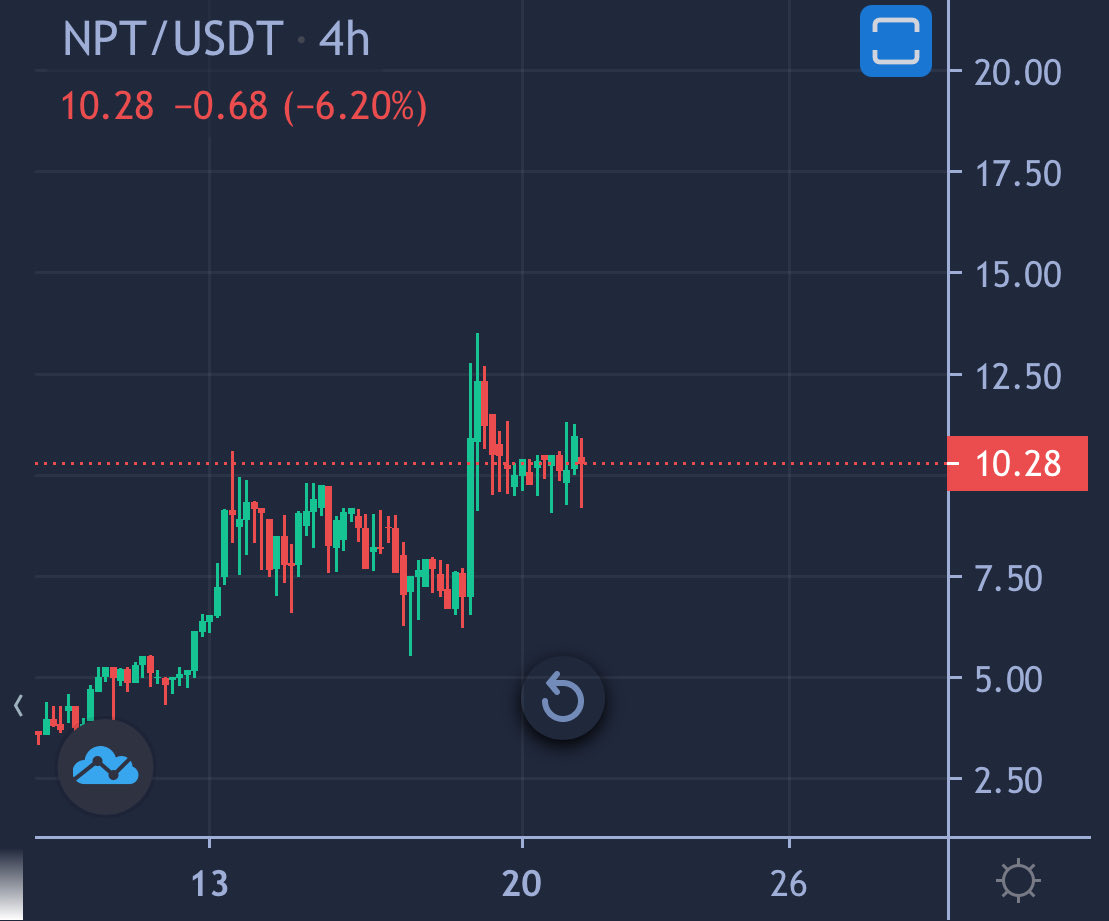
The chart has seen a healthy climb followed by a clean cooldown, exactly the phase where smart money accumulates. This is where you top up and set your limit orders, not after a breakout. Remember, the last time I said to do this was in the $6 range… and then it blasted to $13, just saying 📈
𝗤𝘂𝗶𝗲𝘁 ≠ 𝘀𝘁𝗮𝗴𝗻𝗮𝗻𝘁
The devs are devving. Nobody is asleep at the wheel. Let’s dive into a few more catalysts.
⸻
1. 𝗥𝗲𝗯𝗿𝗮𝗻𝗱 𝗜𝗻𝗰𝗼𝗺𝗶𝗻𝗴
@NeptuneCash is getting a polished, professional visual identity to match the sophistication of its tech — led by the same branding talent that helped shape $KAS in its early stages (@rhubarbmedia).
2. 𝗪𝗲𝗯 𝗪𝗮𝗹𝗹𝗲𝘁 𝗡𝗲𝗮𝗿𝗶𝗻𝗴 𝗥𝗲𝗹𝗲𝗮𝘀𝗲
One of the most requested features is almost here: a simple, clean, web wallet for self-custody.
3. 𝗖𝗘𝗫 𝗗𝗶𝘀𝗰𝘂𝘀𝘀𝗶𝗼𝗻𝘀 𝗢𝗻𝗴𝗼𝗶𝗻𝗴
Higher-tier exchange listings are being finalized. Visibility + accessibility = fuel. Load up now while it’s still only on @safetrade, those days are limited.
4. 𝗠𝗮𝗿𝗸𝗲𝘁𝗶𝗻𝗴 𝗘𝗳𝗳𝗼𝗿𝘁𝘀 𝗔𝗰𝗰𝗲𝗹𝗲𝗿𝗮𝘁𝗶𝗻𝗴
A coordinated content, education, and narrative strategy is underway. Cleaner messaging → stronger positioning → broader reach → more liquidity.
⸻
𝗪𝗵𝗮𝘁’𝘀 𝗖𝘂𝗿𝗿𝗲𝗻𝘁𝗹𝘆 𝗕𝗲𝗶𝗻𝗴 𝗕𝘂𝗶𝗹𝘁
• Parallel block download for faster sync
• Major UX / usability improvements
• Succinctness work to reduce historical bloat
• Triton VM proving optimization (faster proofs = real scaling)
• Modernizing codebase for 3rd-party dev support
• Replacing tarpc with JSON/REST frameworks
• Continued discussions regarding future bridging
⸻
𝗧𝗵𝗲 𝗕𝗶𝗴𝗴𝗲𝗿 𝗣𝗶𝗰𝘁𝘂𝗿𝗲
Neptune isn’t just building “another chain.”
It’s building a private, fully scalable/programmable ecosystem designed to survive post-quantum reality.
If you see it, you see it.
If you don’t… you’ll probably see it later — at a higher price 😏
$NPT exchange listings on the horizon.
Expansion incoming.
This is the type of L1 that you can look back at a year from now and sit in amazement of how you nailed a 100x’r.
I personally don't think it's a good idea to antagonize the v1 punk community. Why? Because it's a surefire way to forge a determined adversary...especially one who doesn’t care.
It would be neither difficult nor expensive for someone to deploy a flash-loan-powered bot to “bid reset” every v2 listing ... aliens, apes, zombies included... batched every five minutes, around the clock. In the short term, that would significantly disrupt the unwrapped v2 marketplace. In the long term, it would all but force a workaround, likely involving wrapping v2s just to restore basic bidding functionality.
And once both v1s and v2s are seen as “broken,” the question writes itself: If neither works properly, what’s the value proposition at all?
As an owner of both projects, I’d far prefer a future where v1 and v2 holders show mutual respect and build a market that thrives together — rather than tear each other down.
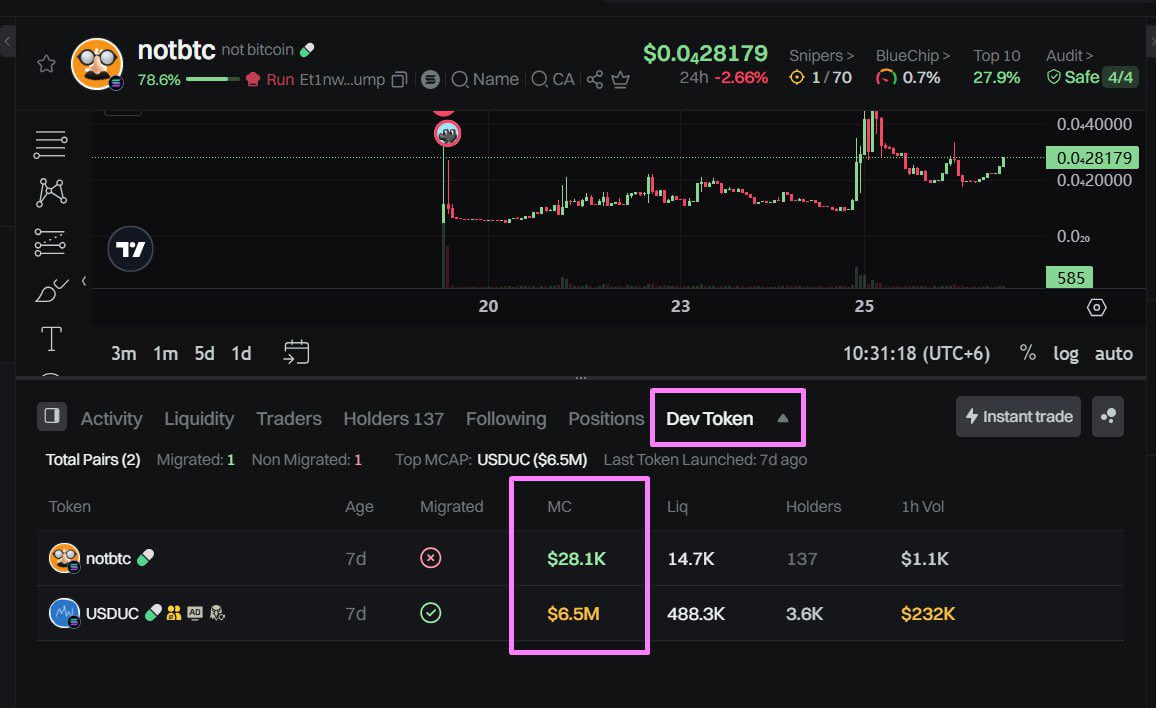
28k mcap
“Not bitcoin”
$NOTBTC
— Gamble play
— Not bitcoin $NOTBTC also deployed by unstable coin dev $USDUC
— Both two have same narratives
— Still on pumpfun
USDUC at 6m mc
NOTBTC at 28k 🤣
I saw many coins that made by #FARTCOIN dev reaching 3-10m mcap n more so why not this 28k can do some numbers?
https://t.co/HGhvdMHG0h
Et1nwX1U2PrS1A4iRvFcd6LGzYWh1C33iHvKWBCVpump
$mew $bonk $wif $dog $goat $king $him
I should charge $99 for this…but today, it’s free.
If you want to build AI Agents, this "AI Agents Mastery Guide" will change everything.
→ Learn how AI Agents actually work
→ Set up your own in 1 weekend
→ 20+ disruptive ideas and frameworks
RT + comment "Agent" and I'll DM you the full guide.
(Must be following)