At Platzi we’re renewing our React.js and React Native courses.
Looking at the roadmap I keep asking myself: by the end of 2026, will people still write frontend framework JavaScript by hand?
I think Codex, Claude Code, Cursor, etc... will do most of it.
What should developers learn now? Fundamentals: HTML, CSS, JS, how the web works, for sure.
Frameworks? I’m not so sure...
I've got an agent in a loop optimizing a renderer with the goal to minimize frame times (and tests to measure). It got times down from 88ms to 2ms and allocations down from ~150K to 500. Sounds good, right? Wrong. This is exactly why agent psychosis is a big fucking problem.
As an experiment, I rewrote the Ghostty core render state in Go, with access to identically laid out data structures as Ghostty and the exact same validation tests. I made a purposely naive renderer (simple, correct, but slow). 88ms per frame with 150,000 allocations (horrendous, lol)!
I then kickstarted a Ralph loop to bring the frame times down. I told it it can't modify input data structures or the public API or tests (they're correct), but it can do anything else it wants. It got to work.
It has worked for about 4 hours. I've spent around $350 on this experiment so far. The results?
88ms => 1.5ms
150K allocs => ~500 allocs
Incredible right? Nope.
My hand-written renderer I ported has frame times (same benchmark) of ~20us (0.020ms) and 0 allocations in the update path.
This is the problem with psychosis and lacking systems understanding. If you don't understand the system, you're going to accept that this is an incredible result. If you understand the system, you'll see better solutions immediately and can do roughly 75x better on throughput.
The people who blindly trust agent output are in the former camp. They're sheeple, overdrinking from a fountain of mediocrity.
Standard disclaimer: I use AI all the time. I like AI. The point I'm making is to not blindly accept results. Think. Analyze. Learn.
Anthropic describe opus 4.7 como un modelo orientado a complex reasoning, long-running tasks y systems engineering.
Mientras tanto, sonnet 4.6 está mucho más optimizado para velocidad, coding iterativo y costo/performance.
Por eso esta estrategia me viene funcionando MUY bien:
/model opusplan (Opus plan y Sonnet ejecuta)
Opus:
- arquitectura
- planning
- edge cases y tradeoffs
Sonnet:
- escribir código
- refactors
- pruebas
Y además tiene otro beneficio importante:
consumo de tokens.
Opus razona increíblemente bien, pero los loops largos con Opus consumen muchos más tokens.
Entonces dejo que piense el problema una vez y uso Sonnet para toda la parte iterativa.
Mi estimado piloto… tu todavía no lo sabes, pero tu vida va a cambiar para bien gracias a tu ingenio, ganas de salir adelante y sobre todo a que aparentemente nada te detiene.
¿Nos ayudan a encontrarlo?
🚨 We recently discovered that an unauthorized party obtained a token with access to the Grafana Labs GitHub environment, enabling the threat actor to download our codebase. (1/6)
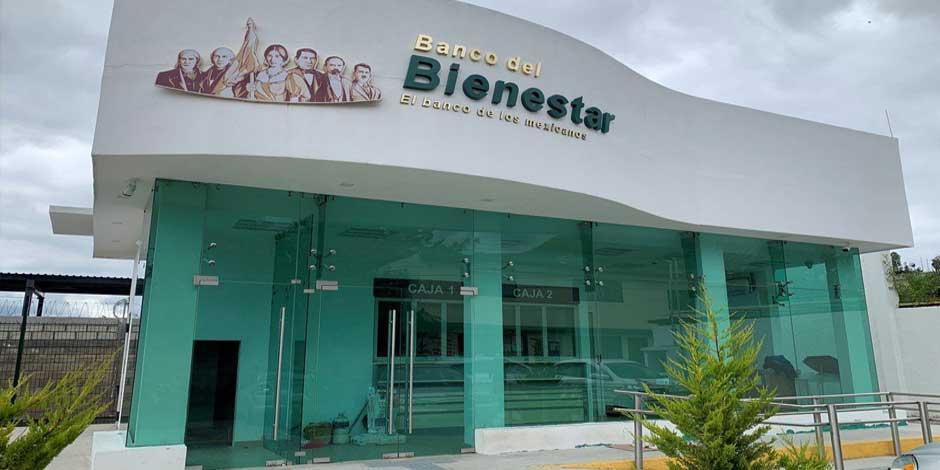
🇲🇽👉🏻El Banco del Bienestar ha costado una fortuna: alrededor de 25 mil millones en infraestructura y cerca de 90 mil millones en operación. En total, unos 115 mil millones de pesos del erario.
El banco no es rentable, no otorga préstamos, no funciona como un banco convencional, simplemente existe para cobrar programas sociales y enviar remesas.
¿Cuál es la razón de su existencia entonces? No sería extraño que fuera una institución fachada para lavar dinero.
Caso absurdo: Magdalena Mixtepec, Oaxaca. Un municipio de apenas 1,500 habitantes que en 2025 recibió más de 12 millones de dólares en remesas. Eso da cifras ridículas por persona y por vivienda. No cuadra por ningún lado.
Cuando ves flujos millonarios en pueblos diminutos, total opacidad en activos y pasivos, y una red bancaria sin lógica financiera, algo huele mal.
Muy probablemente en estos pueblos de usos y costumbres, el Banco del Bienestar funcione para blanquear dinero, haciéndolo pasar por remesas. Y que ese mismo efectivo sea utilizado para mantener estructural electoral.
Ojalá algún día salga a la luz todo lo que hay detrás de los Bancos del Bienestar.
Esta imagen me hizo mucho click
La barrera de los tutoriales y la preparación infinita, en lugar de llevar mano a mano el aprendizaje junto a la acción y afrontar las equivocaciones en el camino
Las nuevas generaciones de desarrolladores con Cursor + Copilot + Claude + Gemini
El senior con el IDE a pelo, su taza de café cuando le llaman para resolver las cagadas generadas con IA.
Tengo 35 años y cancer de mama metastásico, un caso raro, menos del 1% de tumores de mama son como el mío y hay poca documentación sobre ello.
Por eso me gustaría encontrar personas que se dediquen a esto y que quieran investigar con mi caso. Twitter haz tu magia