A fundamental lesson from my posts these last two weeks on modernization, industrial policy, and development is that development economics should be about understanding why South Korea got rich but Bolivia did not.
The current field has largely given up on that question. Sharply identified RCTs on small micro programs are a fine way to publish in the AER and get tenure at a fancy university, but a profession that knows everything about microfinance impact evaluations and almost nothing about industrialization has misallocated its own intellectual capital on a pretty heroic scale.
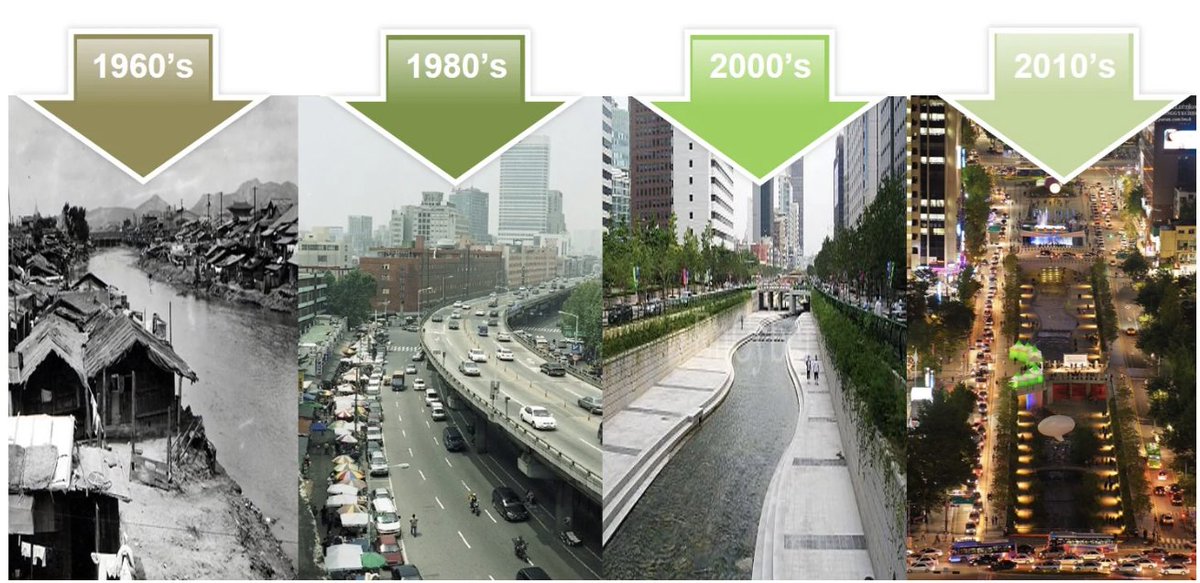
Four images of Seoul:
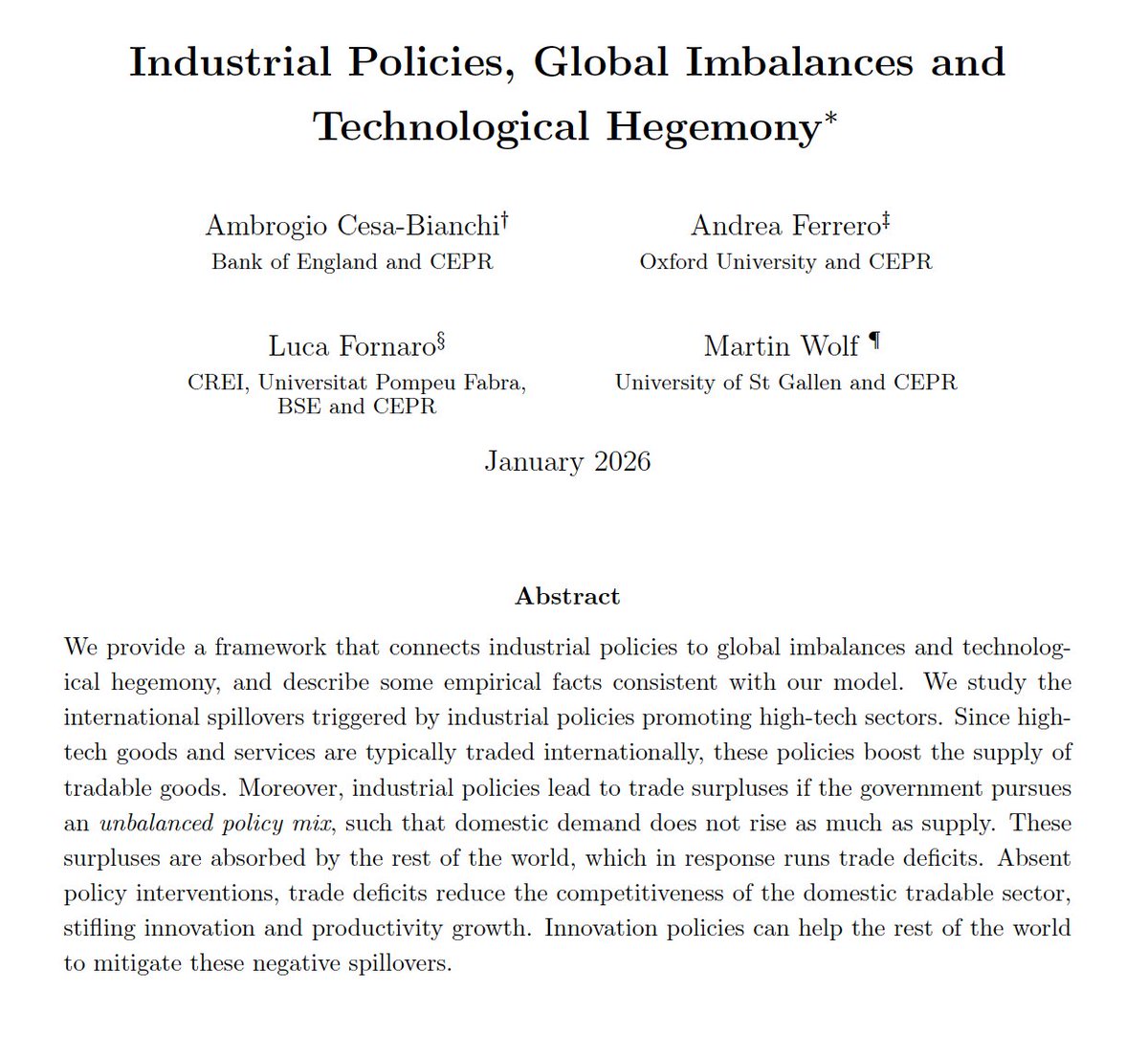
Industrial policies (IPs) are rarely connected to global imbalances. Yet, IPs are a key feature of many surplus countries. This new paper tackles three questions: Can IPs shape global imbalances? What are the spillovers to deficit countries? What policy responses are available?
Is firm-level efficiency killing global productivity?
Cost competitiveness boosts profits—but often reduces productivity at the system level.
👉 Why this matters for industrial policy: we show it using global labor requirements
50 free copies in the first comment
This quote from Gramsci captures exactly where I feel we are today:
"The old world is dying, and the new world struggles to be born: now is the time of monsters."
We have to fight the monsters, and help define the new world. Happy 2026. 😀
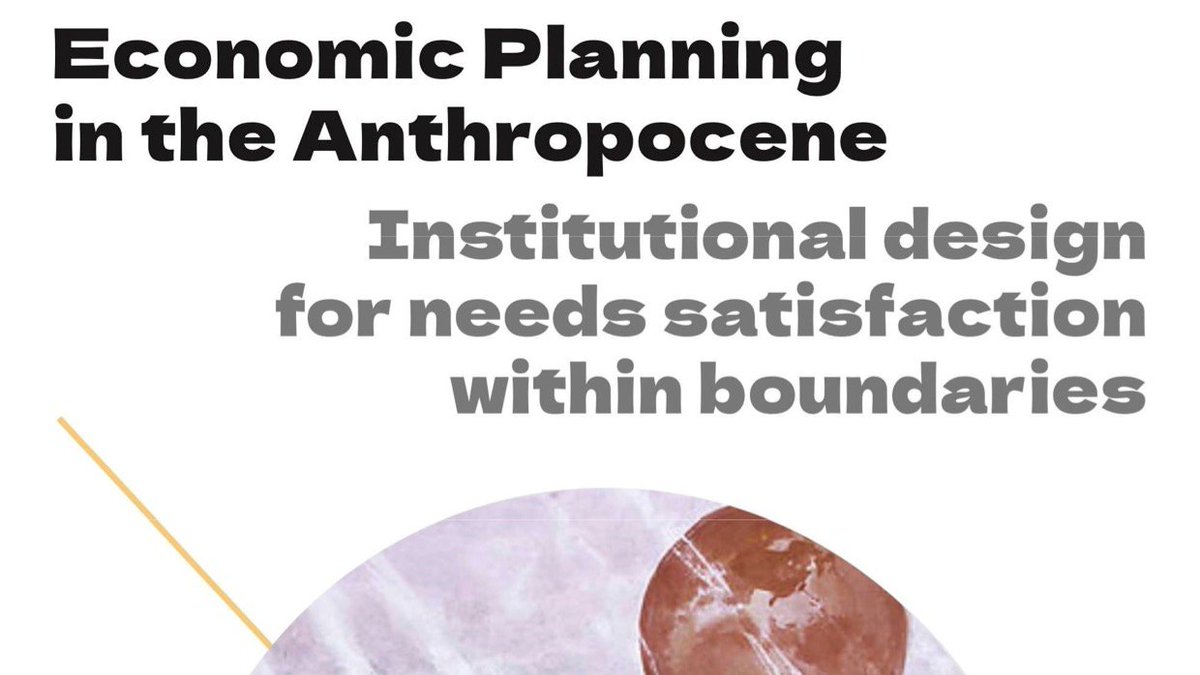
Is it possible to design a world where production is organised according to social, #community#needs and respecting #planetary#boundaries?
What are the techno-political basics needed for #democratically building such an alternative?
Join us in Geneva to discuss this & more!
New paper in Economic Modelling with @AndreaCoveri89 & #A_Zanfei:
Functional diversification lowers GVC exposure.
More functions ➡️ less vulnerability to disruptions
👉 https://t.co/fRPtrvjrVI
Great to see in the August issue of the NBER Digest a summary of our @nberpub paper, where we show how commercial #banks facilitated firms reorganizing their supply chains after the 2018-19 #Tariffs by providing both financial and informational support. @lalfaro
🧵 Post 5/5
🎓 Special PhD poster session during the welcome aperitif!
📍 Venue: the stunning Angevin Castle, Gaeta 🇮🇹
🎓 Organized by @uni_cassino & @Crem_TECH within the @EuropUnivTech network
📬 Info: [email protected]
🧵 Post 1/5
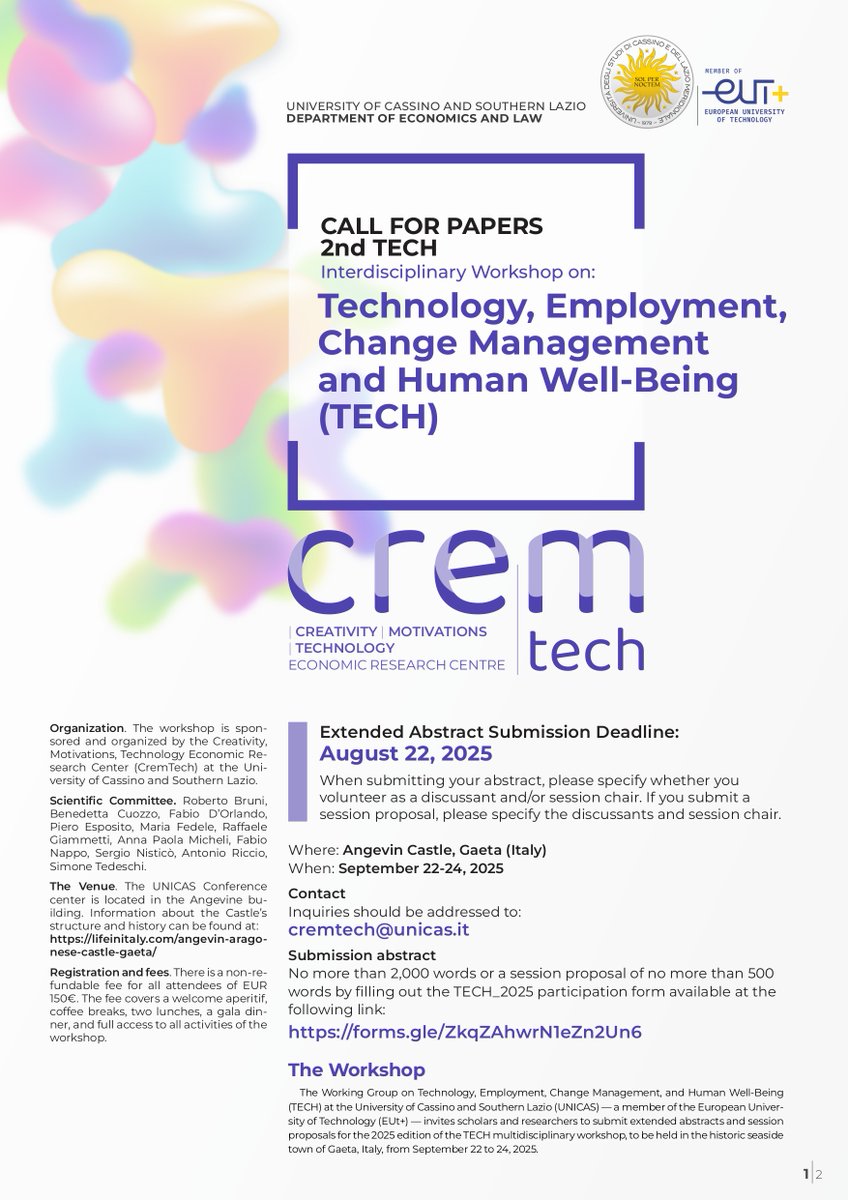
🔎 CALL FOR PAPERS – TECH 2025 📍 Gaeta, Italy 🗓️ 22–24 September 2025 📌 Deadline: 22 August
Join us at the 2nd Interdisciplinary Workshop on Technology, Employment, Change Management & Human Well-Being hosted by @uni_cassino & @Crem_TECH
👇
🧵 Post 4/5
🌍 Topics include:
• AI, automation & labor markets
• Big Tech & digital sovereignty
• Strategic autonomy & friend-shoring
• Inequality & human well-being
• CSR, behavioral econ, platform governance
• Policy in times of transition
Two centuries of unequal exchanges
To better understand the issues at stake, the World Inequality Lab recently published a historical study on global trade and financial imbalances since 1800
https://t.co/rlFCqLPYph
9/ 💡 So what do we learn?
Rewiring global production is possible — but uneven.
Resilience requires more than nearshoring — it needs a strategic fit between what countries produce and who demands it.
Geopolitical blocs may redistribute—not reduce—global exposure.
1/ 🚨 New in International Economics!
We simulate what happens when global production is rewired — backward to the past or fractured by geopolitics.
Spoiler: It’s not trade itself that shapes value-added outcomes, but how production fits with demand.
https://t.co/Q1h2EWdHA5
8/ 📊 At the sector level:
Industries with high forward GVC exposure (i.e. producing inputs used abroad) are most vulnerable to fragmentation.
Reconfiguring supply chains isn’t neutral — it reshapes who captures value across the global economy.