Spinoza offers us, no more and no less, a philosophy of power, freedom, and joy. Deleuze was one of the first contemporary thinkers to exploit its political implications … https://t.co/Gip2Ij50xG
"Philosophie ist eigentlich Heimweh — Trieb überall zu Hause zu sein."
"Philosophy is properly Home-sickness; the wish to be everywhere at home."
Novalis, Logical Fragments I.
"Neo-fascism, neo-imperialism – these terms are not radical enough to name the situation that already defines us. Only planetary vision will be adequate for perceiving the world we now inhabit together."
https://t.co/oc3Gcjs85K
French theory—the body of thought otherwise known as structuralism and post-structuralism—has been a polarizing force among students and scholars since it emerged. It came from the intellectual climate of postwar Paris, where the dominant school of thought had been existentialism. For some, the humanist emphasis that existentialism placed on the freely choosing individual felt naïve, or at least incomplete. By the sixties, it seemed that systems, not individuals, were the forces governing reality. Of the thinkers who began to take up these new philosophies, interested in the relationship between the system and the subject and the ways that language governs understanding were Jacques Lacan, Roland Barthes, Michel Foucault, Gilles Deleuze, and Jacques Derrida.
A new book—part memoir, part biography, and part philosophy primer—by Emily Eakin charts theory’s progression and the quirks of its progenitors, while explaining the work of eight famously difficult thinkers. It also traces Eakin’s own falling in, and out, of love with theory. “The book’s appeals to reader-friendliness can feel pandering,” Dayna Tortorici writes. “Then again, a little hand-holding isn’t unwelcome. Even the Frenchmen didn’t always understand one another’s work.” Read her review: https://t.co/viyf0Vvsue
Interview with @koheisaito0131
Marx in an Age of Breakdown: An Interview with Kohei Saito about Capital from Zero (@astrahousebooks)
by Howard Prosser
Free to read on the website
https://t.co/X3FqXVjWsR
Κείμενο του Γιώργου-Κωνσταντίνου Μιχαηλίδη στο περιοδικό Kaiak: Α Philosophical Journey για το βιβλίο του καθηγητή Γεράσιμου Κακολύρη, Jacques Derrida on the Aporias of Hospitality (Palgrave Macmillan 2024).
https://t.co/yF3orIoZlX
La dejé a medias en enero.
La he vuelto a empezar y la he terminado en apenas cuatro días.
Sencillamente no puedo concebir que nadie vivo sobre la faz de la tierra escriba un mejor libro que el que ha pergeñado este señor.
No sabría ni por dónde empezar a glosarla.
"The Inexorable Fall" compiles my research on the self destructive tendencies of capitalism, in both its economic and social dimensions. You can buy it now as an ebook or paperback! https://t.co/IGtZhRlSTG
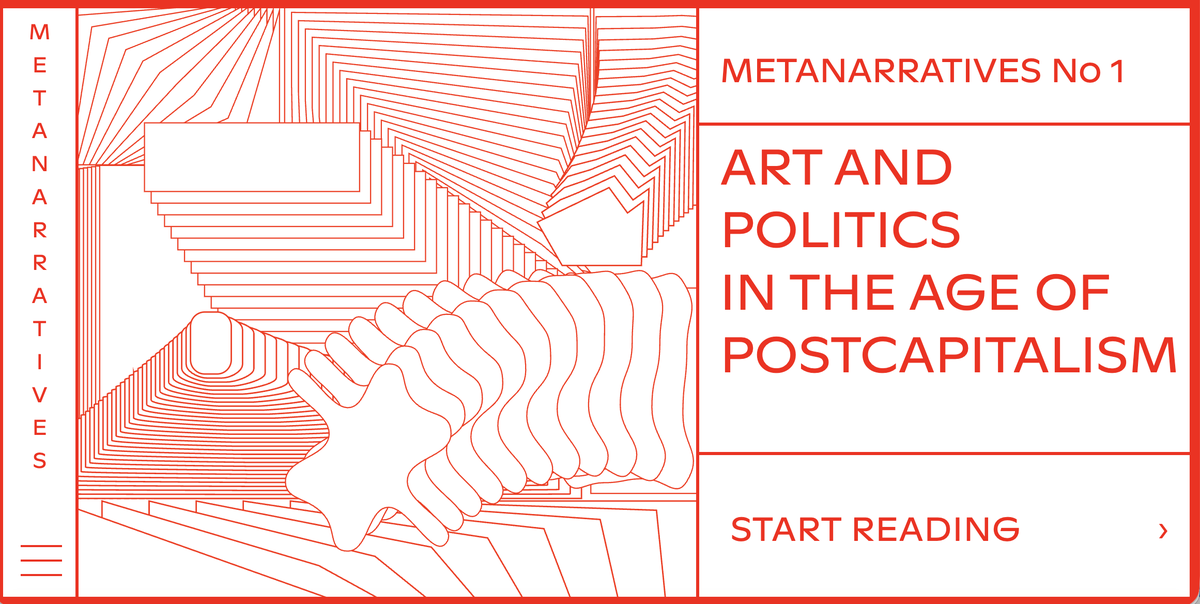
Metanarratives: A splendid new magazine's first issue on ART & POLITICS in the AGE of POSTCAPITALISM (where postcaputalism, rather than the socialism we dreamed of, has turned out to be Rosa's BARBARISM). With contributions from Rana Abdulfattah, Alain Alameddine, Shoja Azari, Ashraf Aziz, Rüdiger Brandisk Alasdair Cannon, Angela Dimitrakaki, Inua Ellams, Suzanna Fitzpatrick, Vaios Kolofotias, Beral Madra, Danielle Maisano, Raoul Martinez, Shirin Neshat, Nikos Papastergiadis, Nasrin Parvaz, Alexandra Petrus, Xaviera Ringeling, Jacob Smith
Elettra Stamboulis
https://t.co/1BQOeGf3UG
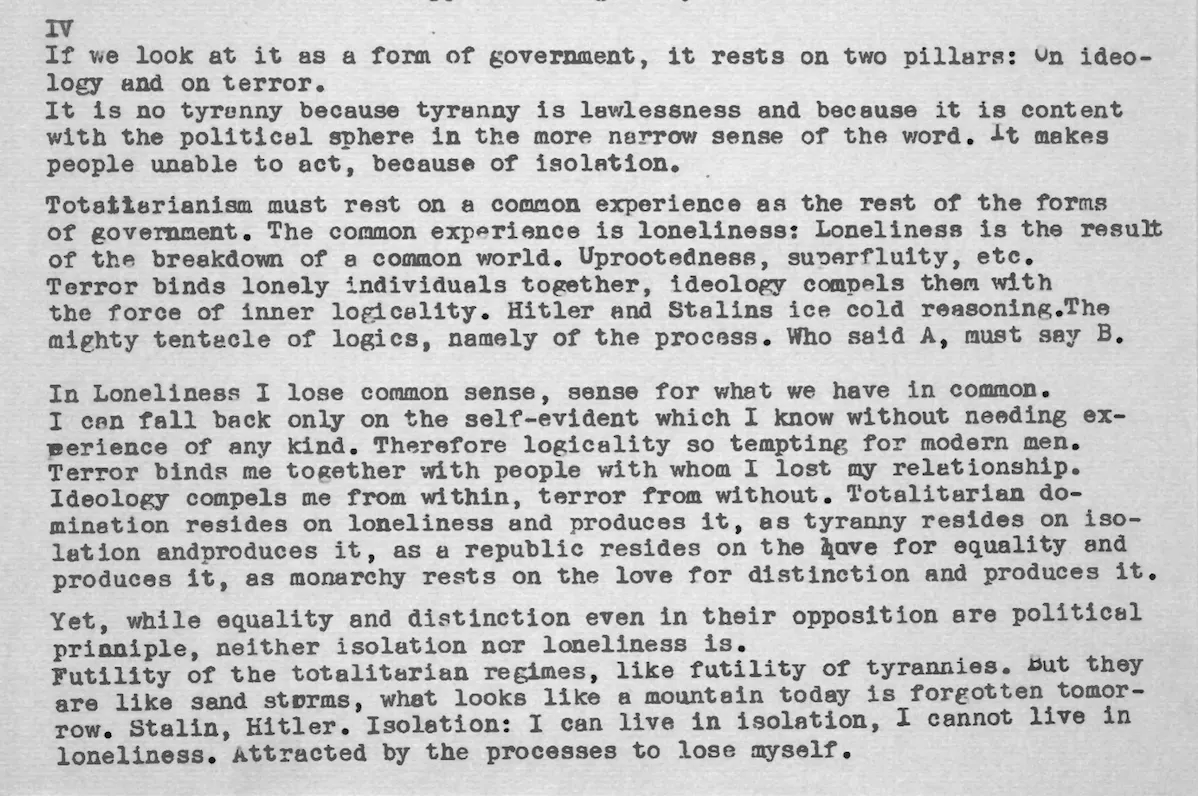
“Totalitarian domination resides on loneliness and produces it”
"Loneliness is the breakdown of the common world."
"In loneliness I lose common sense, sense for what we have in common."
"I can live in isolation, I cannot live in loneliness."
— Hannah Arendt
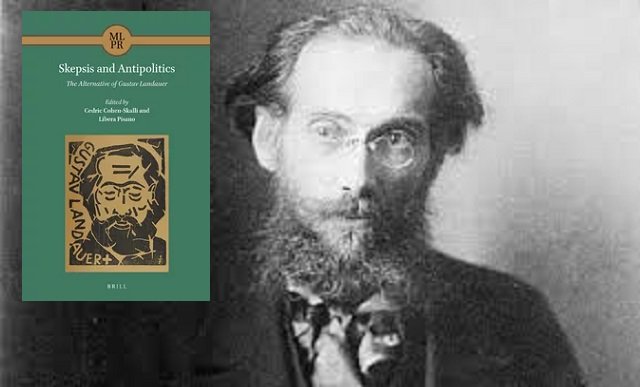
Landauer's «antipolitics not only has the negative meaning of a rejection of current politics, but also the positive one of calling for a subversion of the modern symbolic and material order based on the sovereignty of the state and its representative and institutional system».
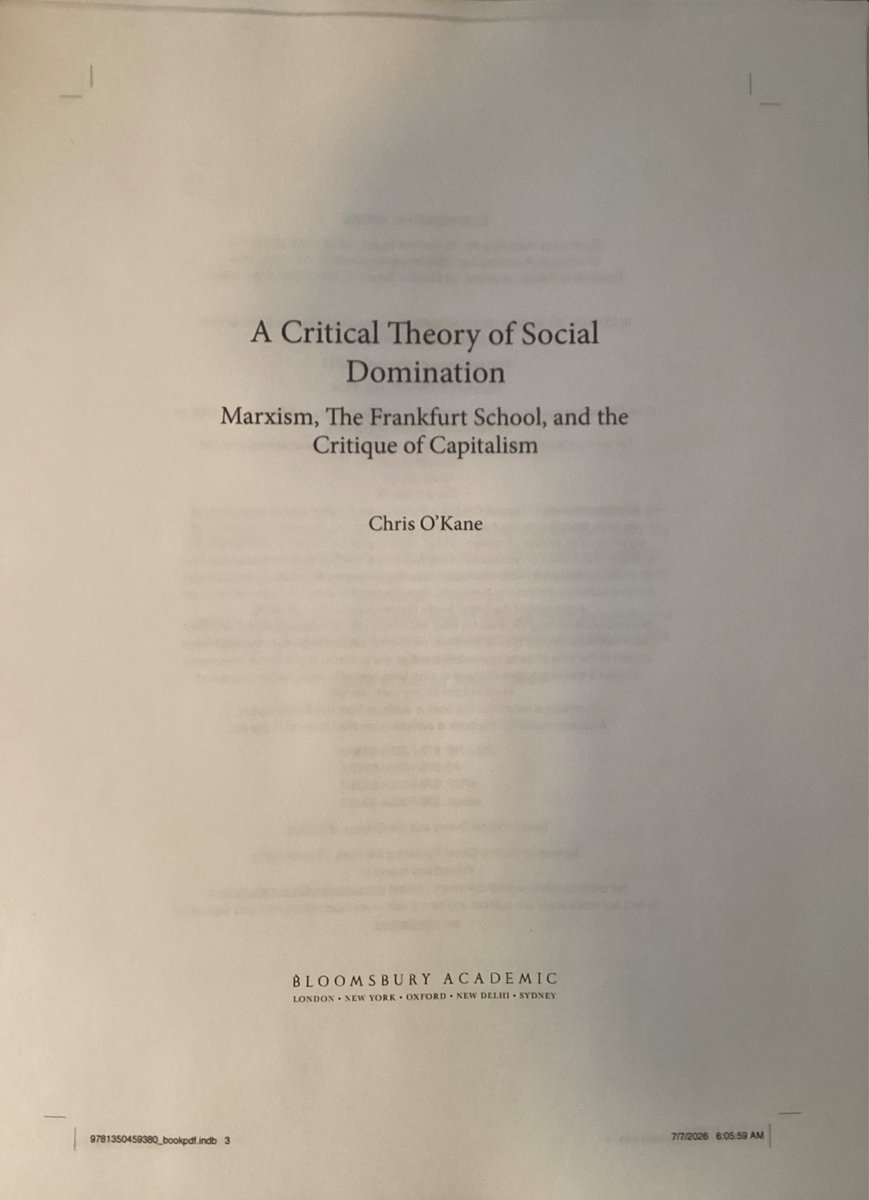
Η κριτική σκέψη απαιτεί σήμερα να πάρει κανείς το μέρος των υπολλειμάτων της ελευθερίας, να στηρίξει τις τάσεις προς την πραγματική ανθρωπιά, ακόμη και αν αυτές μπροστά στο βασικό ρεύμα της ιστορίας φαίνονται ανίσχυρες - Adorno & Horkheimer
Rethinking Capital Punishment by Peter Garnsey
Until the 18th century, the death penalty was accepted universally. This study investigates the origins of the case for its abolition.
📘 https://t.co/mX1UqSX9im
#intellectualhistory#historyofideas