This is an excellent project comparing the language of the current anti-Israel movement and the Soviet antizionism campaign. The overlap is enormous and in large measure identical. https://t.co/f9MrhTjCXV
Terminal-stage Israelophobia makes it perfectly possible to peddle the "livestreamed genocide" bullshit while simultaneously parroting the low-IQ conspiracy claim that "Israel doesn't allow journalists into Gaza because it has something to hide".
Because basic logic is "spiritually Zionist".
Who is missing from your table?
When the Torah tells us to rejoice on Sukkot, it names the people who should share in that joy.
In Devarim 16:14, the circle extends from our household to the Levite, the stranger, the orphan, and the widow.
I find something deeply moving in that list.
The Torah makes us look beyond the people we would naturally remember to invite. It draws our attention to those whose place at a table may be less certain.
Someone new to the community.
Someone whose home has grown painfully quiet.
Someone who says, “I’m fine,” because explaining the loneliness would take longer than anyone seems willing to listen.
I keep thinking about how easily we mistake silence for contentment.
We assume that people have plans.
That someone else has called.
That they would ask if they needed company.
But asking to be included can feel harder than spending the evening alone.
An invitation can lift that burden.
“I’m setting a place for you.”
There is a particular kindness in those words. They allow someone to arrive knowing they were wanted before they had to explain why they needed to come.
And there is room at the table for more than one kind of presence: the person ready to laugh, the person who mostly listens, the person whose joy still carries grief.
We can welcome each of them without asking them to arrive in a better mood.
That is what I hear in the Torah’s widening circle: a responsibility to help make rejoicing possible for someone else.
May we notice the person who has quietly slipped out of view.
May our invitations be sincere, our welcome warm, and our attention generous.
A temporary dwelling can leave someone with a lasting memory:
They thought of me.
There was a place for me. ✡️
The savagery of October 7 caused too much cognitive dissonance with the progressive image of noble white-hearted Palestinian and wicked Israeli. They NEED the genocide narrative as a psychological corrective to return equilibrium to their internal worldview.
UN Secretary-General António Guterres said: “I have never seen killing and destruction like Gaza in all my years as Secretary-General.”
According to even the most critical reports, Guterres, 70,000 people were killed in the war in Gaza, a large proportion of them Hamas terrorists.
During your years as Secretary-General: more than 600,000 people were massacred or starved to death in Ethiopia.
377,000 died in Yemen — that figure appears in reports issued by your own organization.
150,000 were killed in Sudan and 12 million were displaced.
Hundreds of thousands have been buried in Ukraine.
You didn’t see it? They died before your eyes. You simply looked the other way, because the Jews couldn’t be blamed.
Prime Minister Benjamin Netanyahu, today at the UN General Assembly with a Starlink device:
“This is a communications device that enables people to access the truth. That is what the Iranian regime fears. It spends billions to censor the internet.
I’m going to leave this device with the Iranian delegation. When they inevitably defect, they’ll be able to tell their story on social media.
One day and that day is not far off, the Iranian people will be free, and their murderous regime will fall.”
If I were to tell you 1800 years ago, one day, the Colosseum in Rome would lie in ruins, and the Jewish people's temporary Sukkah they build yearly would outlast it, you would say I'm crazy, but here we are.
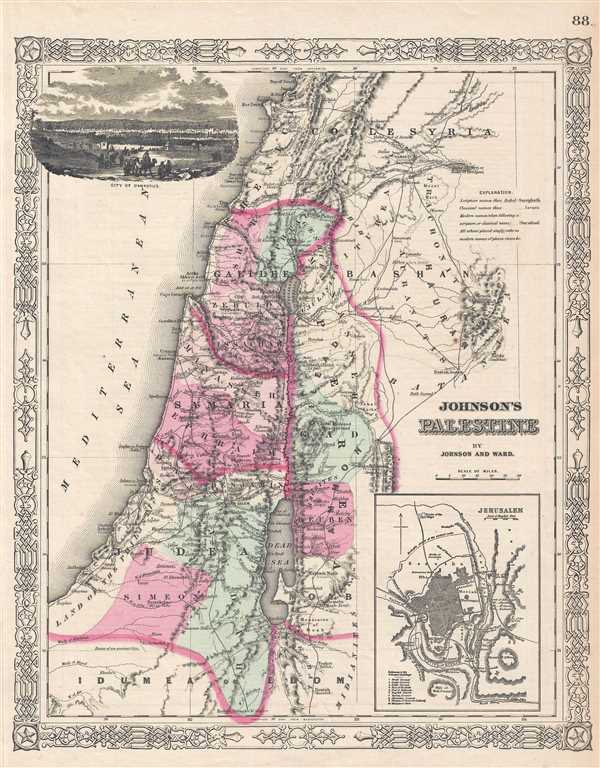
For 1,800 years if you asked a European, they would tell you that Judea, Samaria, and Galilee were regions of Palestine.
If you said that today, it would probably manage to unite all sides in anger.
This is not the first time Guterres has made the insanely hyperbolic claim that the killing in Gaza is "unlike anything he has witnessed in his years as UN Secretary-General". He's been pumping essentially the same line for more than two years, and it remains as absurd today as it was the first time he invoked it.
Even if we take the Hamas-sourced figures at face value, Gaza's reported death toll is nowhere near the top of the list for the nearly ten years since Guterres took office in 2017.
According to the Armed Conflict Location & Event Data (ACLED) database, during that period approximately 275,000 fatalities have been reported in Ukraine, 203,000 in Afghanistan, 144,000 in Syria, 135,000 in Yemen, 106,000 in Myanmar and 94,000 in Nigeria - all well above the claimed Gaza figure.
So why keep making such grossly exaggerated and obviously false claims?
The reason is what I call "negative exceptionalism" - a compulsive tendency to describe virtually everything involving Israel in uniquely hyperbolic terms.
A terrible war cannot simply be terrible - it must be unprecedented.
The killing cannot simply be extensive - it must be unlike anything seen elsewhere.
Food shortages cannot simply be severe - they have to become an unimaginable "man-made famine", supposedly cramming "80% of the world's hungriest people" into one tiny place.
And this is where the pattern becomes self-reinforcing.
The claim that Gaza is uniquely horrific is used to justify an extraordinary, obsessive level of attention. And that obsessive attention then ensures that every death, every destroyed building and every individual tragedy is documented, broadcast and emotionally amplified on a scale no other conflict has ever received.
That unprecedented visibility is then mistaken for unprecedented severity.
The result is a spiral of ever-escalating demagoguery: the more Gaza is portrayed as uniquely horrific, the more attention it receives; the more attention it receives, the more uniquely horrific it appears; and that perception then becomes the justification for still more extreme rhetoric.
So negative exceptionalism drives the obsession, while the obsession continuously reinforces the negative exceptionalism.
It is long past time to break that toxic self-reinforcing loop.
That does not require minimizing Palestinian suffering or defending every aspect of Israel's conduct. What it does demand is abandoning the hysteria, restoring a sense of proportion, and reconnecting with reality as it actually is, rather than filtering everything through ideologically driven over-the-top theatrics.
Believe it or not, this "third holiest site" line sounds even more delusional in Arabic: The original phrase is Ṯāliṯ al-Ḥaramayn aš-Šarifayn, literally "the 3rd of the Two Noble Sanctuaries", which makes as much sense as talking about your car's 5th wheel.