@educationgovuk There were 4.2 million children living in poverty in the UK in 2018-19. That's 30 per cent of children, or nine in a classroom of 30. (source: DWP Households Below Average Income, Statistics 1994/95 to 2018/19, Tables 4a and 4b. Department for Work and Pensions, 2020)
@AndrewKersley@_TheLondoner That’s a brilliant bit of work. Tragic story that needs to be followed up to hold those bodies that failed Tracey & Joan accountable. Thank you.
Your brain has a circuit that doesn't know you live in a city. Its only job is to monitor whether birds are still singing. Right now, in this room, it is on.
The circuit predates primates. Mammals have been using ambient soundscape continuity as a predator-detection system for roughly 200 million years. Birds stop singing when something larger moves through their territory. For most of mammalian history, a forest full of song meant no large predator was nearby, and the cessation of sound was the warning. Your nervous system never updated this software.
The Max Planck Institute tested the inverse in 2022 with 295 participants. Six minutes of birdsong dropped anxiety with a medium effect size. Six minutes of traffic noise raised depression with the same. The effect worked on subjects who lived in dense urban environments and had no regular contact with nature. The brain still ran the check.
Birdsong sits in the 1,000 to 8,000 Hz range. Your brainstem reads continuous patterns in that band as a signal that nothing dangerous is currently moving through the environment. EEG data shows birdsong at 45 to 50 decibels boosts alpha wave activity by 14.1% relative to silence. Alpha is the brainwave signature of relaxed alertness. Push the same birdsong above 60 decibels and the response flips. Stress markers rise 29%. The circuit only trusts the signal at the volume of quiet conversation, which is exactly the volume birds sing at from a typical distance.
Three things happen simultaneously when the brain registers ambient safety. The amygdala downregulates. The parasympathetic nervous system takes over from the sympathetic. Heart rate variability rises, cortisol drops. The posterior cingulate cortex, which sits at the center of the rumination circuit, quiets down. King's College London tracked this through a smartphone study with over 1,200 participants and found the mood lift lasted hours after the sound stopped. People diagnosed with depression got the same response as healthy controls.
Most of what gets labeled mental fatigue is hypervigilance running in the background. Birdsong tells the circuit it can stand down, and the brain reallocates the freed compute everywhere else.
A quiet park feels different from a quiet office because the parks have sentinels.
It’s that time of year - folks asking us about #bumblebees - WHY THEY’RE SEEING THEM ON THE GROUND - so here’s a thread to explain.
Please #retweet!
Every queen that survives means a new colony that gets to exist & produce queen #bees for next year!
So important to #share!
1/9
The math on this project should mass-humble every AI lab on the planet.
1 cubic millimeter. One-millionth of a human brain. Harvard and Google spent 10 years mapping it. The imaging alone took 326 days. They sliced the tissue into 5,000 wafers each 30 nanometers thick, ran them through a $6 million electron microscope, then needed Google’s ML models to stitch the 3D reconstruction because no human team could process the output.
The result: 57,000 cells, 150 million synapses, 230 millimeters of blood vessels, compressed into 1.4 petabytes of raw data. For context, 1.4 petabytes is roughly 1.4 million gigabytes. From a speck smaller than a grain of rice.
Now scale that. The full human brain is one million times larger. Mapping the whole thing at this resolution would produce approximately 1.4 zettabytes of data. That’s roughly equal to all the data generated on Earth in a single year. The storage alone would cost an estimated $50 billion and require a 140-acre data center, which would make it the largest on the planet.
And they found things textbooks don’t contain. One neuron had over 5,000 connection points. Some axons had coiled themselves into tight whorls for completely unknown reasons. Pairs of cell clusters grew in mirror images of each other. Jeff Lichtman, the Harvard lead, said there’s “a chasm between what we already know and what we need to know.”
This is why the next step isn’t a human brain. It’s a mouse hippocampus, 10 cubic millimeters, over the next five years. Because even a mouse brain is 1,000x larger than what they just mapped, and the full mouse connectome is the proof of concept before anyone attempts the human one.
We’re building AI systems that loosely mimic neural networks while still unable to fully read the wiring diagram of a single cubic millimeter of the thing we’re trying to imitate. The original is 1.4 petabytes per millionth of its volume. Every AI model on Earth fits in a fraction of that.
The brain runs on 20 watts and fits in your skull. The data center required to merely describe one-millionth of it would span 140 acres.
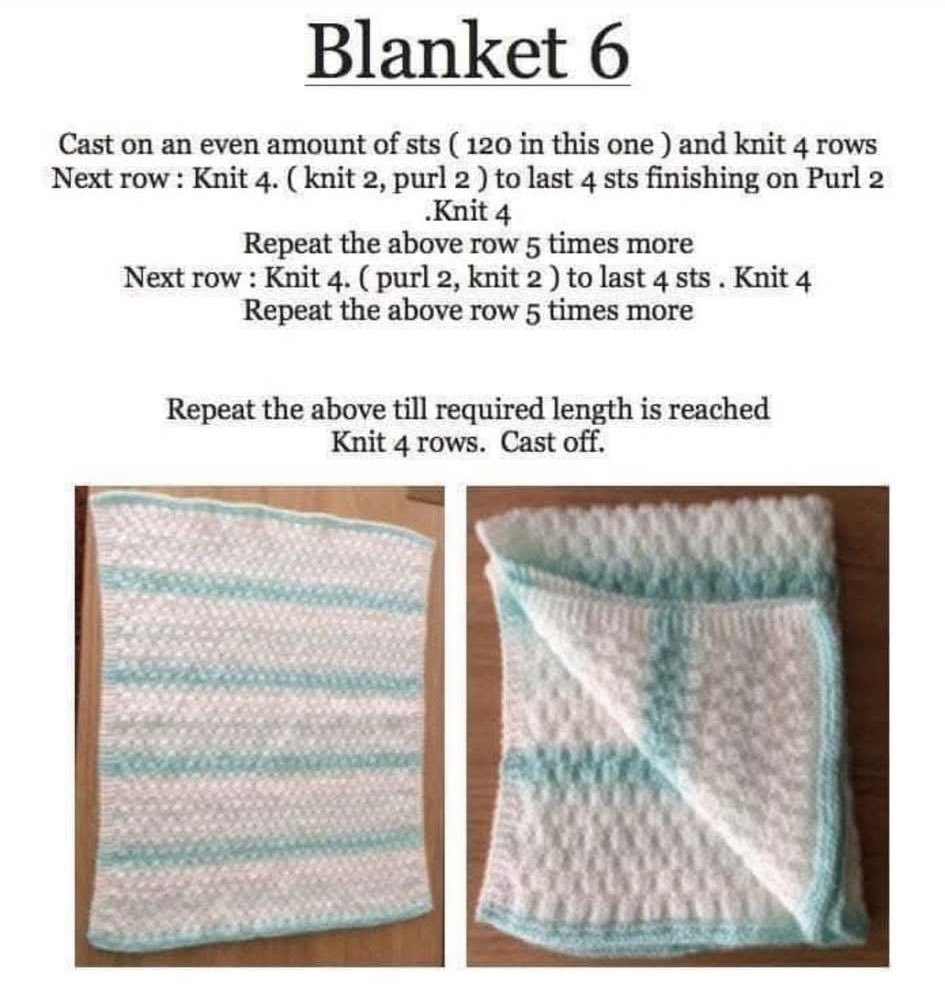
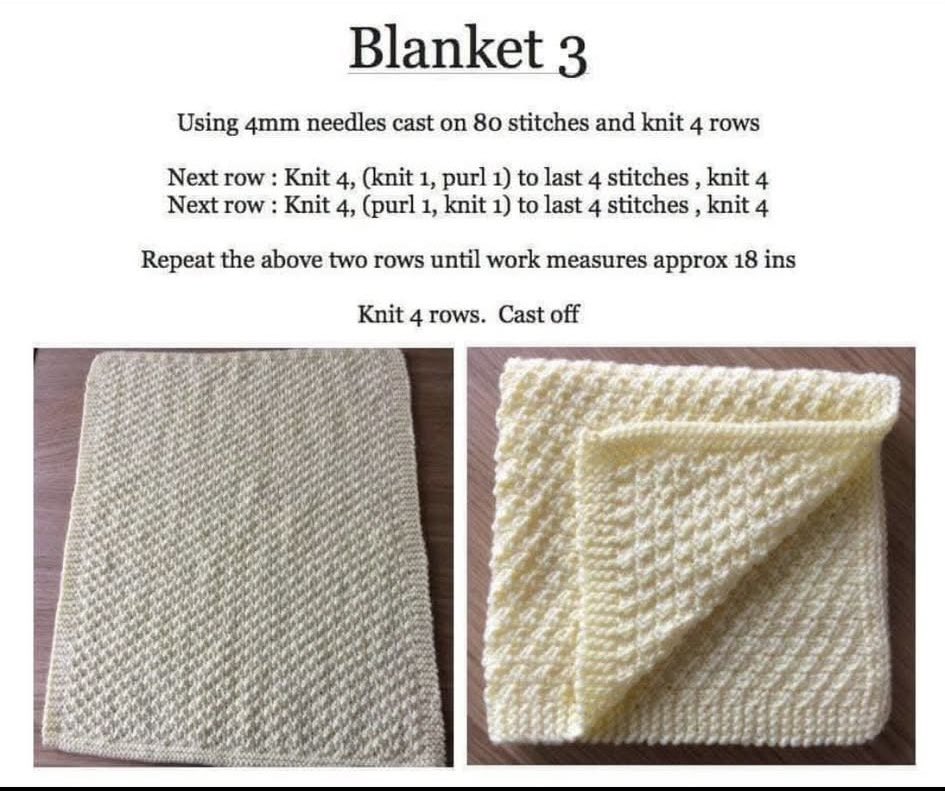
If anyone in the Norwich area know of any lovely ladies (or gentlemen) who are able to knit some blankets for our NICU babies at NNUH, we are in desperate need 🙏🏻🙏🏻
The patterns we use are below.
Thank you!
#NorwichKnitters#NICU
💔I admit that I never imagined the depth of sacrifice Iranians are capable of.
Milad Hassan Zadeh, a 17-year-old boy, left a farewell note for his family before heading out to protest.
I’m sharing his words because that was his own request, to make sure his voice would be heard. Let’s make sure his wish is honored.
“I’m heading out to the protests. If I am killed, or if I am arrested, know that I chose to live with honor and dignity.
If I am meant to die, then it is better that I die on the path of courage and honor.
Whatever happens to me, I want the news to spread like an explosion, so that I become a model for the rest of my generation. January 2, 2026, signed by Milad Hassan Zadeh.”