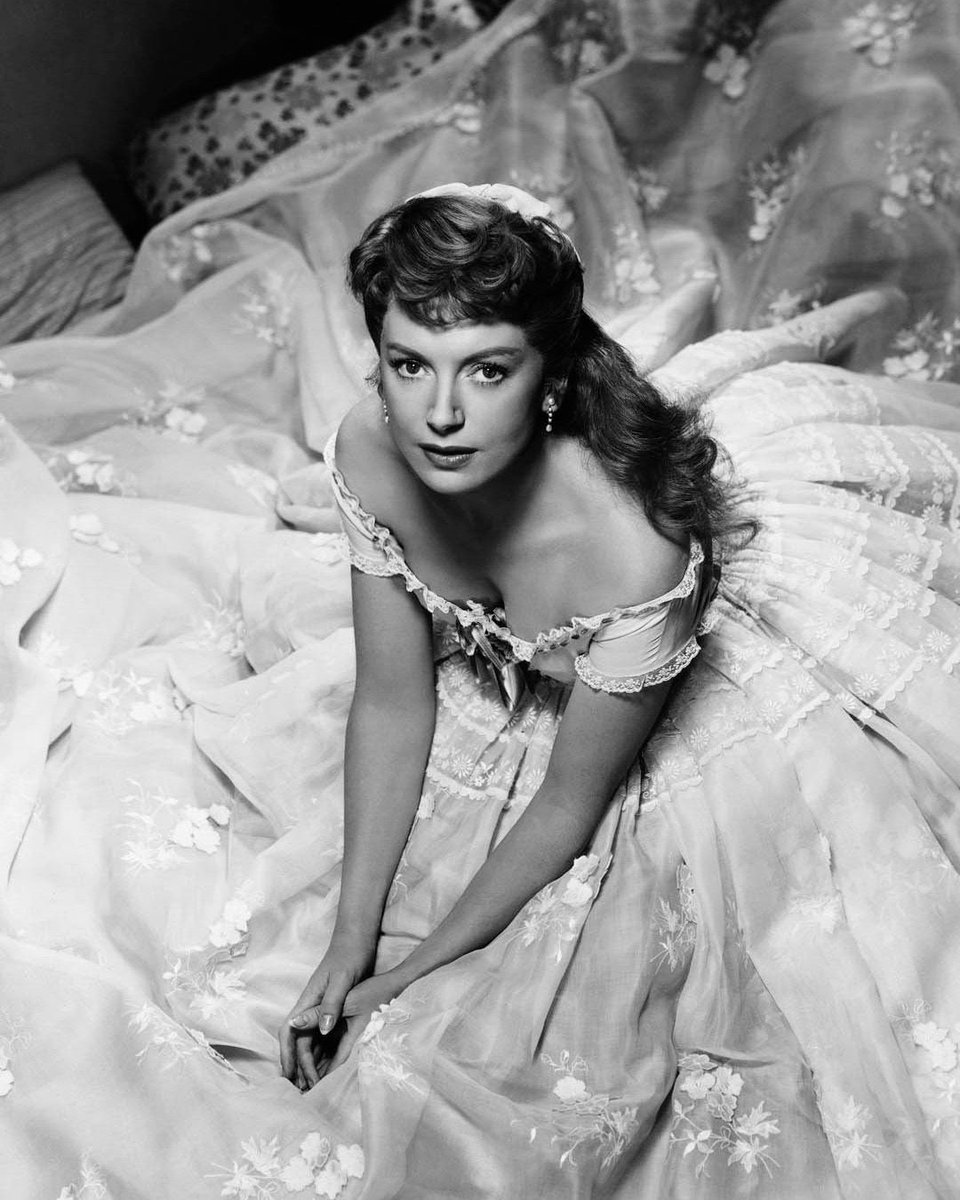
On this day in 1921: Actress Deborah Kerr was born in Glasgow. She became one of the most iconic leading ladies of Hollywood's Golden Age. Known for her poise and undeniable elegance, she starred in timeless classics like The King and I (pictured) and From Here to Eternity.
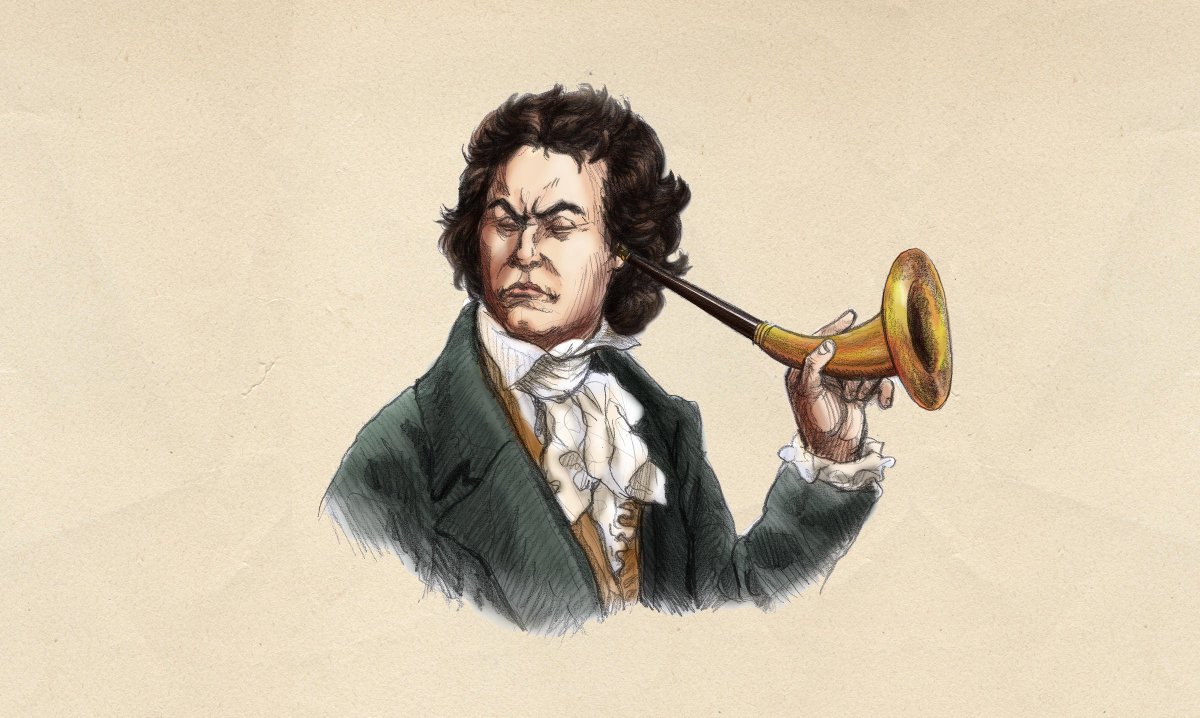
Ludwig van Beethoven began losing his hearing in his late twenties around 1798 and was completely deaf by his mid-40s, yet he composed some of his greatest masterpieces in total silence. Around age 28, Beethoven noticed ringing and buzzing in his ears (tinnitus) and had trouble hearing high-pitched notes and quiet speech. Terrified that his career would end, he hid his condition for years and withdrew from social life, making him appear harsh or antisocial....
In 1802, Beethoven retreated to the village of Heiligenstadt on medical advice, hoping quiet and rest might slow the terrifying decline of his hearing. Instead, his condition worsened. In private despair, he wrote a long letter to his brothers Carl and Johann, confessing the truth he had hidden from nearly everyone: his deafness was advancing, and he feared it would destroy both his career and his identity as a composer. He described how doctors had failed him, how the world felt closed off, and how he struggled to reconcile his artistic calling with a body that seemed to betray him.
He explained that people misjudged him as cold, rude, or antisocial, not realizing he avoided social gatherings because he could no longer hear. The shame of his condition made him withdraw from friends, patrons, and everyday life. In the letter, he poured out years of frustration, his longing for human connection, his fear of being exposed, and the emotional torment of watching silence swallow the world around him. Yet even in this darkness, he insisted that he still felt bound to his artistic mission, determined to rise above his suffering and continue creating music worthy of his talent.
Beethoven never sent the letter. He sealed it among his private papers, where it remained unknown until after his death in 1827. When discovered, it revealed the depth of his struggle and the extraordinary resolve that carried him forward.
Beethoven admitted in the Heiligenstadt Testament that his despair over losing his hearing grew so overwhelming that he considered ending his life. What stopped him was his conviction that he still had music left to create. He wrote that only his art held him back from a final, irreversible decision, and that this sense of purpose was the thin thread keeping him in the world.
#archaeohistories
Lavrentiy Beria (1899-1953), the long-serving head of Soviet security and secret police under Joseph Stalin. According to historical accounts, Beria was arrested in June 1953—shortly after Stalin's death—following a coup orchestrated by fellow high-ranking Soviet officials including Nikita Khrushchev and supported by military leaders like Marshal Georgy Zhukov. He was later tried and executed in December 1953...
Six armed generals stepped into the Kremlin conference room with their pistols drawn. Sitting at the long mahogany table, Lavrentiy Beria froze, watching his Politburo colleagues stare back in icy silence. For fifteen years, the bespectacled Georgian had served as Joseph Stalin’s chief executioner, directing the torture chambers of the Lubyanka, managing the vast slave-labor empire of the Gulag, and building the Soviet atomic bomb. Following Stalin’s death in March 1953, Beria appeared completely untouchable, commanding hundreds of thousands of security troops and holding blackmail files on every leader in the room. But in a sudden ambush organized by the men who had spent years trembling in his presence, the supreme master of Soviet terror discovered what it felt like when the state came for him.
In the vacuum following Stalin’s death, power in Moscow fractured into an uneasy collective leadership. While Georgy Malenkov assumed the premiership and Nikita Khrushchev led the party, Beria seized the Ministry of Internal Affairs, fusing the police and state security into an almighty intelligence monolith. To the astonishment of his rivals, Beria moved rapidly to pose as a reformer, halting the fabricated Doctors' Plot, releasing over a million prisoners from the Gulag, and curbing police powers. Yet his fellow ministers saw nothing benevolent in these maneuvers. They knew Beria held wiretaps on their apartments, files documenting their complicity in the purges, and private armed units across Moscow. Convinced that his liberal gestures were merely a cover to seize absolute power, his colleagues realized they had to strike before his secret police struck them.
Nikita Khrushchev organized the conspiracy with frantic secrecy. Whispering in soundproofed rooms and isolated dachas, Khrushchev quietly recruited Malenkov, Foreign Minister Vyacheslav Molotov, and defense chief Nikolai Bulganin. But neutralizing Beria presented a lethal obstacle: the Kremlin guards and security divisions ringing Moscow were all loyal to Beria’s ministry. To break the police grip, the plotters turned to the army. Khrushchev recruited Marshal Georgy Zhukov, the celebrated war hero whom Stalin had sidelined, along with trusted combat commanders. The officers loathed the secret police, whose fabricated dossiers had decimated the Red Army high command in 1937. On the morning of June 26, 1953, the generals smuggled pistols into the Kremlin beneath overcoats, waiting in an anteroom while Malenkov opened a routine cabinet meeting.
The trap snapped shut midway through the session. When Malenkov gave a prearranged nod, Khrushchev launched into a savage denunciation, accusing Beria of criminal intrigue and treason. Stunned, Beria protested, but his colleagues joined the assault, denouncing the man they had toasted days earlier. Seeing the attack mount, Malenkov pressed a buzzer beneath his desk. The double doors flew open, and Marshal Zhukov entered with General Kirill Moskalenko and four armed officers. Zhukov stepped behind the police chief and commanded: "Hands up!" Beria reached for his briefcase, but Moskalenko pinned his arms while the generals drew their weapons. Glancing in panic at Malenkov, Beria stammered, "Georgy, what is this?" Malenkov offered no answer, looking down at his desk.
#archaeohistories
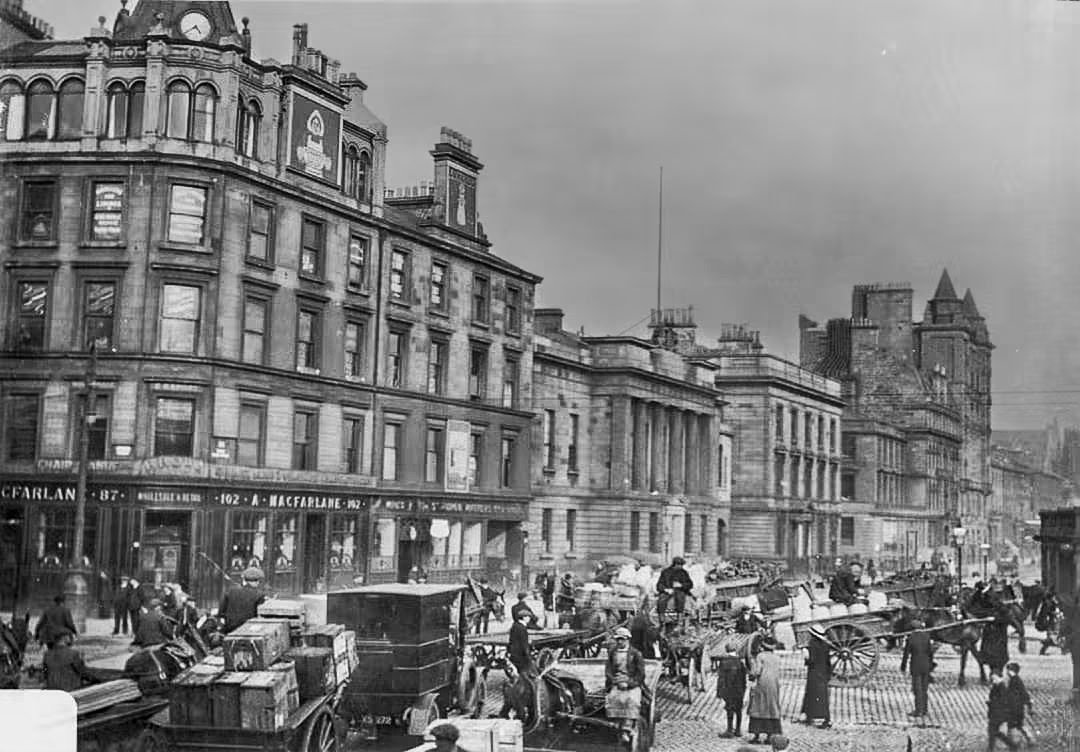
There are some photos you can practically smell, this is one of them. Taken at the corner of Jamaica and Clyde St (then Great Clyde St), it was part of a series taken in 1914 to illustrate traffic congestion, and to support a parliamentary bill for tramway extension.
📷 GCA
You clearly stated and firmly stood behind this statement: 'killing 20,000 children in Gaza is justified' even though I repeatedly reminded you those children are indeed innocent civilians. Civilians targeted daily, deliberately, and intentionally. No doubt about it. I was genuinely shocked you haven't thought this through. Our regional audiences are shocked and in distress over your lack of humility.
I understand this is now crisis management, Gunther, and the record of your stance has been made.
This is something that will not easily be ignored. It's a statement that will probably live with you forever and will mark you as a person and a politician. Times will change, ICC will do its job. International community will accept its failures.
Now, this is what you could do: apologize publicly for your previous statements that are absolutely shocking and shameful and start actively advocating for preservation of life of Gaza's children lives and their basic rights under international laws. Regardless of the fucking regime.
That's the only way to go from here. Saying this in good faith. Think about it.
| #Gaza #Genocide #Children
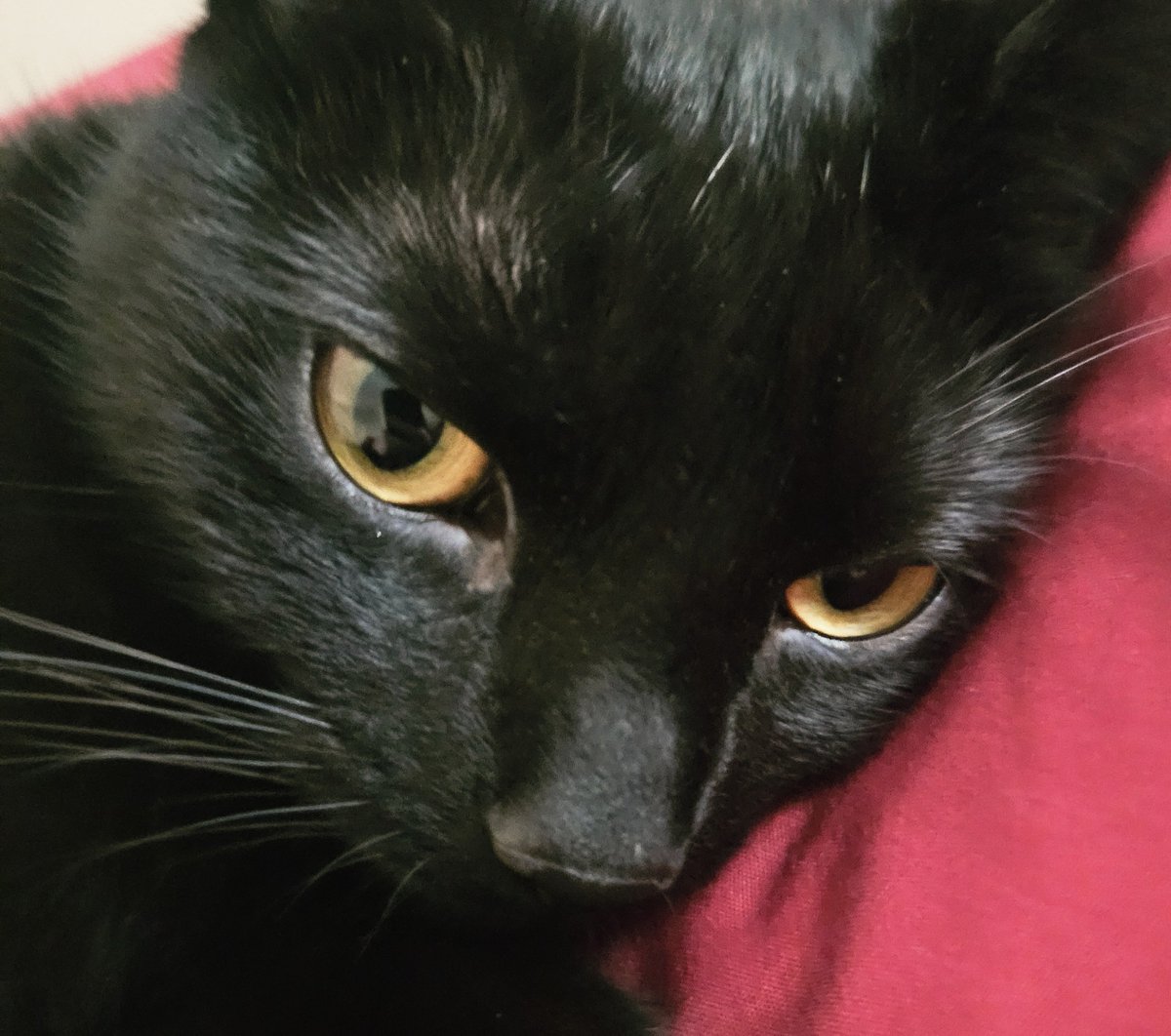
I thought it only fair the my wee Stardust had her photo taken this morning.
The lads got enough attention from auntie Dell last night.
Starry is a super shy girl and very loving towards Ziggy an Spider. She is the 'centurian' of the home. Nothing gets past without her say so x
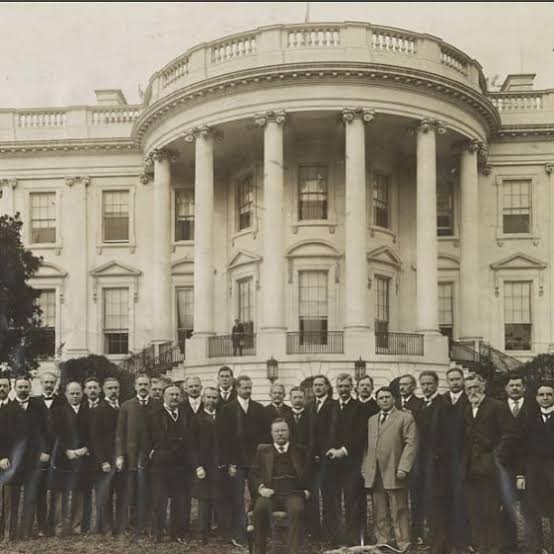
President Theodore Roosevelt officially named the Executive Mansion "The White House" in 1901 and carried out a major 1902 renovation that created the West Wing. He hired the prominent New York firm McKim, Mead & White to modernize the aging structure. They built a separate temporary executive office building—known today as the West Wing—to move presidential workspaces out of the main residential living quarters...
The White House, during the administration of Theodore Roosevelt, was a little different—to say the least. Roosevelt, who believed in the "strenuous life" with a fervor bordering on zealotry, brought not just his irrepressible energy but also an army of children and a veritable zoo with him to 1600 Pennsylvania Avenue. The corridors echoed with the clatter of young feet—Roosevelt's six rambunctious children, including Kermit and Quentin, were known to unleash a pack of ponies through the East Room or stage impromptu boxing matches. Meanwhile, the family’s pets, which included a badger named Josiah, a macaw, a garter snake, and a barn owl, freely roamed the White House grounds, much to the chagrin of more staid visitors. “The president was in constant motion,” one bemused congressman recalled, “and so was everything around him.”
But nothing embodied Roosevelt’s unorthodox leadership more than his infamous "walk-and-talk" sessions, during which any poor soul who sought his ear would be whisked away on what could only be described as an endurance test masquerading as conversation. Senators, used to the plush leather chairs of committee rooms, found themselves breathless as Roosevelt marched them up hills, through thick brush, and over rocky streams in Rock Creek Park. "I can talk politics just as well outdoors as I can in the office," Roosevelt would bellow with a grin, while his guests gasped for air. Those who couldn't keep up were simply left behind. And though many a congressman would have preferred discussing tariffs seated by a fire, none dared suggest it. As one exhausted senator was heard to mutter after a grueling hike, "Theodore Roosevelt believes in democracy—just not on flat ground."
#archaeohistories
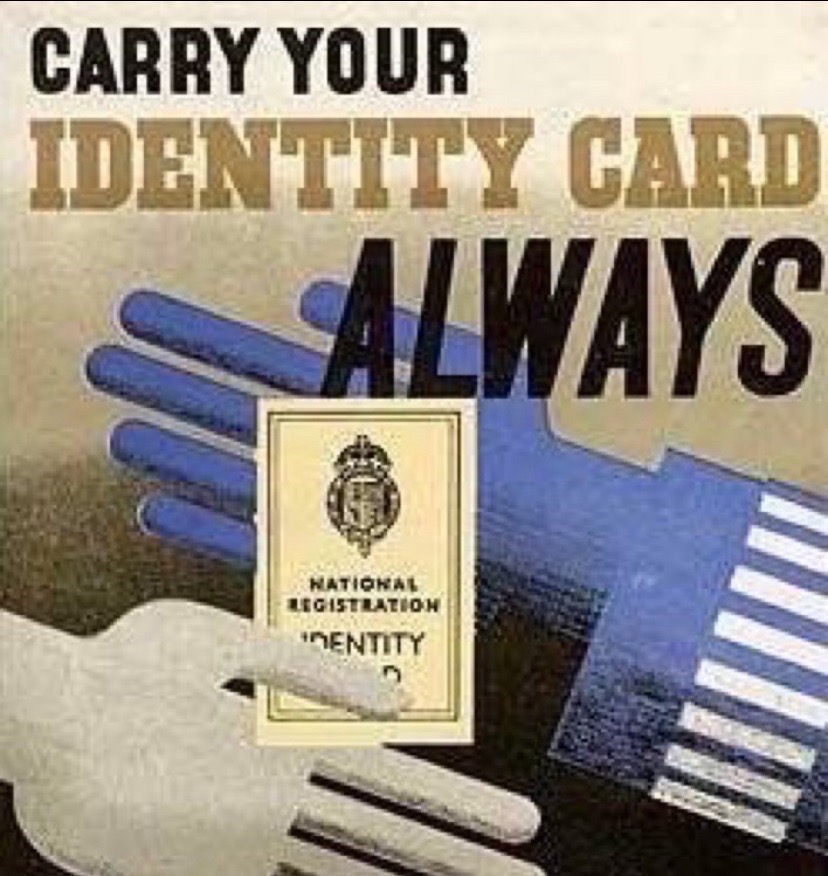
30 September 1939. As part of war-time regulations, identity cards were introduced in the UK. There was a legal requirement for every person to carry one and if not to produce it on demand or present it at a police station within 48 hours. The cards were abolished in 1952.
"I fired him because he wouldn't respect the authority of the President. I didn't fire him because he was a dumb son of a bitch, although he was, but that's not against the law for generals. If it was, half to three-quarters of them would be in jail."
Truman said this in conversations with journalist Merle Miller in 1961 and early 1962, a decade after he fired MacArthur.
On April 11, 1951, he had relieved Gen. Douglas MacArthur of his command during the Korean War. MacArthur was one of America’s most celebrated military figures. He had led Allied forces in the Pacific during World War II, and his dismissal caused an immediate public uproar.
The two men disagreed over how to fight the war in Korea. Truman wanted to prevent the conflict from expanding into a wider war with China.
MacArthur favored a more aggressive approach and publicly challenged the administration’s policy. The dispute raised a question larger than either man: Who had the final say over American military strategy; the president or a general in the field?
When Truman said this years later, Miller was interviewing the former president for a proposed television series. The series was never made, but Miller kept his recordings and notes and published the conversations after Truman’s death in the 1974 book Plain Speaking. Truman was looking back on one of the most controversial decisions of his presidency: he said he dismissed MacArthur because the general would not respect the president’s authority over the Korean War.
MacArthur returned to the United States to a hero’s welcome. His dismissal remained controversial, but Truman’s decision affirmed a fundamental rule of the American government: military commanders answer to civilian leaders, even when the commander is famous and the president’s decision is unpopular.
Eight days after his dismissal, MacArthur addressed a joint session of Congress and ended his speech with the line, “Old soldiers never die; they just fade away.”
#drthehistories
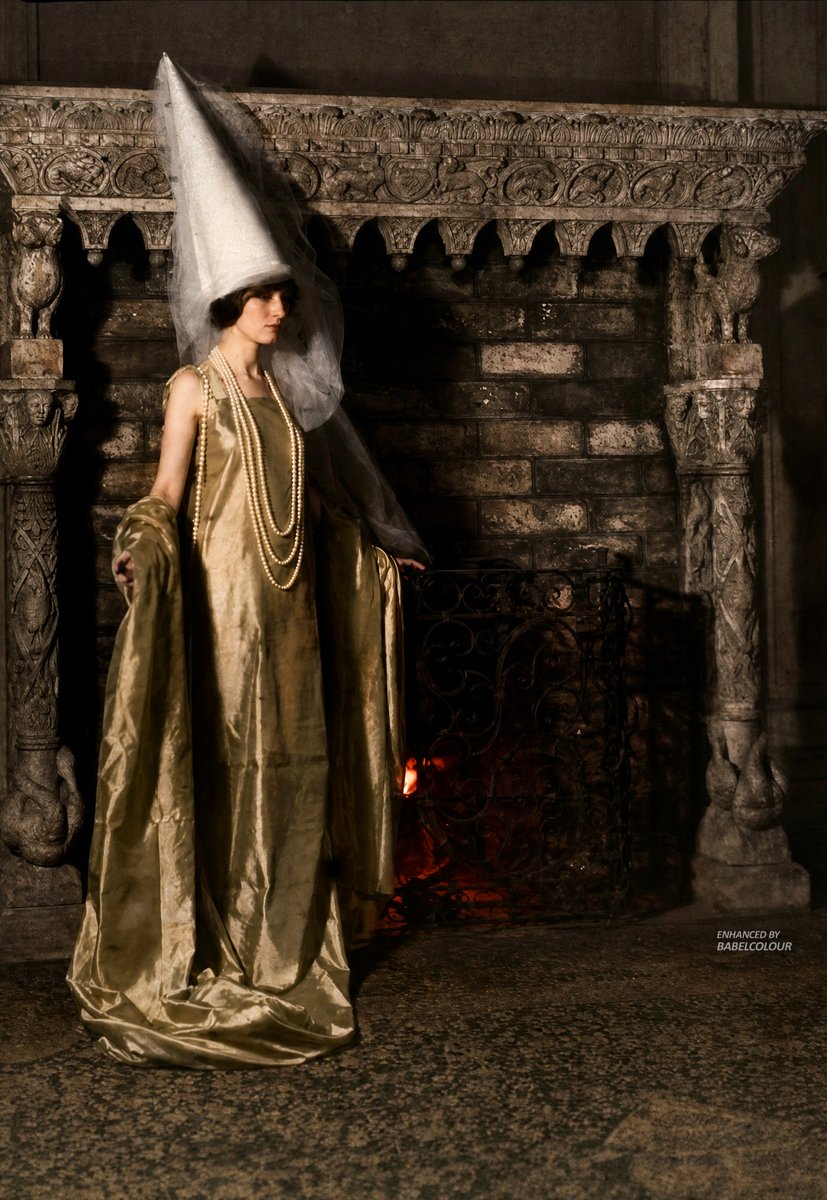
This medieval princess was photographed around 700 years ago.... oops, scratch that! I have cleaned up this wonderful Autochrome which was taken around 1910, depicting a young lady cosplaying in a romanticised vision of medieval nobility. It has a most wonderful painterly quality to it! The photographer is unknown, but it was taken around 116 years ago using an early colour glass-plate process and isn't colourised.
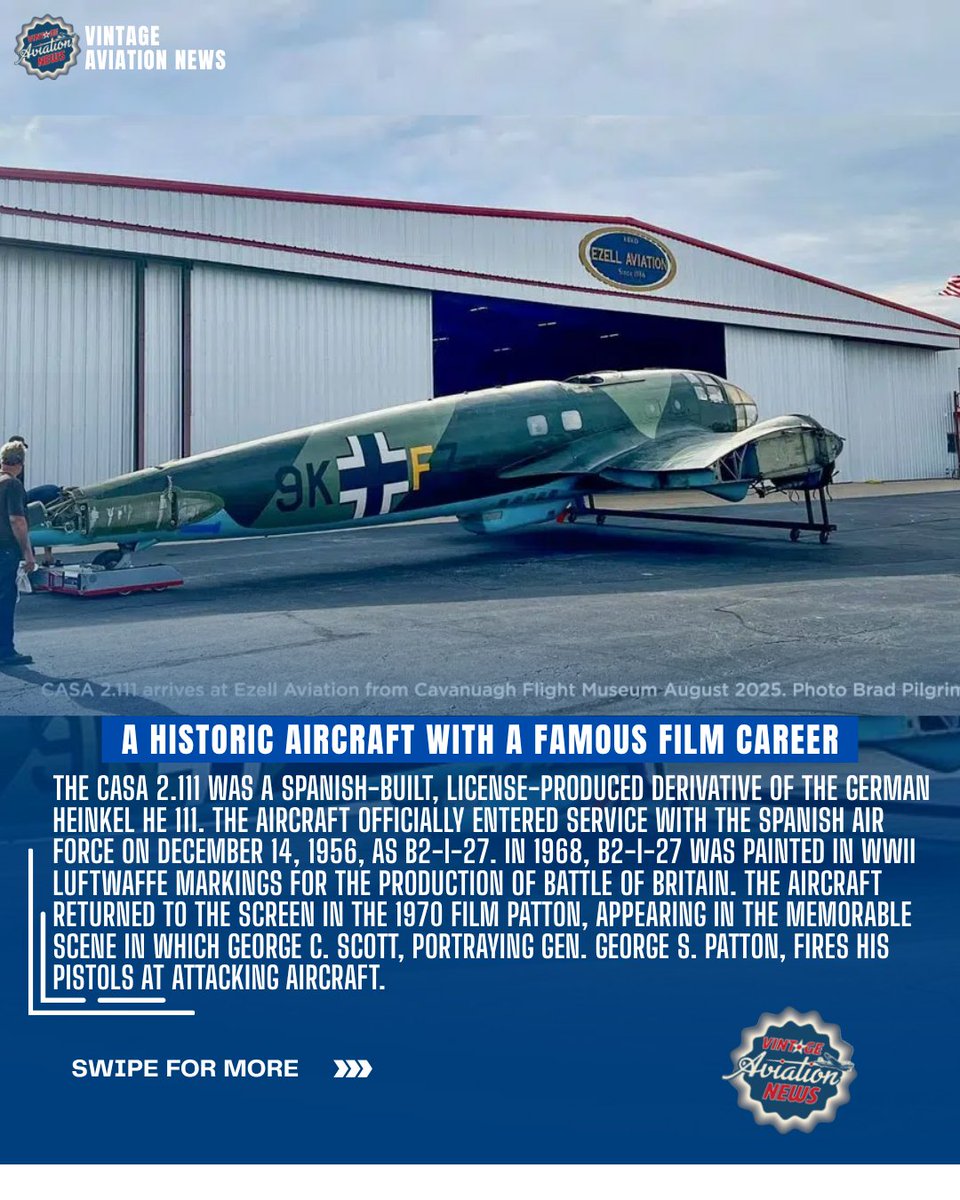
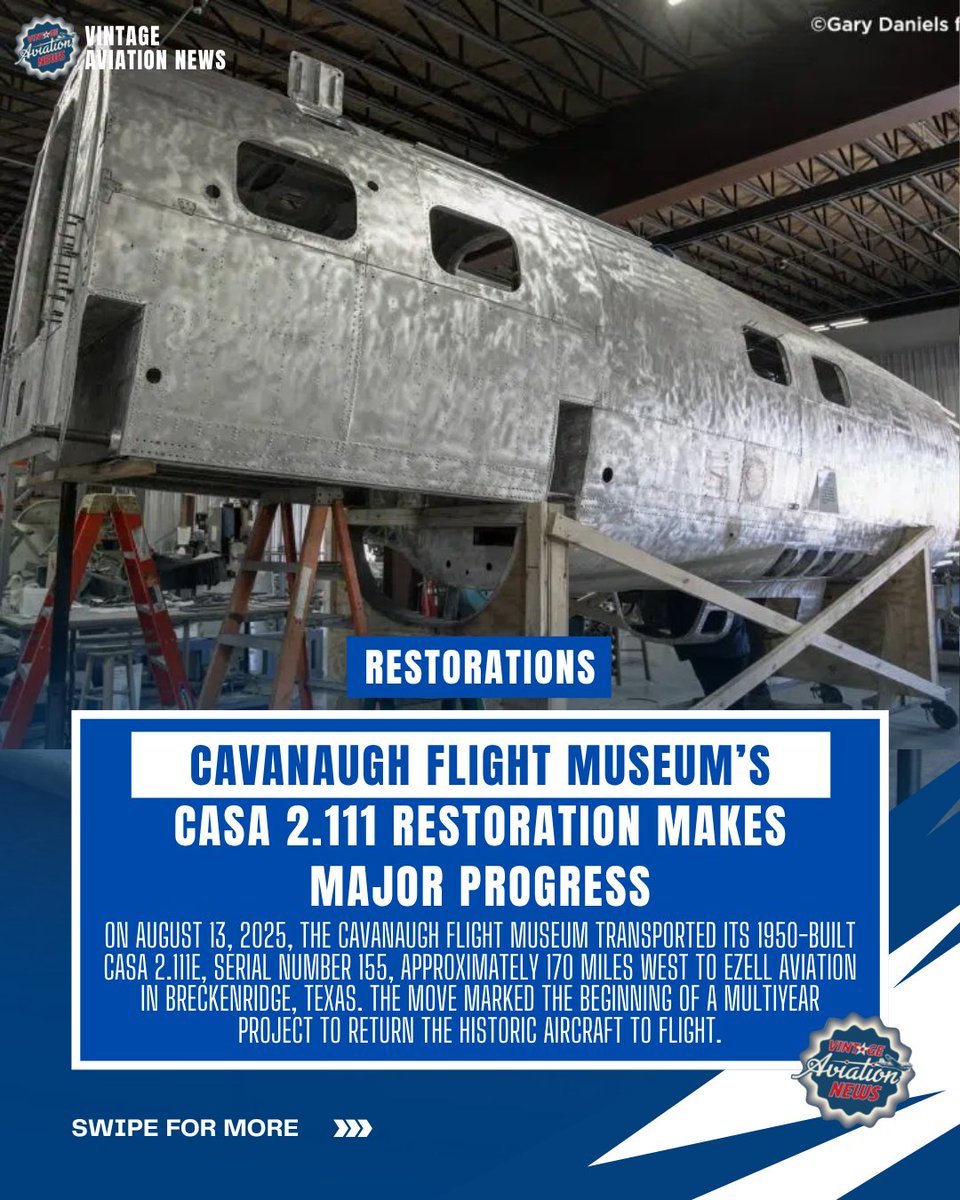
On August 13, 2025, the Cavanaugh Flight Museum transported its 1950-built CASA 2.111E, serial number 155, approximately 170 miles west to Ezell Aviation in Breckenridge, Texas, marking the beginning of a multiyear project to return the historic aircraft to flight.
The CASA 2.111 was a Spanish-built, license-produced derivative of the German Heinkel He 111, and served with the Spanish Air Force before appearing in the films Battle of Britain and Patton. One year into its restoration, the aircraft has been completely disassembled, with the museum currently anticipating a first flight during the 2029–2030 timeframe.
Read full article here
https://t.co/ozxriD7X70
Source: Vintage Aviation News
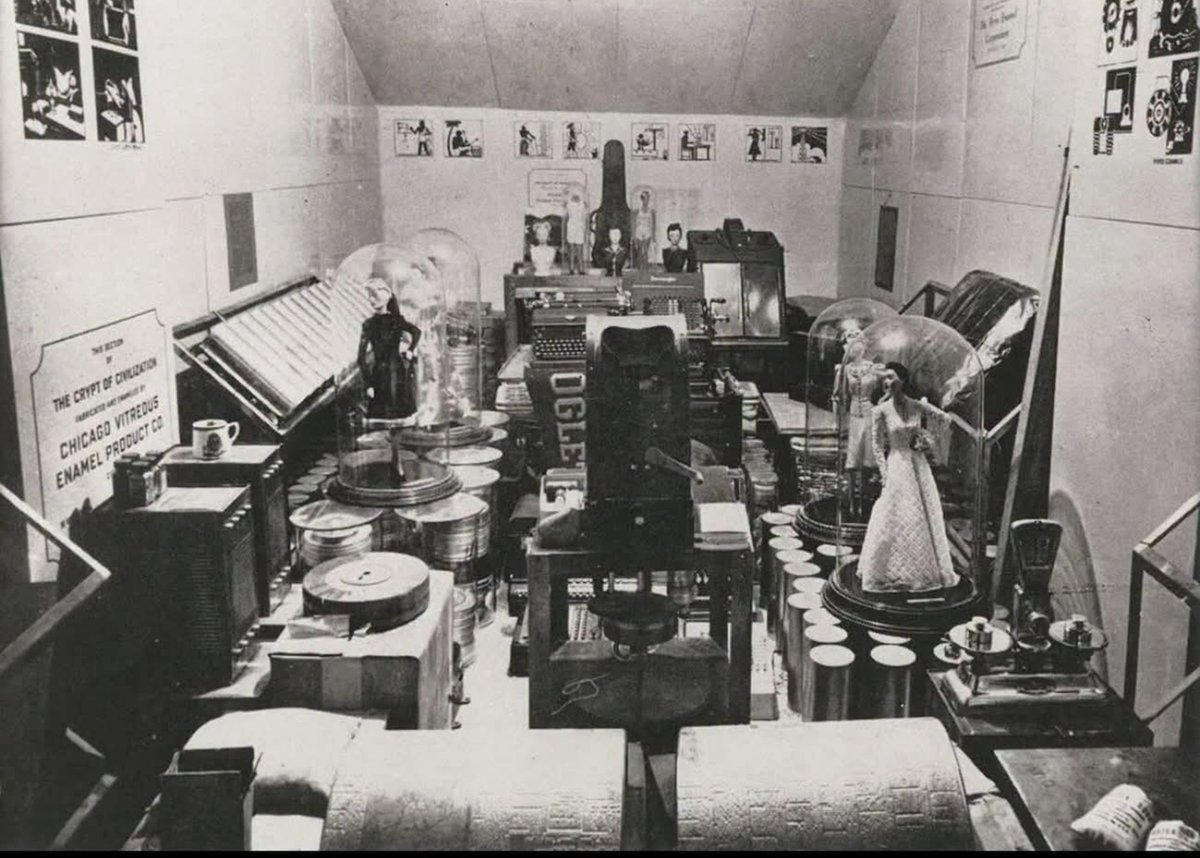
The Crypt of Civilization, a room-sized time capsule at Oglethorpe University in Brookhaven, Georgia, photographed prior to being sealed on May 28, 1940. Conceived by Dr. Thornwell Jacobs to preserve a record of 20th-century human knowledge and culture....
The Crypt of Civilization is not an ordinary time capsule. Located at Oglethorpe University in Atlanta, it is an entire room measuring 20 feet long, 10 feet wide and 10 feet high. Its stainless-steel door was welded shut in 1940 and is not supposed to be opened until May 28, 8113, more than 6,000 years later.
Inside are more than 640,000 pages of microfilmed material, movies, recordings, books and examples of everyday 1930s life. The collection includes a Donald Duck doll, Lincoln Logs, dental floss, a woman’s purse, a typewriter, dentures, seeds and even a specially preserved container of Budweiser beer.
Future discoverers were given machines for viewing the films and recordings, along with the wind-powered generator. The creators even anticipated that English might have disappeared by 8113 and included a machine designed to teach the language.
The Crypt contains recordings of Hitler, Stalin, Mussolini and Franklin Roosevelt, but also the voice of Popeye the Sailor and a champion hog caller, all deliberately preserved as sounds of our civilization for whoever opens the chamber 6,000 years from now.
#archaeohistories
'It just shows how cruel some people in this country are'
On this week's Media Watch, Hannah Emma Shedden and Lucy Jackson discussed a GB News clip calling for asylum seekers to be castrated - and what action should be taken against the channel
30 September 1965. 1st episode of the animated TV series Thunderbirds was broadcast in some ITV regions. It ran for 32 episodes until 25 December 1966. It was produced using electronic marionette puppetry (called “Supermarionation”).










![HighlandHistory's tweet photo. Ascending Ben Nevis with Lochan Meall an t-Suidhe on the right, c1898
[photo: Valentine & Sons; source: HLH Archives, D1751/2/2/5] https://t.co/vW9tu3cQyv](https://pbs.twimg.com/media/HTYPOn8WkAEUIM9.jpg)