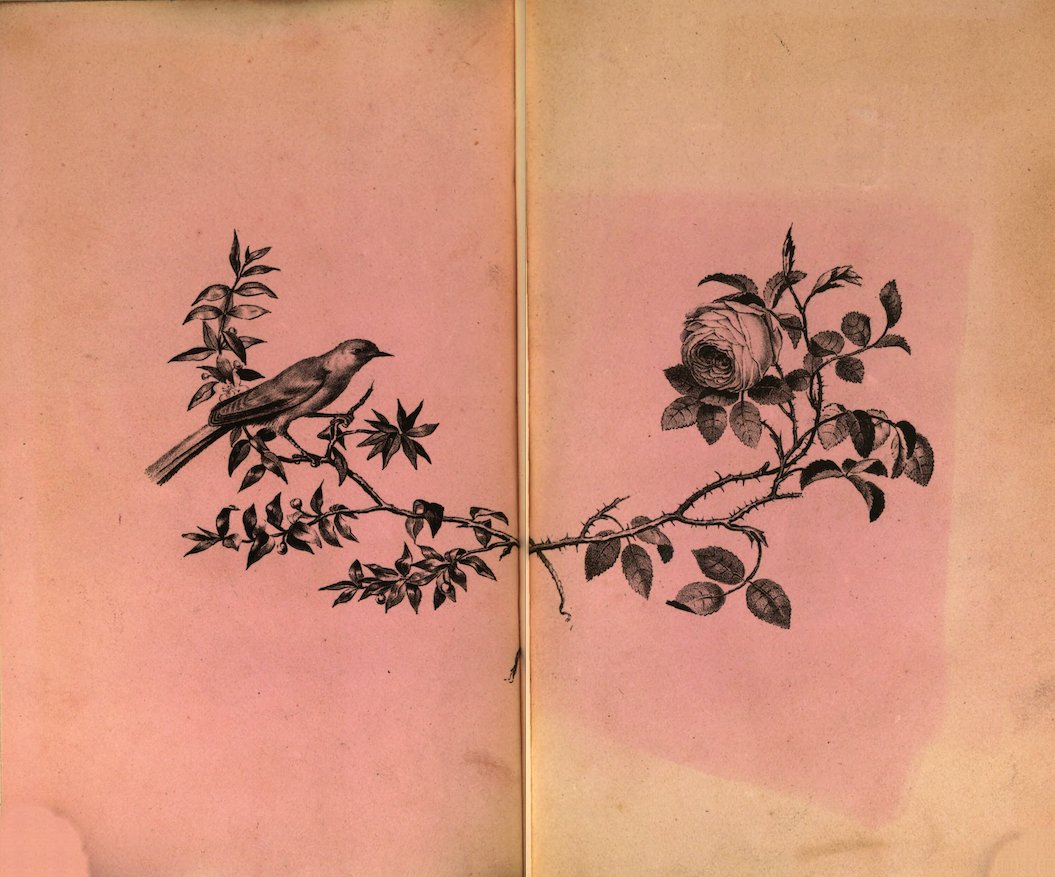
A beautiful example of the early use of lithography in orientalist printing: Joseph von Hammer-Purgstall’s 1834 Turkish-German edition of Kara Fazli’s Gül ü Bülbül, with shamsa title page, unvan, & wrappers depicting the titular rose and nightingale. https://t.co/JN4i5dmoux
for a progressive online pub. #slateplus is quite classist, as it works like a frequent flyer program that condemns those w/out cash for pricey tix to substandard service. Yes, news making costs a lot of money, but you exclude poor listeners @mjs_DC@Dahlialithwick@emilybazelon
@marysdesk the WRONG audio is linked to your What next story on Kevin McCarthy -- https://t.co/OfGOo8kv5u today is July 3, and the wrong audio is up there since June 27
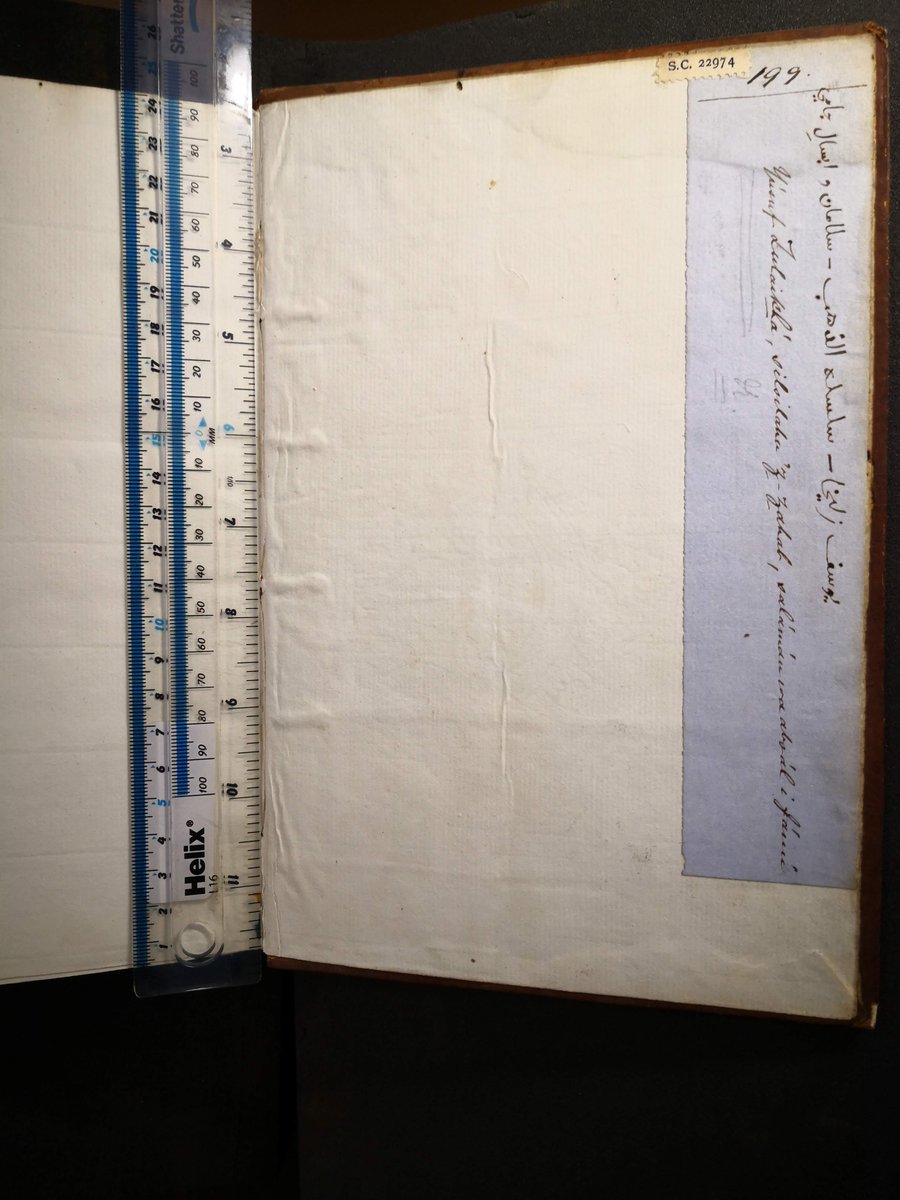
@SHARPorgNews mea culpa - UK, Oxford, Bodl. MS. Ouseley 199 - undated miscellany with three mathnavis by Jami (1414-1492) https://t.co/VV6ul2q8G2 (thank you for teaching me abt alt-text; didn't know of it as I am sitting on the fence abt leaving twitter)
.@RareBookLibAntw@mssprovenance violations of community policed citation standards are independent of genre or publication mode: isn't the crucial difference efficiency of gatekeeping??? perhaps it's less common in UK but the blogs of @NevilleMorley & @mssprovenance have no ISSN
#receptiogate insightful article on how Carla Rossi's work is, itself, much like a blog dressed in academic clothes which is a kind of defense all its own: https://t.co/xdbaEpoqQi
@Marphurius @ScribblingSandy .@Marphurius observation that courts may have to decide what's research & what's not reminded me of the de facto hierarchy in some fields (e.g., Middle Eastern studies) between mss catalogers & "real" professors -- the work of the mss catalogers is used, not necessarily cited
@Marphurius .@ScribblingSandy I did not mean to imply that Rossi is NOT violating all standards for the recognition of using other people's work as well as using other people's work - presenting their words (plagiarism) as her own as well as using their research -- cont.
Join us 14 December at 12p Eastern / 5p GMT for the next Social Justice Lecture!
Rustin Zarkar @RustinZ & Waleed Ziad will present their work on "Post-custodial archives from Sufi shrines of the Afghan-Pakistan frontier"
Register here https://t.co/861JrC1gRR
Hope to see you there
In our new blogpost, @AltaytoYughur shows some examples of Alexander in the @britishlibrary#Turkic-language collections and explores how İskender, or Alexander, ‘formed one of many linkages between the literary traditions of Eurasia’. https://t.co/8L50tytGY9 #AlexanderTheGreat
On Wednesday 23th, the Louvre museum in Paris will unveil two leaves of a unique Qur’ān manuscript attributed to caliph 'Uthmān, coming from Katta Langar, a village located in South-East of Uzbekistan. A brief look back at the history of this mysterious manuscript🧵1/10
Middle High German binge watching alert! Have just finished editing lectures 2-5 by Nikolaus Ruge on panopto & added to playlist - brace yourself for 12th cent. EMHG to graphemics & morphology #medievaltwitter https://t.co/dbAI9OIy3r
@PaulaManstetten The root is hamza-ra-kha: grammatically it's a verbal noun of II 'arrakha: ta'rīkh (see the tafʿīl paradigm). But the hamza is phonetically a glottal stop, which in Arabic is a consonant but not in Persian or Turkish, so that in Arabic loanwords the long syllable ta' > long tā +
@PaulaManstetten in other words, metrically for rhyming titles it makes no difference whether it is a long ta' = cvc > long tā = clongv -- in terms of formal fusha, it has to be ta'rīkh
@PaulaManstetten The root is hamza-ra-kha: grammatically it's a verbal noun of II 'arrakha: ta'rīkh (see the tafʿīl paradigm). But the hamza is phonetically a glottal stop, which in Arabic is a consonant but not in Persian or Turkish, so that in Arabic loanwords the long syllable ta' > long tā +
@PaulaManstetten since in writing the rasm does not have to include hamzas which sit on alif, "hook", or waw, it is impossible to argue on the basis of written texts whether how the first syllable in ta'rīkh was pronounced -- my 2 cents😉