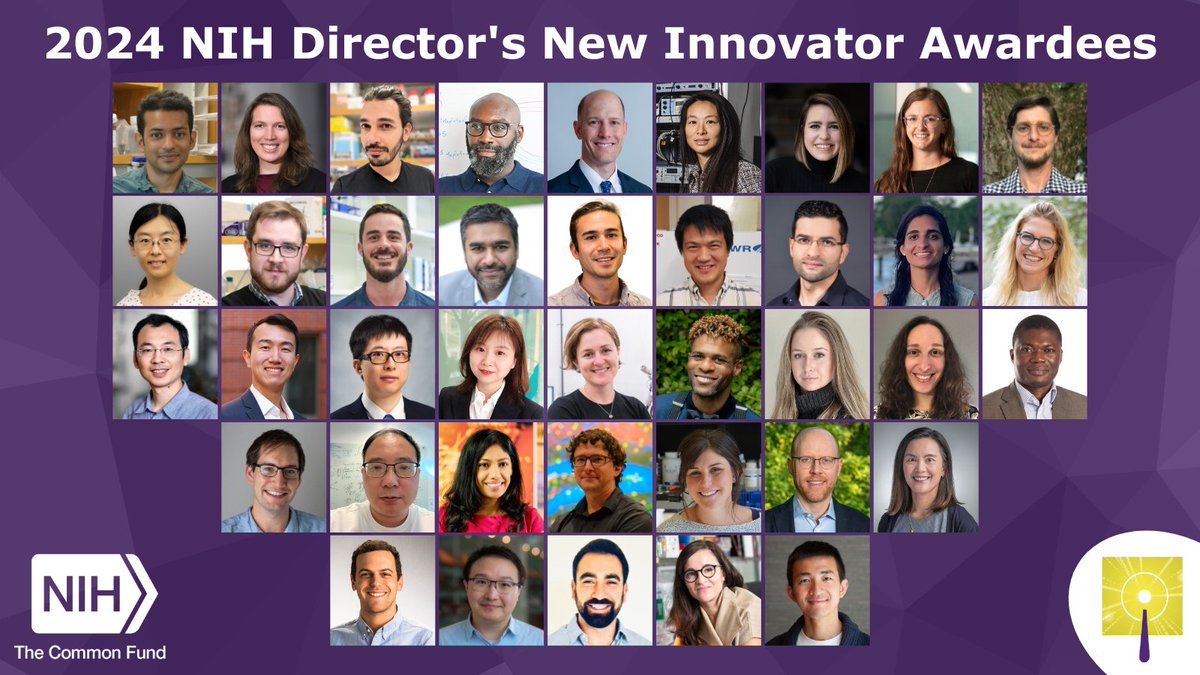
Dr. Yue Lu of @UofUHealth has received the #NIHHighRisk New Innovator Award for her research on extracellular vesicles that will help us better understand how our environment impacts our body and health. Learn more: https://t.co/dbdzs1Z6Gr
Early-stage investigators proposed #innovative high-impact research ideas for the @NIHDirector’s New Innovator Award. See the projects the awardees will pursue: https://t.co/ujuDoPOLUu #NIHHighRisk
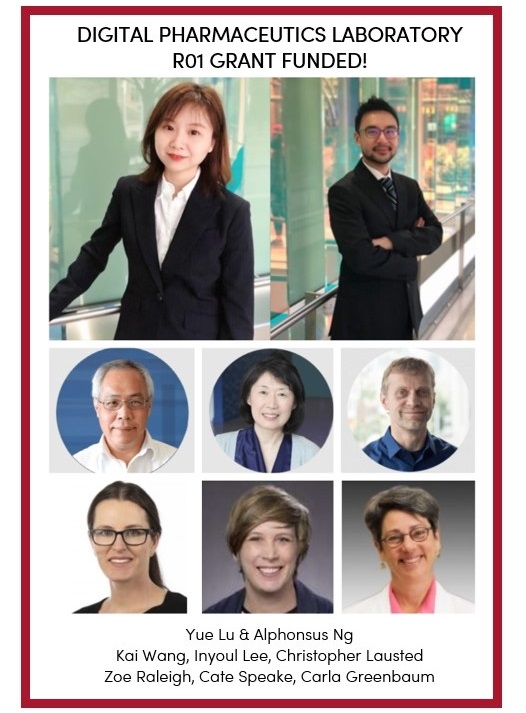
CONGRATULATIONS to Drs. Yue Lu & Alphonsus Ng
@LuDigiPharmaLab on their R01 funding from
@NIDDKgov! The project aims to develop new technologies to study and harness extracellular vesicles implicated in Type 1 Diabetes. https://t.co/xbw5TGuPtX
@isbsci@BRIseattle@UofUHealth
Our lab just received the NOA for a R01 grant with @BRIseattle, @isbscience, and @UofUHealth to bring new mico-nanotechnologies into the fight against #T1D. We are grateful to @NIDDKgov, US taxpayers, and study section reviewers for their support of our research.
Read highlights from this week’s issue of PNAS: We examine brain reorganization during human evolution, discuss Amazon deforestation and malaria transmission, and discover 4D electron microscopy for T cell binding and activation: https://t.co/Hr7qfNIQy5
Photon-induced near-field electron microscopy (PINEM) may represent a highly sensitive, label-free approach to probe cell surface features at scale, according to a recent study. In PNAS: https://t.co/V7SOGVMYSR
Photon-induced near-field electron microscopy (PINEM) may represent a highly sensitive, label-free approach to probe cell surface features at scale, according to a recent study. In PNAS: https://t.co/V7SOGVMYSR
ISB's Dr. Yue Lu et al. show that PINEM (photon-induced near-field electron microscopy) can detect human T lymphocyte activation and that this activation, in turn, reveals details about cellular physical properties that shape the PINEM signal. @PNASNews https://t.co/iWKiGcgwf1