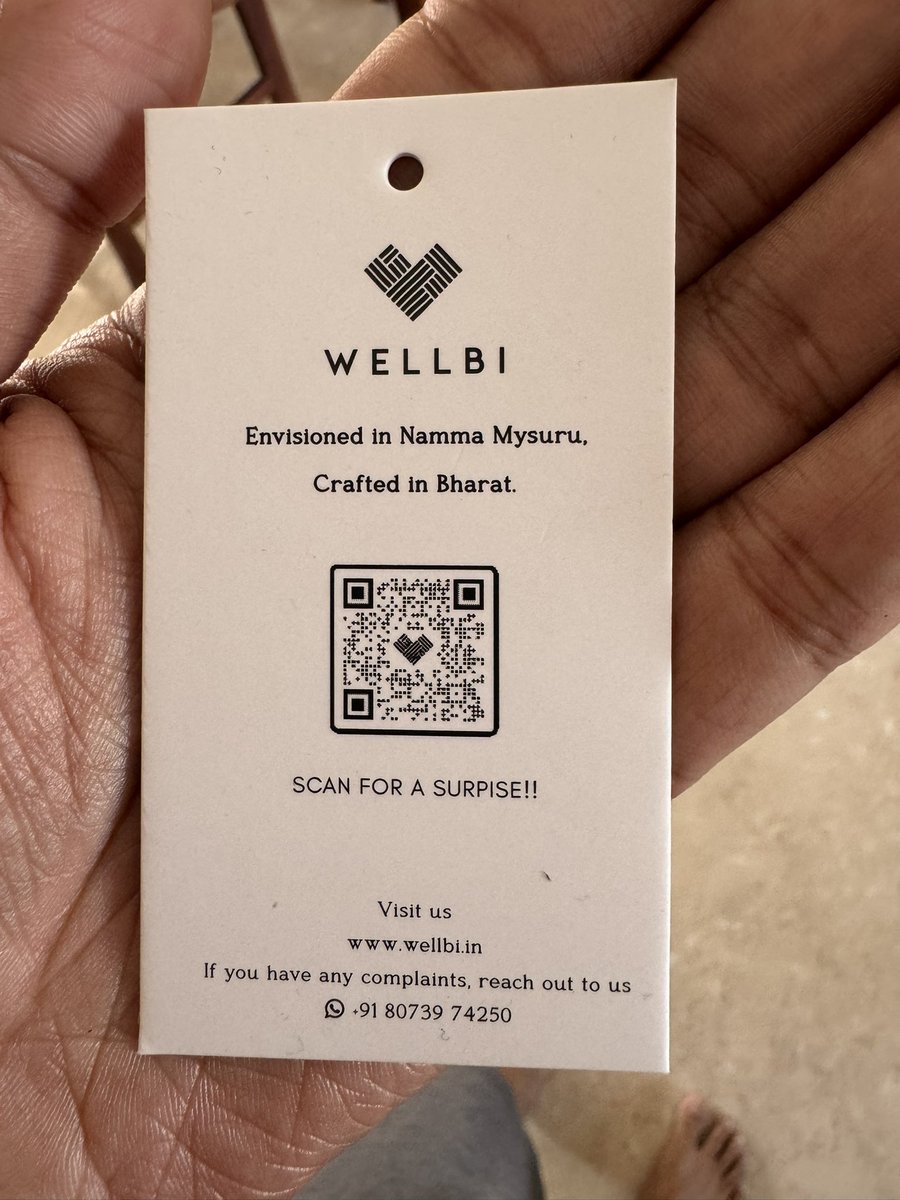
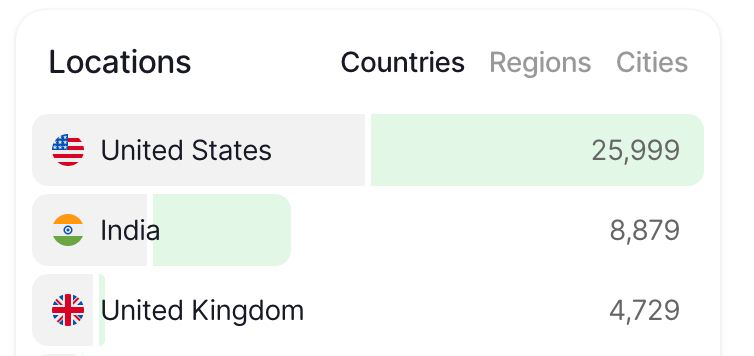
I hope our website https://t.co/y5ywxZMcac doesn't crash because @ganeshsonawane just tweeted about our product and 'poor marketing' 😂. Jokes aside, we saw a sudden spike in website visitors!
We’ve been cautious with ad spend recently due to our increased product pricing and allowing Meta Pixel to adapt to capturing new, higher-priced customers.
Huge thanks to the @myfrido founder for the shoutout—I’ve been following him for a while and learning a ton from his strategies. Fun fact: I’m a mechanical engineer too!
Swish reported ₹47.6 crore in operating revenue and a net loss of ₹91.1 crore in FY26.
I genuinely hope a significant part of these losses went into building infrastructure and long-term capabilities rather than just discounts and customer acquisition.
I still struggle to understand the economics of 10-minute cooked food delivery. What real, long-term value are we creating beyond convenience, especially when the model depends so heavily on cheap labour and unregulated traffic rules?
Imagine deploying some of this capital into deep tech or manufacturing. Companies that build actual capabilities, create skilled jobs and strengthen the backbone of our economy.
I feel VCs need to rethink their investment thesis. Are we funding businesses that create lasting value, or just competing to acquire customers for another marketplace?
And there’s another problem: once VCs have invested heavily, there’s an incentive to keep funding the next round just to protect the previous investment and justify the valuation.
At some point, we need to ask whether we’re building sustainable businesses or just keeping the funding cycle alive.
Most founders don’t even try markets outside India. There’s a huge opportunity globally. Pocket FM has shown that products built in India can find massive audiences elsewhere.
Many Indian pain points are global problems. Same technology, different demographics, just a few tweaks. Never limit your market to India!
been some time to this experiment and things have been picking up :)
used to thing that it's hard to build a global product sitting in India, turns out its not that hard - have some sense of what works. just need to double down now
Here we go! More funding for deep tech. If you have a viable product and pilot customers, this could be a great opportunity. Don’t wait around. Grab it while you can!
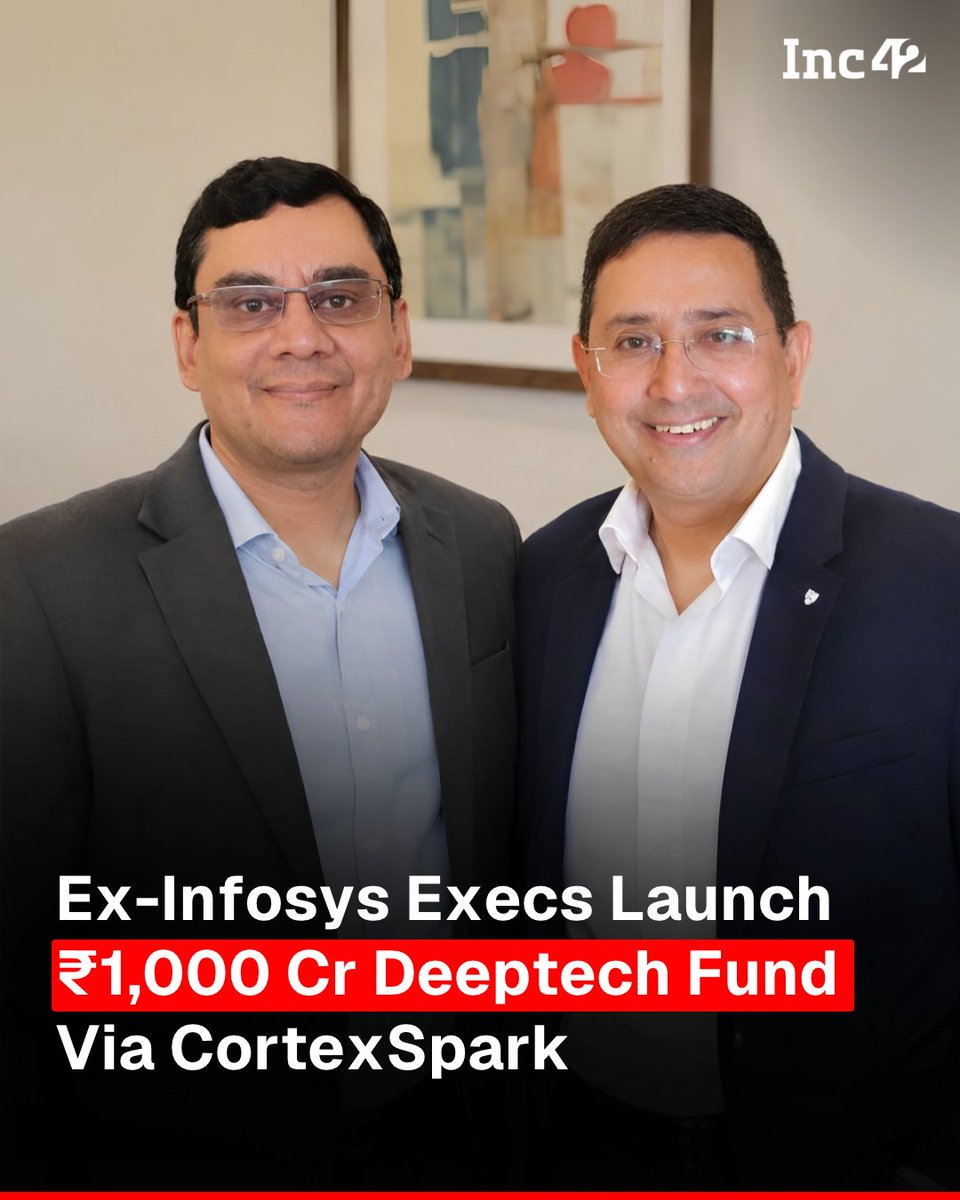
Ex-Infosys Execs Launch ₹1,000 Cr Deeptech Fund Via CortexSpark. 👇
Founded by Vinay Peshwa and Sanjay Khanduri, the fund will back around 20 startups across spacetech, defence tech, AI, robotics, medtech and advanced materials, with average cheques of $4 Mn–$5 Mn.
It also has a ₹400 Cr greenshoe option, taking its potential corpus to ₹1,400 Cr.
The launch comes amid rising investor interest in deeptech, with Indian startups raising $290 Mn across 28 deals in Q3 2026.
🔗 Read more about CortexSpark’s deeptech investment plans here: https://t.co/aXKfkAQY8P
#CortexSpark #Deeptech #AIStartups #StartupFunding #News
5/10 brands use the exact same AI-generated style in their packaging now. Creativity itself is becoming a commodity. Everyone has access to the same tools, same prompts and same aesthetics.
The real differentiator is going to be taste, originality and the ability to think beyond what AI keeps suggesting.
How do you stand out when everyone has access to the same creativity?
This is what I call a real pivot. Understanding where the market is heading and making a quick move.
It’s not easy to change your company’s core vision from quick service delivery to collecting data and training physical robots.
Having a US company as the parent could also make it easier to raise bigger funds at better valuations, especially with US customers for Pronto, now known as Provision Labs. That’s a pretty bold move.
🚨 Exclusive: Instant quick services startup Pronto is pivoting to physical AI play, US-based Provision Labs to become parent.
It's in the process of raising a big round from marquee US names
Pronto to become Provision Labs subsidiary as Anjali Sardana pivots to physical AI, eyes $50 million fundraise
Sardana has kickstarted the process to eventually make the instant home services startup a subsidiary of Provision Labs, the US-based physical artificial intelligence (AI) venture also founded by Sardana, as she looks to build a larger platform bringing together businesses that generate real-world data across multiple sectors, multiple people familiar with the developments told Moneycontrol.
As per current discussions, Provision Labs will acquire Pronto and house it under its umbrella over the course of the coming months.
Sardana is also in early discussions to raise around $40-50 million for Provision Labs and has engaged with investors including G Squared, Founders Fund and Andreessen Horowitz (a16z) in the US, among others, sources told Moneycontrol.
Details from @AryamanGupta_ and @Goenka_Tushar1
https://t.co/RRalWB1b8S
Hard to comprehend how a 23-year-old starts a company, gets some of the biggest companies in the world as customers and reaches $100M ARR and raises $350M
I’d genuinely love to see an 18 month day-in-the-life documentary of that journey, especially the last 10 months. Imagine closing deals worth millions almost every day.
I have friends whose enterprise sales cycles take 3–6 months just to get a pilot approved. How do you crack some of the world’s biggest companies and scale at that speed?
Would love to understand what actually happened behind the scenes.
Yash Patil, co-founder/CEO of Applied Compute - acquired by Palo Alto Networks for $4.5 bn - was supposed to graduate from Stanford last year..
Took leave, worked at OpenAI for two years before starting up and will now be leading AI at Palo Alto.
And worth $2 bn with his two co-founders.
Indian founders spend 15–20 years building a company, raising multiple rounds, dealing with failures, sleepless nights and endless hurdles. Even after building something big, cashing out $100M is still a distant dream.
Meanwhile, 600 employees at Anthropic are reportedly looking at $100M each.
The difference in wealth creation between ecosystems is wild.
The 2.3K people who liked this tweet might think twice before choosing Delhivery when they start their own D2C brands.
That’s the thing about logistics: one bad delivery experience can cost a brand a customer for life. Logistics companies, do better. You’re part of the customer experience too.
We live in a world obsessed with stories of startups raising $1M, $10M and $100M . But imagine what a ₹5–10 lakh grant could do for a rural entrepreneur who has never even had exposure to the startup ecosystem.
For someone like this, that money could be the difference between an idea staying an idea and becoming a real business.
Not every founder needs huge VC money. Sometimes, the right opportunity, a little capital and access to mentorship can change an entire trajectory.
We should be doing much more of this. In fact, imagine if VCs dedicated even 10% of their funds to backing rural entrepreneurs.
In six months, Lokesh has moved further in his entrepreneurial journey. He is now incubated at the incubation center in Agriculture university Dharwad. He has won a grant from IISc and has a few paying customers for his areca shell based packaging materials startup.
It's such a happy moment to see talented founders from rural India progress...🙌
He gave a short video about his progress in the last 6 months when I met him at BTS yesterday...
@mundhebanni
Selling men's trunks & briefs on Amazon is brutal right now. Between legacy giants (Jockey, Lux Cozi) and D2C players (XYXX, Damensch), sponsored ad CPCs have hit ₹25.
Imagine someone clicks your ad just to browse and boom, ₹25 gone instantly.
At that cost, single-unit economics don't work. You have to sell packs of 2 or 3 to protect your margins. Improving CTR should be the goal. Better catalogue and A+ will help.
@Sameer_vyapari Meta ads are also doing well and undoubtedly contributing to the organic growth of the marketplace. T-shirts for men and women are performing exceptionally well, but innerwear faces more competition.