Inspired by professor Sven Ove Hansson, the Economics science can be defined as the practice that provides as with the most justified knowledge produced by the economics knowledge discipline (with its researchers, journals, scientific conferences, professional societies, etc)
Economics is a science just like physics, but it is physics if matter could talk, and if molecules had will. Mill described it as the "inexact science", but Menger was better and explained the different aspects of the science -- exact laws, empirical realistic theory, and economic history (both contemporary [public policy] and in the past [history and development path]). And I side with Vlad Tarko and his invoking of Buchanan's position between science and philosophy.
The best statisticians and mathematicians of both XXst and XXist century have nothing but contempt for bayesianism.
Sure, one can use bayesianism when one knows the prior exactly - which is basically never.
Bradley Effron warns:
Check out 'Seminal Ideas and Controversies in #Statistics' by Rod Little. A very interesting book, covering some of the most important papers published in the field, with Rod's personal view on them. I think it could spark a debate! https://t.co/I2Ys6o2u56 #DataScience
Different scientific environments work with risk and uncertainty topics; here is a conference that mainly attracts economists and decision analysts with interest in mathematical and philosophical issues
https://t.co/pRaSH9e6nw
What does 'at risk' mean in this statement: "Anyone breaking the law is putting themselves at risk of being prosecuted"?
Not that it is certain that they will be prosecuted, but they could be - it is possible. Using the 'at risk' term an aspect of uncertainty is acknowledged. The term may also be interpreted here as expressing that it is likely that they will be prosecuted.
An interesting paper by George W. Warren, Sarah M. Duckett & Ragnar Löfstedt: An archaeology of risk: a bibliometric analysis of risk research
https://t.co/8ZuyvjEmVG
The paper presents a bibliometric analysis of the two journals Risk Analysis and Journal of Risk Research
@SocRiskAnalysis@JofRiskResearch
Risk Management 101:
1. Identify potential risks
2. Assess the likelihood and impact
3. Prioritise key risks
4. Develop a strategy to prevent or accept the risks
5. Implement the strategy
6. Review regularly
7. Communicate to stakeholders
RM 201: put it in a fancy heatmap
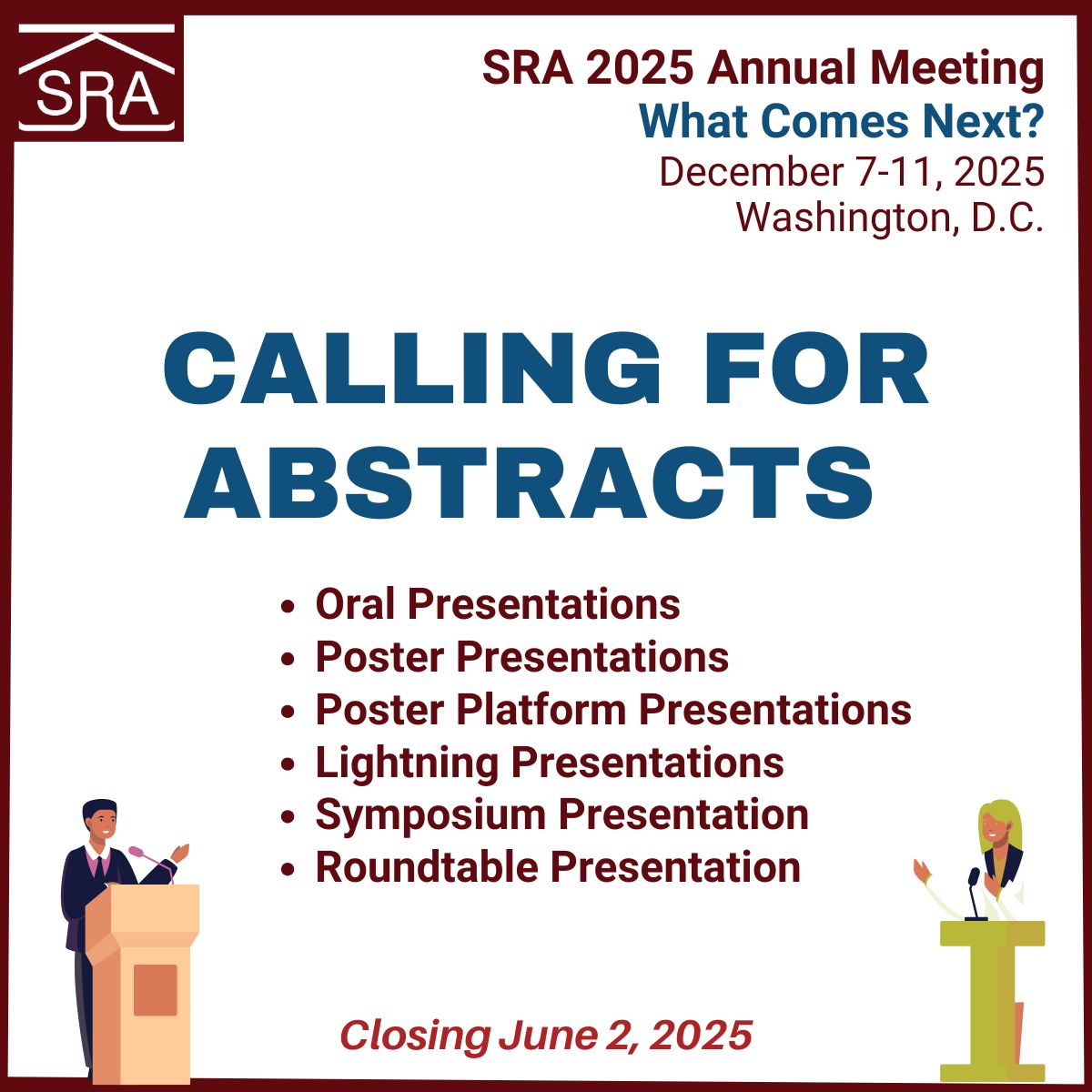
CALL FOR ABSTRACTS: Submit to present at SRA's 2025 Annual Meeting titled "What Comes Next?" happening in Washington, D.C. from December 7-11, 2025. Be a part of the conversation on the future of risk analysis.
Submission Deadline: June 2, 2025
Link: https://t.co/z7yxl7X4wc
0.37 PERCENT
That is the probability of a PGA Tour player hitting an approach from 197 yards to 2 feet or closer.
Rory did it.
On the 71st hole of the Masters. Tied for the lead. Going for the career slam.
📣 #IPCC is calling for nominations of authors for the Seventh Assessment Report!
IPCC’s WG Co-Chairs explain how your contribution as an author or review editor can help shape the global response to #climatechange.
👉 https://t.co/H5AdoPfp33
Submissions close 17 April
Assumptions – explicit and non-explicit (tacit) - represent a challenge in science, including risk science. The issue is discussed in the context of risk assessment in this paper:
https://t.co/lI1vB9a17m
This is not how we define and understand risk and uncertainty in risk science, see for example the Society for Risk Analysis Glossary
https://t.co/HGoOVB3rVy @SocRiskAnalysis
If we have only risk when objective probability distributions can be obtained (in line with the Knightian terminology) we cannot talk about climate change risk, security risk etc.
A non-technical explanation of the difference between Risk and Uncertainty
https://t.co/MHOZdcordZ
And this is a survey (technical) on the impact of uncertainty on the macroeconomy
https://t.co/W4pqqJUDdc
Visit my website for lectures on uncertainty https://t.co/YC7vyr21Kw