THIS WILL SAVE YOUR LIFE ONE DAY:
1) Sudden panic attack → Touch something cold (water, phone, metal). Your brain switches from fear to safety mode.
2) Heart beating too fast → Cough 2–3 times forcefully. It resets your heart rhythm.
3) Can’t breathe properly → Put your hands on top of your head. Your lungs open up instantly.
4) Feeling dizzy → Focus on one spot and tense your legs. Blood rushes back to your brain.
5) Stuffy nose → Hold your breath and nod your head up & down slowly. Open blocked airways.
6) Sudden anxiety → Splash water on your face – it activates the calm reflex.
7) Can’t sleep → Exhale longer than you inhale (4–7 breathing). Your brain goes into sleep mode.
The first thing I did with @39billion games was remove the basketball and changed the over 2.5 to 1.5 and did some few edits as well and the odds came up to 1.5k odds. Posted on telegram. Good luck guys. https://t.co/F7ZvqxYkFI
These are the people who are coming to "save" you in Benue and Plateau. The Christian saviours coming to rescue you from the crazy Allahu Akbar people👍🏿
I'd have offered my sympathies in advance, but there's no point sympathising with suicidal people.
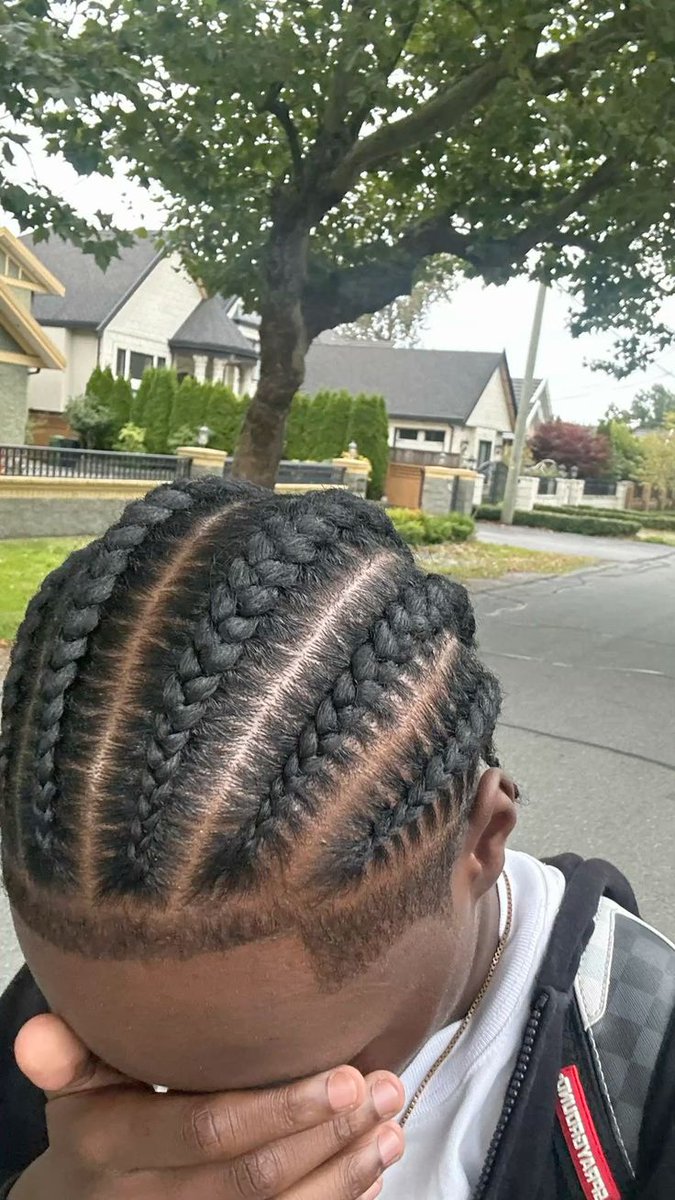
The Demonization of Male Hairstyles in Africa
There is a quiet but very deep contradiction in African societies.
African men are told to be confident, dominant, original, proud of their roots.
But the moment a man expresses himself physically outside a narrow template, he is punished.
Hair is one of the biggest examples.
1. African Hair Is Treated Like a Crime
Cornrows, dreadlocks, twists, braids, afros.
These are not foreign ideas.
They are indigenous African hairstyles with centuries of history tied to age, status, spirituality, warfare, royalty, and community.
Yet today, an African man with long hair is instantly suspected.
He is called:
irresponsible
unserious
unsermonious
criminal
unserious academically
unserious professionally
In some places, he is searched more often. In others, denied jobs. In others, openly mocked by elders who themselves grew up around these same hairstyles.
So the question becomes:
When did our own hair become evidence of moral failure?
2. Colonial Discipline Never Left Our Heads
This did not start naturally.
Colonial rule did not only control land.
It controlled appearance.
Short hair, neat cuts, military style grooming became associated with:
obedience
discipline
intelligence
civilization
Anything else became “wild”, “pagan”, “rebellious”.
Mission schools enforced it. Colonial armies enforced it. Post-colonial institutions inherited it without questioning it.
So today, African men still unconsciously obey a grooming code written by people who believed Africans needed to be visually controlled to be civilized.
That’s not culture. That’s conditioning.
3. The Masculinity Trap
Here’s the irony.
African masculinity praises strength, dominance, leadership, fearlessness.
But the same society panics when a man does something as simple as grow his hair.
Why?
Because control is safer than confidence.
A man who looks exactly like everyone else is predictable. A man who styles himself differently forces people to confront the fact that masculinity does not require permission.
So instead of asking: “Is this man responsible?” “Is this man competent?” “Is this man disciplined in action?”
We ask: “Why is his hair like that?”
That is intellectual laziness disguised as morality.
4. Why Women Are Allowed and Men Are Not
Another uncomfortable truth.
African women can experiment endlessly with hair. Wigs. Braids. Colors. Lengths.
It’s called beauty.
When men do even a fraction of that, it becomes rebellion.
Why?
Because men are expected to be tools, not expressions. Workers. Providers. Structures.
Once a man starts expressing identity visually, people subconsciously feel he is stepping outside his assigned role.
And societies that struggle economically hate men who look like they are not suffering “correctly”.
5. The Criminalization Effect
This is where it gets dangerous.
In many African countries:
men with dreadlocks are policed harder
profiled more
associated with crime regardless of behavior
This creates a self-fulfilling loop.
Society excludes. Opportunities shrink. Resentment grows. Then society points and says, “See, we were right.”
But the origin was never crime. It was appearance.
6. What This Is Really About
It’s not about hair.
It’s about:
obedience vs autonomy
inherited colonial discipline vs self-definition
fear of difference in fragile societies
African societies did not have a problem with male hairstyles until authority decided uniformity was easier to manage than individuality.
And we never unlearned that.
7. The Quiet Question Nobody Asks
If an African man:
works hard
is disciplined
is ethical
contributes to society
Why should his hair matter at all?
And if hair matters more than character, what does that say about our priorities?
This topic always gets people angry because it exposes something uncomfortable:
Many African societies claim pride in heritage, but are deeply uncomfortable with the expression of it✅