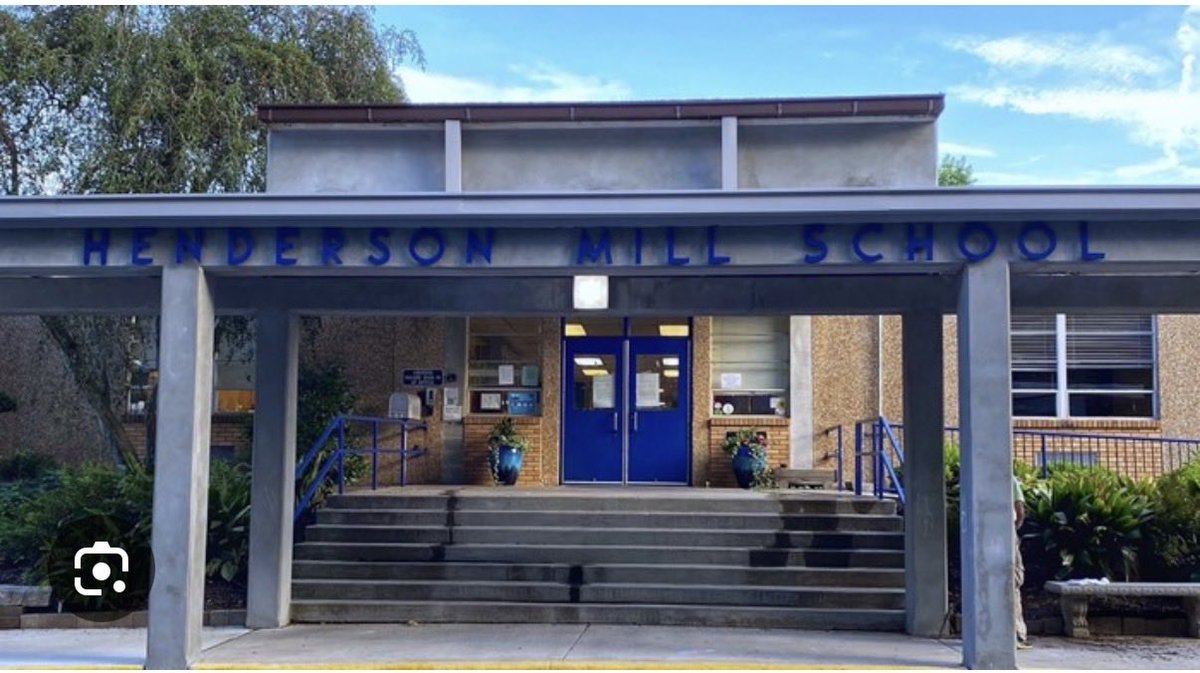
It was a pleasure to engage with BLTs in Sycamore Community Schools (Cincinnati area) today. Effective district and school leadership attracts and retains skillful teachers.
Coming in Fall of ‘26. Full Circle School Leadership: Culture, Change, Communication, Decision Making, Leading Teams, Direction Setting, Instructional Leadership, Leadership Transitions, Self Knowledge and more…
Perhaps controversial, but I believe it’s best practice to reach out to homeschool families and support them. They are all our kids. Besides, most return to public schools eventually. The more successful they are the better for all of us.
https://t.co/JuFy1wEyad
Excited and grateful to make the SamTastic Weekly Tip this week with “Learn to Look at Classroom Cause and Effect.” Visit https://t.co/rgyATCoSDO for information about the National SAM Innovation Project and the upcoming SAMs National Conference.
Working yesterday with the MLDS (Missouri Leadership Development System) team on using Locale Memory strategies for adult learning and PD applications. The evidence is building… connect learning to 3-D spatial contexts for better recall and transfer!
It’s always a pleasure to work with the talented professionals at MLDS. We’re in Columbia, MO for a two day session supporting these principal professional developers. Check it out at @MoEducation.
Many thanks to Dr.Tuqwan Taylor, principal at Redan High School in DeKalb County, GA, for hosting today’s Feedback and Coaching Lab. We observed some excellent classrooms today!
The importance of informal learning opportunities… another great resource from https://t.co/QcfK8HPCOS.
Understanding the Landscape of Professional Learning for School Principals | Wallace Foundation https://t.co/LjxqDtkRxB
A little nerdy, perhaps, but if part of your job is to display data for peak understanding, this classic by Edward Tufte is a must read (and a must see).
“ Bodies and brains learn together.” Thanks CTAC and Valerie Butron for a great article. In the Artisan Teacher world, we call this Locale Memory- accelerated learning, recall, and transfer for children and adults.
The best professional learning is designed for movement—gallery walks, walk-and-talks, active protocols—because bodies and brains learn together. Treating motion as a core PD design principle boosts energy, attention, and transfer.
https://t.co/cF0qXDbA9w
https://t.co/cqYwP5aJ41
Attention Dayton, Cincinnati, and Northern KY instructional leaders! The Montgomery County ESC is hosting a single-day Artisan Teacher event on 6/3/26 at Lebanon JHS in Lebanon, OH. This will be an excellent opportunity to experience an introduction to all things Artisan Teacher - teachers, admins, and district level leaders are welcome. Here’s a link to the brochure that contains registration information
Many thanks to principal Charles Barker for hosting our Feedback & Coaching Lab sessions at Chapel Hill MS in DeKalb Co., GA this week. We saw inspired teaching at every turn!
https://t.co/BP6QP87klY
Principals need support and accountability for their role as instructional leaders. District leaders are in a prime position to provide this support. The School Walk-Around(SWA) process seeks to provide administrators with an authentic and insightful assessment of their instructional leadership skills. It focuses on revealing, through observing and talking, the administrator’s personal understanding of the instructional strengths and needs of individual faculty members and the faculty as a whole.
From this month’s Scientific American by Emma R. Hanson… visualizing shortcuts to math solutions is linked to future STEM performance. Also, interesting gender differences. Girls follow procedures more often. Boys are more likely to visualize shortcuts. Good tips for both!
Many thanks to Dr. Rocky Wallace at Campbellsville University (KY) for his recent book review of The Artisan Teacher. Thanks for the kind words!
BOOK REVIEW - 'The Artisan Teacher: A Field Guide to Skillful Teaching' https://t.co/BzAfo9aSjl via @TextandAcademic
https://t.co/niZwq4aB6S
Keen classroom observers can spot and analyze effective teaching moves. A “move” is a “short burst of teaching technique that puts the teacher at a quick advantage.” Great moves have two parts: cause (what the teacher does) and effect (how the move affects learning and learners). This Feedback & Coaching Note, Learn to Look at Classroom Cause and Effect, describes the necessary skills for success.