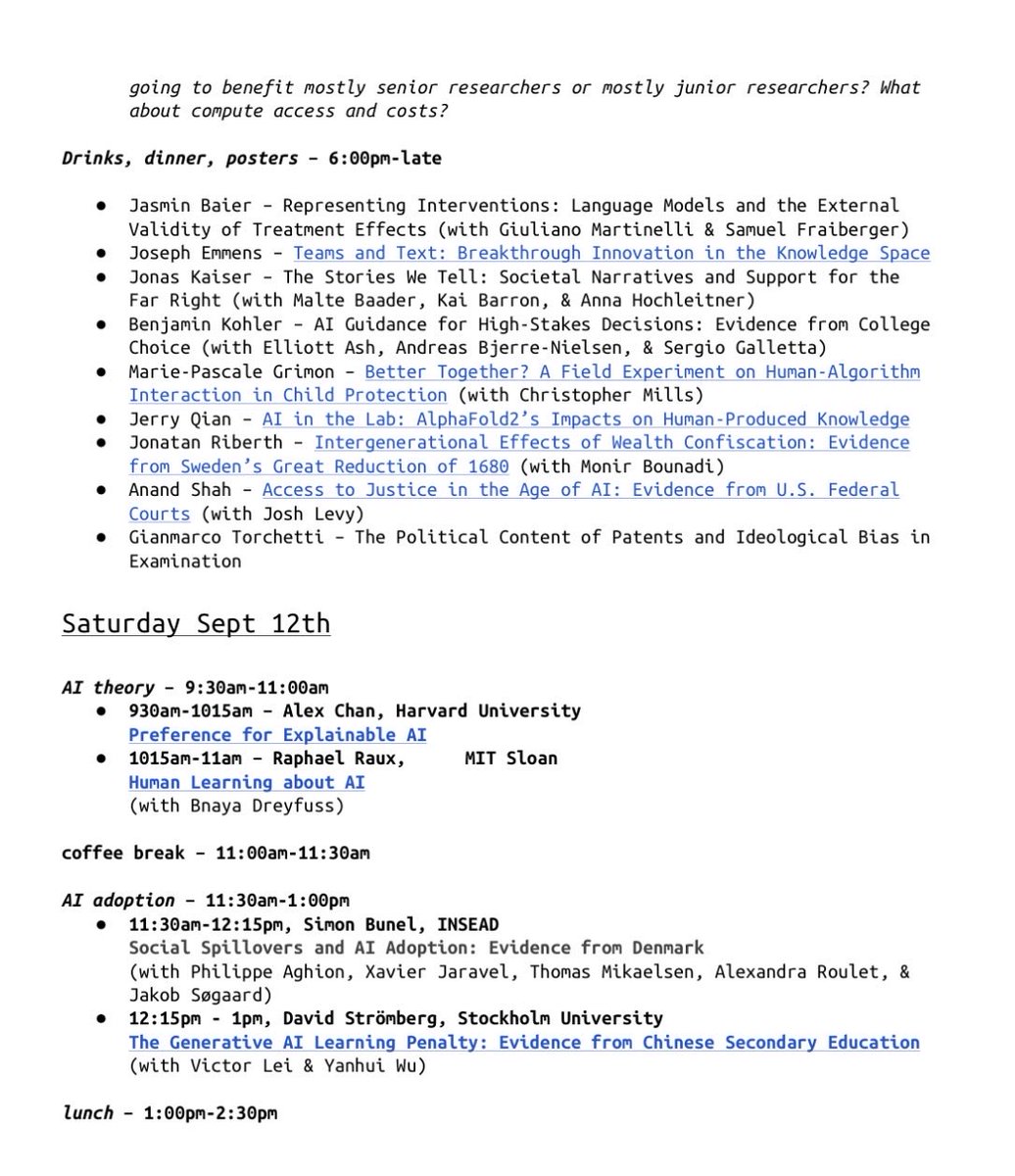
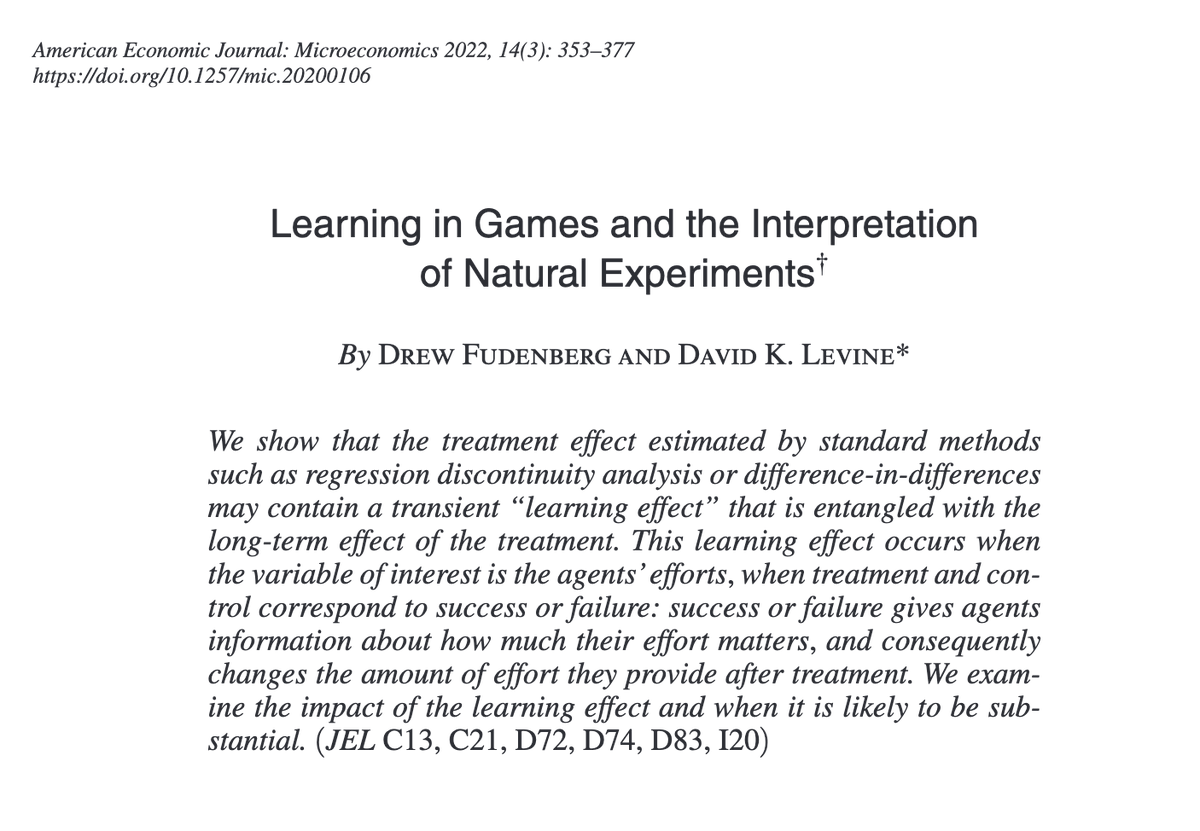
"Fighting poverty through development economics." A video from @ArtsLettersND highlighting the work of our colleague Enrique Seira (@SeiraEnrique). https://t.co/OHiEAHUreC
「3年後にAGIが誕生すると分かっていながら,博士号を取り,ポスドクになり,大学教授になる計画を立てているんですか?」
Anthropicの研究者が,博士課程の学生たちに「あなたたちのキャリアプランはもう存在しない」と告げた講演が話題です。
拡散モデルの発明者でもあるJascha Sohl-Dickstein氏(Anthropic)の講演『Advice for a young investigator in the first and last days of the Anthropocene(人新世の最初と最後の日々における若手研究者へのアドバイス)』を紹介します。
https://t.co/kKcoAbwP7x
人類が主役だった��質年代(人新世)が,AIの台頭によって極めて短い期間で幕を閉じるかもしれない ——そんな前��のもと,提示されたデータは強烈です。
■ 突きつけられた冷徹なファクト
モデル訓練の計算量は過去10年で約1000万倍に増加し,人間の脳が生涯で行う総計算量に迫っている。AIが単独で完遂できるタスクの時間スケールは,数ヶ月ごとに倍増している。ここ7ヶ月ほど,モデルは数学者が長年解けなかった未解決の「Erdős(エルデシュ)問題」を解き始めている。サンフランシスコでは「長いタイムライン(懐疑派)」とは「AGIは10年以内に来る」を意味している。2030年の計算量は2025年の約1万倍に達する見込み。
線形グラフで見れば,現在の劇的な進歩すら「まだゼロと区別がつかない平���な初期段階にいる」というのが彼の主張です。
■ 学生たちへのシンプルで容赦ないアドバイス
毎日AIを使え。指数関数の上にいれば,遅れを取ることはない。彼自身はClaudeを「実行力は天才だが、研究のセンスはかなり悪い大学院生」のように毎日使い,自分ではもうコードを一切書いていない。
計算量がスケールするほど良くなるプロジェクトを選べ。それ以外は,完成する前に解かれてしまう サットンの『苦い教訓』の通り,スケールに味方されるテーマを選ばなければ,2年かけた研究も完成する頃には次世代モデルのプロンプト一発で追い抜かれる。
キャリアを「安定したもの」として計画するのをやめろ。安全な選択肢は,もはや安全を買ってくれない 社会全体で大規模な破壊が起きるなら,ベースラインのリスク自体が高い。従来の「手堅い選択肢」は,もはや安全を担保してくれず,ただ潜在的なリターンを犠牲にするだけになる。
そして,最も印象的な一言がこれ。
「書くことは考えることだ(Writing is thinking)。書くことを外注すれば,考えることも外注することになる。」
コーディングや実行は徹底的にAIへ委譲しつつ,問題設定(センス)と思考の核(書くこと)だけは決して手放すな。 AGIのタイムラインを本気で信じているなら,キャリアの計画も本気でそれに合わせろという,極めてストレートなメッセージの講演を紹介しました。
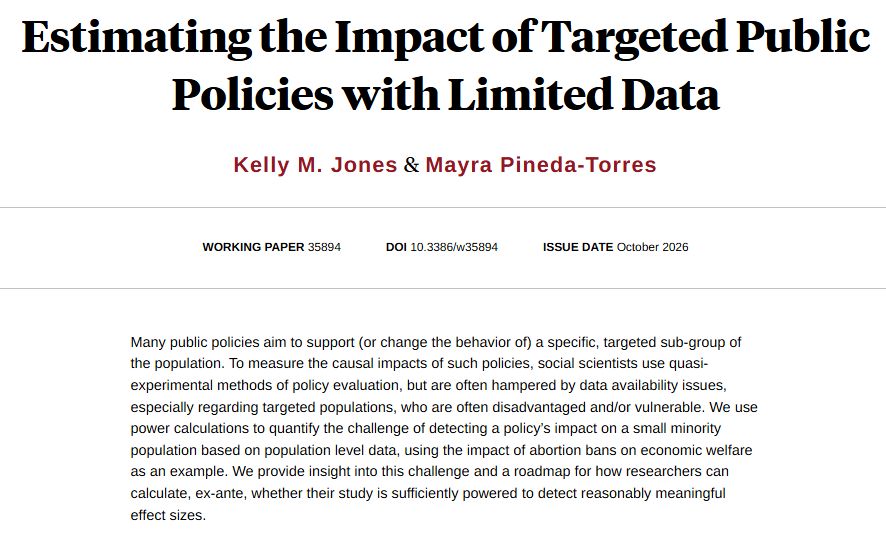
Presenting a roadmap for ex-ante power calculations when evaluating policies aimed at small, vulnerable populations, illustrated with abortion bans' effects on economic welfare, from @kmpjones and @mayrapinedat https://t.co/0sPcinlmGU
Information framing and the impact of nutrition label serving size change - Zhang - American Journal of Agricultural Economics - Wiley Online Library https://t.co/9OSGvyMNDy
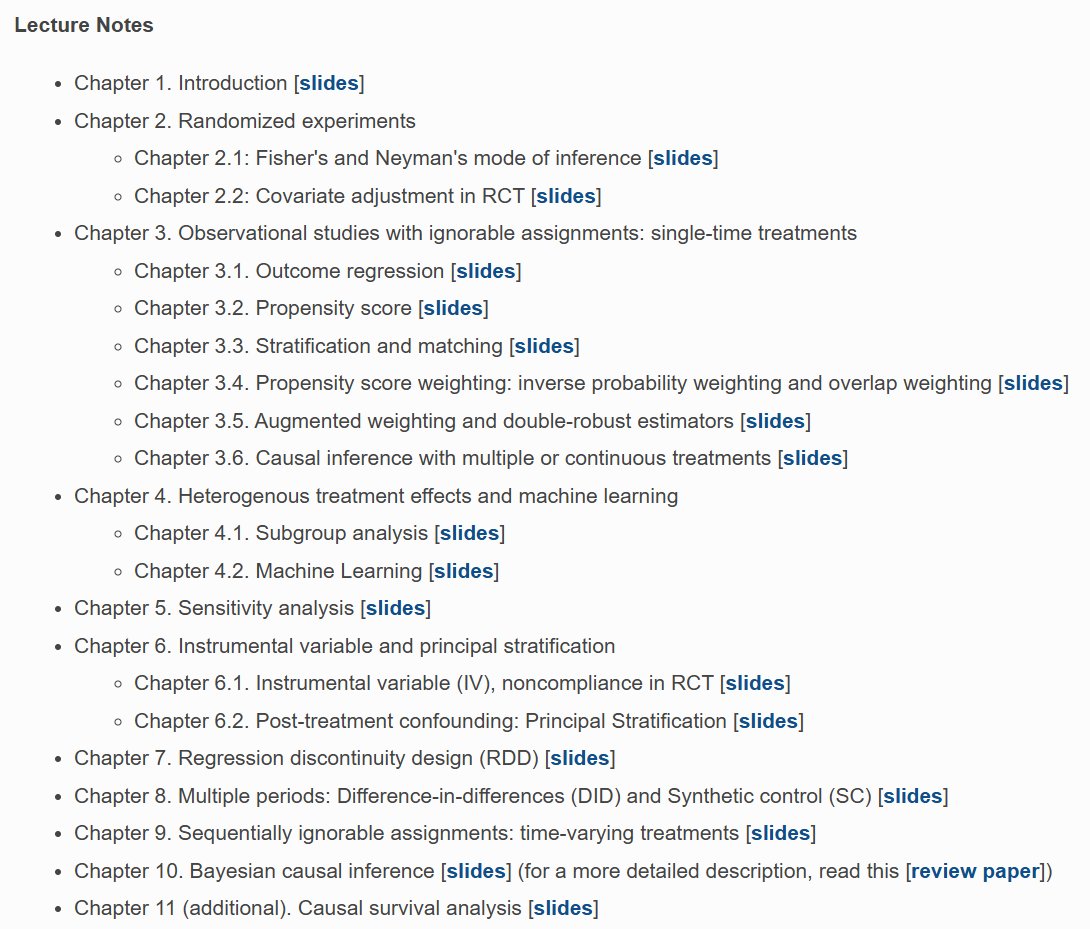
Open sourcing my regression lectures 🍻
AI is changing how we teach. Here’s one way I’m adapting: I’ve open-sourced my regression course, POLI 450A, built on Jens Hainmueller’s original class.
The course is suitable for first-year political science PhDs, as well as advanced undergraduate students in economics, political science, and other social sciences.
The materials include slides, R code, data, worksheets, and a short video for every lecture.
https://t.co/yUl3hs5P0Y
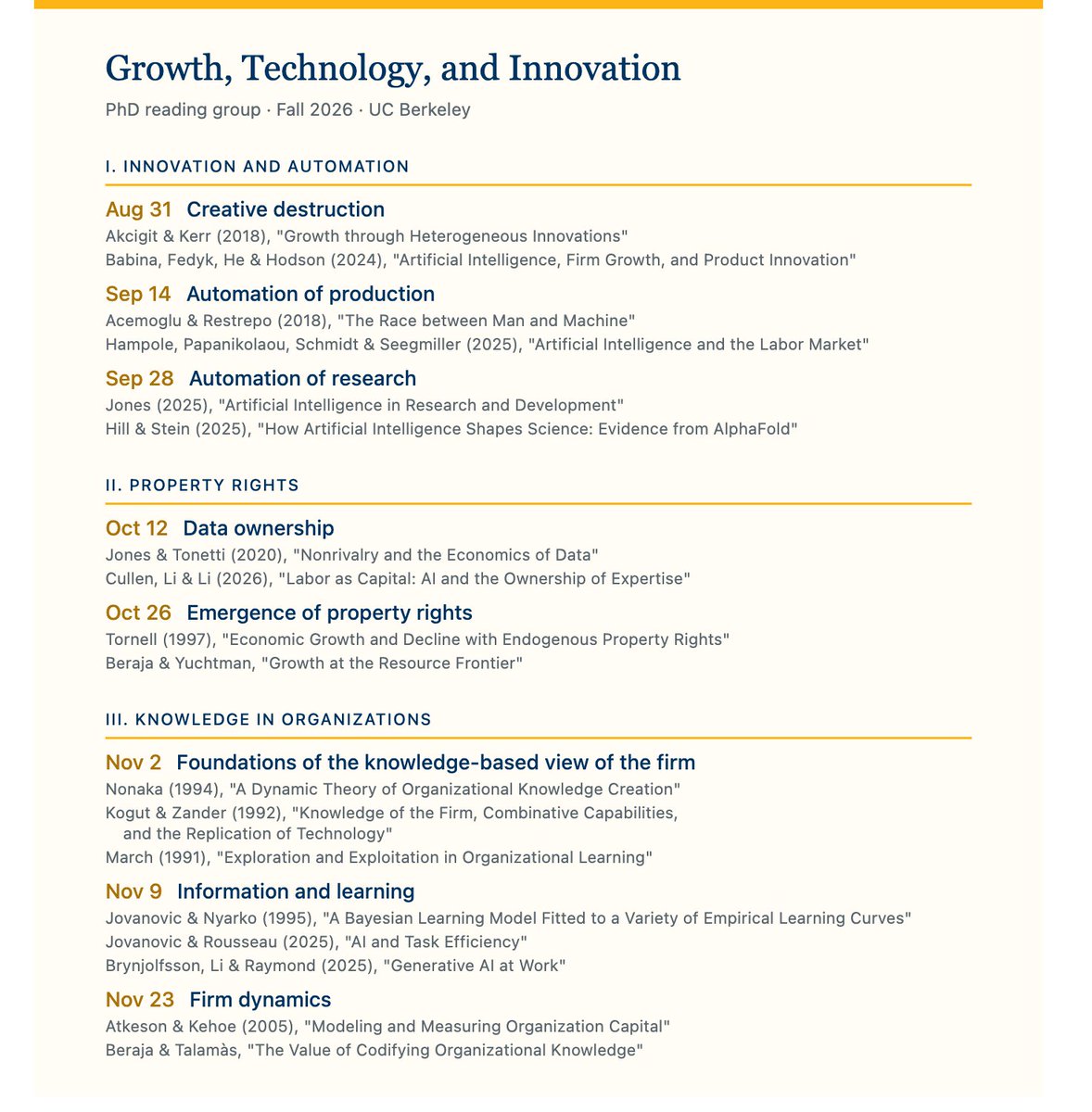
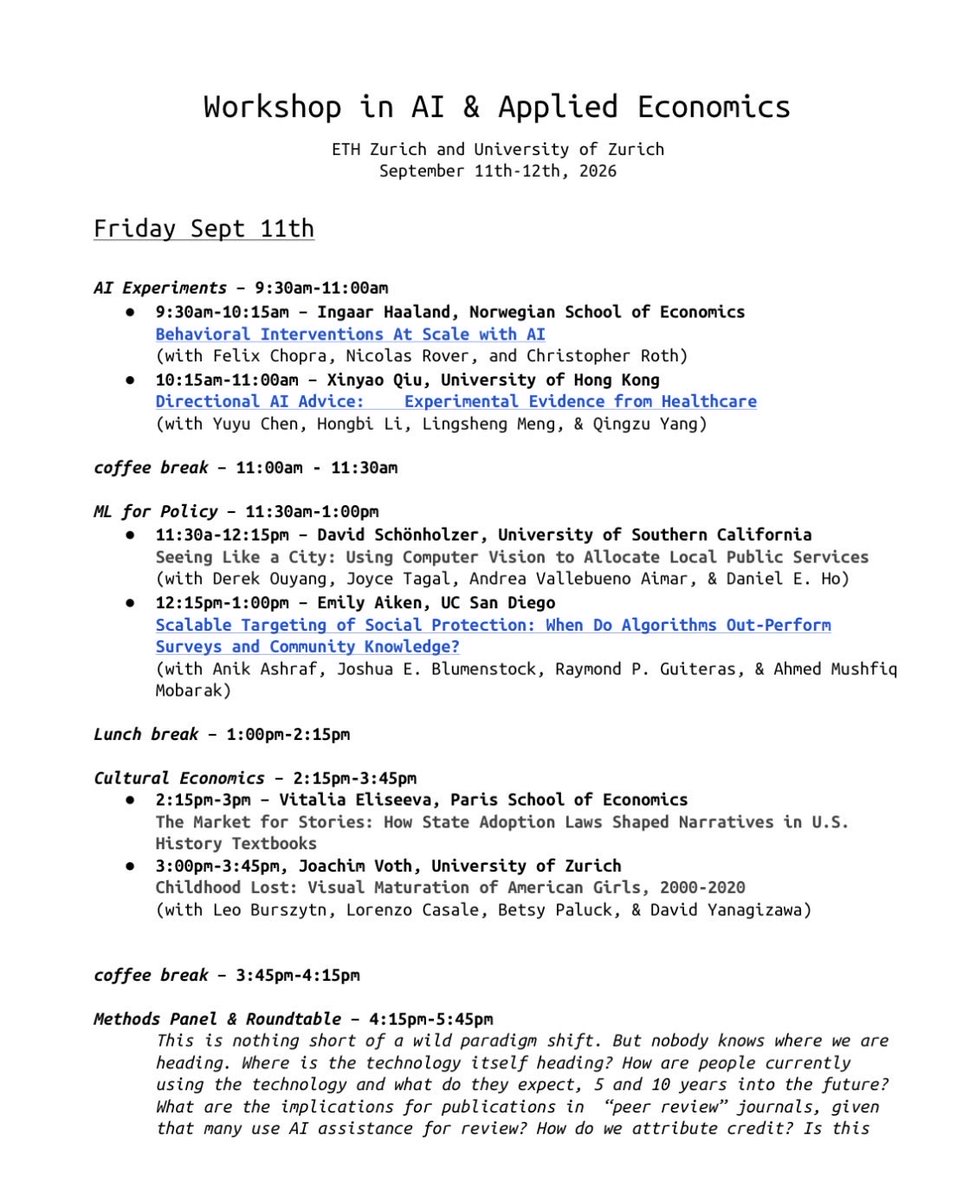
Today we kick off a PhD reading group at @UCBerkeley on Growth, Technology, and Innovation.
Sessions on innovation and automation, property rights, and knowledge in organizations — old classics and new work on AI, side by side, built around gaps where the next papers should be.
Here is the reading list for those who are interested.
I made a list of 100+ free social science datasets on GitHub. Check it out, and if your favorite dataset is missing, submit a pull request or reply! https://t.co/x8NMeZ3C7d
Parenting programs generate latent human capital, buffering children against schooling shocks in middle childhood, from Shruti Jha, @econ_4_everyone, Rebecca C. Royer, and Anya Samek https://t.co/2J6r3jTcV4
Forthcoming in AEJ: Macroeconomics: "Women’s Labor Supply Incentives and Old-Age Income Redistribution" by Fabian Kindermann and Veronika Püschel. https://t.co/JsA9jhDMrW
@DrKarleenG I have used Pangram AI myself, and it is far from accurate. Declining to review a paper simply because an AI detector flagged it is outrageous, especially given the well-documented unreliability of these tools.
LeanEconomics
https://t.co/U4Y1n6Wl6o
Current: prove existence of stationary general eqm for Aiyagari 1994, plus uniqueness for mu=1 (already known, now Lean formalized).
Please feel free to join the Github org and contribute to Econ in Lean.
Explain: https://t.co/VNw6X5wRdQ
Si estudian economía o les interesa la intersección entre Econometría/Inferencia Causal y Machine Learning, este paper de Susan Athey es lectura obligada. Explica qué puede (y qué no) aportar el ML a estas disciplinas
Les dejó el link: https://t.co/QGm35d5Pgg
Forthcoming in the AER: "Becoming Legible to the State: The Necessary but Not Sufficient Role of Identification in Taxation" by Oyebola Okunogbe. https://t.co/JbhyXAr6bB
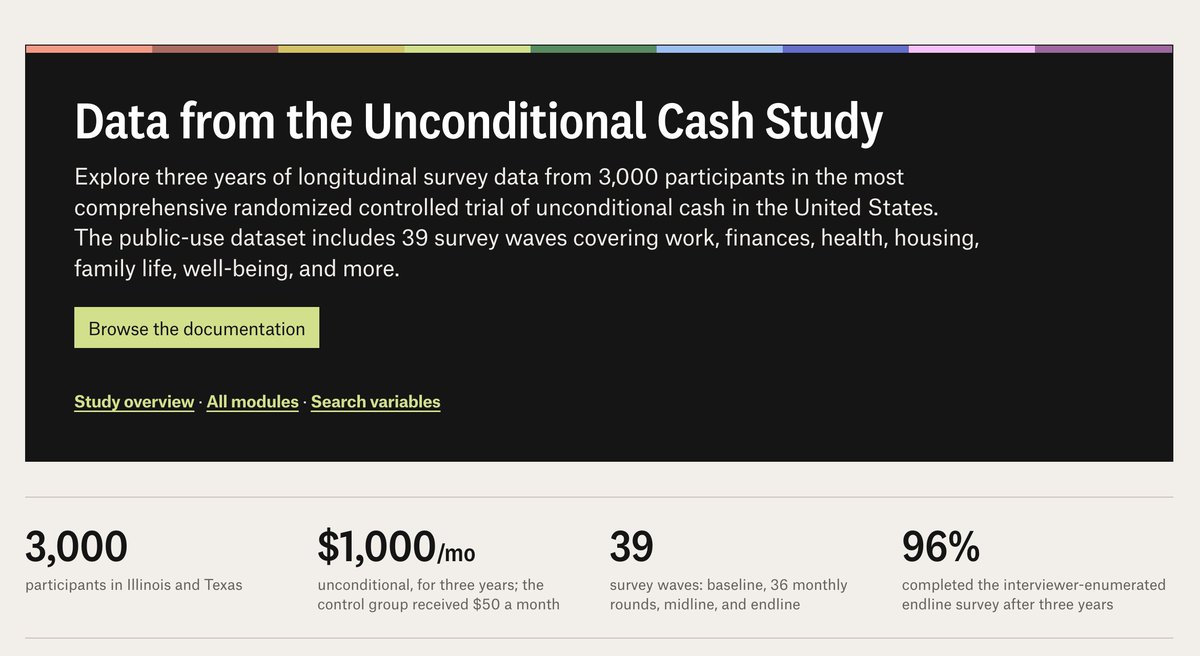
So excited that the public microdata is out for the Open Research Unconditional income Study (ORUS)! 1000 folks were randomly given $1000/month and a 2000 person comparison group received $50/month for 3 years.
Explore it yourself here:
https://t.co/Qox9fhhdGW
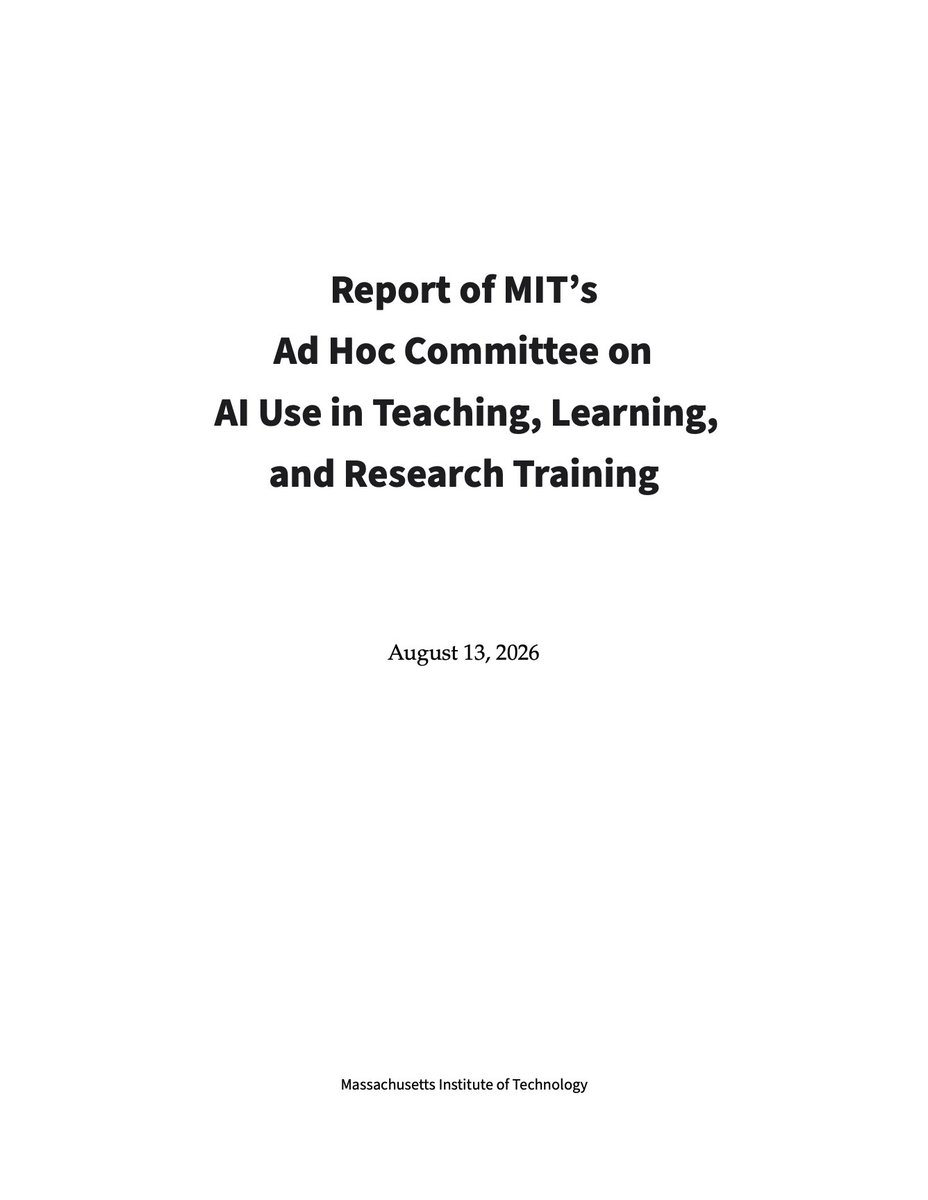
MIT published a brutally honest report on what AI is doing to students.
A committee of professors and students spent five months studying how AI changed learning on campus, and the findings read like a warning to every university on the planet.
Study groups are disappearing. Office hours are emptying out. Problem sets and take-home exams no longer prove anything, because AI can produce credible solutions to almost any written assignment in the undergraduate curriculum. Students who lean on chatbots lose mastery and confidence, and some slip into what the report calls cognitive surrender, reaching for AI at the first hint of struggle.
The numbers are rough. 46 percent of surveyed MIT undergrads use LLMs daily. 90 percent worry about their own overreliance. Undergrads who feel AI makes them replaceable now outnumber those who feel it makes them capable.
The committee's answer surprised me. They refused to fight AI with surveillance. The report calls AI detectors unreliable, says lockdown browsers feel like spying, and warns that policing students builds a classroom atmosphere of mutual distrust.
Instead, MIT wants to rebuild education around the things AI can't replace. That means oral exams, semester portfolios, in-person project work, and a required social component in every subject. The report even floats the idea of rethinking grades entirely, since without a GPA to optimize, much of the incentive to cheat with AI evaporates.
The committee warns professors against replacing undergrad research assistants with AI agents just because they're cheaper, because a university exists to grow people, not output.
The most famous tech school on earth admitted the machines broke its way of teaching. Its answer is more humans, not more software.