New podcast out with Erica Komisar on what children really need & the irreplaceable role of mothers.
Her insights challenge the status quo and remind us of the profound power of presence, sacrifice, and love in raising emotionally healthy children.
👍
https://t.co/8pV2afC2CI
PARE DE PERGUNTAR AO SEU FILHO "COMO FOI A ESCOLA."
Ele vai dizer "foi legal" toda vez.
Uma psicóloga infantil me disse pra substituir por uma dessas 4 perguntas:
"True knowledge and wisdom requires questioning what we perceive as reality, and accepting that it is, in many cases, not real, but just a manipulated show."
👆 SPOT ON @MattersInformed
https://t.co/BbA9bp3BPD
Erling Haaland is taking the world by storm.
He drinks raw milk and eats beef liver and heart.
He doesn’t fear the sun. He gets sunlight in the morning and limits blue light at night.
In this video, I’m reviewing his diet…
A bricklayer in East Yorkshire has spent 35 years putting up barn owl nest boxes on weekends. This year, the region saw 308 owlets hatch.
His name is Robert Salter. He's 56 and does bricklaying full time. In 1990, he saw a piece on the news about a man in Lincolnshire installing barn owl boxes, and decided he'd do the same. He started with five.
He now has more than 350 boxes scattered across fields, farms, outbuildings, and trees in East Yorkshire. Every June, he takes four weeks off from bricklaying and visits them with his wife Sue. Scrambling up ladders, ringing chicks, cleaning boxes, repairing the ones the weather got to. He's a licensed bird ringer for the British Trust for Ornithology.
In 2024, the region ringed 95 owlets. In 2025, the count was 308. The Barn Owl Trust says that nationally, this year was "pretty poor" for barn owl breeding, but east Yorkshire is the exception, and it's the exception because of one man with a ladder.
The barn owl population in the UK was estimated at 4,000 pairs in the mid-2000s and crashed to roughly 1,000 by the early 2010s. The species is still recovering.
Most of conservation is one person who refuses to give up.
⚡️The deeper signal is youth risk did not disappear.
It migrated inward.
Teen drinking fell because the old physical world of adolescence got dismantled. Alcohol belonged to a social ecosystem: unsupervised time, cars, parties, local jobs, malls, basements, boredom, flirting, older siblings, house gatherings, and the chaotic peer world where teenagers learned who they were by colliding with other people in real space.
That ecosystem was replaced by phones, surveillance, parental tracking, algorithmic entertainment, social anxiety, online status games, and a much thinner physical commons.
So the surface looks healthier. Fewer kids drinking. Fewer kids using weed. Fewer kids doing reckless things in public.
The hidden layer looks worse. The young are less reckless because they are less socially embodied. Less initiation. Less unsupervised friction. Less courage-building. Less embarrassment and recovery. Less real dating. Less independence. Less contact with the physical world before adulthood demands it.
The old teenage world produced damage, stupidity, alcohol abuse, pregnancy risk, fights, accidents, and bad decisions. No need to romanticize it. But it also produced social reps. It forced young people through discomfort. It made them practice attraction, rejection, conflict, reputation, risk, repair, and status in the open.
The new world suppresses visible risk while increasing invisible fragility.
That is the trade.
A teenager can avoid drinking, avoid parties, avoid sex, avoid driving, avoid real confrontation, avoid rejection, avoid shame, avoid danger, and still arrive at 23 emotionally underbuilt. Cleaner behavior does not automatically mean stronger formation.
This is why the marriage chart and the teen drinking chart are the same story at different stages. People are not suddenly failing to pair in adulthood. The whole pathway into embodied adulthood has been slowing for years before marriage even becomes the question.
The real truth: society solved part of the teen vice problem by shrinking the arena where teenagers become adults.
It took away the dangerous commons and replaced it with controlled isolation.
The result is safer kids with weaker initiation into real life.
We are overstimulated and we don't even notice. Netflix while eating. Reels in the bathroom. Music while cooking. Podcasts on walks. We consume by default, not by intention. You keep filling every gap, then wonder why you feel foggy and unmotivated. Boredom and silence are the real growth drivers. They give you space to think and create. That's when solutions show up for problems that have been stuck for months. Leave some room.
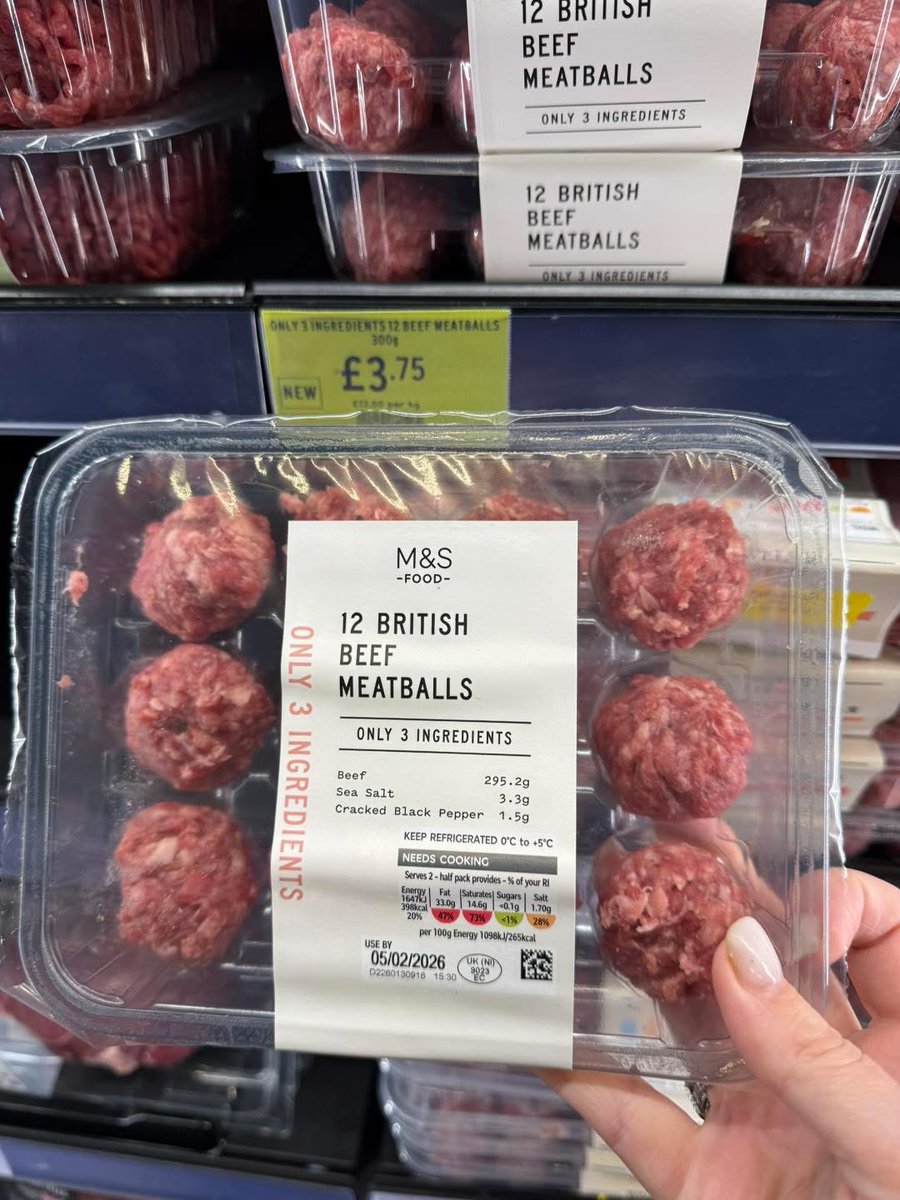
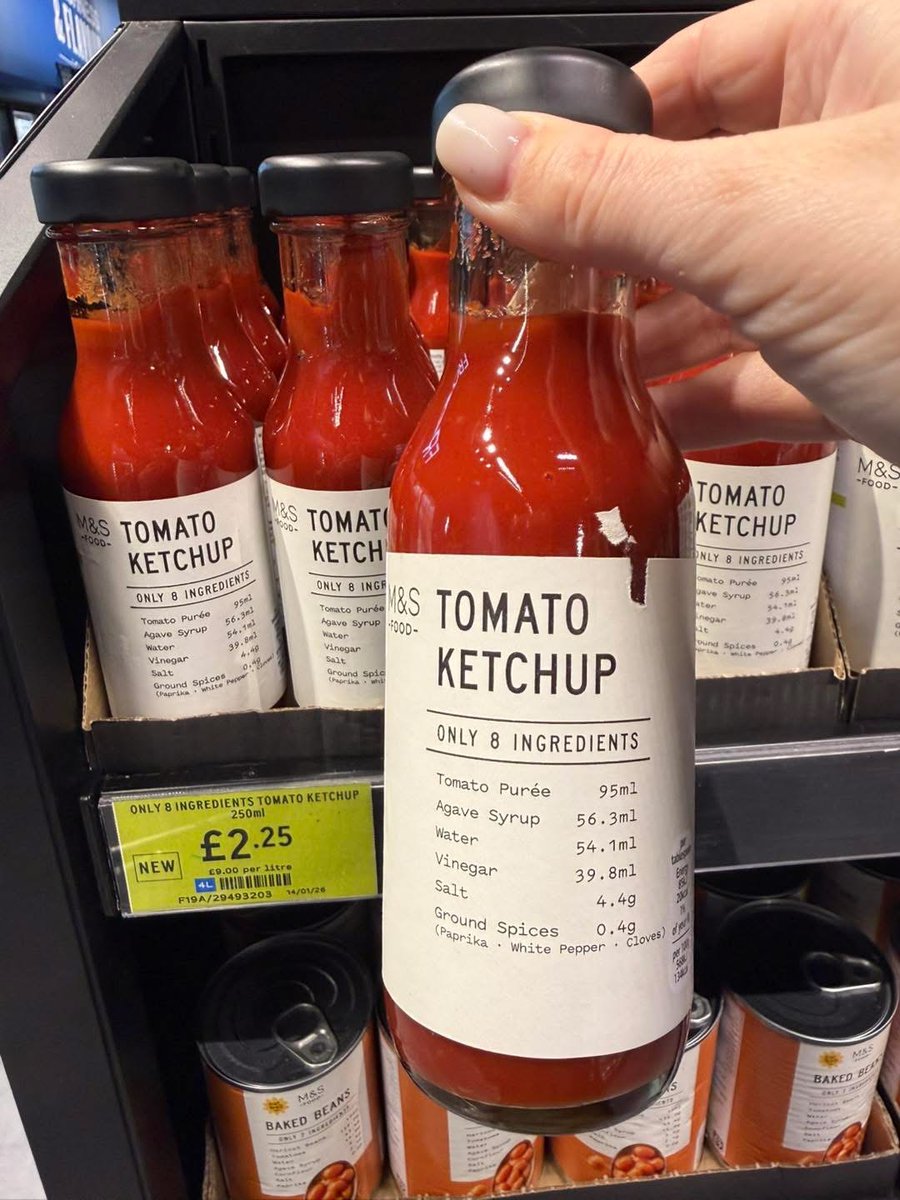
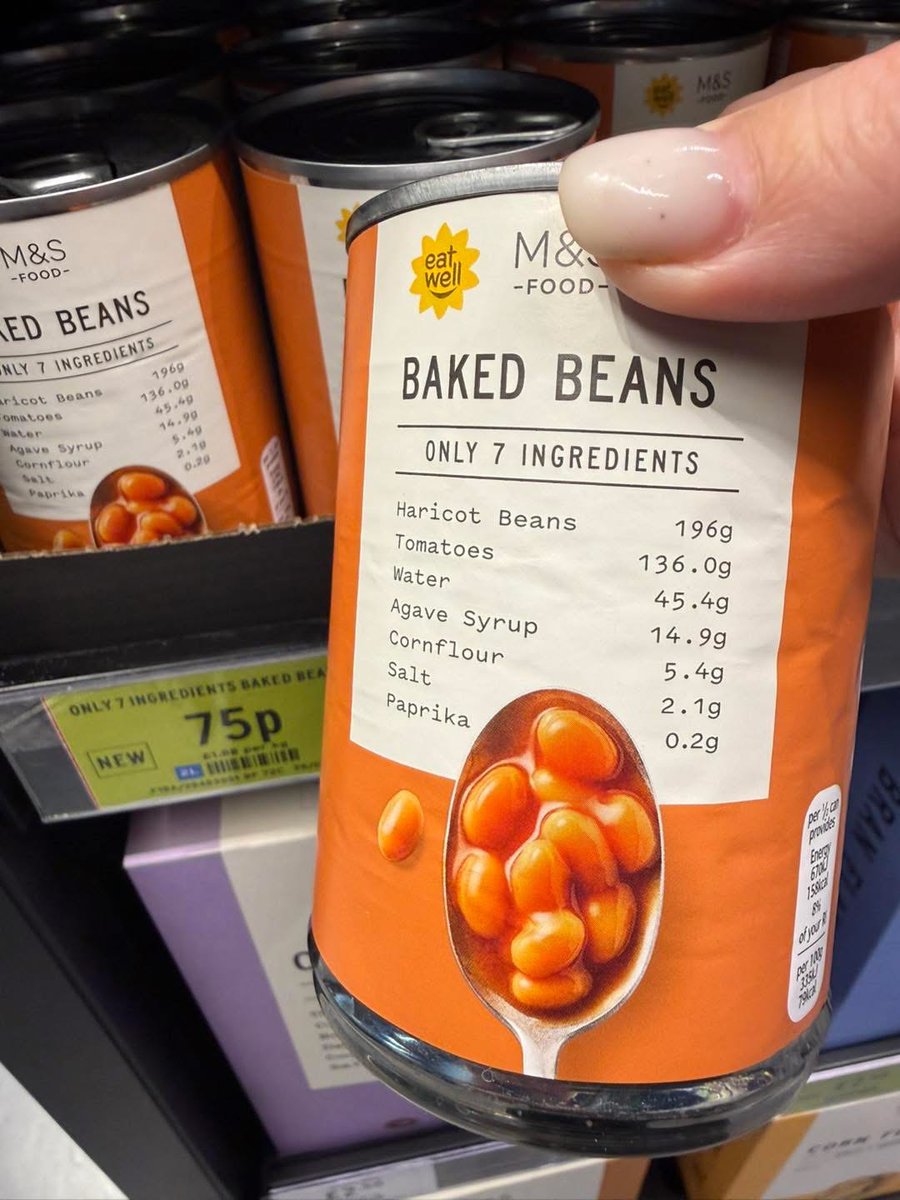
OK M&S just dropped something actually genius: their new 'Only… Ingredients' range 😍
Everyday staples like baked beans, sausages, burgers, ketchup, yoghurts, cereals... made with 3–8 recognisable ingredients MAX. No weird additives, no artificial colours, no preservatives, no ultra-processed nonsense. Just proper food, back to basics. 👏🏻
A quite unbelievable and, frankly, stupid line of defence from Petey.
His innocence until proven guilty granted, but this line is simply dumb.
It assumes that male pedophiles don’t also procure underage boys for gay men.
Celebrating New Year on January 1st, in the dead of winter, has felt off with me for quite a while - turns out 1st April used to be day... https://t.co/hJVbM0RL0B
How the City of London is not part of the UK.
For those who have not seen this before it’s important you watch and listen. The City of London, Washington DC and the Vatican City all have special status. This gives special rights and protections to those in these areas.
The speaker is Professor Richard Werner.
One if not the most important video in the history of the 20 century!