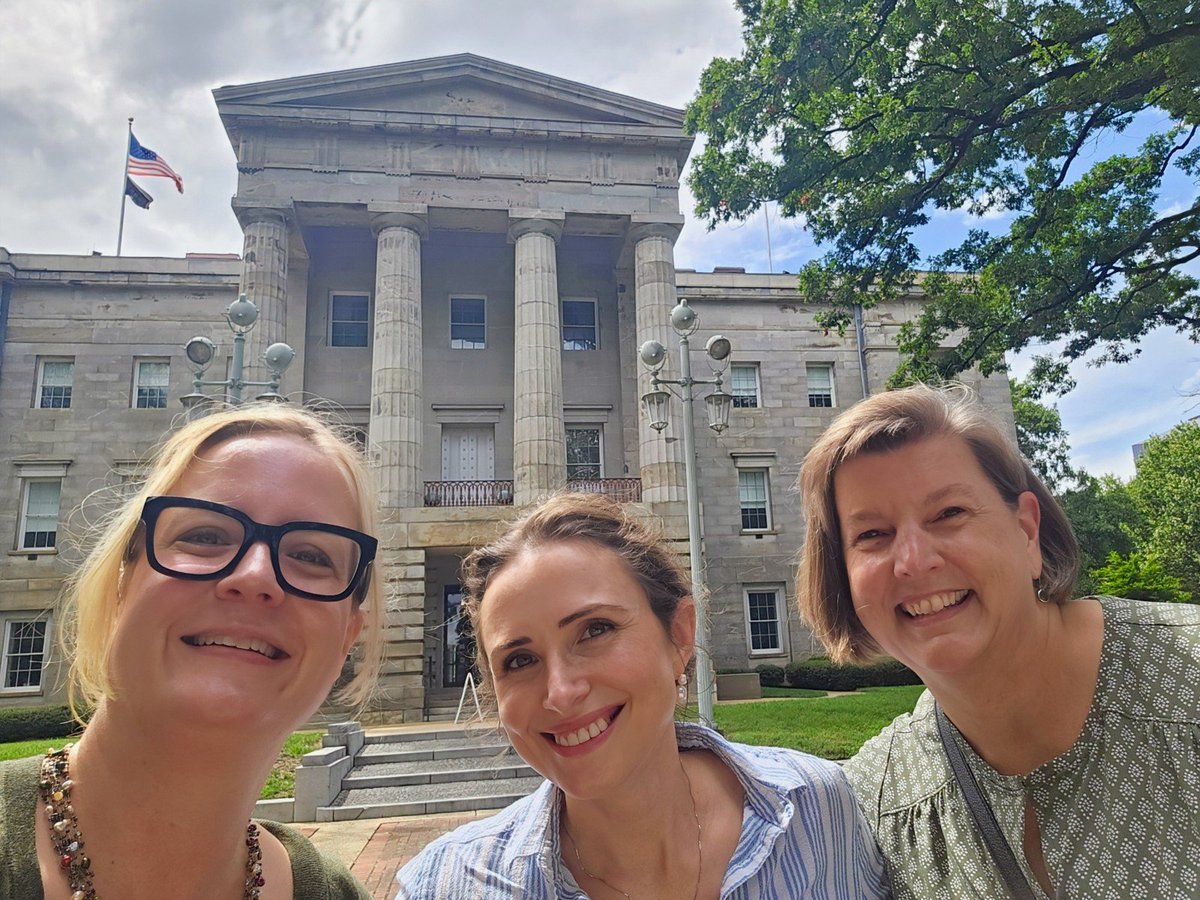
Using data from 2017–2026, the study will compare detention pathways and outcomes across three pretrial policy periods in Cook County—measuring how each shapes both public safety and the burden on local jails.
Congratulations to @RobinaInstitute Research Director Julia Laskorunsky (@jl_crim) & @UMDCriminology Asst. Professor Robert Stewart, who have been awarded a Safety and Justice Challenge (@safety_justice) grant to fund a new project examining pretrial detention in Cook County, IL!
Kevin R. Reitz will be a panelist at tomorrow’s “Re-Punished for the Past: Criminal Records and Sentencing,” a webinar from @SentencingProj that will examine the role of sentencing commissions and highlight recent reforms in MN, PA, and WA. Register here: https://t.co/A2GKwWEKzu
The report finds that criminal records can account for a large share of already lengthy prison sentences, often adding years or even decades to sentences, without evidence of community safety benefits. Read the full report here: https://t.co/mXwjFtBi8V
The @SentencingProj has released a new report that examines sentencing policies and outcomes in MD, MN, PA, and WA for individuals sentenced to 10 years or longer, building on Robina's work on prior record enhancement.
As part of the Minnesota Sentencing Guidelines Commission Research Support Project, Robina Institute researchers wrote to endorse the Commission’s proposed amendments. See the full letter of support here: https://t.co/7soXMxPeKz
The letter highlights research that supports several of the key proposed changes, which are intended to increase sentencing proportionality and modernize the guidelines.
Robina Institute board member Prof. Perry Moriearty penned a @StarTribune opinion piece recognizing outgoing Hennepin County Attorney Mary Moriarty’s contributions to public safety in the Twin Cities. Read the full article: https://t.co/AGq5eK7rxt
The Special Issue of Criminal Law Forum, "Celebrating the Career of Michael Tonry", co-edited with Julian Roberts (@OxfordCrim), is now officially published.
https://t.co/EUhxPRWEG7
Robina Institute board member Prof. Perry Moriearty was quoted in the @StarTribune about a new policy in Hennepin County that asks its prosecutors to consider the racial identity of defendants. Read the full article: https://t.co/IhgxiWolOE
As part of the Minnesota Sentencing Guidelines Commission Research Support Project, Prof. Kevin Reitz presented “Guidelines' Purpose and Principles” to the Commission on February 13. Learn more and view the presentation on our website: https://t.co/QEYuZN4lye
As part of our MN Sentencing Guidelines Commission Research Support Project, we’ve shared a series of presentations made by the project team to the Commission. View them all and learn more about the project on our website: https://t.co/NGg8inCqFb
Excited to be presenting at two sessions tomorrow! Join me at 9:30 am in Willow to hear about MN's increasing recommended incarceration rate and again at 3:30 pm in Salon 7 for a roundtable on researcher and sentencing commission partnerships. #ASCrim2024
Former Robina co-director Prof. Richard Frase served on the MN Dept. of Corrections Aiding and Abetting Felony Murder Task Force, which released a report of its findings and recommendations earlier this year. Read the full report at the link below: https://t.co/Dgmx7USGIk
Check out this new article by @Stu_Kokkalera and @GeliMaples1225 in the @JCJLcjJournal, which reviews parole structures and procedures for lifers to find commonalities and variations, and cites multiple Robina Institute publications: https://t.co/xOw29oPcT4
Excited to share that this work with @GeliMaples1225 is now published: https://t.co/7y5YJeAVR1.
We reviewed parole structures & procedures for lifers to find commonalities & variations.
Thanks to @ORSP_SHSU for the support!
@CJCSamHouston@SHSUCJ@APAIparole
Robina Institute Research Director Julia Laskorunsky (@jl_crim) is quoted in the new @MSTODAYnews article, “Is Mississippi’s parole system broken?” Read the full piece at the link below.
Inconsistencies with who is paroled, the use of long setoffs and infrequent use of other forms of medical or compassionate release keep people inside, contributing to the growth of Mississippi’s prison population.
https://t.co/C8gkDdJeZF