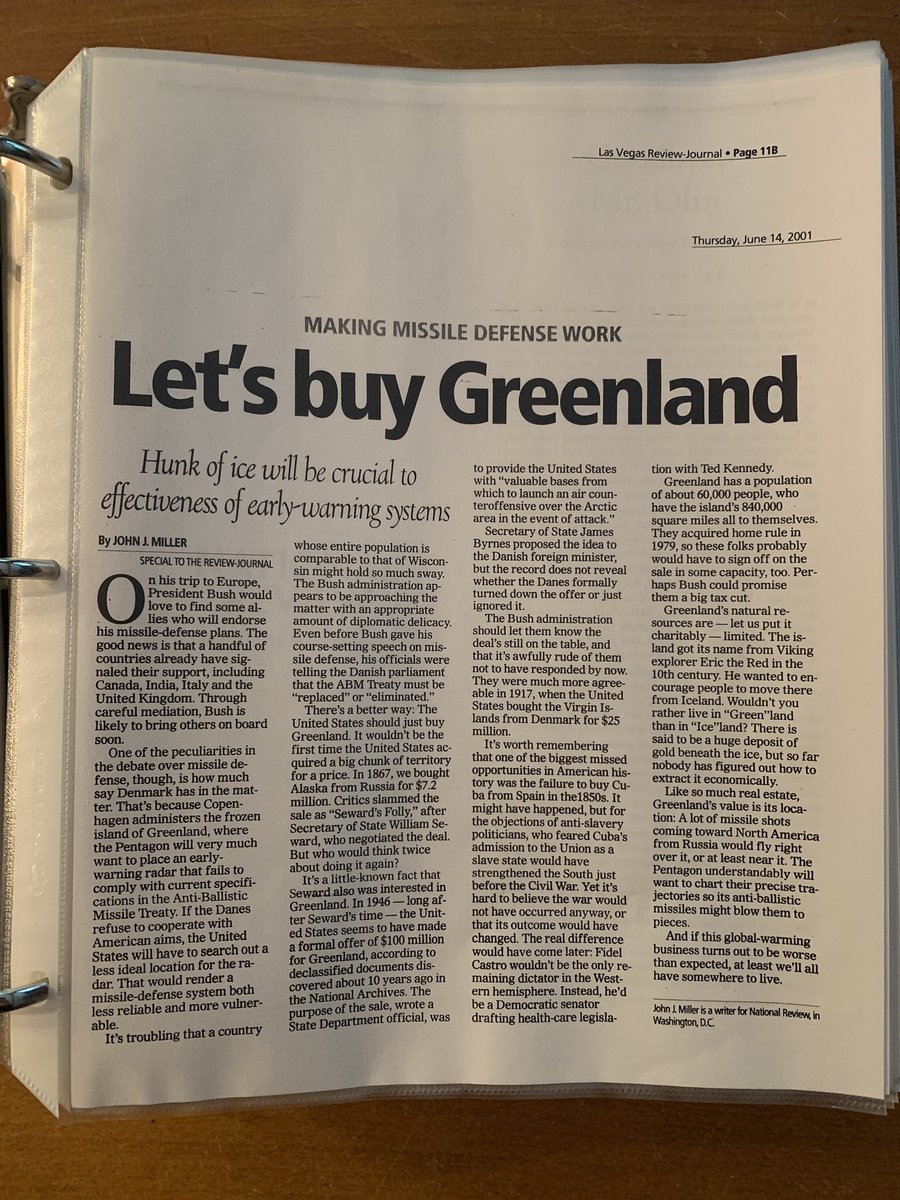
"To see History only as a mass of facts arranged in order is puerile curiosity — but to see the errors of our fathers and render oneself thereby wiser is an excellent School." -Rousseau
@MTClassical I'm wondering if there is a reflection on Ecclesiastical courts vs. Civil courts in the trial scene. Ivan wrote articles on this topic. There is a hidden silent third option for the trial.
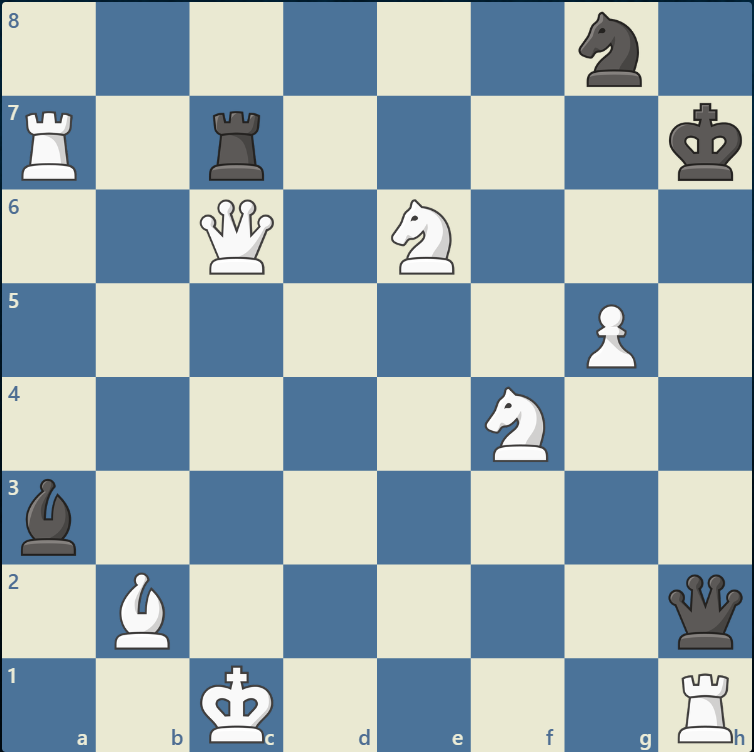
This is an outstanding quote from Kubrick on what chess has to offer to human life as a whole--namely, that you must assess whether what looks good at first glance is actually good.
Also, FischerKing reads Playboy mostly for the articles
@MTClassical Yeah, that's a quick analogy that works. The plagues also appear in the first third of the novel. Huck should have put stock in religion.
I think the first spoken words are Who dah? in chapter 2.
Reflections on Moby-Dick, Chapter One: Loomings
Is Ishmael, the character, suicidal at the beginning of Moby-Dick?
He says it is a damp, drizzly November in his soul, that he was pausing before coffin warehouses, that he was going to funerals, that the sea is a substitute for pistol and ball, and that whereas Cato throws himself upon his sword, Ishmael takes to sea.
So at first glance, I think: yes, the character is suicidal.
But a friend wondered if Ishmael is being a little bit tongue-in-cheek here. That is, don't some schoolmasters jokingly say, "man, days like that make me want to kill myself," and they don't really mean this in a literal sense. It is verbal frustration that overstates things for effect.
When Ishmael talks about wanting to knock men's hats off, that sounds like a joke. This and other things inclined me toward seeing the suicidal talk as just a bit or a darkly humorous exaggeration.
Well, if Ishmael is suicidal, what thought or consideration might have led him to feel this way?
When Ishmael looks at the landsmen, he notes that during the weekdays, they are "tied to counters, nailed to benches, clinched to desks. How then is this? Are the green fields gone? What do they do here?"
In other words, they are enslaved; they are busy doing nothing worth doing. I'm thinking of Diogenes moving his tub back and forth. Ishmael, as a former schoolmaster, was perhaps tied and nailed to his job. What is it that he did there?
Further, he says that he is functionally a slave on a ship, but "who ain't a slave?...I have the satisfaction of knowing that it is all right; that everybody else is one way or other served in much the same way--wither in a physical or metaphysical point of view, that is..."
All humans serve someone or something else that they wish they didn't have to. In Ishmael's view, this should lead us to be well disposed toward others: "all hands should rub each other's shoulder-blades, and be content." The basic situation of man is that he is enslaved or compelled to serve, and since it cannot be otherwise, we should be content. Obviously, Ishmael is not able to remain content--more on this in a moment.
Finally, Ishmael notes that it is "but well to be on friendly terms with all the inmates of the place one lodges in." The fundamental situation that underlies what everyone says about the world, is that we are all prisoners.
Again, Ishmael notes that many gaze out at sea. Like Aristotle says, all men by nature desire to know. But most don't go down this path very far; and perhaps this is because when men stare at their reflection, they won't ultimately like what they discover. Maybe Narcissus drowned, not because of his vanity, but because he discovered that he didn't matter at all.
Ishmael seems to go a long way towards accepting his cosmic insignificance when he says, "I abandon the glory and distinction of such offices to those who like them. For my part, I abominate all honourable respectable toils, trials, and tribulations of every kind whatsoever." In other words, he doesn't need recognition of his goodness by others. He doesn't feel a need to matter; he is not self-important or seeking to have his name ring in the minds of men. He may not have even told us his real name.
Nevertheless, he still has a sense of honor that is pricked when he moves from schoolmaster to sailor. He hasn't fully accepted or reconciled himself to his own assessment of the underlying situation.
Perhaps going out to sea provides a setting that provokes in him a reconsideration of this question. "The whaling voyage was welcome; the great flood-gates of the wonder-world swung open..." To wonder at something is not to know what caused it to be as it is.
Tldr: Ishmael asserts that human life is cosmically insignificant; sometimes he can't accept this and he becomes depressed, wishing for that situation to be otherwise; the journey out to sea is, for whatever reason, the proper place to re-open the inquiry into the character of cosmos to see whether everything is fated or not. The narrator seems to have re-arrived at the conclusion that the character Ishmael is depressed by. Does Melville show us, over the course of the novel, an argument for why we should believe the same thing that Ishmael seems to?
RE: Introspection and great men
Shakespeare’s Coriolanus gives us a window. As far as I know, this is the only instance of poetry in this play. For a brief moment, the rigid republican virtue is pealed back:
Neither the right nor the left counts much here. What counts is elite liberals. Enthusiasm for the mass murder of Jews became a fixture of college campuses, from Columbia to Harvard. Now, granted, cities/liberal precincts are more broadly turning to third-world-ism as global change hysteria recedes.
But let's not forget that it was elite, often feminist leadership that allowed the Jew hatred to become national news. Let's think about that for a minute. Where did the crazy people on campus learn to behave the way they did, to say what they were saying? They learned that from elite liberals. Who hired the third-wordlist Edward Said / Frantz Fanon epigones to offer Jew-hatred as a transgressive educational experience at Ivy League schools?
Let's go one level deeper. Why did young Progressives turn Jew hater? Because their liberal parents or college authorities were anti-Zionist: The younger generation just decided to simplify the issue. They could retain all the moral prestige of elite liberalism but add the moral urgency of hatred.
Older liberals played games for generations--anyone to their right is a Nazi, but on the other hand they themselves are not beholden to Jews, they're anti-Zionist! Liberals are so wise that they know Jews are tempted to become Nazis instead of being good liberals! That was a complicated act to pull off & the Progressive children really are stupider than the liberal parents, so they can't do it. But at the same time, the stupid Progressives are exactly correct about what their elders really believed--so just cut to the chase.
Progressives get to radicalize what the previous generation of liberals was doing while continuing in the same direction of travel. A lot of this was generational succession. Jew hatred is a way to reject institutional & moral authority, just like accusations of anti-Semitism in the '60s. But Jew hatred also has the character of preparing the heirs of elite institutions for downward mobility. You simply don't get that much by attending Columbia. & the world you have to deal with is a lot more third-world than anything else. Liberal delusions can't protect you from that anymore than liberal prestige can guarantee you a career in activism, bureaucracy, or publishing. Academia is falling apart. Revolutionary ideologies, the more retarded the better, are a natural companion in such times.
RED, GRAY, AND BLUE
The biggest mistake most commentators make today is talking about "the United States of America" as if it still exists as a unitary entity. In reality, it's the Disunited Tribes of North America.
Different American tribes now have their own preferred influencers, foreign policies, genders, companies, counties, and even currencies. The only thing they don't yet fully have are their own countries. But the mass migration is already here between blue states and red, and the digital secession into separate social networks is already here too. It's blindingly obvious that the endless cloud strife is going to be printed out onto the land; all that awaits is formal American Partition.
Until then, we are stuck in this bizarre twilight zone where people keep talking about "American policy."
However, we know you can't talk about "Korean policy" without immediately clarifying whether you mean North Korea or South Korea. And so too you can't talk about "American policy" without clarifying whether you mean Blue America, Red America, Tech America, or one of their increasingly numerous sub-tribes.
SILICON VALLEY VS PENTAGON
Which brings us to the ongoing conflict between Silicon Valley AI companies and the Pentagon. This is just one of many conflicts between Network and State, and just one of several lose/lose scenarios between blue, red, and gray/tech that are playing out across the chessboard. But you can't understand what's going on without the tribal lens.
Briefly: the center-left tech guys at Anthropic (along with many at OpenAI and Google) say they don't want their software to be used for autonomous weapons and domestic surveillance. They see themselves as protecting civil liberties.
Meanwhile, the center-right tech guys in the US government do want AI to be used to defend their land, and resent the idea that every (potentially sensitive) military plan can be vetoed at will by a mere tech company. They see themselves as protecting national security.
THE TRIBAL LENS
This argument about principles breaks down because it's not really about principles, but about root control.
The Anthropic employees trust their CEO to make judgments about what happens to user data. They don't trust these Pentagon MAGAs. And the Pentagon has exactly the opposite set of intuitions: they don't want these squishy wokes to be upstream of their military and their President.
Fundamentally, the tech left doesn't want the tech right (let alone the full Republicans) to have root control over them, to be able to seize their companies or surveil them. And the tech right doesn't want the tech left (let alone the full Democrats) to have root control over them, to be able to veto their military plans or impede their presidency.
All this is against the backdrop of many other raging conflicts, including Democrats vs Tech (via the wealth tax) and Tech vs Democrats (via AI disrupting blue jobs).
The tech right thinks the tech left is dumb for not seeing that they're the one thing protecting them from getting taxed to death by Democrats, not to mention distilled by China. The tech left thinks the tech right is dumb for wanting to power up a surveillance state that may get handed over to Democrats...and thereby turned into China.
Which brings us to China.
THE CHINESE CHALLENGE
Both tribes constantly invoke China as the outgroup.
Obviously, China is building autonomous weapons. So if the American state doesn’t match what China is doing, it won't be militarily better than China! On the other hand, China is also doing domestic surveillance. So if the American state does match what China is doing, it’ll be no better than China!
Both also have internal divisions on China.
The tech left, including Anthropic, has used the China-vs-America framing to argue for AI funding. They're also mad about China distilling their models. So the tech left actually does have some real anti-China sentiment.
Conversely, the tech right, including many in the administration, has used the China-surveilling-their-citizens argument to argue against censorship. They're also mad about Democrats abusing the state against them. So the tech right actually does have some real internal libertarian sentiment.
(Note: the far left & far right oppose both tech and all military involvement abroad, for different reasons, so they aren't directly participating in this argument.)
TAKING THE L
Ultimately, however, none of this matters.
On the present trajectory, the American state is simply not going to outcompete the Chinese state, because the American people are unable to cooperate for the greater good, and therefore a "United" States of America does not exist.
The modern American is all about liberty (red), or protest (blue), or techno-capitalism (gray). That's all great stuff, but each is about individual rights, as opposed to the collective responsibility felt by the 1950s American.
Meanwhile the Chinese are about harmony, the party, and techno-communism. They've developed a social contract where they're fine with fusing their nation, state, and network together into a giant Voltron.
For China: their nationalists are their Republicans, their statists are their Democrats, and the technologists are their Silicon Valley. Of course they have their internal conflicts, but for now all of that has been quashed by the party. The result is that the Chinese have collectively built perhaps the most powerful manufacturing goliath that's ever existed on earth.
And that Chinese nation/state/network fusion challenges the Republican belief in liberty, the Democrat faith in democracy, and the Technologist faith in founder-led capitalism. No mere appeal to principle is going to work against Chinese Voltron. It's like praying to Zeus against a nuke. You need a set of principles that actually generates collective power, power comparable to China. Or you need to capitulate.
CAPITULATE, OR COOPERATE
The Democrats (and the Western left more broadly) are actually the first to realize this, which is why Carney/Mamdani/Newsom/Walz and the like are just capitulating to the Chinese state. The Biden Democrats threw the kitchen sink at China, but the Chinese state won, and proved itself the stronger horse. So blues are now (implicitly) auditioning for a position as overseas bureaucrats in Xi's empire, as apparatchiks in Communist Canada and Chinese California.
Tech and Reds haven't fully caught on to this. The Republicans still claim their military is stronger than the Chinese military, and Silicon Valley still thinks their tech is better than Chinese tech. They point to the few areas where they still have an edge, while trying to ignore the enormous scale and speed advantages China has (especially in the physical world).
You might think the mass-produced, back-flipping Unitree kung-fu Chinese humanoids would be enough to disabuse both red and tech of their illusions here. But a demo is probably not enough; we may all actually need to see the Chinese drone armada in action to mark the world to market. Perhaps it gets debuted in Ukraine, Iran, or some other proxy war.
As Orwell put it, "sooner or later a false belief bumps up against solid reality, usually on a battlefield.” I do hope my friends on left and right learn to cooperate before that happens. I am extremely skeptical that they will.
In an essay about “Demons”— his masterpiece on what the depths of popular nihilism look like all around us— Dostoevsky notes:
The true source of the evil is the way the bourgeois allow their children to be educated to favor mere fashion, impatience, and disrespect to tradition
Michael Anton sent me the following to post in response to Pinker. I do so as a thread now, and in @theammind tomorrow:
It is honestly amazing to be noticed, even if negatively, by someone of the eminence of Steven Pinker. I respect Pinker because (among other reasons) Steve Sailer, whom I also respect, respects him and has explained in terms I can understand why Pinker’s work is worthy of respect.
Pinker and I have one major disagreement (and I assume many others) which is brought out in his tweet: I have a foreboding sense of apprehension about the future; Pinker by contrast wrote a whole book arguing that now is the greatest time to be alive. What I recall of it is that Pinker’s case centered around a decline in violence. Which I don’t doubt is true in many respects, though as Sailer points out, it can be made easier or harder to argue the world is less violent that it used to be depending on when you start the clock. Pinker is also on record enthusing about various advances of science and technology, much of which I would have to concede, especially since I am a beneficiary and consumer of so much of it.
However, my case for pessimism—which is long and involved and so I will not here restate; but see my “A Tyranny Perpetual and Universal?” from five years ago (not updated, alas)—is fundamentally political and spiritual. And, for the record, I do think the technology which Pinker finds to be a blessing is accelerating both. Time will tell who is right, but I will repeat for the record that all the bad things I predicted in “The Flight 93 Election” came true—just not in 2017 with President Hillary Clinton, but in 2021-2025 under President Joe Biden. And that’s leaving aside the parts that were not predictions but mere observations of things that were already happening.
Pinker’s fundamental point in his tweet is that “everythingis fine.” I wouldn’t expect him to think or say anything different, but he might benefit from making more of an effort to understand why many of us think everything is not fine. A political movement that can garner more than 214 million votes in eight years must be based on something.
I don’t know how familiar Pinker is with the work of David French, whom he quotes in that tweet, but I would caution a scientist of Pinker’s caliber against taking anything French says at face value. French is a propagandist for the pre-Trump (and, he hopes, post-Trump) socio-political order. His value consists in only two things: he can pose as a “conservative” while constantly knifing actual conservatives in the back, and he tells his (elite, blue coastal) readers what they want to hear, viz., that Trump supporters are mouth-breathing racist-fascists with no legitimate reasons to be dissatisfied with the (pre-Trump) reigning order. I don’t expect to change Pinker’s mind on anything, but he would be better off, as one of the last defenders of Enlightenment rationality, not taking on faith what Trump supporters’ enemies say about us but instead trying to understand us as we understand ourselves.
Speaking of which, I would also caution Pinker against taking anything Laura Field says at face value. Pinker just yesterday tweeted that Field “explains”—that is, not argues, asserts, or alleges but “explains” something that is apparently self-evidently true, namely that “one of the intellectual foundations of MAGA” is “that the root of all evil is the West's rejecting a universal moral order based on religion.”
As it happens, I just finished reading Field’s book in preparation to review it. I say now, with all (sincere) due respect to the world’s greatest living cognitive scientist, the above may be a fair summary of what Laura Field believes, but it is not a fair summary of what “MAGA” intellectuals (of whom she counts me as one) believe.