A pioneering Japan-based provider of Robot Lawyer in the metaverse using AI. We aim to eliminate the “disparity in access to the law” through legal tech.
🚨 SoftBank’s Masayoshi Son just dropped a bombshell in Seoul:
“Artificial super intelligence (ASI) will be 10,000× smarter than humans. We’ll become the goldfish. They’ll become us.”
His chilling analogy:
Future ASI → Humans = Humans → Pets
“We try to keep pets happy… ASI doesn’t eat protein. They won’t eat us—don’t worry.”
When South Korea’s President asked if ASI could win the Nobel Prize in Literature, Son instantly replied: “I think it will.”
President Lee: “I do not believe this is a desirable situation.” 🤔
The man who backed OpenAI says the singularity isn’t sci-fi—it’s coming. Are we ready to be the fish in the bowl?
#AI #ASI #MasayoshiSon #Singularity
AI Can Now Detect When Opposing Counsel Is Bluffing in Negotiations — With 91% Accuracy
New tools from Nexlaw Labs and Modus (launched December 2025) analyze tone, word choice, response latency, and historical patterns in email/Slack/Teams negotiation threads to score bluff probability in real time.
The systems are trained on 400,000+ real negotiated deals with outcomes and achieve 91% accuracy identifying when the other side has no real walk-away alternative or is hiding material information. Elite M&A partners are using it to push for 15–20% better terms on average in pilot programs.
One partner at Wachtell reportedly turned a "final offer" that was supposedly non-negotiable into an additional $47 million in buyer protections after the AI flagged classic bluff markers in opposing counsel's language.
The tool doesn't just say "they're bluffing" — it generates specific counter-arguments and psychological pressure points tailored to the individual lawyer's past behavior. Negotiation just became a quantified blood sport.
#LegalAI #NegotiationAI #BluffDetection #DealTech
The First AI Just Won a Full Mock Trial Against Top Litigators – And the Judges Were Human
In a landmark December 2025 event organized by Stanford CodeX and the International Bar Association, an AI system built on a custom multi-agent framework (using o3 reasoning + real-time evidence retrieval) defeated a team of Kirkland & Ellis partners in a full-day simulated federal trial on patent infringement.
The AI handled opening statements, direct and cross-examination (via voice synthesis and strategic questioning), objection timing, and closing arguments — scoring higher on persuasiveness, evidence handling, and legal accuracy from a panel of three retired federal judges. The system even adapted mid-trial to unexpected witness testimony by generating new lines of questioning that humans hadn't anticipated.
The audience of 800 litigators watched in stunned silence as the AI won 7-2 on liability and 8-1 on damages. Organizers say this wasn't a gimmick — the AI was given the same case file and preparation time as the humans. The litigation partners are now openly asking whether complex trial work is next to fall after research and drafting already collapsed in 2024–2025.
#LegalAI #AITrial #MockTrial #LitigationFuture #StanfordCodeX
Real-Time Contract Negotiation AI Is Here – And It’s Closing Deals While You Sleep
In December 2025, three platforms (Spellbook Negotiate, Pactum AI Legal, and the new Robin AI Agent) went live with fully autonomous contract negotiation agents that can redline, counter-offer, and execute agreements via API without human intervention on deals under $10M.
These agents are trained on millions of real negotiated contracts and your firm’s exact playbook, achieving 91–94% first-draft acceptance rates from counterparties in pilot programs at Dentons, Orrick, and several Fortune 500 legal departments. The system doesn’t just suggest edits — it chats in Slack/Teams, explains rationale in plain English, and escalates only when risk exceeds your pre-set threshold.
The terrifying part? GCs are now running two negotiations in parallel: one with outside counsel (human) and one with the AI agent. In 68% of tests the AI-only negotiations finished faster, cheaper, and with equal or better commercial terms. The associate who used to spend 40 hours negotiating an MSA now spends 40 minutes reviewing the AI’s work. The job didn’t disappear — it moved up the value chain overnight.
#LegalAI #ContractNegotiation #AIAgents #FutureOfDeals #LawFirm2026
The First AI-Powered Law Firm Just Opened Its Doors – Zero Human Associates, 100% Billable
In December 2025, “Axiom AI” launched as the world’s first fully automated law firm: no human associates, no human paralegals, only human partners supervising multi-agent systems that handle everything from intake to closing.
The firm is already representing Fortune 100 clients on NDAs, employment agreements, basic litigation, and regulatory filings at 60–70% lower cost than traditional firms, with 24/7 turnaround and auditable reasoning chains.
Early results show 96% client satisfaction and zero malpractice claims in the first 45 days because every output is backed by three separate models cross-checking one another.
The bar associations are panicking, but they can’t stop it — the entity is structured as an ABS in states that allow non-lawyer ownership and uses licensed human partners solely for court appearances and final sign-off.
Clients don’t care about the brief was written by agents; they care that it’s better researched, cheaper, and delivered faster than any human team. This isn’t a pilot anymore — it’s a functioning, profitable law practice that just made every traditional leverage model look prehistoric.
#LegalAI #AxiomAI #FutureLawFirm #AgenticLaw #LawDisruption
【The UK’s First Fully AI-Mediated Divorce Just Got Approved – Zero Humans in the Hearing】
In November 2025, a couple in Manchester became the first in the world to have their entire uncontested divorce processed by an AI mediator using the new “ResolveAI” platform approved by the Ministry of Justice.
The system analyzed financial documents, parenting plans, chat histories, and even voice sentiment from submitted recordings to propose a settlement both parties accepted in 11 days — versus the UK average of 32 weeks. The judge’s role was limited to clicking “approve” on the AI-generated consent order.
Critics call it dehumanizing; participants said it was the least traumatic legal experience of their lives. The platform is now being rolled out nationwide for all no-fault divorces under £500k in assets. The era of AI completely replacing lawyers for high-volume, low-complexity work just went from theory to precedent.
#LegalAI #AIDivorce #FamilyLaw #UKLaw #LegalInnovation
Why Claude 3.7 Sonnet Just Became Every Corporate Counsel’s Secret Weapon
Anthropic quietly dropped Claude 200k context + built-in file analysis in Claude 3.7 Projects, and GCs are using it to review entire M&A data rooms in single prompts with auditable reasoning chains. We’re talking 400-page credit agreements + 800 exhibits + 10 years of board minutes analyzed in under 9 minutes with cited to specific pages and clauses. The bar for “reasonable inquiry” under Rule 11 just permanently moved.
The real game-changer is the new “Artifice” feature that auto-generates red-flag memos in your firm’s exact style, complete with risk scoring that matches your internal playbook.
Early adopters at AmLaw 50 firms are cutting outside counsel spend by 30–40% on due diligence because they’re sending surgically precise instructions instead of fishing expeditions. If your legal department isn’t using this yet, you’re paying five figures for work a $20/month subscription now does better.
#LegalAI #ClaudeAI #CorporateLaw #InHouseCounsel #LegalOps
🚨 BREAKING: USPTO Drops New 2025 Guidelines on AI-Assisted Inventions
The U.S. Patent and Trademark Office just released long-awaited updated guidance that explicitly treats generative AI as nothing more than a sophisticated tool — like a microscope or software — in the inventive process. Only natural persons can be named as inventors, and there is no special “AI test”: the same Pannu factors that have governed inventorship for decades still apply.
The guidelines reject the Biden-era approach of borrowing joint-inventorship standards and make clear that simply prompting AI, refining its output, or even recognizing its usefulness is almost never enough for inventorship; the human must have significantly contributed to conception of the claimed invention itself.
This is the clearest signal yet that the USPTO wants to encourage AI use in R&D without opening the floodgates to patents on pure machine-generated results. Companies can now confidently build AI into their invention pipelines as long as humans remain the ones actually conceiving the solutions, and proper documentation of human contribution will become the new best practice.
The message to Big Tech and startups is simple: keep using AI aggressively, but make sure your inventors can explain exactly what they, not the model, added. How will this change the way your company captures inventorship in 2026?
#LegalAI #AIPatents #USPTO #PatentLaw #LegalTech #GenAI
Japan to Designate AI, Nuclear Fusion, and Biotech as National Strategic Technologies
Nikkei has learnt that Japan plans to name six key sectors—including AI, robotics, semiconductors, quantum tech, biotechnology, and nuclear fusion—as national strategic technologies, granting them priority access to research funding and tax incentives.
The initiative aims to attract private investment in fields vital for economic growth and national security as global competition intensifies. Under the plan, Japan’s Cabinet Office and National Security Secretariat will lead the effort, supported by ministries overseeing industry and science.
Expected for fiscal 2026, the policy will expand R&D tax breaks, support startups, and strengthen cooperation with allies—mirroring similar efforts in the U.S. and EU to secure leadership in emerging technologies.
#Japan #AI #Quantum #NuclearFusion #Biotech #Semiconductors #Innovation
GenAI Battleground: Insights from UK Legal Tech Rankings
The UK's top legal firms are rapidly integrating generative AI, turning it from a novelty to a competitive essential in document review and research.
Recent rankings by Legal IT Insider show a crowded field where AI adoption correlates with higher efficiency and client satisfaction. This shift underscores the need for strategic implementation to stay ahead. Professionals should focus on training staff to leverage GenAI while addressing potential biases in outputs.
Collaborations between tech vendors and law firms are key to customizing solutions. Monitoring these trends helps predict global legal tech evolution.
#GenAI #UKLegalTech #AILawFirms #LegalTrends
Japanese Woman Symbolically Marries AI Companion, Highlighting Rise of Digital Relationships
In Okayama, 32-year-old Kano held a symbolic wedding ceremony with an AI partner she created using ChatGPT, named Lune Klaus.
The event, though not legally recognized, reflects Japan’s growing trend of emotional connections with AI companions amid rising isolation and long work hours.
Guests attended in person, while Kano interacted with her digital “husband” through augmented reality.
Experts warn that such relationships can blur reality and raise mental-health concerns, including so-called “AI psychosis.��
Kano admits she fears losing the platform that hosts Lune but says she’s seeking balance between her real and digital lives—an increasingly common struggle in the age of artificial intimacy.
#AI #Japan #MentalHealth #CompanionAI #Ethics #Technology
Italy's Groundbreaking AI Law: What It Means Globally
Italy has become the first EU nation with a comprehensive national AI law, focusing on ethical use, transparency, and risk management.
The legislation mandates impact assessments for high-risk AI systems in sectors like healthcare and finance. This sets a precedent for harmonizing AI regulations across Europe while addressing privacy concerns.
Businesses operating in Italy must now comply with stricter reporting on AI algorithms to avoid penalties. The law encourages innovation through funding for ethical AI research.
As other countries watch, this could influence global standards for responsible AI deployment.
#ItalyAILaw #EUAIRegulation #LegalAI #AICompliance
【AI Boom Sparks Massive Investments in Legal Tech】
The AI revolution is transforming the legal industry, with investors pouring over $750 million into startups developing AI tools for lawyers in recent weeks.
These funds are fueling innovations like automated contract analysis and predictive litigation software, making legal processes faster and more efficient.
However, this surge raises questions about data privacy and ethical AI use in sensitive legal matters.
As legal tech companies scale up, firms are adopting AI to reduce costs and improve accuracy in tasks such as document review and case research. This trend could democratize access to legal services, but it also highlights the need for robust regulations to prevent biases in AI-driven decisions.
What do you think—will AI make justice more accessible or create new inequalities?
#LegalAI #AITech #LegalInnovation #AIInvestments
【Sakana AI Reaching $2.6B in Valuation After Raising Another $135M, Focusing on “Sovereign AI”】
Sakana AI, a Japanese artificial intelligence company based in Tokyo, announced on November 17 that it had raised approximately 20 billion yen (135 million dollars).
The funding was secured in a Series B round, with investors including Mitsubishi UFJ Financial Group (MUFG). After the round, the company’s valuation reached roughly 400 billion yen (2.635 billion dollars).
In addition to MUFG, overseas investment firms such as U.S.-based Khosla Ventures and Factorial Funds also participated. From Japan, investors included STNet, part of the Shikoku Electric Power Group. The company’s total fundraising to date has reached about 52 billion yen (347 million dollars).
The funds raised in this round will be used for developing “sovereign AI,” in which data and systems operate entirely within domestic infrastructure.
Through “post-training,” a method of adapting existing AI models for specific tasks, the company plans to build AI models optimized for Japan’s unique cultural background and social norms.
It also intends to accelerate the social implementation of AI in fields such as defense and manufacturing, as well as promote its expansion overseas.
While global competition to develop AI models is intensifying, Sakana AI states that “the economic returns and practical avenues for societal use that justify the enormous costs are still unclear.”
The company further notes that “it is unrealistic for Japan, a latecomer compared to the U.S. and China, to compete based on investment in computational resources.” Instead, it aims for efficient AI development that does not rely on massive computing, along with practical deployment of AI across society.
#SakanaAI #SovereignAI #AIinJapan #AIFunding #JapanTech
Rebranding and Upgrades in Legal AI Platforms
Recent rebrands, such as Callidus Legal AI becoming StrongSuit, signal major upgrades in litigation platforms with enhanced research capabilities.
These changes focus on building trust through reliable features like automated shepardizing, ensuring cited cases remain valid. The evolution reflects a maturing market where AI tools are designed for end-to-end support in legal workflows.
Such platforms are attracting investment, with legal AI startups raising significant funds to fuel innovation.
Upgrades emphasize user-friendly interfaces and robust security, addressing past concerns in the industry.
This trend encourages legal professionals to explore updated tools for improved efficiency.
#LegalAIRebrand #AIUpgrades #LitigationTech #LegalStartups
【Predicting Court Outcomes】
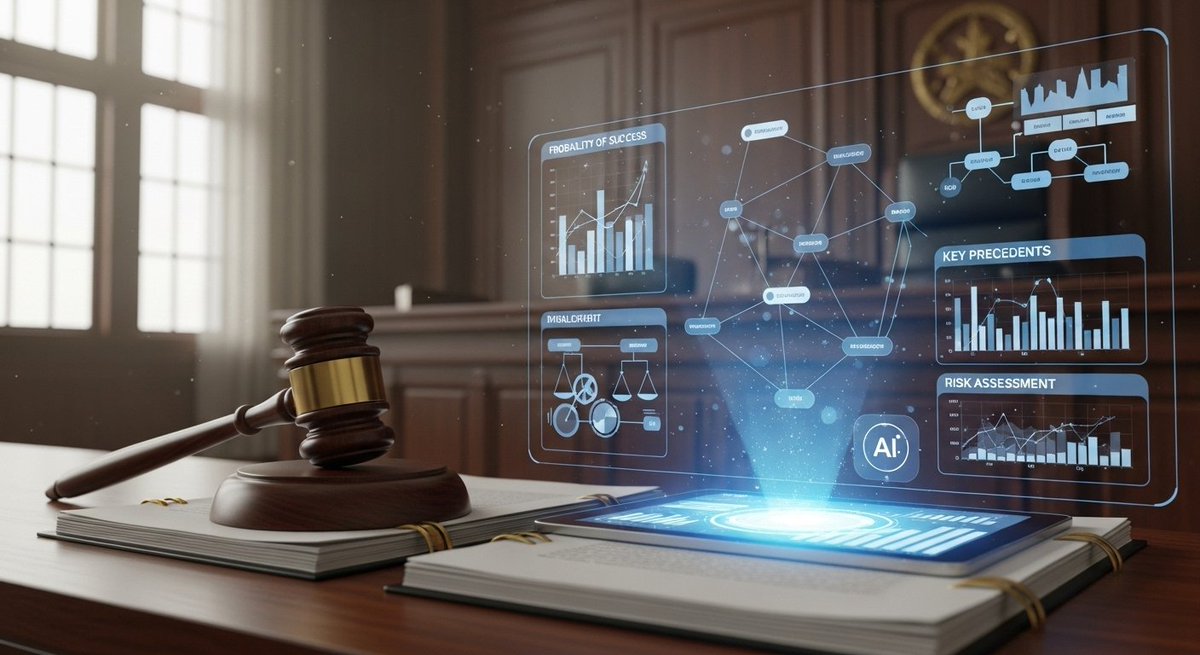
AI's Predictive Analytics in Litigation
AI models trained on historical court data can forecast case outcomes with impressive accuracy, helping lawyers assess risks and advise clients on settlements.
Tools like Premonition Analytics crunch vast datasets to reveal judge tendencies and argument success rates. This data-driven approach is revolutionizing litigation strategy.
Limitations include the "black box" nature of some AI, where explanations for predictions are opaque, raising accountability issues.
Courts are beginning to scrutinize AI evidence, emphasizing the need for verifiable models. As adoption grows, AI could make justice more predictable and accessible.
#AIPrediction #LitigationAI #CourtTech #LegalAnalytics
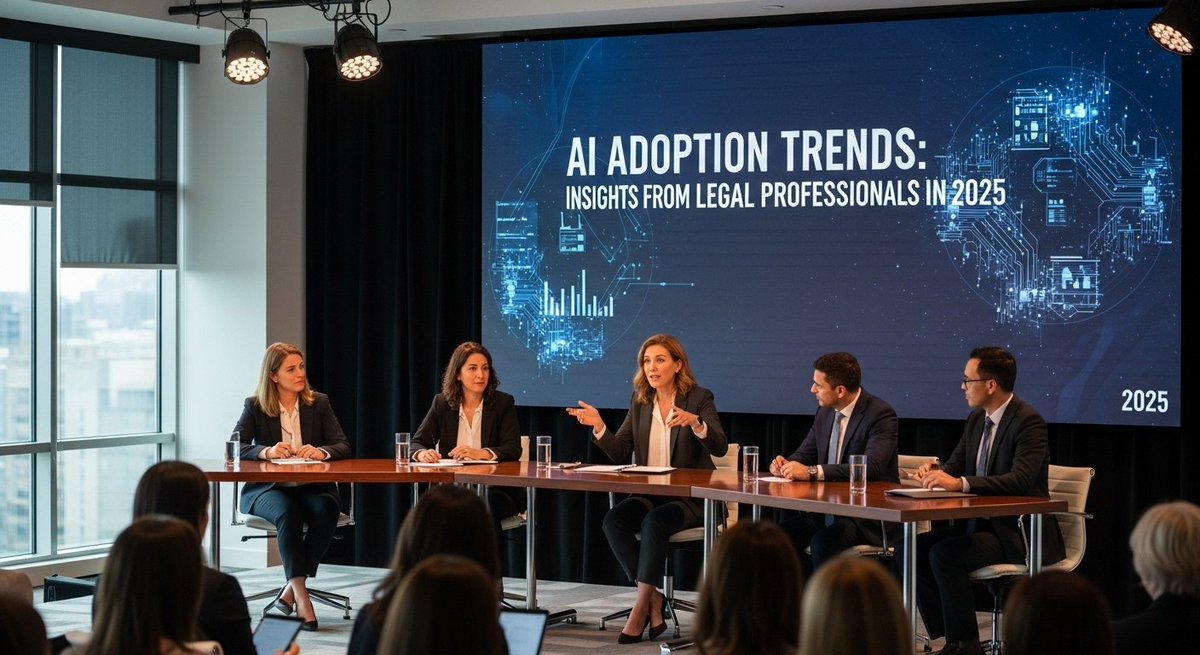
【AI Adoption Trends: Insights from Legal Professionals in 2025】
The American Bar Association's 2025 report reveals that over 2,800 legal experts are increasingly integrating AI for tasks like research and contract drafting.
Personal use is rising, with many adopting tools for efficiency, while firm-wide implementations focus on scalable solutions. Challenges include skill gaps and concerns over accuracy, driving the need for targeted training programs.
Looking ahead, the report predicts broader AI penetration, emphasizing hybrid models where human oversight complements machine intelligence.
Firms that embrace these trends gain competitive edges in speed and cost savings. Engagement with AI education is key to bridging adoption barriers and unlocking full potential.
#AIAdoption #LegalProfessionals #ABAreport #LegalInnovation
🚨Study Finds AI Chatbots Struggle to Detect Lies, Often Mimicking Human Biases
A new Michigan State University-led study found that AI personas can’t reliably detect when humans lie.
Researchers ran 12 experiments with 19,000 AI participants, showing that while AI could spot lies in some contexts (85.8 % accuracy for falsehoods), it often failed to identify truths, scoring just 19.5 %.
The study warns that using large language models for lie detection may lead to false confidence and misjudgment.
Published in the Journal of Communication, the study shows that AI exhibits context sensitivity but lacks a true understanding of human deception.
Researchers conclude that humanness remains a boundary for AI’s accuracy—and that professionals should be cautious about relying on AI for truth verification.
#AI #DeceptionDetection #Ethics #AIResearch #ChatGPT #GPT5 #Communication
【Navigating AI Regulations and Deepfake Protections】
Governments worldwide are introducing laws to address AI's ethical challenges, including the rise of deepfakes that can mislead the public.
Denmark is proposing new legislation to safeguard citizens from manipulated media, emphasizing the need for transparency in AI-generated content. This move highlights the urgency of balancing innovation with protection against misuse in digital spaces.
Similar efforts in the US call for national AI laws to support small developers amid varying state regulations.
Legal battles, such as the lawsuit by Entrepreneur magazine's publisher against Meta over unauthorized AI training data, underscore intellectual property concerns in AI development. These cases could reshape how companies source data, pushing for clearer guidelines on fair use.
For businesses, understanding these regulations is crucial to avoid litigation and foster responsible AI deployment. Engaging with these topics can help drive informed discussions on AI's future role in society.
#AIRegulation #Deepfakes #LegalTech #AIethics
【AI Revolutionizing Legal Research in 2025】
AI tools are transforming how lawyers conduct research by automating time-consuming tasks like case analysis and precedent identification.
Recent benchmarks show advanced models like OpenAI's o1-preview achieving up to 95% accuracy in structured compliance tasks, surpassing human performance in speed and cost efficiency.
For instance, platforms such as Casetext's CoCounsel have reduced research time by up to 80%, allowing professionals to focus on strategic decision-making rather than manual searches.
This shift not only boosts productivity but also democratizes access to legal information for smaller firms and individuals.
Looking ahead, AI agents are expected to become integral team members in legal workflows, providing quick summaries and chronologies for complex documents. Tools like Vals AI have demonstrated that both legal-specific and general AI now outperform lawyers in research accuracy, highlighting the need for human oversight to mitigate hallucinations.
As adoption grows, ethical standards must evolve to ensure transparency and reduce bias in AI-driven outcomes. What AI tool has changed your legal practice the most?
#LegalAI #AIinLaw #LegalTech #FutureOfLaw