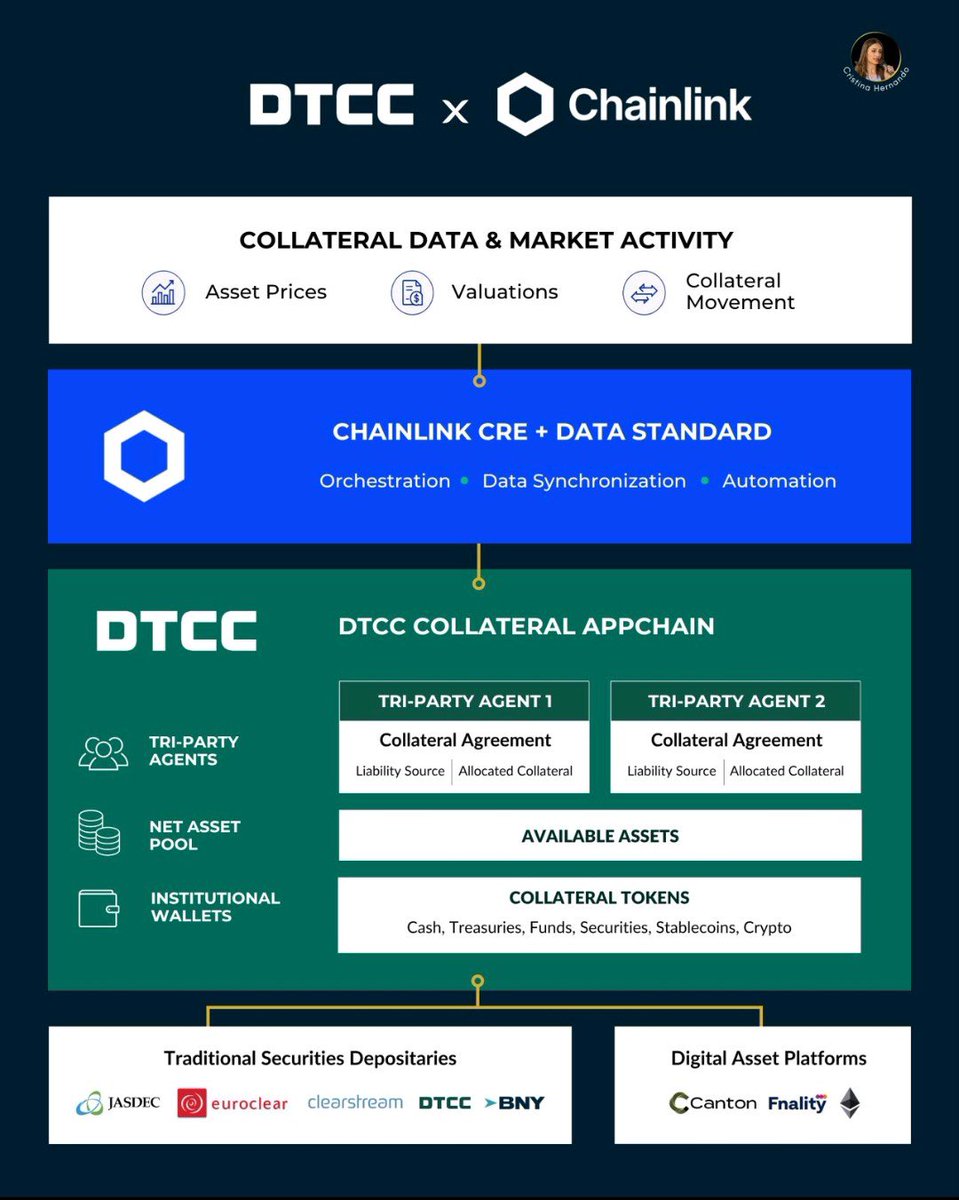
🔥 SODA 2026 sell-side bank survey just confirmed what $LINK holders already know: 16 major banks ranked collateral mobility/repo as their #1 tokenization use case, a statement that financial-resource optimization is the key.
Smart contract automation of repo workflows was the single highest-priority feature banks want. That’s not a blockchain problem, it’s an interoperability and programmable-logic problem. That’s precisely what Chainlink does and why they are to be viewed as critical infrastructure.
The report is rather blunt about what’s blocking adoption at scale: legacy-system integration and cross-network interoperability was the biggest hurdle, not client demand or legal ambiguity. **Regulations are key to moving ahead with utility but production required interoperability with legacy systems as a foundational requirement.
70% of banks rate integration friction as a high barrier. Off-chain and on-chain ledgers are running in parallel, creating reconciliation headaches instead of solving them.
This is EXACTLY the sort of gap CRE, CCIP and ACE were designed to close, connecting siloed bank infrastructure, tokenized collateral, and legacy rails into one programmable, compliant layer, rather than forcing banks onto a single chain or bespoke consortium stack that doesn’t talk to other siloes.
DTCC’s Collateral AppChain, the GL1 Programmable Compliance framework, and now this survey are all converging on the same conclusion…
Institutional tokenization wins on infrastructure, not issuance.
Banks aren’t asking “how do we mint a token.” They’re asking “how do we move collateral, settle cross-border, and stay compliant without ripping out our core systems.” Chainlink is the only project positioned as the neutral interoperability and compliance layer answering that question at scale. This report is another confirmation of this understanding. $LINK
https://t.co/298DpoK2Jx