"Este resultado es una grata sorpresa y podría ofrecer una pista para nuevos tratamientos de un tipo de cáncer que es más mortal en los hombres", dijo el Dr. Anthony Letai, director del Instituto Nacional del Cáncer de los Institutos Nacionales de Salud, en un comunicado.
#Testosterona #CáncerCerebral #Salud #Ciencia #Investigación #Medicina
🔴Lee más 👉 https://t.co/sRHgj5qLoN
Hay un órgano en tu pecho que el cuerpo reduce en la adolescencia. Durante décadas lo creímos residual. Ahora, 28.000 escáneres sugieren que este tejido olvidado predice tu esperanza de vida. https://t.co/HnC3iDfJyk
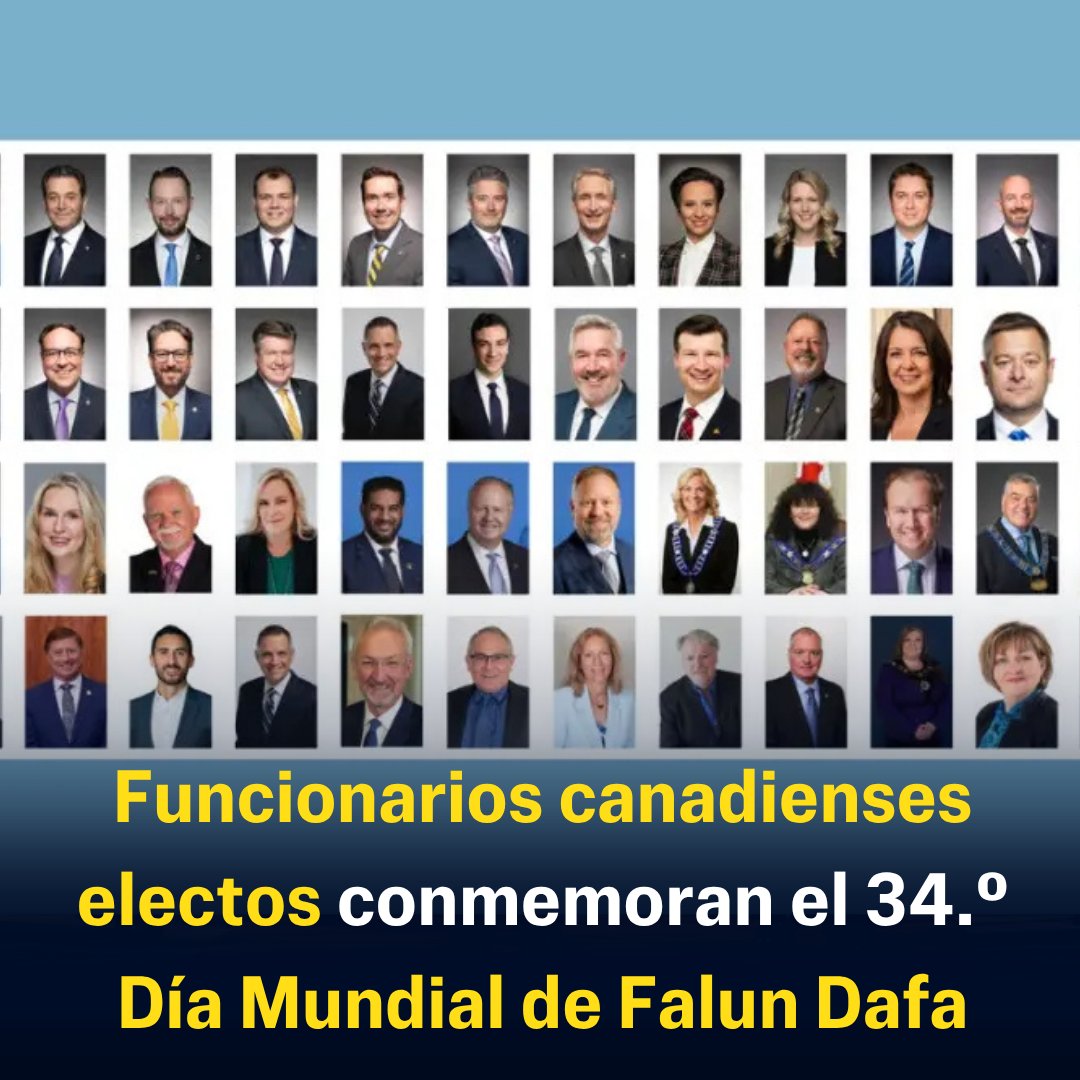
This past Wednesday, practitioners around the world celebrated World Falun Dafa Day, marking 34 years since Falun Dafa's introduction in 1992.
The streets of Manhattan saw colorful floats, traditional performances, and peaceful meditation demonstrations celebrating Truthfulness, Compassion, and Forbearance.
https://t.co/ctfs9961Nt
#WorldFalunDafaDay #FalunDafaDay
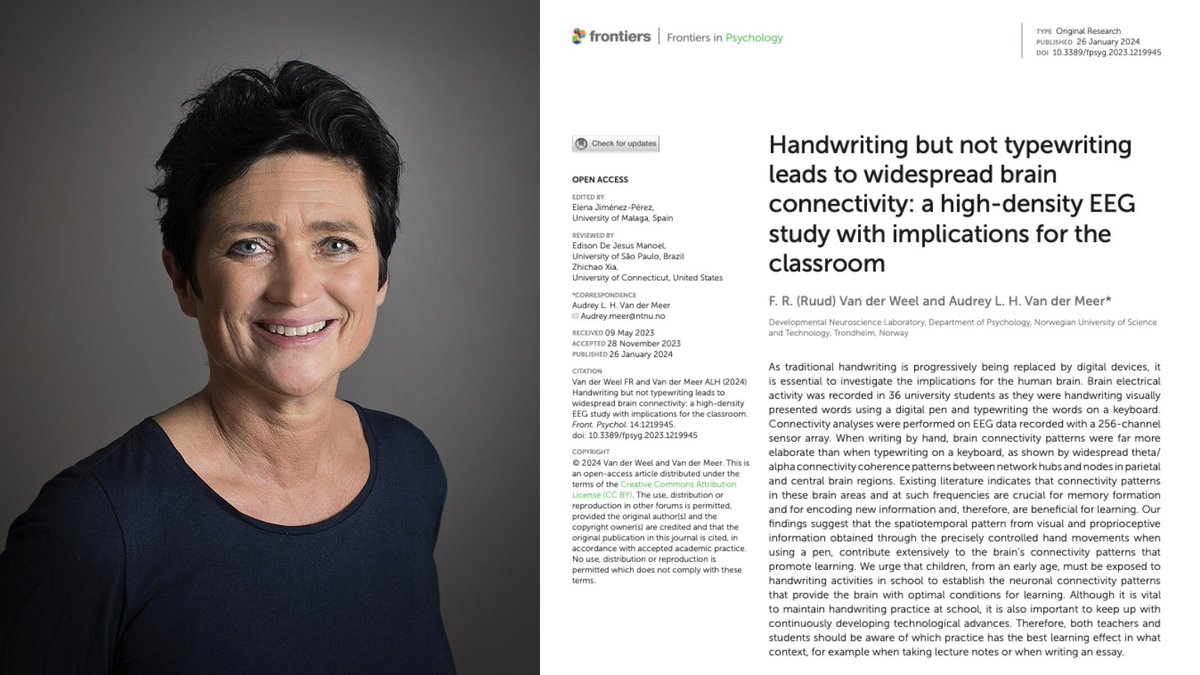
A Norwegian neuroscientist spent 20 years proving that the act of writing by hand changes the human brain in ways typing physically cannot, and almost nobody outside her field has read the paper.
Her name is Audrey van der Meer.
She runs a brain research lab in Trondheim, and the paper that closed the argument was published in 2024 in a journal called Frontiers in Psychology. The finding is brutal enough that it should have changed every classroom on Earth.
The experiment was simple. She recruited 36 university students and put each one in a cap with 256 sensors pressed against their scalp to record brain activity. Words flashed on a screen one at a time.
Sometimes the students wrote the word by hand on a touchscreen using a digital pen, and sometimes they typed the same word on a keyboard. Every neural response was recorded for the full five seconds the word stayed on screen.
Then her team looked at the part of the data most researchers had ignored for years, which is how different parts of the brain were communicating with each other during the task.
When the students wrote by hand, the brain lit up everywhere at once.
The regions responsible for memory, sensory integration, and the encoding of new information were all firing together in a coordinated pattern that spread across the entire cortex. The whole network was awake and connected.
When the same students typed the same word, that pattern collapsed almost completely.
Most of the brain went quiet, and the connections between regions that had been alive seconds earlier were nowhere to be found on the EEG.
Same word, same brain, same person, and two completely different neurological events.
The reason turned out to be something nobody had really paid attention to before her work. Writing by hand is not one motion but a sequence of thousands of tiny micro-movements coordinated with your eyes in real time, where each letter is a different shape that requires the brain to solve a slightly different spatial problem.
Your fingers, wrist, vision, and the parts of your brain that track position in space are all working together to produce one letter, then the next, then the next.
Typing throws all of that away. Every key on a keyboard requires the exact same finger motion regardless of which letter you are pressing, which means the brain has almost nothing to integrate and almost no problem to solve.
Van der Meer said it plainly in her interviews.
Pressing the same key with the same finger over and over does not stimulate the brain in any meaningful way, and she pointed out something that should scare every parent who handed their kid an iPad.
Children who learn to read and write on tablets often cannot tell letters like b and d apart, because they have never physically felt with their bodies what it takes to actually produce those letters on a page.
A decade before her, two researchers at Princeton ran the same fight using a completely different method and ended up at the same answer. Pam Mueller and Daniel Oppenheimer tested 327 students across three experiments, where half took notes on laptops with the internet disabled and half took notes by hand, before testing everyone on what they actually understood from the lectures they had watched.
The handwriting group won by a wide margin on every question that required real understanding rather than surface recall.
The reason was hiding in the transcripts of what the two groups had actually written down.
The laptop students typed almost word for word, capturing more total content but processing almost none of it as they went, while the handwriting students physically could not write fast enough to transcribe a lecture in real time, which forced them to listen carefully, decide what actually mattered, and put it in their own words on the page.
That single act of choosing what to keep was the learning itself, and the keyboard had quietly skipped the choosing and skipped the learning along with it.
Two studies. Two countries. Same answer.
Handwriting makes the brain work. Typing lets it coast.
Every note you have ever typed instead of written went into your brain through a thinner pipe. Every meeting, every book highlight, every idea you captured on your phone instead of on paper was processed at half depth.
You did not forget those things because your memory is bad. You forgot them because typing never woke the part of the brain that would have made them stick.
The fix is the thing your grandmother already knew.
Pick up a pen. Write the thing down. The slower road is the faster one.
🚨 URGENTE
Un estudio hecho por la Sociedad Radiológica de Norteamérica dio a conocer que la levotiroxina, el segundo medicamento más recetado entre los adultos mayores, estaría relacionado con una pérdida ósea.
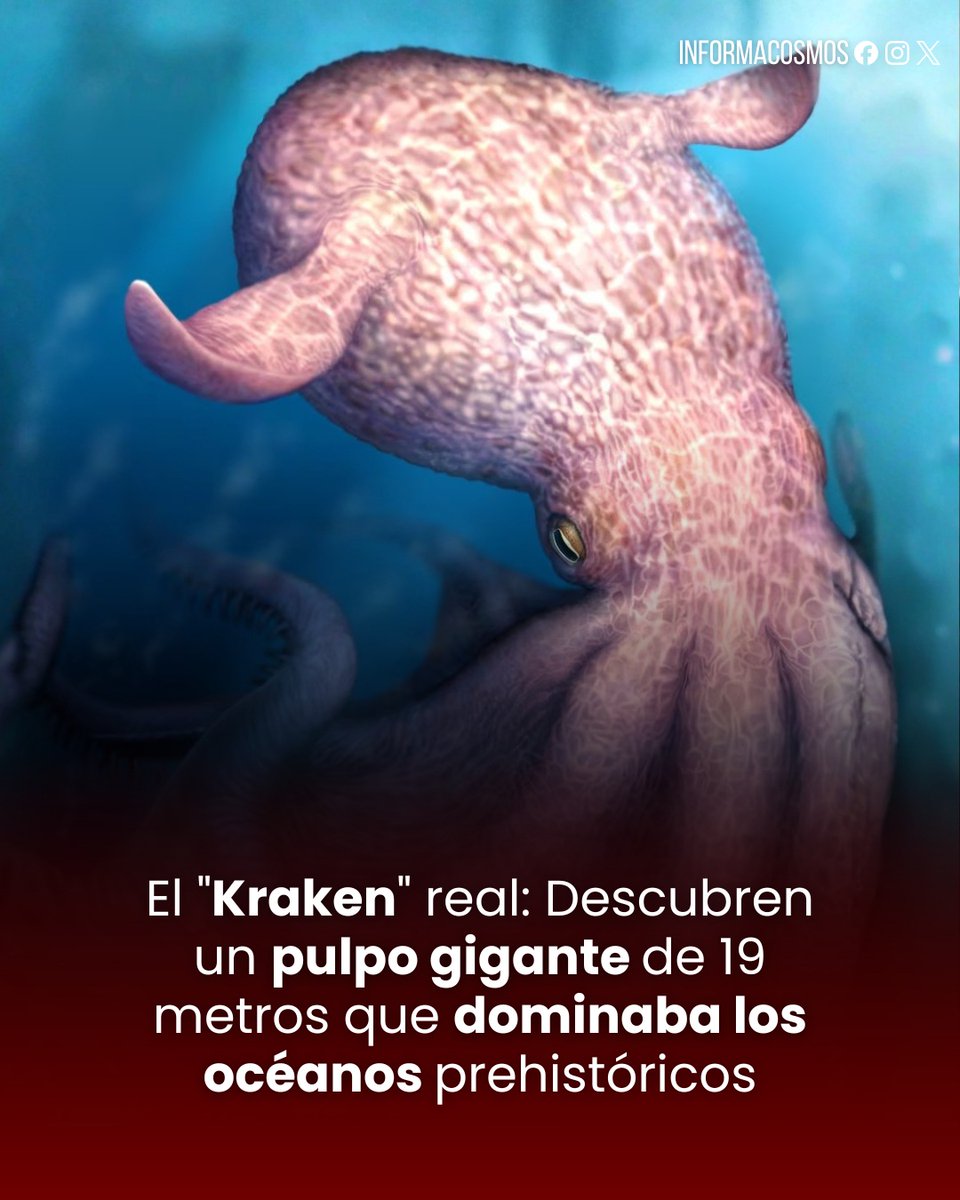
Científicos identificaron un pulpo prehistórico de 19 metros de largo que dominó los océanos hace 100 millones de años.
Este "kraken" gigante superaba en tamaño al famoso mosasaurio y poseía una mandíbula tan potente que era capaz de triturar huesos. El hallazgo demuestra que los invertebrados también ocuparon los niveles más altos de la cadena alimenticia en el Cretácico, según el estudio publicado en la revista Science.
🩺‼️ | Nuevos estudios revisados por The New York Times confirman que caminar en la naturaleza mejora significativamente la atención y la memoria de trabajo, con aumentos de hasta casi un 20% en el rendimiento cognitivo tras paseos de unos 4,5 kilómetros en entornos verdes, comparado con caminatas urbanas.
La “fascinación suave” de los patrones naturales permite que el cerebro descanse de la fatiga atencional provocada por las ciudades, generando una restauración mental que se traduce en mayor enfoque y memoria inmediata, incluso sin necesidad de disfrutar especialmente el paseo.
📘¿Puede la conexión potenciar el propósito de vida en la juventud? 🌍➡️Los resultados evidencian relaciones positivas entre identidad, conexión y propósito, con un efecto mediador parcial claro.
¡La conexión marca la diferencia! 🌀🧠
Revísalo aquí 👉https://t.co/iLXIrWveYX
¿Sabías que la Antártica fue un paraíso verde con temperaturas sobre los 20°C? 🌿❄️ Fue el origen de los bosques del sur de Chile y hogar de pingüinos gigantes y aves del terror. Descubre su increíble historia aquí 👇 https://t.co/cWcKvN3xDe
As we move through spring, it’s the season of what we call “April showers,” those sudden downpours that arrive without much warning, soak everything, and then pass just as quickly.
The Chinese idiom 傾盆大雨 (Qīng pén dà yǔ) captures that feeling, but more vividly.
It literally means “rain pouring from a tilted basin.”
The phrase comes from observations of sudden, intense downpours, as if the sky had tipped over and dumped out water. It's often used in classical literature to depict sudden, intense, and unstoppable forces of nature.
Today, 傾盆大雨 can describe more than just weather. It can capture anything overwhelming or unstoppable—a surge of emotion, a flood of tears, a moment that hits all at once.
When was the last time you experienced a "tilted basin" moment?
Ahora que Shen Yun celebra su 20.º aniversario, el Sr. Pascual dirigió palabras de ánimo a los artistas y expresó su esperanza de que su trabajo siga difundiendo la cultura tradicional china por todo el mundo.
⭐Mira la nota👉 https://t.co/ExwUE7nZQR
The @APAPsychiatric Future DSM Strategic Committee has proposed a forward-looking model for the DSM’s evolution to preserve its clinical pragmatism while advancing scientific rigor, cultural inclusivity, and adaptability—ensuring that the DSM remains a trusted, globally relevant tool for understanding and treating mental disorders. 1/5
https://t.co/LeetFBWBJm
El primer latido del corazón no se “enciende” como un interruptor. Poco a poco, muchas células comienzan a activarse hasta que alcanzan un punto crítico y todo el tejido se sincroniza… entonces ocurre el primer latido. 🫀
El Sr. Méndez, que viaja con frecuencia, ha visto muchos espectáculos diferentes. Pero Shen Yun destaca por su énfasis en la belleza de lo divino.
⭐Mira la nota👉 https://t.co/g0fDTq9Hdw
On International Women’s Day, we celebrate the courage, strength, and resilience of women around the world.
We also stand in solidarity with those who continue to face discrimination, persecution, and injustice.
#InternationalWomensDay
Un estudio revela que incluso breves exposiciones a entornos naturales generan cambios medibles en el cerebro adulto, mejorando atención, bienestar y autorregulación.🌱
https://t.co/Yh4fXTbbrM