This study blew my mind.
It found there’s ONE main key to earning a higher income.
The study looked at kids from poorer families, and how they turned out as adults.
Turns out, the number one indicator of their future income was not the socioeconomic status of their family.
It was the socioeconomic status of the other people they’re around.
This is called Economic Connectedness.
What does that mean?
Put bluntly, EC measures how many rich people and poor people are friends.
When an area has higher economic connectedness, poor kids are more likely to make more money as adults.
For example:
• Minneapolis has an EC of 0.98.
• Indianapolis’s is lower at 0.65.
But…
• Kids from low income families in Minneapolis reach the 43rd percentile of household income as adults.
• Kids from the same background in Indianapolis only reach the 34th percentile.
WHO you surround yourself with and WHERE you are has a huge impact on your monetary success.
So we asked the question...
Is it possible to be in the top 1% of earners without ever changing your environment?
What do you think?
My dads an incredibly smart man.
•Great leader
•Can fix anything
•Socially strong & networks well
•Read a book a week for 30 years
He NEVER moved up in his company.
I asked him WHY & the answer he gave me brought me to tears.
Here’s THE BEST LESSON my dad ever taught me.
@BBVA_Mex Hola, el fin pasado viajé a Colombia y al realizar una transacción, me retiraron de mi cuenta $16,500 de MXN en lugar de COP. ¿Qué puedo hacer al respecto?
Cuando la Ciudad de México se volvió el campo de batalla! En esta interesante filmación vemos como quedó el zócalo tendido de cuerpos debido al enfrentamiento entre los golpistas encabezados por Bernardo Reyes y las fuerzas leales al gobierno legítimo de Francisco Madero. En total, el 9 de febrero de 1913 murieron alrededor de 800 personas en el enfrentamiento, la mayoría civiles, mirones y personas que pasaban por ahí. Te invito a ver y a compartir este filme donde aparece Victoriano Huerta, Felipe Ángeles, los cadetes del Colegio Militar, y una ciudad desolada! #CDMX
After his second year at Michigan, Tom Brady wanted to transfer.
He wasn't playing in games, and he was so low on the depth chart that he only got 2 reps in practice.
Brady met with his coach to express his frustration, “The other quarterbacks get all the reps.”
Coach replied,
“Brady, I want you to stop worrying about what all the other players on our team are doing. All you do is worry about what the starter is doing, what the second guy is doing, what everyone else is doing. You don't worry about what you're doing.”
Coach reminded him, “You came here to be the best. If you're going to be the best, you have to beat out the best.”
And then he recommended that Brady start meeting with Greg Harden, a sports psychologist who worked in Michigan's athletic department.
Brady went to Harden's office and whined, “I'm never going to get my chance. They're only giving me 2 reps.”
Harden simply replied, “Just go out there and focus on doing the best you can with those 2 reps. Make them as perfect as you possibly can.”
“So that's what I did,” Brady said. “They'd put me in for those 2 reps, man, I'd sprint out there like it was Super Bowl 39. 'Let's go boys! Here we go! What play we got?'”
“And I started to do really well with those 2 reps. Because I brought enthusiasm, I brought energy.”
Soon, it went from getting 2 reps to getting 4 reps. Then from 4 to 10, “and before you knew it,” Brady said, with this new mindset that Greg instilled in me—to focus on what you can control, to focus on what you're getting, not what anyone else is getting, to treat every rep like it's the Super Bowl—eventually, I became the starter.”
Takeaway 1:
Greg Harden telling Brady to just focus on being great during his 2 reps reminded me of a piece of advice from the entrepreneur Mark Cuban.
“People come to me all the time and tell me they're stuck,” Cuban explained. “They're stuck in a job they don't like. They're stuck working for a boss they don't like. They're stuck on a team they don't like.”
“I just tell them, 'Be great.'”
“The reality of life is that you can't just always quit your job. You can't just always go to your boss and say, 'Give me the promotion, or I'm out of here.'” You can't just always go to your coach and say, 'Give me more reps, or I'm transferring.'
“So when you're stuck, you've gotta find it within yourself to say, 'Ok, this is where I am. And if I'm going to be here, I'm going to be great.'
Because if you're great at your job, typically other people and companies find out, so it creates opportunities.”
Takeaway 2:
I've written before about “lead measures”—the actions and behaviors that predictably drive success.
The core characteristic of a lead measure, the authors of The 4 Disciplines of Execution (4DX) write, is that “a lead measure is influenceable; it can be directly influenced by you.”
To achieve your goals, they recommend (echoing what the Michigan Coach told Brady), apply a disproportionate energy to the things that are in your control.
Starting at Michigan and for the rest of his career, that’s what Brady did, that’s what drove his success.
In his first media call after he was selected by the New England Patriots with the 199th pick in the 2000 draft, Brady was asked: “Are you aware that [along with starting quarterback, Drew Bledsoe] there’s another quarterback here that they drafted last year?”
Brady said he was aware of that. “And I know he’s a heck of a player,” Brady said. “But I’ve always really concerned myself just with the things I can control. I don’t put a lot of thinking into the other guys because I know I’m not at my best when I’m not just thinking about playing as well as I possibly can.”
- - -
“I never once in my life ever said I wanted to be the best of all time. Ever. I wanted to be the best I could be, period. I learned that in college. It didn’t matter what the other guys were doing. It mattered what I was doing.” — Tom Brady
Follow @bpoppenheimer for more content like this!







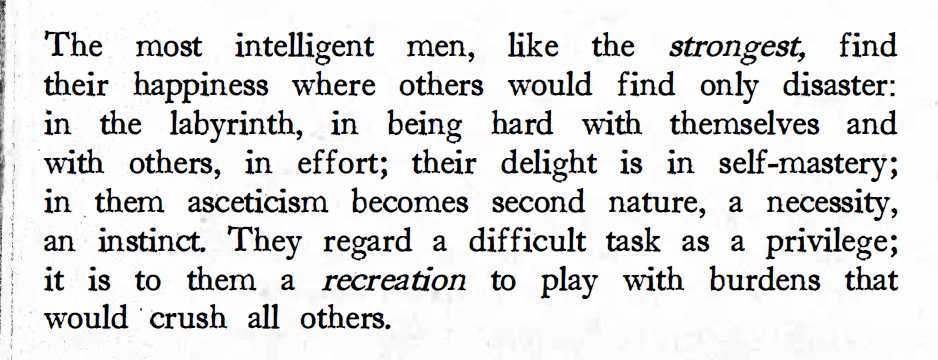

![bpoppenheimer's tweet photo. After his second year at Michigan, Tom Brady wanted to transfer.
He wasn't playing in games, and he was so low on the depth chart that he only got 2 reps in practice.
Brady met with his coach to express his frustration, “The other quarterbacks get all the reps.”
Coach replied,
“Brady, I want you to stop worrying about what all the other players on our team are doing. All you do is worry about what the starter is doing, what the second guy is doing, what everyone else is doing. You don't worry about what you're doing.”
Coach reminded him, “You came here to be the best. If you're going to be the best, you have to beat out the best.”
And then he recommended that Brady start meeting with Greg Harden, a sports psychologist who worked in Michigan's athletic department.
Brady went to Harden's office and whined, “I'm never going to get my chance. They're only giving me 2 reps.”
Harden simply replied, “Just go out there and focus on doing the best you can with those 2 reps. Make them as perfect as you possibly can.”
“So that's what I did,” Brady said. “They'd put me in for those 2 reps, man, I'd sprint out there like it was Super Bowl 39. 'Let's go boys! Here we go! What play we got?'”
“And I started to do really well with those 2 reps. Because I brought enthusiasm, I brought energy.”
Soon, it went from getting 2 reps to getting 4 reps. Then from 4 to 10, “and before you knew it,” Brady said, with this new mindset that Greg instilled in me—to focus on what you can control, to focus on what you're getting, not what anyone else is getting, to treat every rep like it's the Super Bowl—eventually, I became the starter.”
Takeaway 1:
Greg Harden telling Brady to just focus on being great during his 2 reps reminded me of a piece of advice from the entrepreneur Mark Cuban.
“People come to me all the time and tell me they're stuck,” Cuban explained. “They're stuck in a job they don't like. They're stuck working for a boss they don't like. They're stuck on a team they don't like.”
“I just tell them, 'Be great.'”
“The reality of life is that you can't just always quit your job. You can't just always go to your boss and say, 'Give me the promotion, or I'm out of here.'” You can't just always go to your coach and say, 'Give me more reps, or I'm transferring.'
“So when you're stuck, you've gotta find it within yourself to say, 'Ok, this is where I am. And if I'm going to be here, I'm going to be great.'
Because if you're great at your job, typically other people and companies find out, so it creates opportunities.”
Takeaway 2:
I've written before about “lead measures”—the actions and behaviors that predictably drive success.
The core characteristic of a lead measure, the authors of The 4 Disciplines of Execution (4DX) write, is that “a lead measure is influenceable; it can be directly influenced by you.”
To achieve your goals, they recommend (echoing what the Michigan Coach told Brady), apply a disproportionate energy to the things that are in your control.
Starting at Michigan and for the rest of his career, that’s what Brady did, that’s what drove his success.
In his first media call after he was selected by the New England Patriots with the 199th pick in the 2000 draft, Brady was asked: “Are you aware that [along with starting quarterback, Drew Bledsoe] there’s another quarterback here that they drafted last year?”
Brady said he was aware of that. “And I know he’s a heck of a player,” Brady said. “But I’ve always really concerned myself just with the things I can control. I don’t put a lot of thinking into the other guys because I know I’m not at my best when I’m not just thinking about playing as well as I possibly can.”
- - -
“I never once in my life ever said I wanted to be the best of all time. Ever. I wanted to be the best I could be, period. I learned that in college. It didn’t matter what the other guys were doing. It mattered what I was doing.” — Tom Brady
Follow @bpoppenheimer for more content like this!](https://pbs.twimg.com/media/F85l1KpWUAAeAcO.jpg)