This account hunts the next Amazon or Meta: founder-led companies in emerging industries with 10x–100x potential over 5–10+ years.
Core criteria:
•Started and still driven by the creator/founder (visionary bets, early Bezos/Zuck style)
•Disruptive themes: AI infra, quantum, space, next-gen energy, autonomy
•Asymmetric setups — lower valuations relative to massive long-term TAM
•High-risk/high-reward moonshots (small ~5% sleeve)
Current focus (no order): $PLTR (Karp)
$TSLA (Musk)
$MSTR (Saylor)
$CRWV (Intrator)
$IONQ (Chapman)
$RGTI (Kulkarni)
$LAES (Moreira)
$ASTS (Avellan)
$RKLB (Beck)
$HIMS (Dudum)
$OKLO (DeWitte, recent add)
Bets on founder conviction + physical/AI disruption where the market hasn’t priced in trillion-dollar futures yet. Long-term compounding, not trading.
Volatility expected. In for the ride.
DYOR
What founder-led disruptors are you watching?
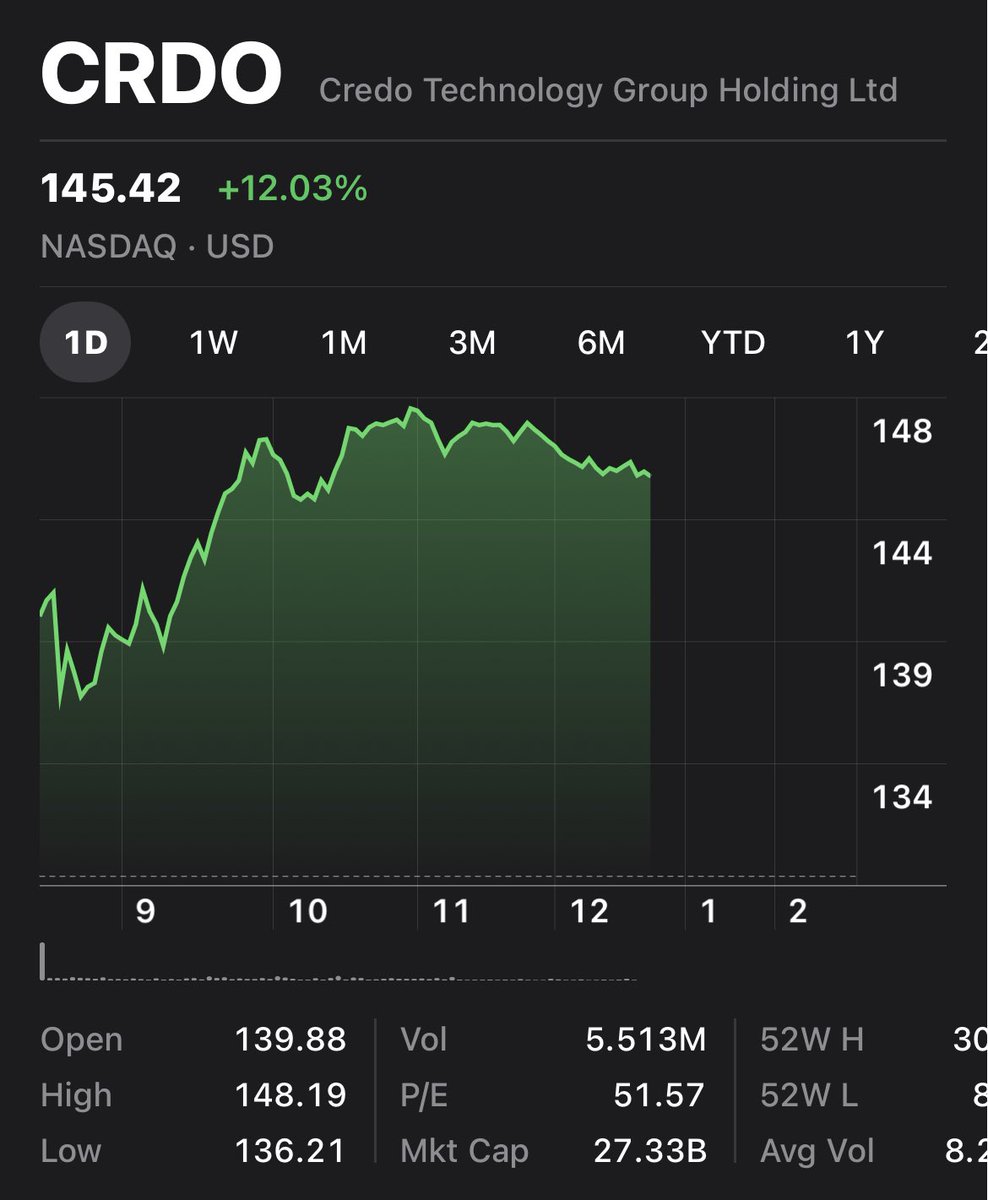
Looking at $CRDO.
Shares are up about 12% today, trading near $146 after a recent pullback. Credo makes high-speed connectivity products, including active electrical cables with retimers for AI and data center interconnects.
These handle the higher data rates where older passive copper runs into limits. The company has shown strong revenue growth tied to that demand. Next earnings are expected later this month.
Looking at $EOSE.
Shares are up about 10% today, trading near $1.92 after recent weakness. Eos reported Q3 revenue of $82.7 million, up 171% year over year. Gross margin improved but remains negative. Backlog stood at $765 million.
The company makes zinc-based long-duration batteries. Recent news includes a 10 MW/100 MWh project with MN8 Energy and Google. Manufacturing consolidation is underway. Revenue is growing from a small base. Profitability is not yet there.
Looking at $HIMS.
Shares are down about 18% today after Q3 results. Revenue was $890 million, up 49% year over year. Subscribers reached nearly 2.8 million, up 13% from last year but lower sequentially.
The company said it pulled back marketing spend ahead of expanding its weight-loss catalog and international offerings. Gross margin narrowed. Full-year guidance was tightened.
Looking at $RKLB.
Shares are up about 10% today, trading near $58 after a volatile stretch. Rocket Lab continues regular Electron launches for small satellite customers while developing the larger Neutron vehicle.
The company also builds spacecraft components and has been expanding that side of the business. Electron remains the current revenue base. Neutron is the longer step toward larger payloads.
Looking at $IONQ.
Shares are up about 19% today after Q3 results. Revenue was $174 million, up 336% year over year. The company raised full-year guidance to $505–515 million and reported backlog of $1.2 billion.
IonQ uses trapped-ion systems. Platform revenue grew with Tempo deployments. The SkyWater foundry addition added a large piece of the quarter. Losses continue on an adjusted basis. The nearer question is how much of the growth stays organic as the systems scale.
Looking at $OKLO.
Shares are up about 20% today after the company reported Q3 results. Revenue was small at $1.86 million. The loss came in better than expected.
Oklo is building small fast reactors. The nearer progress is on the Aurora powerhouse in Idaho, where structural work has started, and on isotope production at Groves. Commercial power is still years out. The stock remains well below its earlier highs.
Looking at $IONQ.
Shares are up about 5–6% today, trading near $29.70 after recent weakness. The company reports Q3 results on November 5.
IonQ uses trapped-ion systems and has shown the stronger commercial revenue ramp among the pure-play quantum names so far. The nearer test is whether that growth continues and how much of it is organic versus acquired.
Looking at $LAES.
SEALSQ makes secure chips that embed post-quantum cryptography for IoT and critical systems. The stock is down sharply this year and is trading near its 52-week low.
Revenue is still small but growing. The company has reaffirmed guidance and points to a larger multi-year pipeline as the products move from certification into broader orders. Cash is solid. Profitability is not yet there.
Same early-stage security semiconductor story. Different starting valuation after the decline.
Looking at $TSLA.
Tesla reported Q3 revenue of about $28 billion, roughly flat year over year, with lower profit. Over the weekend Cybercabs were seen operating in Austin during F1, and the company put out its first Robotaxi safety report covering 3.1 million unsupervised miles.
A board committee is also looking at a possible deeper tie with SpaceX. No deal has been agreed. The nearer test remains whether the autonomy and robotaxi work scales beyond the early cities.
Looking at $IONQ and $RGTI.
IonQ uses trapped ions and has the larger revenue base and stronger commercial traction so far. Rigetti uses superconducting circuits built from chiplets and is still earlier on system sales.
Same long-term market. Different hardware paths and different starting points. IonQ is further along today. Rigetti has the smaller base if the next systems scale.
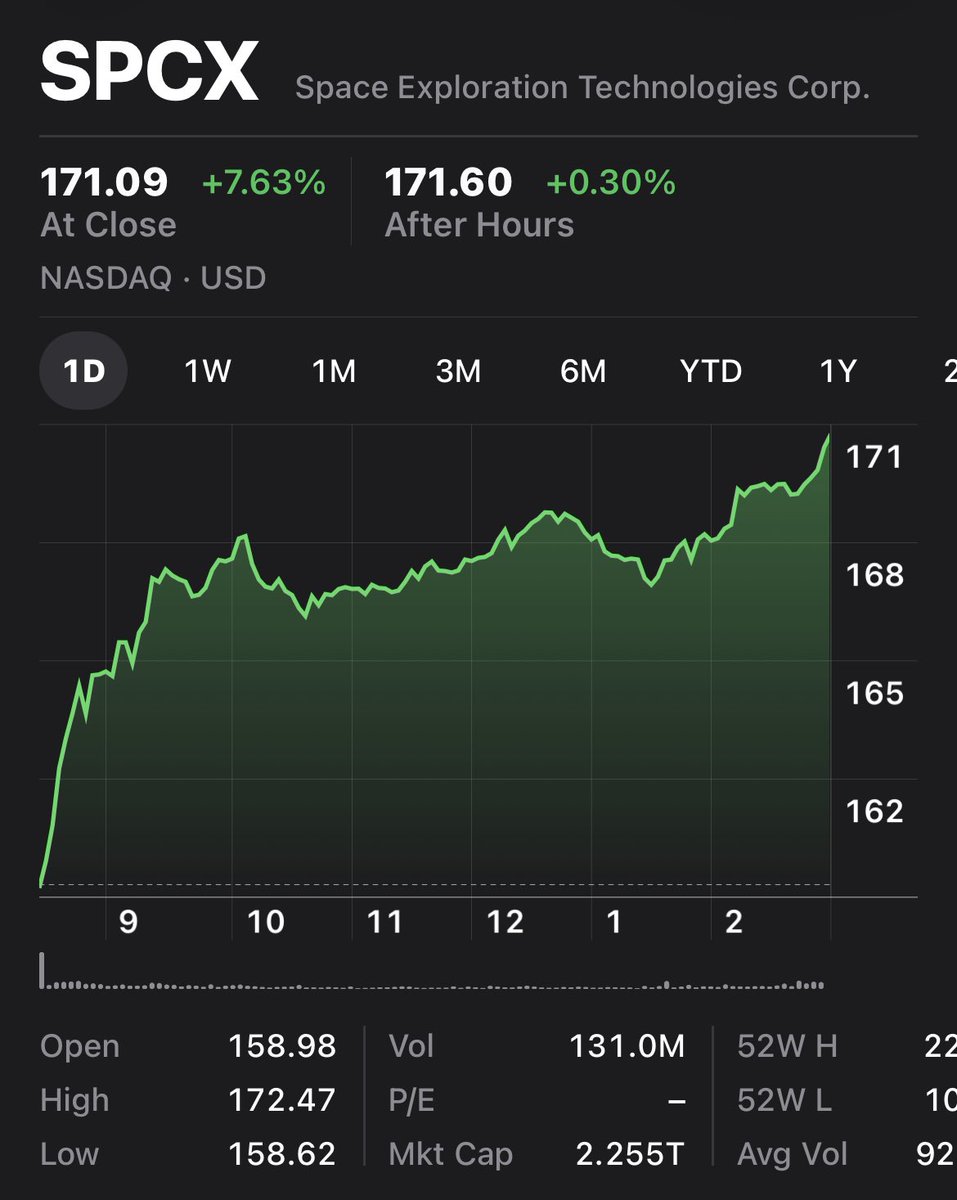
Looking at $ASTS, $RKLB, and $SPCX:
ASTS has the smallest base and the most unfinished commercial ramp. That gives it the highest percentage ceiling if the constellation and carrier deals work.
RKLB already has real revenue and a backlog. Neutron and space systems are the next steps.
SPCX is the largest by far. Even strong growth in connectivity and launch produces a smaller percentage move from a multi-trillion-dollar starting point.
Same industry. Different starting sizes and remaining execution risk.
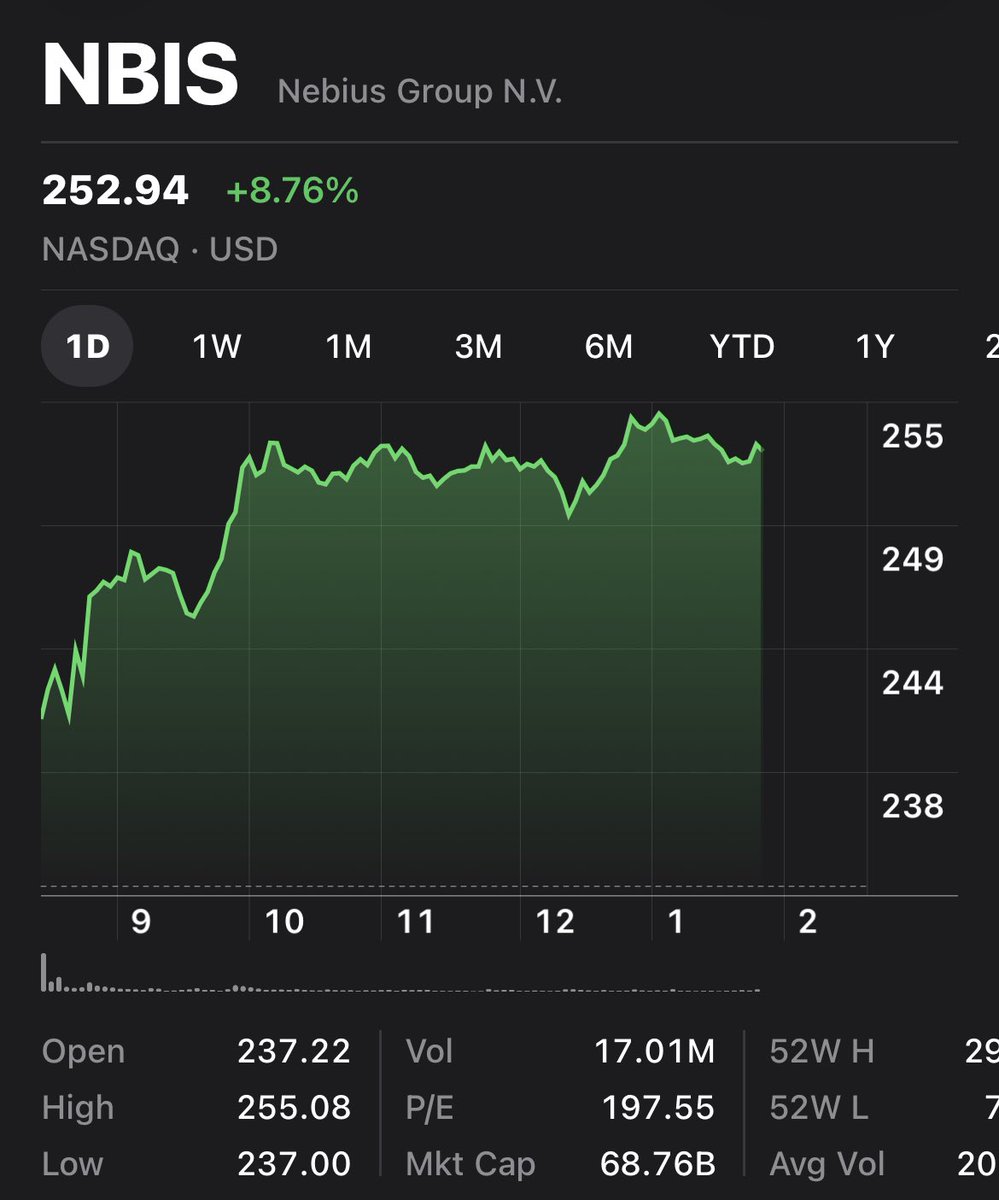
Looking at $NBIS.
Nebius rents GPU clusters, storage, and networking so other companies can train and run AI models. The chips are mostly NVIDIA. The company supplies the data-center capacity and the software that schedules the jobs.
Same basic layer as CoreWeave. $CRWV
IONQ is up 2% today!
$IONQ's real edge isn't trapped ions — it's the foundry.
Electronic qubit control on CMOS, design cycles cut from 9 months to 2, 99.99% two-qubit fidelity.
Fault tolerance won't be solved in a physics lab. It'll be solved on a semiconductor line.