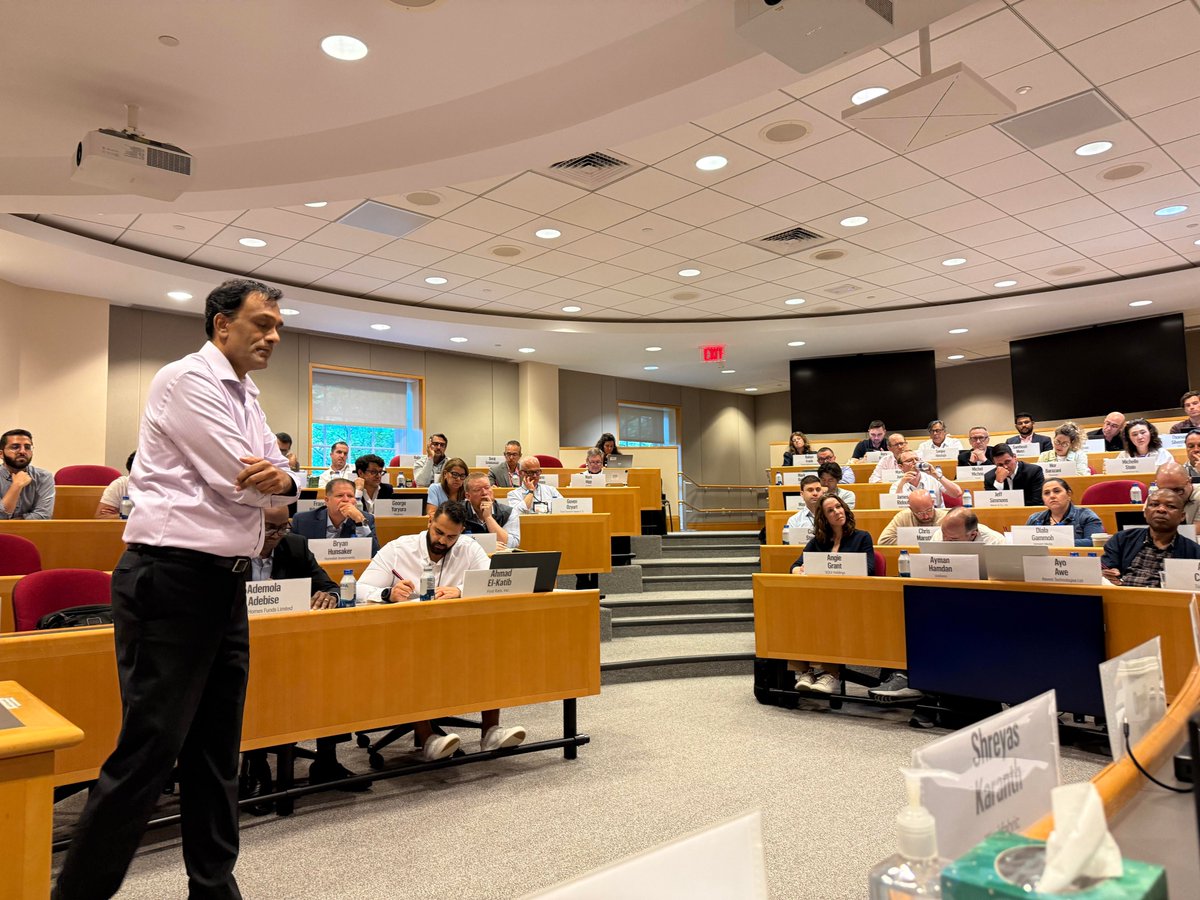
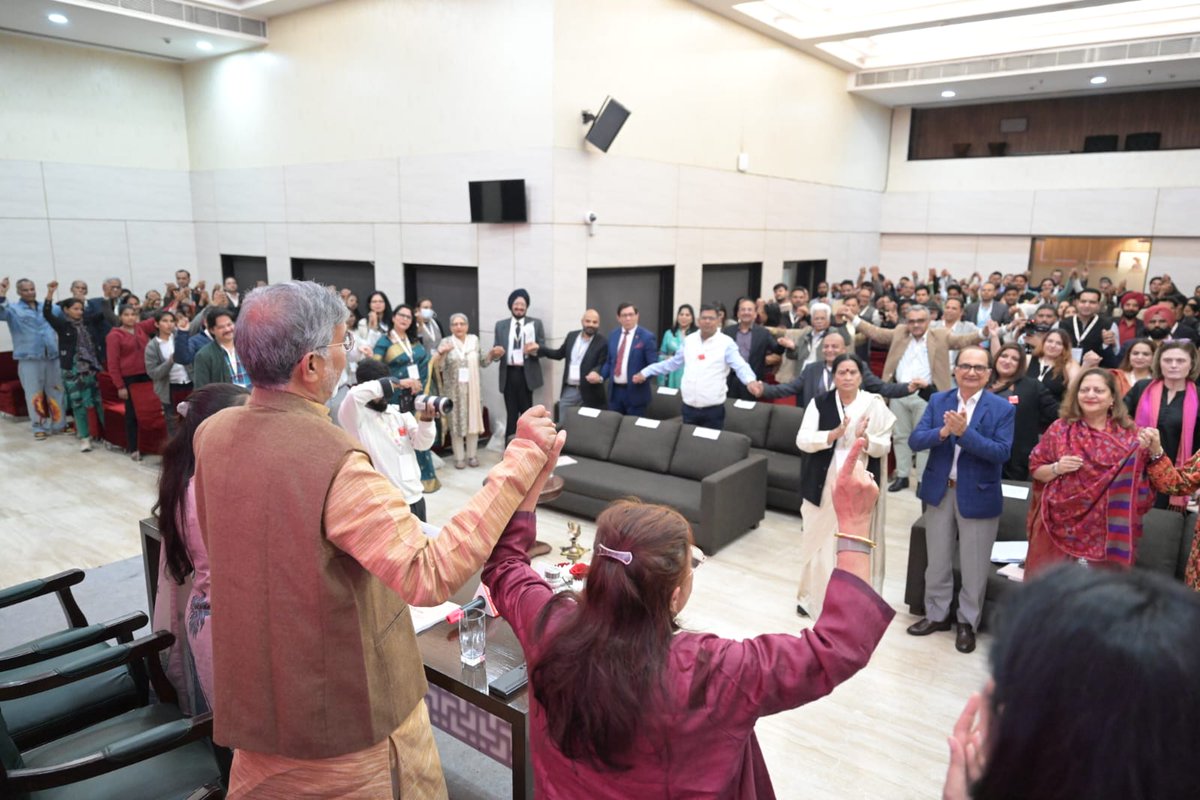
Last week, Prof. Srinivasan at @HarvardHBS taught a case study about our company (Workfabric AI), and 80+ senior executives spent nearly two and a half hours debating it.
The case, written by Professor Suraj Srinivasan and George Gonzalez, is titled "Workfabric AI: AI Twins for the Enterprise". George Nychis, Nash Sabti, Shreyas Karanth, and I were lucky to be in the room as a class of accomplished leaders dug into the ideas we care about most.
What can you actually build an AI twin from - a salesperson, an account, a product, a whole team? How do twins let an organization do things it simply can't today, like surfacing revenue no single person could see? And underneath all of it, how does context, the lived reality of how people actually work, make any of this possible?
Part of this entire discussion was about how humans, how we live and work, are the biggest untapped source of context for AI. And the role our platform ContextFabric plays in making this coming alive.
For a company just over a year old, watching a room of this caliber engage this seriously with our work was exciting. The questions were sharper than any pitch meeting we've had. The hardest ones will stay with us for months. And the fact that none of it was solicited made the validation mean that much more.
Thank you, Professor Srinivasan and George Gonzalez, for the rigor and care you brought to the case. Thank you to the students who brought their toughest questions.
And thank you to the @workfabricai team. Every one of you who helped turn an idea into something worth teaching.
Workfabric AI was featured as a @HarvardHBS case study ("Workfabric AI: Building AI Twins")!
Last week, Prof. Suraj Srinivasan taught a case he co-authored with George Gonzalez about Workfabric AI in his class at HBS. The case explores how Workfabric AI pioneered the enterprise application of context engineering, leading to ContextFabric and the AI Twins it enables, along with the value they unlock for enterprises. And it also outlines how @imravikumars christened what we do as "context engineering". We were represented in class by @shreyas94 , Nash, @gnychis , and @RohanMurty .
Here is an actual implementation of what has been described, in a production environment, with $200M (and counting) to show the value of optimizing the human-AI context loop.
https://t.co/jkMnTPJMyG
@satyanadella Here is an actual implementation of what you’ve described, in a production environment, with $200M (and counting) to show the value of optimizing the human-AI context loop.
https://t.co/jkMnTPJMyG
Claremont McKenna College will celebrate its 78th Commencement Ceremony and the Class of 2026 on May 16 with Akshata Murty ’02 and The Right Honourable PM Rishi Sunak MP as joint keynote speakers. https://t.co/b5vrk1gs44
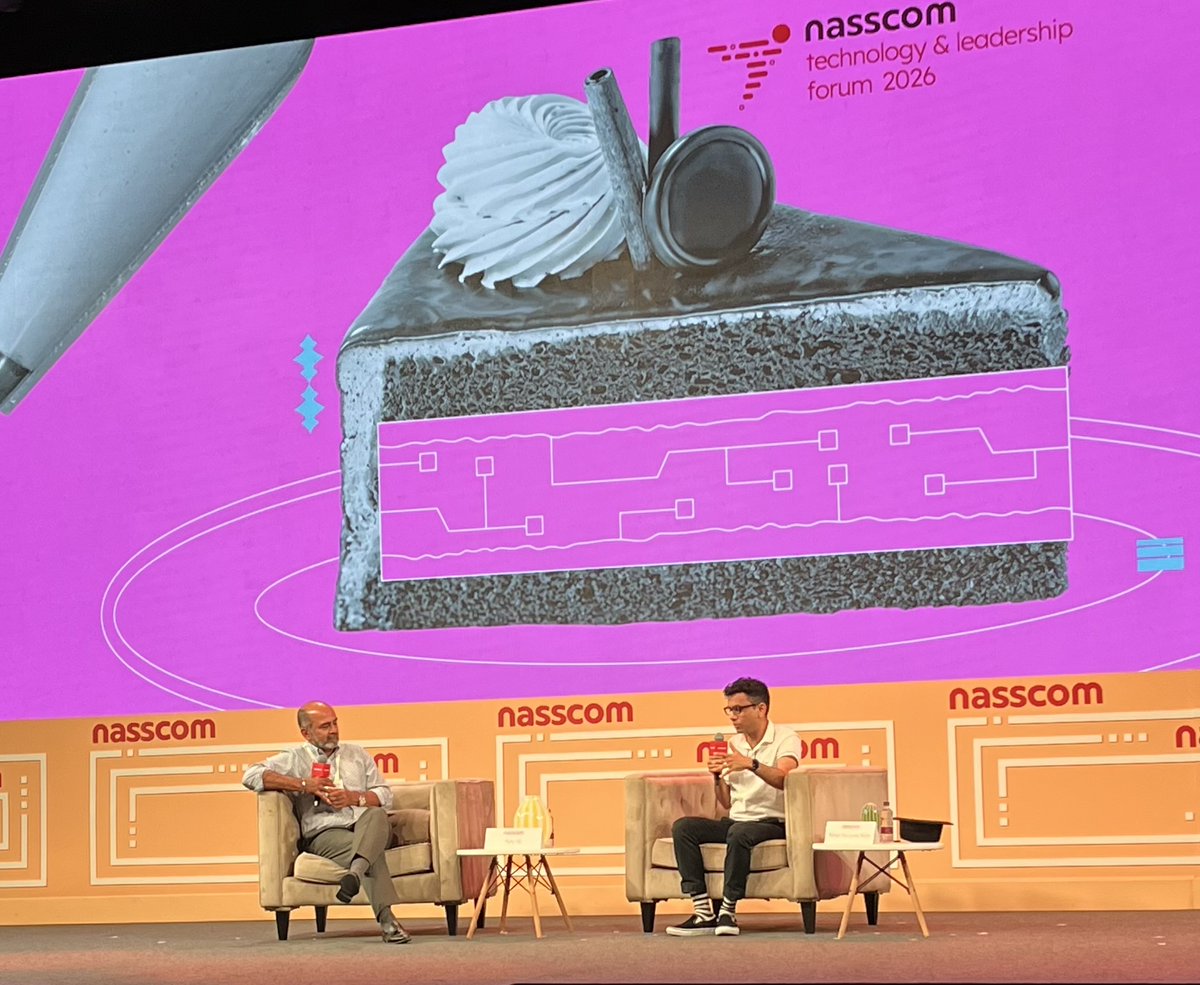
Fireside Chat at #NTLF26 saw @RohanMurty, Founder, @workfabricai, in conversation hosted by Ajay Vij, Senior Country Managing Director, @Accenture, explore whether AI truly understands how work happens inside enterprises.
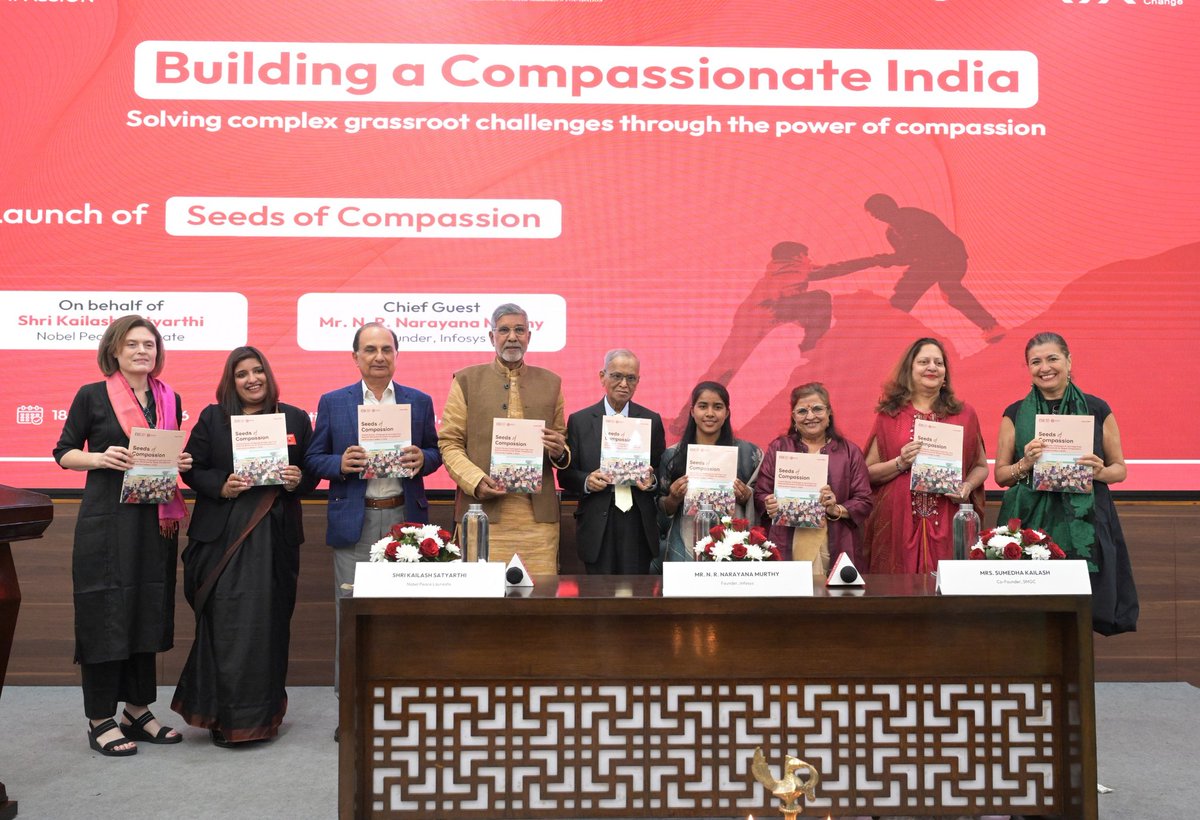
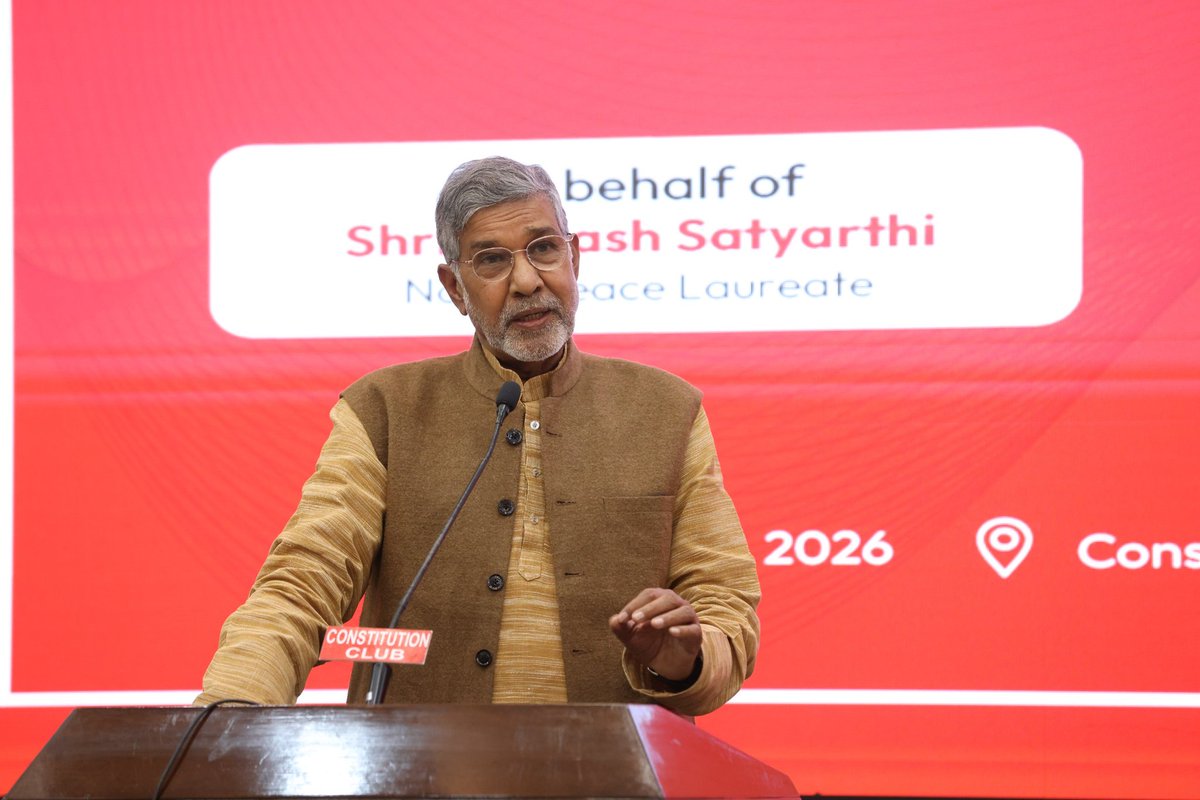
My heartiest gratitude to dear brother @Infosys_nmurthy ji, the legendary father of Information Technology sector in India, for launching “Seeds of Compassion”—an academic research study conducted by Ashoka University’s Centre for Social and Behaviour Change, examining the impact of our work across 1,400 child-friendly communities in India.
His words were true gems of wisdom and a profound moral call: “A compassionate economy is the only sustainable economy. We all talk so much about sustainability, but we have forgotten about a compassionate economy—ensuring that the poor child is as comfortable as the rich child. We have mastered the algorithms of technology, but we are losing the rhythm of the human heart. Compassion, or Karuna, is the antidote to this modern malaise.”
These reflections deeply resonate with our mission.
I firmly believe that the power of compassion is the only enduring solution to the world’s most complex challenges. When compassion guides policy, innovation, and leadership, transformation becomes not only possible but inevitable.
@AshokaUniv @cabcashoka
Excited to share @HarvardBiz co-authored with @workfabricai��� @RohanMurty -why context is the true competitive advantage in the age of AI. Our pioneering partnership in this space is game changing @Cognizant https://t.co/Rbo0c0wgRA
If you and your closest competitor use the same AI models, the same platforms, and the same tools then what exactly is your edge?
This is the question @imravikumars (CEO, @Cognizant ) and I set out to answer in our new @HarvardBiz article. We answer this question with data.
After studying 200+ work patterns across 50+ large enterprises, the answer was clear: context.
Not the models. Not the tools. Not the budget.
New in Harvard Business Review - from our founder @RohanMurty and @Cognizant CEO @imravikumars:
Context is Your Competitive Advantage.
The core insight from actual measurements in enterprises - when every company has access to the same AI models and platforms, the only remaining differentiator is how well you ground that AI in how your organization actually works.
200+ work patterns. 50+ large enterprises. One consistent finding: context, not technology, explains the performance gap.
This is a follow-up to an earlier HBR article, which was the first to show real-world proof that context-driven AI produces dramatically better outcomes. Same tools, radically different results.
At Workfabric AI, this is exactly what we do. We capture execution context, the decision patterns, coordination rhythms, and trade-offs that no system of record holds, and make it available to AI at the moment of decision.
Context compounds. And the companies that capture it first will be the ones that pull ahead.
@gnychis@guruprasad_r94@NabeelQuryshi@juggy_17
https://t.co/MSboTkvLx5
Excited to see context engineering and Workfabric AI referenced by @imravikumars, as a key part of their AI strategy, on @Cognizant’s Q4 earnings call.
On the call, Cognizant leadership highlighted context engineering as a strategic priority and referenced Workfabric AI as a platform partner supporting that vision. That mention reflects something bigger than a single partnership. It signals where enterprise AI is actually headed.
We are seeing a clear shift underway:
* From chasing models to building systems that scale
* From experimentation to production-grade AI
* From isolated tools to context-aware infrastructure
Context is quickly becoming core enterprise infrastructure. It is the layer that connects data, decisions, and outcomes across the organization.
At Workfabric AI, we are focused on helping enterprises operationalize context so AI can work reliably in the real world, not just in demos. Proud to partner with teams that are pushing this transformation forward.
A few reflections:
-Organizations that engineer context alongside AI unlock materially higher productivity
-Real AI impact comes from platforms paired with deep transformation expertise
-The future of work will be shaped by teams that can sustain context at scale
We are grateful to @imravikumars and Cognizant for their vision and partnership. The next phase of enterprise AI is being defined right now.
Workfabric AI and Context Engineering are now being discussed on earnings calls!
On @Cognizant's (strong) Q4 earnings call, Ravi Kumar S (CEO, Cognizant) spoke about Context Engineering as a strategic focus and named WorkFabric AI as the platform partner behind it.
This builds on Cognizant Technology Solutions’s earlier commitment to train and deploy 1,000 context engineers on ContextFabric, our context engineering platform, to operationalize context across the enterprise.
Context is becoming infrastructure.
This is what it looks like when AI moves from models → systems → real work.
Proud to be partnering with @imravikumars and the Cognizant leadership team that’s building for where enterprise AI is actually going.
@RohanMurty@gnychis@NabeelQuryshi@guruprasad_r94
https://t.co/pXHSpQ4KFZ
Cursor and Granola show what’s possible when tools learn from how humans work. This is what that looks like inside a Fortune 500 sales org, using ContextFabric.
What can Cursor and Granola teach us about sales onboarding? At a Fortune 500 enterprise software company, we cut sales onboarding time in half by applying the same idea they use: capture intelligence from how teams actually work.
Our point is simply this: humans, not systems, are the true source of context.
This isn’t about better models. It’s about better context.
Every accept, edit, reject, and rewrite becomes an execution trace. Those traces are live training signals that compound over time.
We built a sales coaching system that learned directly from how top reps sell in practice. Not from CRM fields or static playbooks, but from the micro-actions that reveal judgment, confidence, and intent.
The results were stark:
• New reps closed their first deal in 3 weeks vs. the typical 7
• Reps hit quota consistently by month 5 instead of month 9
https://t.co/VxR6glSjAj
@RohanMurty@gnychis@NabeelQuryshi@guruprasad_r94@juggy_17
Most productivity problems are social, not personal. That’s why AI is shifting from single-player to multi-player. Read @RohanMurty's article for @IndiaToday, in their latest issue on themes for AI.
After working with Fortune 500 teams deploying real AI agents, we've learned the biggest drain on productivity isn't individual inefficiency. It's coordination. Handoffs between teams, unclear ownership, decisions made in one place but needed in another, work stalled because context lives elsewhere.
Multi-player AI isn’t “my assistant.” It’s “our colleague.”
Every team builds tribal knowledge about what usually goes wrong and how similar problems were handled before. Today, that knowledge is scattered across people and systems. Multi-player AI can learn from these experiences and make them available to everyone, so answers don’t depend on who happens to remember.
The biggest gains won’t come from individual copilots, but from AI that shares team context.
https://t.co/6YIUUoTfBN
AI agents need a harness that safeguards execution, aligns with how teams work, and evolves over time
As we started building production agents for Fortune 500 companies, one thing became impossible to ignore: success has very little to do with squeezing more text into the context window.
It’s tempting to frame the problem as “context engineering” in the narrow sense. Bigger prompts. Better summaries. Smarter retrieval. But once agents run for days or weeks, execute hundreds of tool calls, and move through real enterprise workflows, that framing collapses — because the environment is not static. The business changes. The team adapts. New conditions emerge. For the agent to remain useful, it must adapt alongside the team.
This is not a context window problem.
It is an execution and alignment problem.
An agent harness is the system that sits around a model to support long-running execution. It governs how context is assembled and refreshed, how plans evolve, how tools are invoked, how state persists, and how drift or breakdowns are detected and corrected. More importantly, it enables adaptation by shaping what context the agent receives as work evolves. As agents become more autonomous, the harness increasingly holds execution together.
A useful mental model:
- Model = Individual reasoning capability
- Context window = Short-term working memory
- Harness = The system that safeguards execution, maintains alignment, and enables adaptation
- Agent = The digital worker performing task-specific logic
Many of the most effective “AI tools” today are best understood through this lens. Claude Code, Manus, and other vertical agents differentiate not on the model they use, but on how well their harnesses manage behavior over time: maintaining state, revisiting plans, coordinating tools, and keeping work coherent across long horizons.
What became obvious in real deployments is that the harness cannot be designed from abstractions alone.
Large enterprises do not run on clean workflows or fully documented logic. They run on undocumented decisions, informal processes, edge cases, exceptions, and tribal knowledge. That logic does not live in prompts or systems of record. It lives in human execution.
You see it in digital interactions:
- What gets rewritten before approval
- Where someone pauses, escalates, or overrides
- Which signals are trusted versus ignored
- How exceptions are handled when reality breaks the workflow
These execution-time behaviors form decision traces. They are the most reliable source of truth for how work actually happens.
When signals from human work are captured, the learning signal becomes explicit. Every correction, override, escalation, or adjustment teaches the harness how work is really done. Over time, the harness evolves by observing how teams adapt.
The competitive advantage is no longer the prompt.
It is not even the model.
It is the harness, shaped by real execution.
@NabeelQuryshi@RohanMurty@gnychis@guruprasad_r94@juggy_17
Congratulations to our @ztfsurvey architect and visionary Shri Kulkarni, who was awarded a gold medal from the @RoyalAstroSoc for 2026. This is RAS's highest honor, dating back 200 years , with former awardees including A. Einstein, Hubble, and S Hawking! https://t.co/F4HK9nw70p
@PMOIndia@CMofKarnataka
Sir. Shrinivas Kulkarni is truly a rare gem from Karnataka. It is about time our state and country also recognise his contribution to astrophysics.
Startup CEOs: With very few exceptions, the first PM you should "hire" at your company should be an engineer or designer who's already on the team.
I wrote the article (linked in comments) nearly a decade ago, and this is 10x more true today than it was then, due to the PDE roles converging.
The Royal Astronomical Society has announced its 2026 Gold Medal for my uncle, Shri Kulkarni (Astro Prof @Caltech ). This is the Society’s highest honour. Past recipients include names like Einstein, Chandra, Hubble, Babbage, Poincaré, Pickering, Hawking, Hale, among others. He is second Indian to win this medal, after Chandra.
Shri has been my intellectual hero for as long as I can remember, and a big reason I pursued a PhD. I’ve always been inspired by his intensity, grit, dedication, and deep love for the work. In a family full of teachers and professors, he’s the hero in our household.
Heartiest congratulations to Prof. Shrinivas Kulkarni on winning the Gold Medal at the 2026 Royal Astronomical Society Awards! As an Indian, I am proud, and as a sister, I am super proud. My congratulations to Prof. Andrew Jackson too on this honour.
https://t.co/ooK4J5L7Uw
When Nooni stumbles upon a pair of old earrings, she unravels a tale of lost treasures, hidden histories, and family secrets. With ‘The Magic of the Lost Earrings,’ Sudha Murty, beloved author and master storyteller, weaves a deceptively simple tale that carries within it the echoes of Partition, effortlessly revealing the extraordinary truths of history and everyday life.
In conversation with journalist and cultural commentator Mandira Nayar, Co-founder of ‘Agla Varka,’ she dives into the magic of storytelling, treasures lost and found, and the timeless joy of discovery.
Join them at Jaipur Literature Festival 2026, presented by Vedanta.
Register to attend!
15th - 19th January, 2026
Hotel Clarks Amer, Jaipur
https://t.co/TTaRuJE8hs
#JaipurLiteraturefestival2026 #JaipurLiteratureFestival