I completed my MD in Psychiatry and wanted to return to my hometown, Gaya, and serve in a government medical college.
I waited patiently for a Senior Resident opening in the "General Male" Category (as, apart from all the reservations, there is also a 50% women's reservation in Bihar). Eventually, I had to join a private medical college.
The irony is that a doctor who genuinely wants to build a long-term career serving his own city couldn't find an opportunity, while many appointments naturally go to people who may eventually move back to their own home states or cities.
This isn't about blaming anyone; everyone has the right to work where opportunities exist.
But if the system cannot accommodate qualified local doctors who are committed to serving their own region, perhaps it's time to re-evaluate the policy.
A stable, long-term local medical workforce should be an asset, not an afterthought.
@pubity Intresting case: In 1848, an iron rod went through Phineas Gage’s brain, damaging part of his prefrontal cortex (OFC).
He survived, but his behavior changed a lot—he became rude, impulsive, and “no longer Gage.”
Why Do Night-Time Heart Attacks Cause Less Damage Than Daytime Events?
Role of Neutrophils & the Circadian Immune Clock
🔬 Key Insight
Myocardial injury shows clear circadian variation. Ischemic events occurring at night are associated with smaller infarct size and reduced collateral tissue damage, largely due to time-dependent regulation of neutrophil behavior
🌟 Clinical Pearls
1️⃣ Neutrophils drive circadian injury patterns
Daytime neutrophils are hyper-activated and cytotoxic
Night-time neutrophils are functionally restrained, limiting tissue injury
2️⃣ CXCL12–CXCR4 axis is the key checkpoint
Plasma CXCL12 peaks at night, activating CXCR4 on neutrophils
CXCR4 signaling suppresses the neutrophil circadian clock
3️⃣ Night-time neutrophils relocate, not reduce
Total neutrophil numbers remain similar
But neutrophils are confined to the infarct core, sparing surrounding myocardium from apoptosis
4️⃣ Daytime injury = spatial spillover
During daytime MI, neutrophils spread beyond the lesion
This causes bystander cardiomyocyte death and larger infarcts
5️⃣ CXCR4 agonism mimics night-time protection
Pharmacologic CXCR4 activation reduces myocardial and vascular injury
Importantly, antimicrobial immunity remains intact
🧠 Clinical Take-Home Message
It is not the number of neutrophils, but their circadian activation state and spatial positioning that determines myocardial damage.
Harnessing circadian immune checkpoints may open new cardioprotective therapeutic strategies.
📚 Reference
Aroca-Crevill��n A et al. A circadian checkpoint relocates neutrophils to minimize injury. J Exp Med. 2026;223(2):e20250240
https://t.co/j0lFKXpvWg
🩸 Antiplatelet therapy isn’t one drug, it’s a strategy.
Different pathways, one endpoint: prevention of platelet plug.
Aspirin, P2Y12 blockers, GPIIb/IIIa inhibitors, PDE inhibitors, PAR1 inhibitors - each adds an extra layer of protection.
Should care that includes primary aldosteronism screening be applied to all individuals with hypertension, compared with care without screening?
New Endocrine Society Clinical Practice Guideline (JCEM, Sept 2025) on Primary Aldosteronism (PA) screening in hypertension:
🩺 Primary Aldosteronism (PA) Screening in Hypertension – 2025 Guideline Update
🔑 Clinical Pearl
Primary aldosteronism (PA) is common, underdiagnosed, and carries higher CV risk than essential hypertension.
Screening = Aldosterone : Renin Ratio (ARR) + potassium measurement (to aid interpretation, not screening per se).
Recommendation 1:
“In all individuals with hypertension, we suggest screening for PA” (Conditional, ⊕⊕OO).
→ First step toward PA-guided care.
🧭 Key Points
Who to screen?
➝ All hypertensive patients, not just those with resistant HTN or hypokalemia.
➝ Contextual: depends on local resources, expertise, and system capacity.
Why screen?
Detects a potentially curable or specifically treatable cause of HTN.
Early recognition improves BP control, reduces CV and renal complications.
What test?
Serum/plasma aldosterone concentration (PAC).
Plasma renin concentration or activity (PRC/PRA).
Calculate ARR.
Potassium must be measured for proper interpretation.
⚖️ Technical Remarks
Conditional recommendation → implement where feasible.
Screen-positive → proceed to PA-specific pathway (confirmatory testing, subtype classification, surgery vs MRA therapy).
Screening = gateway step in PA care cascade.
💡 CME INDIA Perspective
🌍 India context: Hypertension is a massive burden; PA is under-recognized.
💊 Availability of spironolactone → practical advantage in low-resource settings.
🏥 Need to build awareness among internists, cardiologists, nephrologists, and endocrinologists.
📈 Universal screening may be aspirational → prioritize high-risk groups first (resistant HTN, hypokalemia, adrenal incidentalomas, young stroke patients).
📖 Reference:
Adler GK, Stowasser M, Correa RR, et al. Primary Aldosteronism: An Endocrine Society Clinical Practice Guideline. J Clin Endocrinol Metab. 2025;110(9):2453–2495. doi: 10.1210/clinem/dgaf284
https://t.co/SmCkAxSPIk
EPINEPHRINE FOR ANAPHYLAXIS - DRUG INTERACTIONS AND CONSIDERATIONS
A thread 🧵
Scene 1:
Epinephrine for anaphylaxis in a patient on beta blocker therapy.
-Recently, I had to manage transfusion related anaphylactic reaction in an elderly female with HFrEF, on beta blocker therapy/ T. Met XL 25mg OD.
She had:
-acute onset dyspnea with global wheeze
-HR:48/min
-BP: 76/42mm of Hg
Since IV access is in place, she was given 50mcg of Adrenaline and provided with nebulization with Salbutamol and Budecort.
-Chest condition improved quickly, with the patient being visibly less tachypneic and wheeze resolved over minutes.
-IV fluids are given cautiously, considering pt's cardiac status and Vasopressor support with Nor-adrenaline infusion initiated, which was eventually tapered off.
-HR responded well to a single dose of Atropine at 0.1mg/Kg.
That probed me to read further on managing anaphylaxis in patients on various drugs.
Interesting take-aways:
1. Cardioselectivity of the beta-blocker:
In a patient on non-cardioselective beta adrenergic blocker receiving epinephrine:
-enhanced pressor response to epi, due to beta 2 blockade in vessels, can result in reflex bradycardia and cardiac arrest.
-attenuated bronchodilating effects of epi due to beta 2 blockade at bronchial smooth muscles
-attenuated cardio-stimulatory effects of epi, due to beta 1 blockade in the heart
Thus, it is only prudent to consider using a cardioselective beta blocker in patients at higher risk for anaphylactic reactions.
GLUCAGON IN EPI-RESISTANT ANAPHYLACTIC SHOCK:
-There are 3 anecdotes of successful management of adrenaline resistant anaphylactic shock in patients on beta blockers using Glucagon, at 1-2mg IV doses.
-Glucagon directly enhances adenylate cyclase activity, bypassing the beta receptors, hence the effects.
-Theoretically, it can increase the release of vaso-dilatory mediators from mast cells too, stay watch ful.
Textbook of Trauma/ Emergency resuscitation and Perioperative anesthesia recomends, in patients on beta blockers with anaphylactic reactions, using:
-Higher dose of epinephrine boluses :50mcg-300mcg IV (caution in patients prone to infarction/ risk of intense coronary vasoconstriction)
-early use of Atropine and Glucagon (if available)
Read further:
https://t.co/VnB3R5UW4B
https://t.co/PcsClB6JPL
#Anaphylaxis
#Anesthesia
The eagerly awaited 2025 ACC/AHA ACS guidelines were released yesterday! Congrats to @SVRaoMD@DrM_ODonoghue and all the co-authors
1/ Here are some of my takeways
Simple concept of GN. It’s all about location!
1. Subendothelial deposits/injury by Ig, immune-complexes, complement, other mechanism leads to influx of leukocytes= inflammation=GN
2. Subepithelial deposits/injury= protected by GBM & endothelial cells=no inflammation=No GN. 1/3
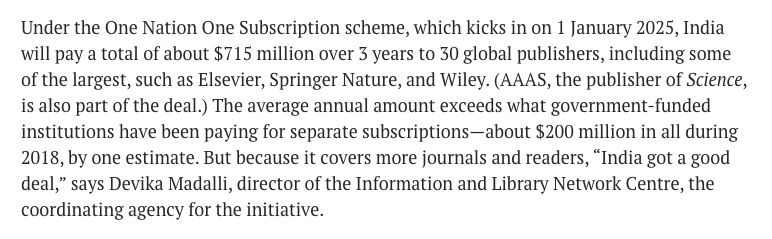
India strikes $715m deal with 30 publishers -- including Elsevier, Springer Nature and Wiley -- giving 18 million academics nationwide free access to 13,000 research journals from 2025.
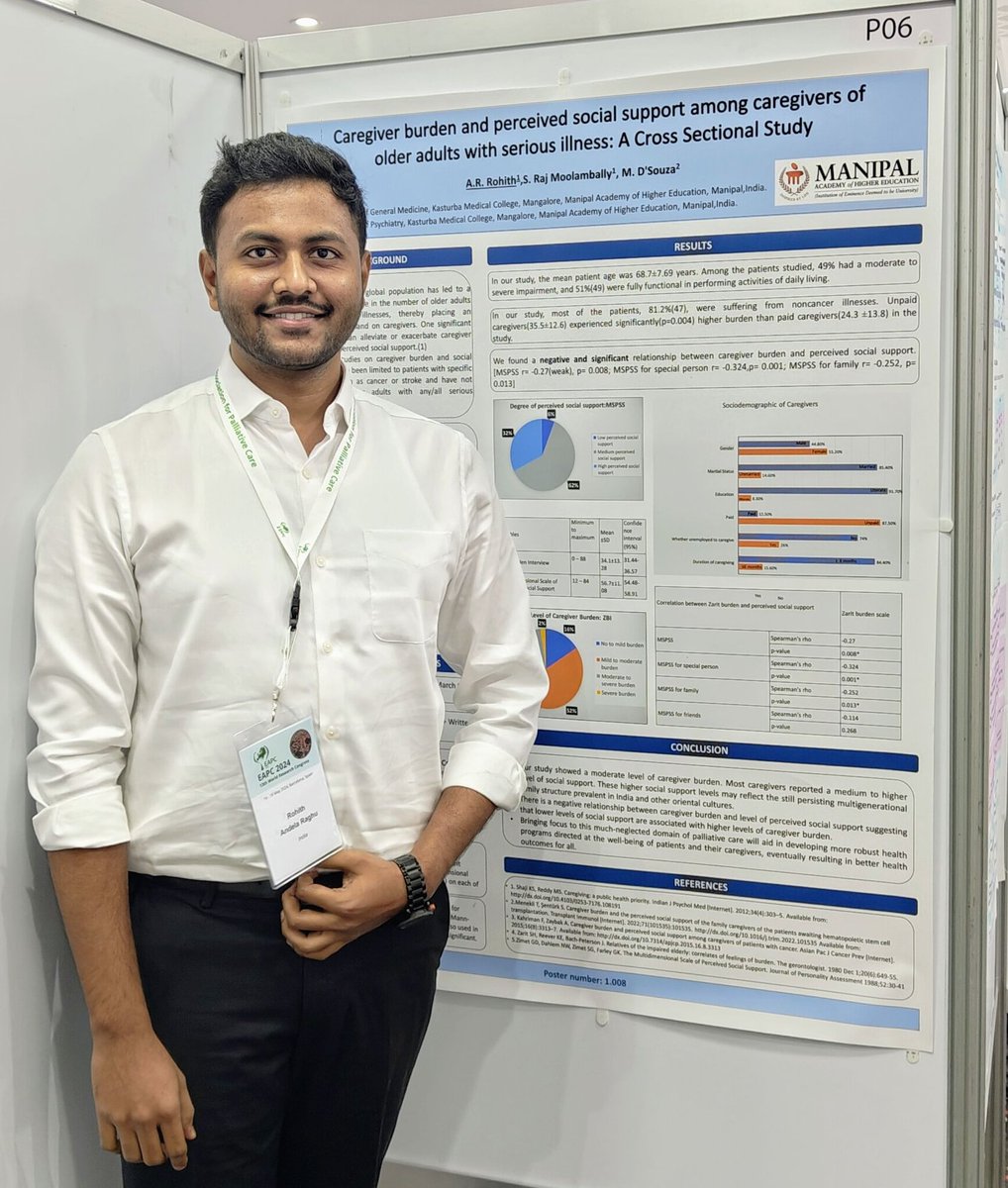
Had an amazing time at #EAPC2024 presenting my poster on caregiver burden and perceived social support among caregivers for older adults with serious illnesses.
#Barcelona