Quantum computing is shifting from physics experiments to systems engineering. The metric that matters now isn't raw qubit count—it's error mitigation and utility-scale performance. Useful quantum computation is becoming an engineering problem with clear milestones.
François Chollet’s 3rd edition of 'Deep Learning with Python' arrives in two weeks—and the entire book will be available online for free.
Prioritizing open access over book sales sets an exceptional precedent for technical education.
Quantum computing is shifting focus from vanity qubit counts to error correction.
Backed by $300M in new funding, Team Oratomic is scaling to build a fault-tolerant system—the definitive hurdle between experimental physics and commercial utility.
IBM and UTokyo researchers just modeled one of the largest quantum many-body systems on the Heron chip. By using Krylov Quantum Diagonalization, they bypassed variational loops entirely—bringing practical quantum simulation a step closer to reality.
Initial architecture sets the baseline, not the ceiling. Genetics provides the starting parameters; iteration, environment, and deliberate execution determine the outcome. Your starting weights are just the first step.
The tech cycle used to measure progress in quarters. Now, paradigm shifts land mid-week before teams finish parsing the last release.
In an era of relentless updates, selective attention is the highest-leverage engineering skill.
The timeline from ArXiv paper to working open-source implementation is down to days. Keeping up with AI isn't about chasing every benchmark—it's about spotting the architectural shifts that actually make models faster and cheaper to deploy.
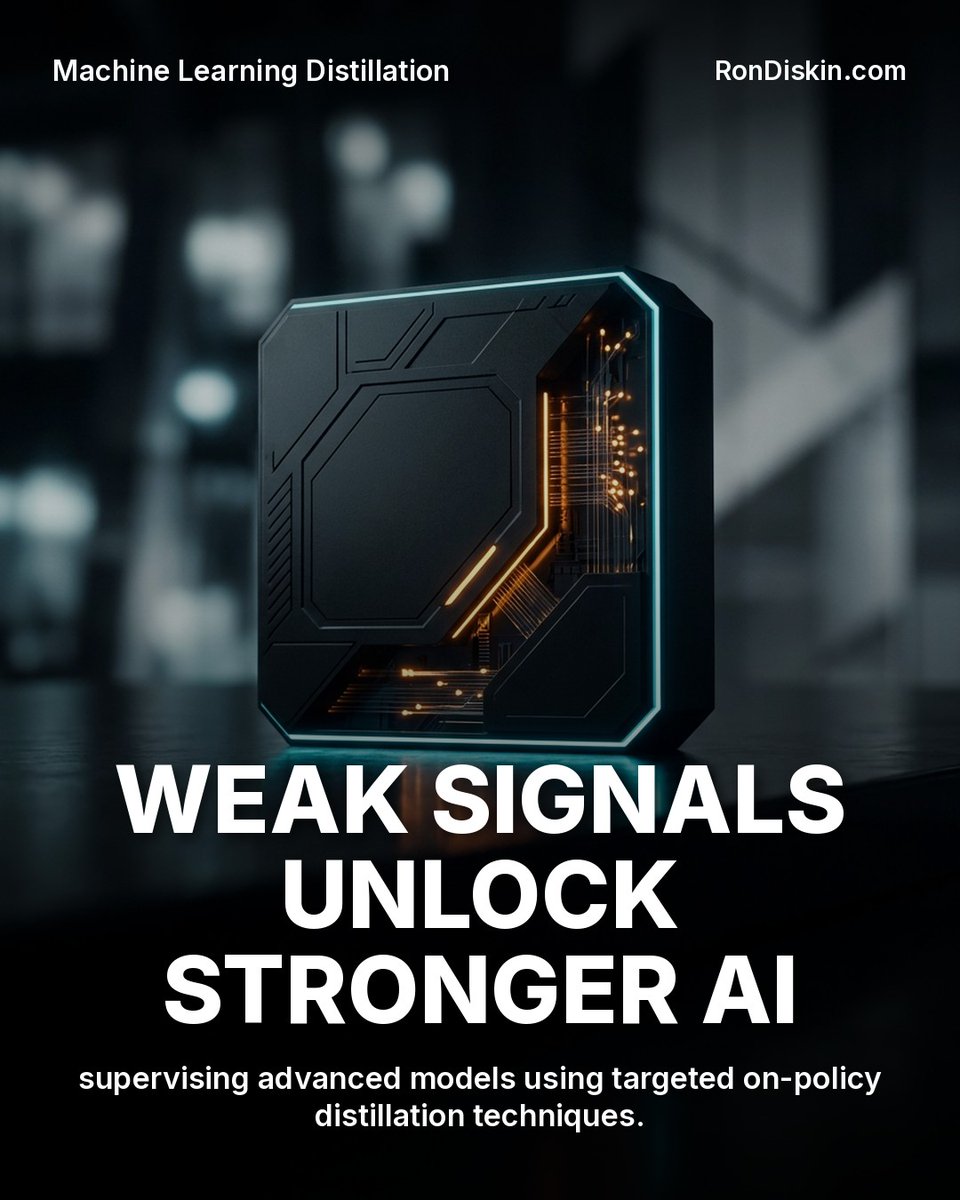
How do you train an AI smarter than its supervisor? Direct on-policy distillation shows stronger models can generalize past weaker teachers by learning from their own generations in real time. A vital step for scalable alignment.
Fault-tolerant quantum computing has long faced a massive hardware overhead problem. New neutral-atom processor designs are significantly reducing the resources needed for error correction, bringing practical quantum utility much closer.
Invertebrate welfare is one of the most neglected areas in bioethics and aquaculture tech. Trillions of farmed shrimp exist in global supply chains with minimal humane infrastructure. Backing solutions here is high-leverage, and I plan to become a significant patron to the cause.
@Funmentalist@RealJimChanos Thought this guy was already completely wiped out shorting $TSLA so aggressively for so many years but I guess he just wiped out his investors and then found new (idiotic) ones
Modern technical collaboration in a nutshell: knowing someone’s logic, writing style, and analytical rigor inside out before ever shaking their hand in person.
Decentralized R&D has inverted how professional relationships are built.
Enterprise AI is moving from proof-of-concept to production.
That shift has made Forward Deployed Engineering one of the highest-leverage roles in tech: bridging core software systems with real-world infrastructure.