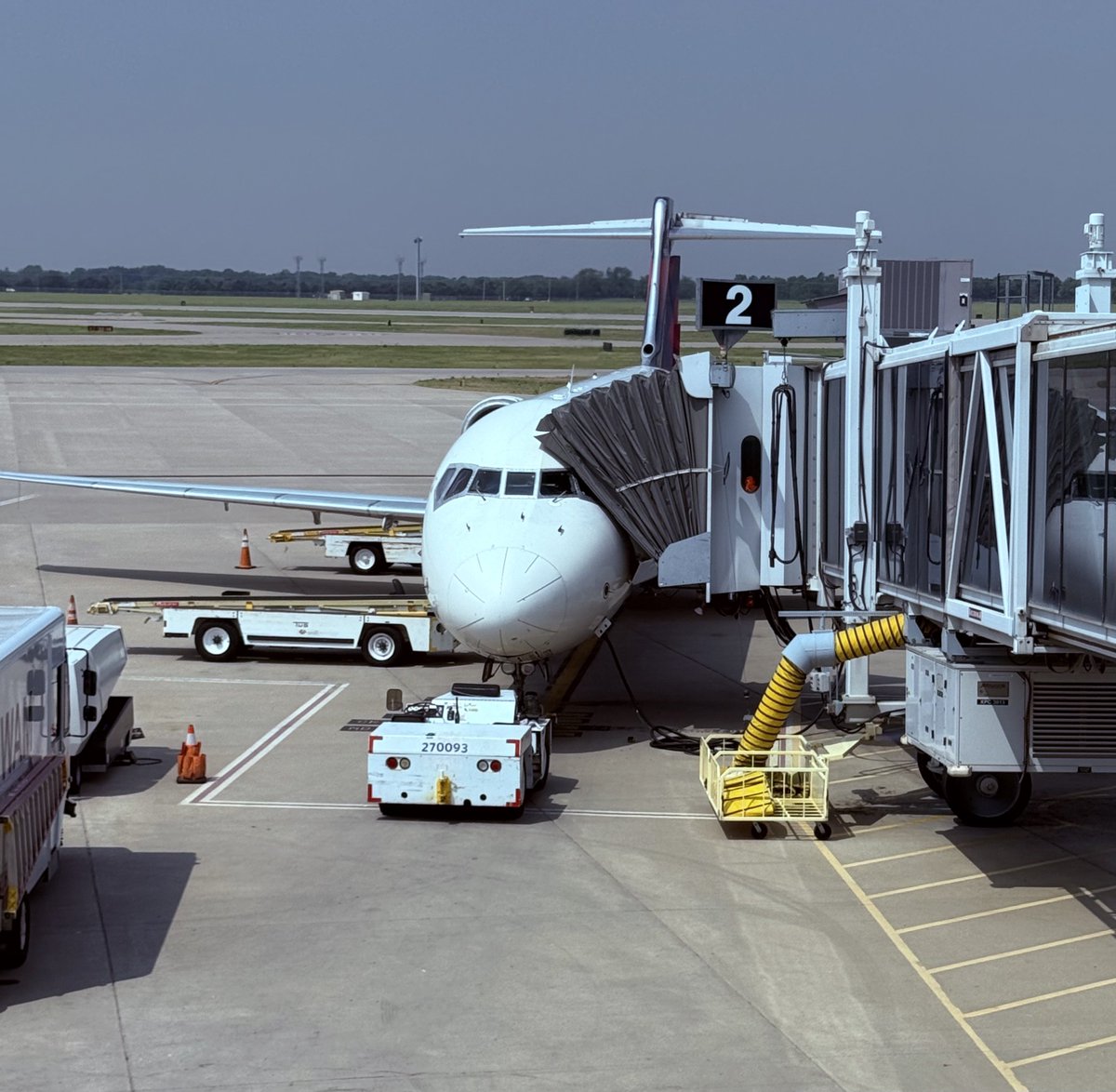
I just had the craziest experience at the airport.
We are about to board a flight to Atlanta when the pilot from the incoming plane walks out of the jetway. Guy is probably late 50s, salt and pepper hair, military look. The kind of pilot you instantly feel good about seeing on your flight.
Pilot walks over to the counter, gets on the PA system, and starts addressing everyone. “Folks, I’ve been doing this a long time. Flying one of these jets is easy. The hard part is looking at 130 people and telling them their flight is going to be delayed.”
Audible groans throughout the boarding gate. Most people here are flying to Atlanta as a layover before another flight. 130 people just had their day become a complete mess.
The pilot goes on. “I get it, trust me. But here’s the deal: During our landing, we had a small mechanical issue. I’m not your pilot for the next leg, but I don’t feel confident the jet’s safe to fly until we have a mechanical team look it over, and I don’t feel comfortable asking the next pilots to fly you guys until we get confirmation.”
He points at the agents next to him behind the counter: “Now, none of this is the agents’ fault. Please be kind to them. I’m the one who made this decision, not them, so any inconvenience you experience is my fault. Just please know that I don’t do this lightly, and I’m only doing it because I believe it’s in the best interests of everyone’s safety.”
Now this is where the story gets crazy. The pilot puts the microphone down, grabs his suitcase, and all the people in the gate…
Start clapping.
I’m not joking, everyone starts clapping for the guy. 130 people who just had their travel plans ruined give an ovation to the guy who made the decision and delivered the message.
All because he addressed them with decency and transparency, took ownership of the decision, made it clear that it was necessary, and explained why it was in everyone’s best interest.
It’s honestly one of the best examples of strong communication—of strong leadership, for that matter—that I’ve seen in a long time.
@Delta, whoever your Atlanta to Wichita pilot was this morning, he’s one of the good ones. Please tell him the delayed passengers of flight 1637 appreciate what he did.
In 2003, 67-year-old Dorothy Fletcher from Liverpool suffered a heart attack on a flight from Manchester to Florida.
When the flight attendants asked if there were any doctors onboard, about 15 cardiologists stood up. They were traveling to a cardiology conference in Orlando.
The doctors used the aircraft’s emergency medical kit and treated her during the flight until the plane diverted to North Carolina, where she was hospitalized. She survived and later attended her daughter’s wedding.
Solar Impulse 2, the pioneering aircraft that became the first solar powered plane to fly around the world, has crashed during a test mission over the Gulf of Mexico after reportedly losing power mid flight.
The aircraft made aviation history in 2016 when it completed a globe spanning journey powered entirely by sunlight. Built from lightweight carbon fiber and carrying more than 17,000 solar cells across its enormous wings, the plane demonstrated the possibility of ultra long endurance flight without fuel.
According to reports, the aircraft went down on May 4 while conducting an autonomous test flight after being converted into a surveillance platform by Skydweller Aero. The uncrewed plane was designed for continuous operations using solar energy stored in massive onboard batteries, allowing it to remain airborne for extended periods.
With a wingspan larger than a Boeing 747, Solar Impulse 2 had become a symbol of futuristic clean aviation technology. Researchers and engineers viewed the aircraft as a stepping stone toward persistent high altitude communications, environmental monitoring, and low emission surveillance systems. Although the crash represents a major setback for perpetual solar flight programs, experts say the data collected from the incident could help improve future autonomous aircraft designs.
Source: “World’s largest solar-powered aircraft crashes after losing power.” Popular Mechanics. May 2026