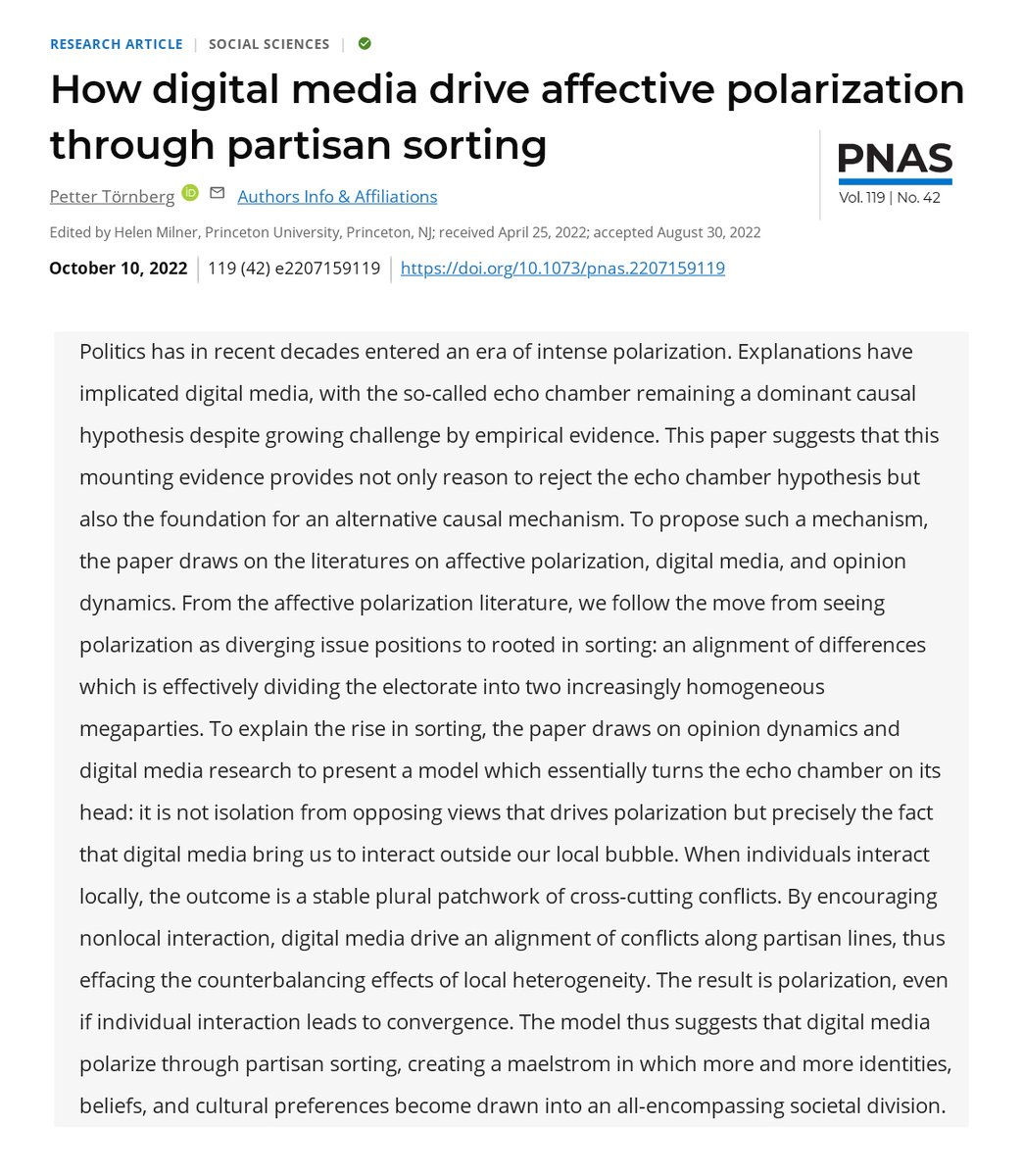
Polarization isn't due to echo chambers. The problem isn't that we only see our side—it's that we see the worst version of the other side.
It's not enough to burst filter bubbles. We need to amplify insight over outrage.
The loud minority rarely represents the silent majority.
Leadership is defined as much by how well people respond to unfolding events as how good they are at driving an agenda. Research shows senior leaders spend an average of 36% of their time in reactive mode, responding to such events. Nitin Nohria offers a matrix of types of event & how leaders should respond:
1) Normal noise: small issues likely to stay small - don't get drawn in
2) Clarion calls: significant issues likely to remain significant - be all-in
3) Whisper warnings: small issues that might become significant - nip them in the bud
4) Siren songs: significant issues that are likely to diminish over time - don't overreact. Watch and wait
He offers a three step process - sensing, sizing & responding - to help leaders react effectively to the full spectrum of unfolding events: https://t.co/Kf0hal8z9f. Via @HarvardBiz
Yes. And
Many arguments include that it’s not the final perfect destination so we shouldn’t go on this.
That’s just the point- the destination is a long way off but this is an important and necessary first step along the way.
We will set back the journey if we get a no.
I’ve just read the Yes and No cases in the #Referendum2023 info. The No case is simply an insult to our intelligence. It’s full of straw man arguments and whataboutisms and is misleading. Analogies like buying a house unseen: no, we’re agreeing to talk about buying one. #Yes23
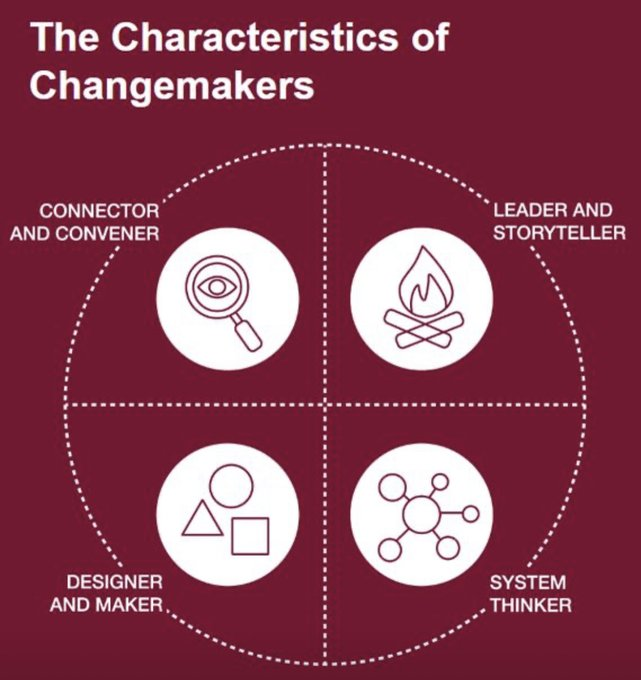
The characteristics of changemakers. The @designcouncil has studied change excellence in practice & identified the attributes of the most effective leaders of change across systems:
1) System thinker: has the ability to see how everything is interconnected in a bigger picture.
2) Leader and storyteller: can tell a great story about what’s possible and why this is important, engage people at all levels and see the work through.
3) Connector and convener: can build strong relationships, create spaces where people from different backgrounds come together and join the dots to create a bigger movement.
4) Designer and maker: has the technical and creative skills to make things happen.
https://t.co/mfSmtDjixj Graphic via @Brilliant_Teams
We do our best work when we feel we're able to work with high levels of autonomy; to make decisions & experiment for improvement. That will only happen if our systems are designed for autonomy. Bureaucracy is not inevitable. We can, and should, design it out: https://t.co/5L0JNOWBRO By @PaulIanTaylor
Very often in healthcare, we make a massive effort to improve our delivery performance by changing our processes and practices. We should probably start much higher up in our knowledge structure by considering our paradigm - our beliefs about how to make change happen. If we do that, we start to frame the problem in different ways & adopt different principles for improvement. Graphic: adapted from @profhamel
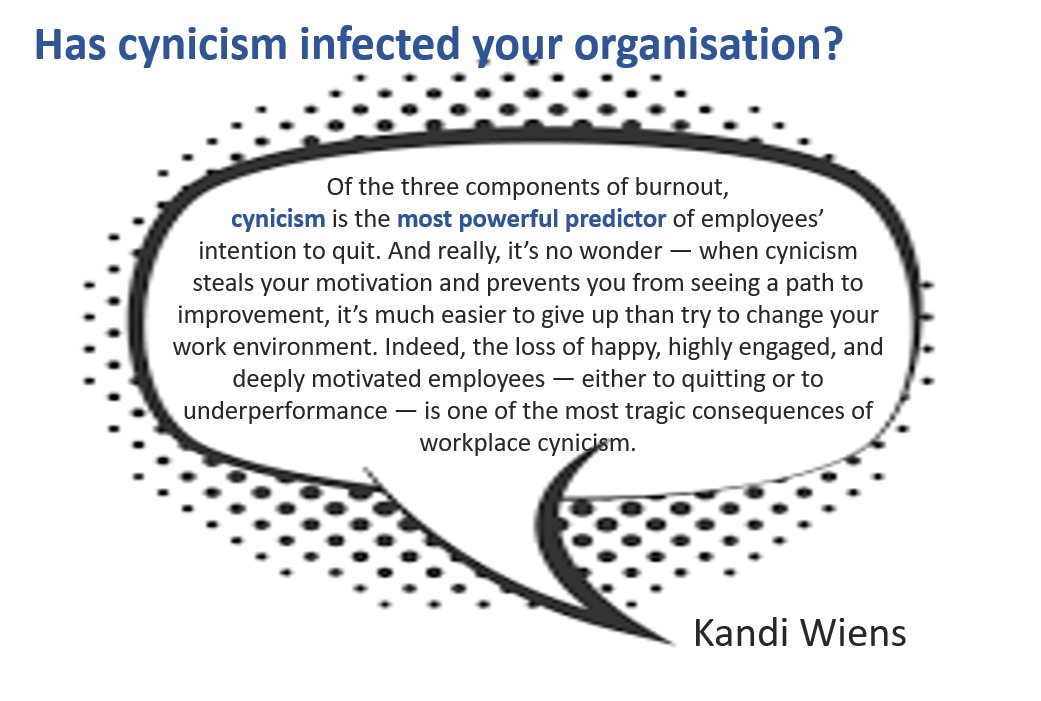
Workplace cynicism is one of the major but least-understood aspects of burnout. Cynicism isn’t due to some character flaw or being a “glass-half-empty” person. It originates from the workplace, not the individual. 8 ways to build a positive, rather than cynical, culture:
1) Attend to yourself first
2) Stop the cycle of negative emotional contagion
3) Encourage/practice empathy
4) Cultivate trust
5) Practice transparency
6) Give people more control
7) Remove uncertainty & ambiguity
8) Inject micro-doses of positivity
https://t.co/1MYTR0O9Ur By @KandiWiens
How do we build leadership skills for systems? We need to move beyond developing individual leaders to creating the conditions for collective leadership to flourish. 5 ways to prepare systems for transformative leadership:
1) leading together, with shared accountability
2) staying interpersonally connected
3) connecting groups with similar challenges
4) authorising and supporting internal change
5) promoting mentorship
https://t.co/b1HlmfsktC by Sida Ly-Xiong of @nexuscp
"Best practice" doesn't work in most change situations in health & care. Best practice works in simple, stable scenarios but we are mostly working in complex systems. This means that yes, we can learn from the practices of others, but we have to:
1) Bring in a diversity of perspectives and experiences
2) Test out new practices experimentally
3) Create learning loops
4) Push authority down to the people who need to act on the information ("disintermediation") https://t.co/rWXGG8wyfT By @jbriselli Graphic adapted from @TheCynefinCo
The earlier kids get smartphones, the worse their mental health as adults.
New study, 27k+ ppl: owning a smartphone younger predicts lower self-worth, motivation & resilience—and more sadness, anxiety & aggression—especially for girls.
Smartphones should wait until high school.
https://t.co/MPTTZpD83G
Exercise reduces depression and anxiety.
Over 1,000 randomized controlled trials: physical activity boosts emotional well-being for people with & without clinical symptoms.
It's not a panacea or a substitute for other treatments, but physical fitness is good for mental fitness.
A young Bentleigh dad who became paralysed and was in ICU for 50 days with a rare disorder has made a remarkable recovery.
Connor Fitzgerald and his wife are sharing his comeback in tribute to the Box Hill Hospital team which saved his life. @emilyrice28#9News
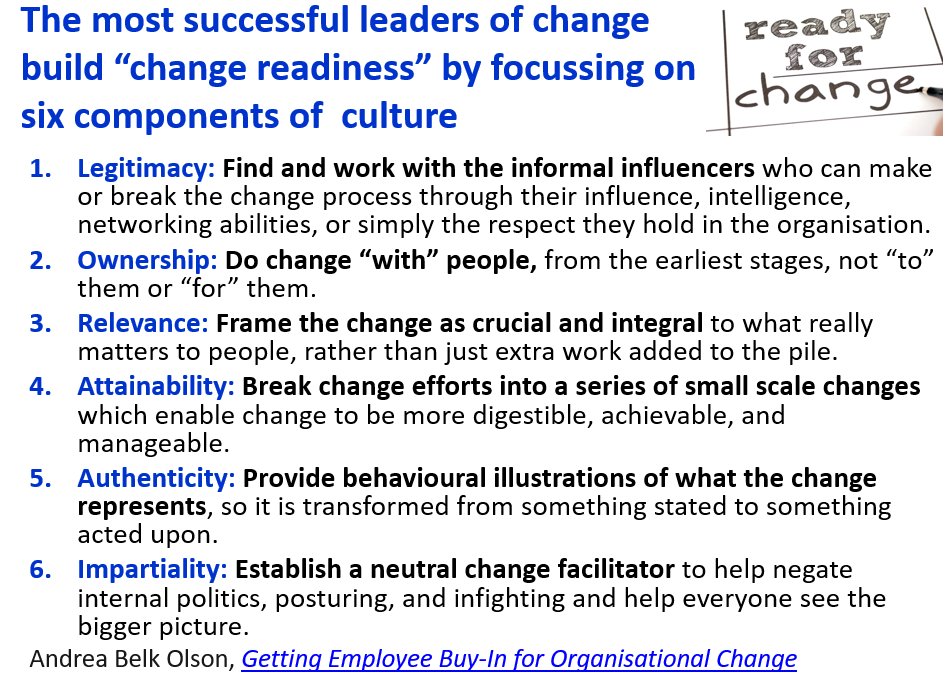
The leaders who deliver change most successfully build a culture of "change readiness" in their organisations. They do this by addressing six components of culture: legitimacy, ownership, relevance, attainability, authenticity & impartiality: https://t.co/e36qP7gMOI By @Pragmadik
Consultant Intensivist Transition (CIT) Management Course.
LAST MINUTE PLACE AVAILABLE.
21-22nd Feb 2023. £350, Oxford.
For new consultants, senior trainees or fellows in ICM.
International Faculty
https://t.co/FnhVusc9Ws
Consultant Intensivist Transition (CIT) Management Course.
21-22nd Feb 2023. £350, Oxford.
For new consultants, senior trainees, fellows or SAS doctors in ICM.
4th edition of the ukcitcourse, running since 2016.
International Faculty
https://t.co/FnhVusc9Ws
Consultant Intensivist Transition (CIT) Management Course.
21-22nd Feb 2023. £350, Oxford.
For new consultants, senior trainees or fellows in ICM.
4th edition of the ukcitcourse, running since 2016.
International Faculty
https://t.co/FnhVusc9Ws
I did a previous iteration of this course in Melbourne and it was one of the best courses I’ve ever done. Now that I’m in a leadership role I use things I learned on the CIT course every day. Strongly recommended.
Feedback is not about sizing people up. It's about helping them grow.
78 studies: criticism is more motivating when you (a) meet face-to-face; (b) compare behavior to a standard, not to others; (c) suggest changes to make.
People want to improve when it's clear that you care.
We used AI to track Nursing Workload in the ICU. Surprise, surprise, delirious patients take a lot of work, at greater than 1:1 ratios. Thanks @Aus_CC
https://t.co/6py2XMWNxr