@ThrimbyFarms My third day off this year was very enjoyable. Thank you for your concern for the well being of those at the coal face of the industry! Cheers Ben 🍺
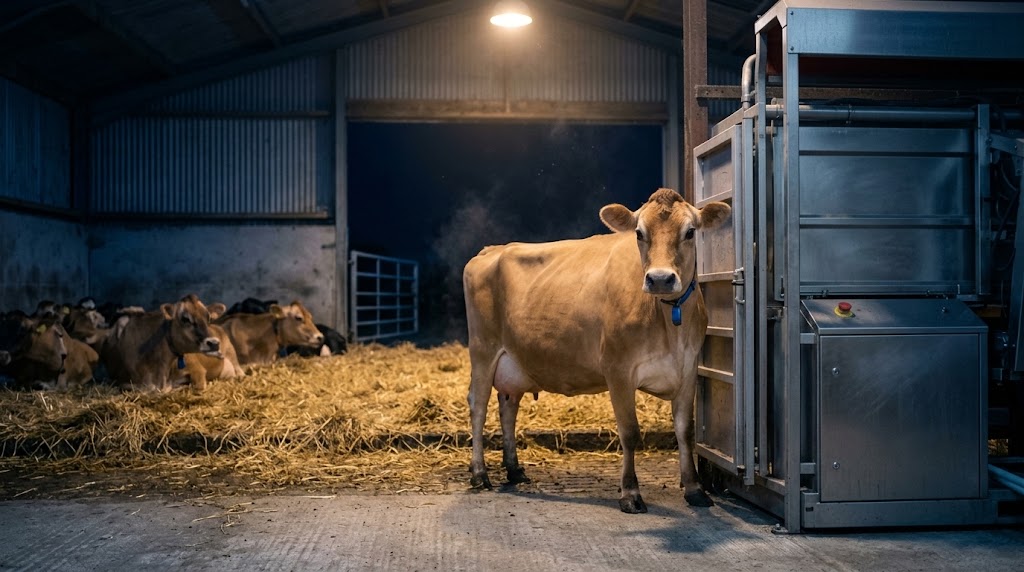
Hazel is a Jersey on a dairy farm run by a man called Roy, and yesterday she spent 24 hours being exploited, in a shed with the gate open, by a machine she queues for.
4.10am. Hazel forces her way into the milking robot for the first of what will be four visits, because the daily cruelty of dairy farming is something Hazel would like more of, and would like it now. Nobody is in the shed. Roy is asleep. The cow has walked the length of a straw yard in the dark, on her own, to be milked, and the machine has read her collar and let her in, and if it had not she would have stood there roaring at it, as she has before.
4.16am. The machine has taken her milk, measured it, checked it for the electrical signature of an udder going wrong, and let her out. Milking hurts, the internet says. Hazel is in the queue again by nine.
5.30am. Hazel lies down in straw to her hocks. The shed has 80 cows in it and one gate, and the gate has been open all night, as it is every night, and every cow in the building has chosen to be in the building, which is the part the documentary forgot to film.
7.00am. Roy comes in. He does not pump anything into anybody. Growth hormone for milk has been illegal in this country for 26 years, and the only cow on the place with anything in her is the one with red tape round her leg at the back of the shed, who is ill, and whose milk is going into a bucket, and whose bucket is the most expensive object on the farm, because if a cupful of it reaches the tanker the whole load goes down the drain and Roy pays for every farm's milk on the run.
9.00am. Hazel goes in again. The machine measures her again. Every litre of milk that leaves this farm is tested for antibiotic before it leaves the lorry and again at the dairy, and tested for the white blood cells that every mammal's milk carries, which the internet calls pus and which the law calls a number, and above the number the milk cannot be sold at all. Hazel's number is fine. Hazel's number is on a sheet in Roy's office, three times a week, with her name on it.
11.00am. Hazel eats. The feed is grass, silage and a scoop at the robot, and the scoop is the reason she goes four times and not three. The internet says she is forced to produce. Hazel is producing because a Jersey cow's whole design is to turn grass into cream, and she would do it in a field with nobody watching, and she has, and Roy has the wet knees to prove it.
1.00pm. A visitor at the gate asks Roy whether the cows ever go outside. Roy says they came in last night from outside and will go back out after milking, and the visitor looks at the open gate for a while and does not ask anything else.
2.15pm. Hazel is at the robot. Nobody put her there.
6.00pm. The tanker comes. The driver draws a sample before a drop goes on, because a cow's worth of antibiotic in 20,000 litres empties the lot, and every dairy farmer in the country treats a poorly cow like she is radioactive for exactly that reason. Hazel's milk goes on. Hazel's milk has gone on every day of her life.
9.40pm. Fourth visit. The robot lets her in, as it has all day, because she asked.
Roy went to bed. The gate stayed open. Eighty cows stayed in, and the one who wants milking most in the whole of England was first in the queue at ten past four this morning, again, shouldering past the cruelty to get to the front of it.
Cut fox numbers by 43% and crows by 78% and moorland waders raise around three times as many young.
That figure comes from an eight-year experiment on moorland in northern England. The habitat was left as it was and only the foxes and crows were changed, which is why it shows cause rather than coincidence.
Golden plover, lapwing, curlew, red grouse and meadow pipit all averaged a threefold rise in breeding success, enough to hold a population steady or grow it.
The survey work says the same thing. Across 320 sample squares in eastern Scotland and northern England, breeding golden plover ran several times denser on keepered grouse moors, tracking the lower crow numbers.
Golden plover lay in an open scrape with no cover to speak of. They are amber-listed and falling nationally, and the ground where they still do well is ground where someone keeps foxes and crows down.
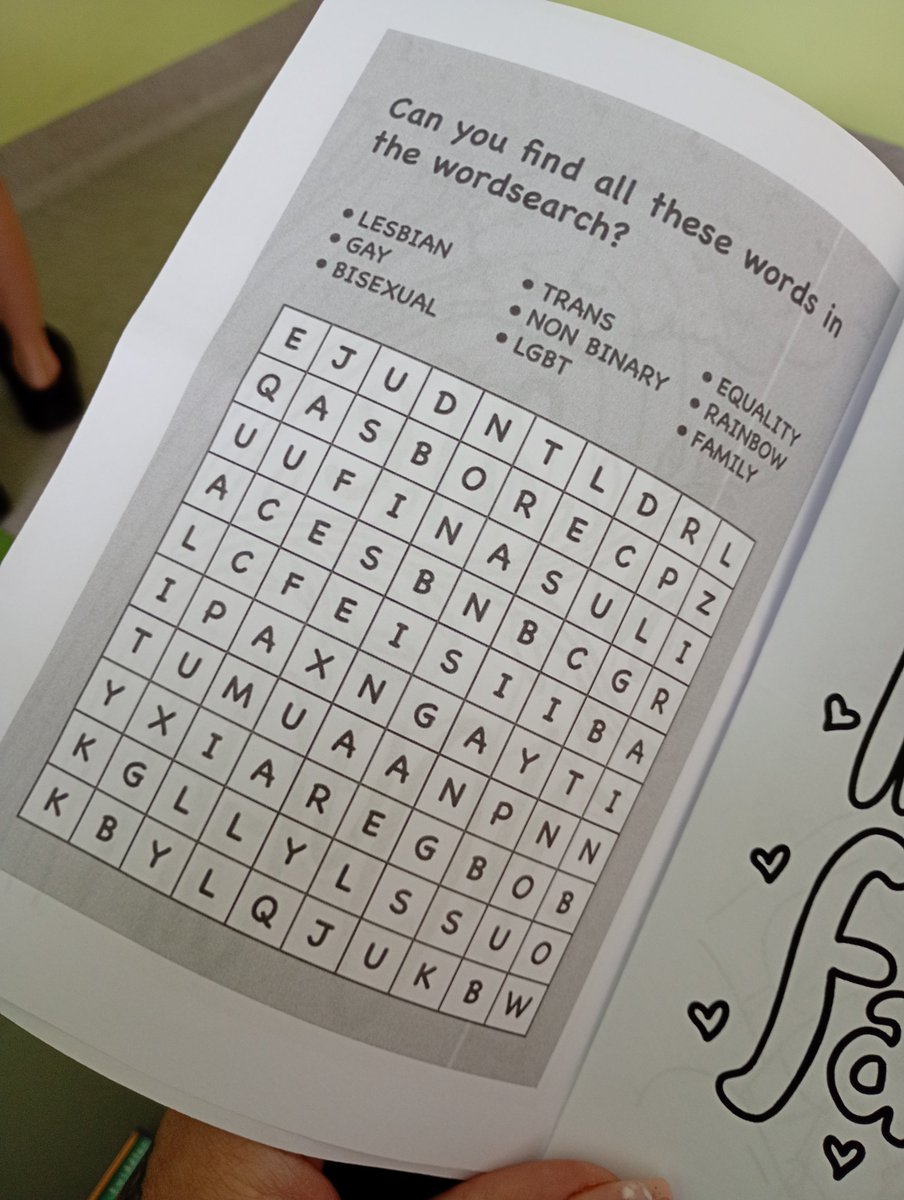
My disabled child was handed this Pride Activity Booklet 2026 while we were waiting for his appointment at Alder Hey today.
It’s full of wording such as “lesbian”, “gay”, “bisexual”, “trans”, “non binary” etc, colouring pages saying “Some kids have two mums” and “Some kids have two dads”, rainbows, “Equality Wins” pictures, and stickers from Alder Hey Children’s Charity covered in pride flags.
When we came back down after the appointment they have a full set-up in the middle of the hospital with speeches going on about LGBTQ+.
I bring my child here so he can see his doctors and get the medical care he needs, not so that adults can push gender and LGBTQ+ ideology on an impressionable disabled child in a hospital waiting room.
This is a children’s hospital. Something has gone badly wrong when this is treated as normal.
I do have a video of me making a complaint. The gentleman said “I’m so sorry, it’s nothing to do with us.” I genuinely felt sorry for him, so I will not post it.
So whose decision is it? The Trust, the charity, or higher up in the NHS and government?
Andy Burnham has already scrapped Keir Starmer's digital ID programme, but will he do the same for the equally unpopular family farm tax? 🚨🚜
"Burnham has got the opportunity to 'reset' relations with farming, and has already answered calls for someone with prior experience in Defra..."
Listen to this week's Farmers Guardian Podcast as we discuss what the new PM will mean for farming 🎧 https://t.co/a8GhPkrVOw
Farmers have been firefighting against Gov since Starmer came in. Reeves introduced the #familyfarmtax (and business tax which has quashed the economy and farm diversification!🤷♀️)
SFI which was so very nearly there QUASHED
@andyburnham needs do reset his relationship with farmers