@MinPres Hoe je de Europeesche economie concurrerend houd? 🤣🤣🤣 Alle mensen die het voor het zeggen hebben eruit en mensen die dicht bij het volk staan erin.
Most people view money as something absolute. A given. The ultimate measure of value.
Money, whether euros, dollars, or yen, exists because we use it to buy groceries and pay our bills. When you exchange your labor and knowledge for work, you receive money. When you want something in a store, you spend money.
Almost nobody stops to think about the value of that money itself. After all, for most people, a euro or a dollar is the only measure to express value. Things that are worth a lot cost a lot of money. But what that euro or dollar is actually worth rarely enters the conversation.
That is strange.
If your employer paid you in seashells instead of money, you would probably laugh. Or assume you were being taken for a fool. After all, seashells have no value.
Yet when it comes to the money sitting in our bank accounts or appearing on our paychecks, people almost never ask themselves the same question. What exactly am I receiving in exchange for the time, energy, and effort I have provided? Euros, dollars, and yen are treated as if they are the absolute measure of value.
But they are not.
There is nothing of intrinsic value in our money, nothing that allows us to objectively measure value. People often say that money is backed by trust. By the assumption that others will continue to accept it as a form of value, whether voluntarily or because laws and regulations require them to do so.
A more honest answer is that our money is backed by naivety and ignorance.
The value of money only becomes visible when you compare it with something else that we assign value to. The prices of goods and services, for example. If prices rise faster than your money grows, the value of your money declines.
Most people have at least some understanding of inflation. Prices go up. But they rarely connect inflation to money itself. Inflation makes money worth less.
You can also compare money to other things that have served as stores or measures of value throughout history. Gold is perhaps the best example. It has fulfilled that role for thousands of years. When you compare money to gold, or express the value of gold in units of money, the results are shocking.
As the chart below from the @IGWTreport (In Gold We Trust Report) illustrates, the value of money relative to gold has collapsed over the past twenty-five years. Whether your money is denominated in euros, dollars, pounds, or yen, compared to gold, you have lost more than 90% of your purchasing power.
The value of money is not absolute.
By comparing money with the prices of everyday goods or with gold, it becomes clear that value is relative. It also becomes clear that money is a remarkably poor instrument for storing the value of your hard work.
Once you truly understand this, something clicks.
You are storing the fruits of your labor in something that is structurally losing value. That is not saving. It equals steadily becoming poorer.
Anyone who is serious about protecting what they earn starts looking for assets that hold their value better. Gold is a good example.
Understanding this is not enough. It is time to act differently and to treat value differently, starting now.
Putin: "One line of Nord Stream 2 is still intact. We could start supplying gas to Germany tomorrow – just push a button. The only obstacle is a political decision by the German government.
I was surprised to hear that Russia, this 'evil Russia', stopped supplying gas to Europe. We never stopped. Europe said no, hoping Russia would collapse. We didn't."
Ironic, isn't it. They thought they'd set the trap for us, but walked into it themselves.
Heftige beelden van de groepsaanval in Groningen bewijzen het belang van rigoureus uitzetbeleid. De vermeende Syriërs die met z’n allen één Nederlandse jongen aanvallen, horen hier niet thuis.
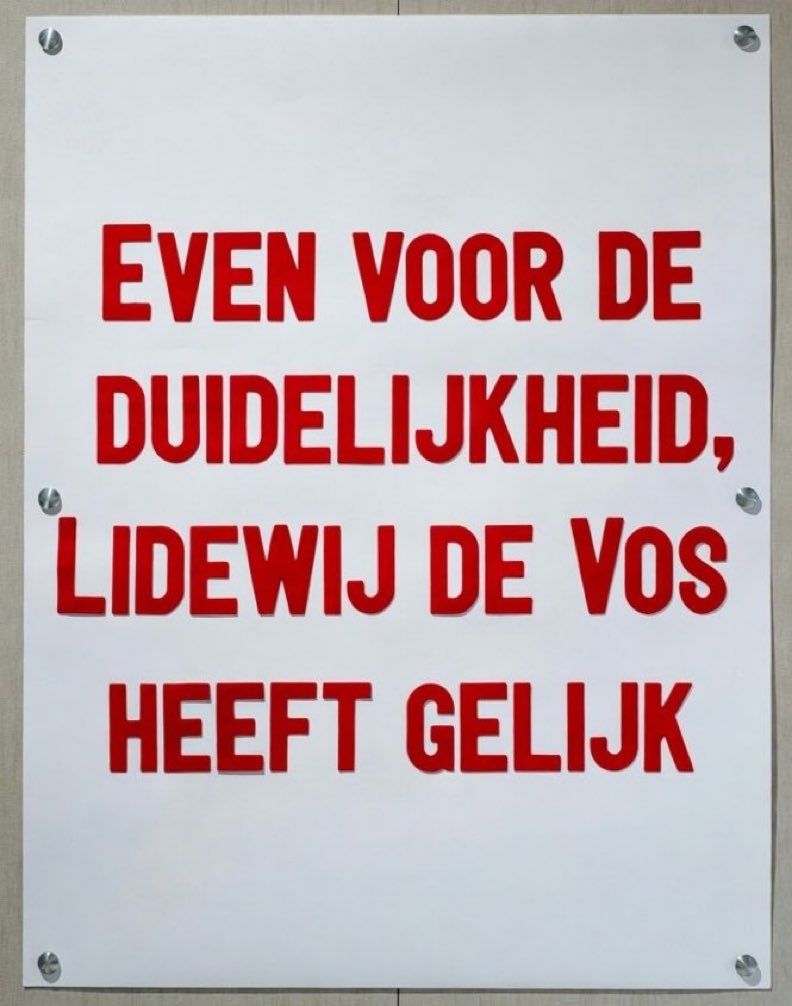
@lidewij_devos diende een motie in om criminelen buiten te houden. Onvoldoende steun.
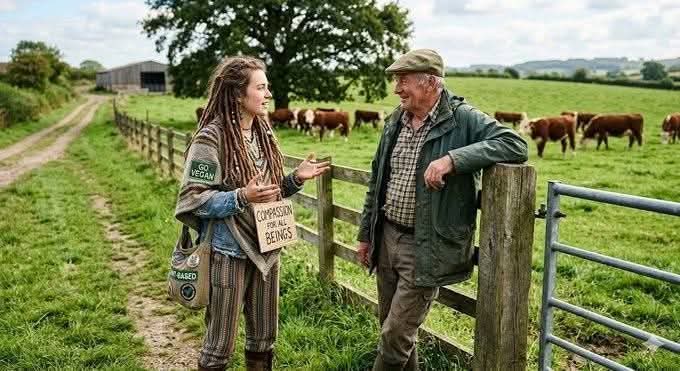
Activist: "Jullie koeien brengen koolstof in de atmosfeer."
Boer: "Waar hebben ze het vandaan?"
Activist: "Wat?"
Boer: "De koolstof. Waar heeft de koe het vandaan gehaald voordat hij het ergens naartoe bracht."
Activist: "Van... eten?"
Boer: "Van het eten van gras. En waar heeft het gras het vandaan?"
Activist: "De grond?"
Boer: "De lucht. Het gras heeft het vorige lente uit de lucht getrokken. De koe at het gras. De koe ademde een deel ervan weer uit. Het ging terug naar de lucht waar het vandaan kwam."
Activist: "Maar het gaat nog steeds de atmosfeer in."
Boer: "Het gaat terug. Er is een verschil tussen iets dat ergens naartoe gaat en iets dat teruggaat. Je hebt een cirkel beschreven en je bent er bang voor."
Activist: "Hou dan gewoon geen koe."
Boer: "Het gras sterft nog steeds in de herfst. Het rot waar het valt. De koolstof gaat hoe dan ook terug de lucht in, alleen zonder dat iemand ertussen door gevoed wordt."
Activist: "Het is niet zo simpel."
Boer: "Het is gras, koe, adem, gras. Of het is gras, rot, lucht, gras. Dezelfde cirkel, minder diners. Als dat ingewikkeld voor je is, zou ik wegblijven bij de watercyclus. Daarin zitten wolken."
Het vrije internet wordt afgeschaft. Want het gaat niet om ‘de kinderen’, de EU gaat iedereen controleren. We slaapwandelen een dictatuur naar Chinese stijl in, allemaal om een digitaal paspoort en CBDC te pushen.