If your kids have TikTok accounts, or ask for them, you should sit down with them and read this report together. Share the disgust and degradation of real feeds from real kids. TikTok is wildly inappropriate for children. From @RR_research and UK orgs
https://t.co/wHxIxB160p
What happens when adults and children share a virtual playground? Our latest research explores the world of Roblox: we set up a 42-year-old male avatar, who observed interactions but didn't speak to any of the users. What we uncovered was troubling: https://t.co/NpQdhCkTbf
Are we losing what it means to be human by embracing technology over genuine real-world connection? The Guardian has shared our latest research today: https://t.co/z1HAQwZuBy
For nearly a decade we’ve been monitoring social media feeds. But last week we stumbled upon something that had the power to shock us. And then we started seeing more disturbing content. Click here to see what we found, and our attempts to recreate it https://t.co/utnCGR6CpF
From ‘room tours’ to role-play: watch how ‘relatable’ content has developed over the 10 years we’ve been researching Children’s Media Lives for Ofcom. We now see heightened intimacy, often using ASMR tropes like whispering. See more & read the CML report https://t.co/d2K4dDHabY
What does the TikTok feed of an 11-year-old girl look like? Sensory & disjointed, short clips of TV shows interspersed with satisfying ‘slime’ or ‘ASMR’ videos, Roblox tutorials, dances, drama & jokes. Sometimes two at once in a split-screen video. More at https://t.co/d2K4dDHabY
From ‘room tours’ to role-play: watch how ‘relatable’ content has developed over the 10 years we’ve been researching Children’s Media Lives for Ofcom. We now see heightened intimacy, often using ASMR tropes like whispering. See more & read the CML report https://t.co/d2K4dDHabY
10 years in 10 posts. When we did the first Children's Media Lives for @Ofcom a decade ago, some of the children in this year's research weren't yet born. A🧵on the changes we've seen since 2014 and what children are seeing, doing & sharing online in 2024. https://t.co/qiEJwobBrn
We'll be sharing findings from our new research, Anti-social Media, at an online event on 6 June. We'll reveal the violent, sexual and often illegal content that children are viewing on one of their most popular messaging apps.
Sign up here: https://t.co/X1vun8Dor6
Join us for the launch of our self-funded research about the disturbing content seen by vulnerable children, on one of their most used apps.
We'll discuss implications with Baroness Kidron + colleagues from NSPCC, Barnardo's and Ofcom.
10am 6th of June: https://t.co/BQVxQWB5OC
Over the past 9 years, we’ve seen social media shift away from creation, towards consumption. Now, one video at a time is not enough. This year children are watching these 'split screen' style posts, with two, often unrelated, videos playing at once.
https://t.co/9Bhj22WDBp
Every year we look forward to interviewing the children who take part in the longitudinal Children's Media Lives research we do for @Ofcom, exploring their media experiences, behaviour and attitudes.
A short thread on what we found this year
https://t.co/H0zg1Ig754
"last year children reported short attention spans and being unable to sit through whole films, or even a complete episode of a programme, this year the rise of the ‘split screen’ format meant that they were often viewing two videos at once"
Our 9th wave of CML out today!
"Children were not always correct in assessing whether the events they were following were real or fabricated. In some cases, it did not appear to matter greatly to them."
Great to see our Children's Media Lives research for @Ofcom in the Telegraph today https://t.co/lcOpSouRqc
On Tuesday we will be presenting our "Without Consent" research on image-based abuse. We spoke with both victims and perpetrators of this behaviour, and will be exploring the drivers and impact of it on young people. Sign up to join the discussion!
Last week we published evidence of a range of image-based abusive behaviours, based on interviews with both perpetrators and victims.
To find out more about the work or ask questions of the researchers, please sign up for our online event https://t.co/R0crjoO7nr
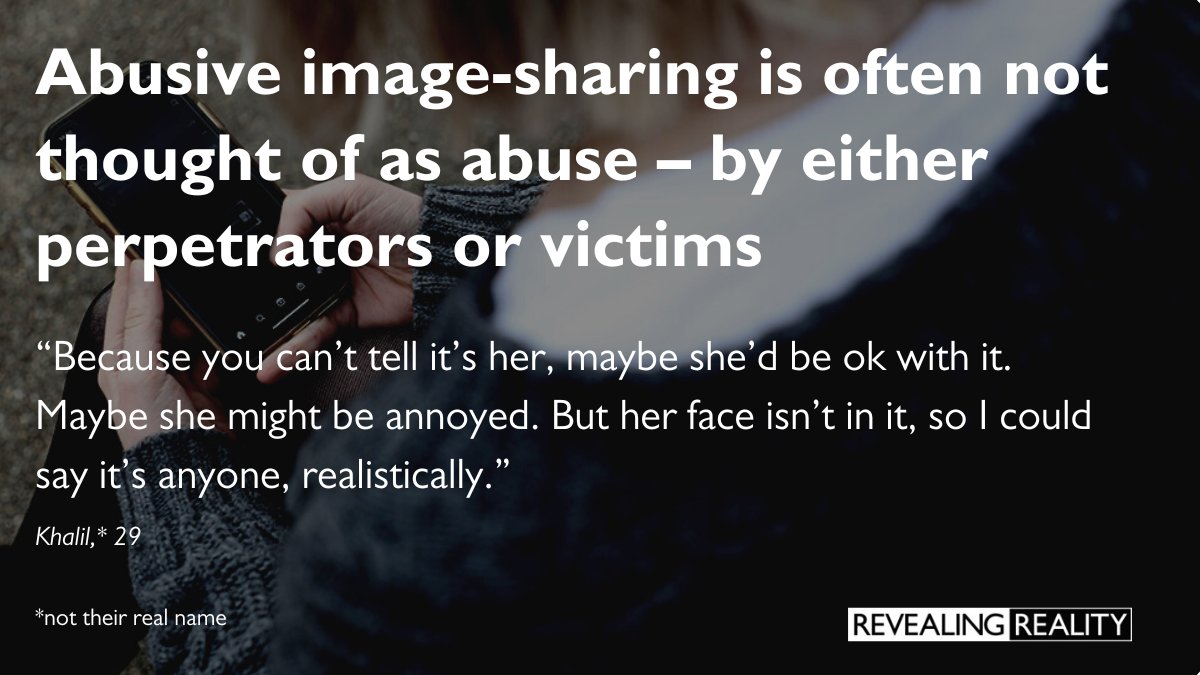
In the first research of its kind, we found that both victims and perpetrators of non-consensual and/or coercive nude-image creation and sharing did not always consider the behaviour as abusive https://t.co/nDRhQ2m23B
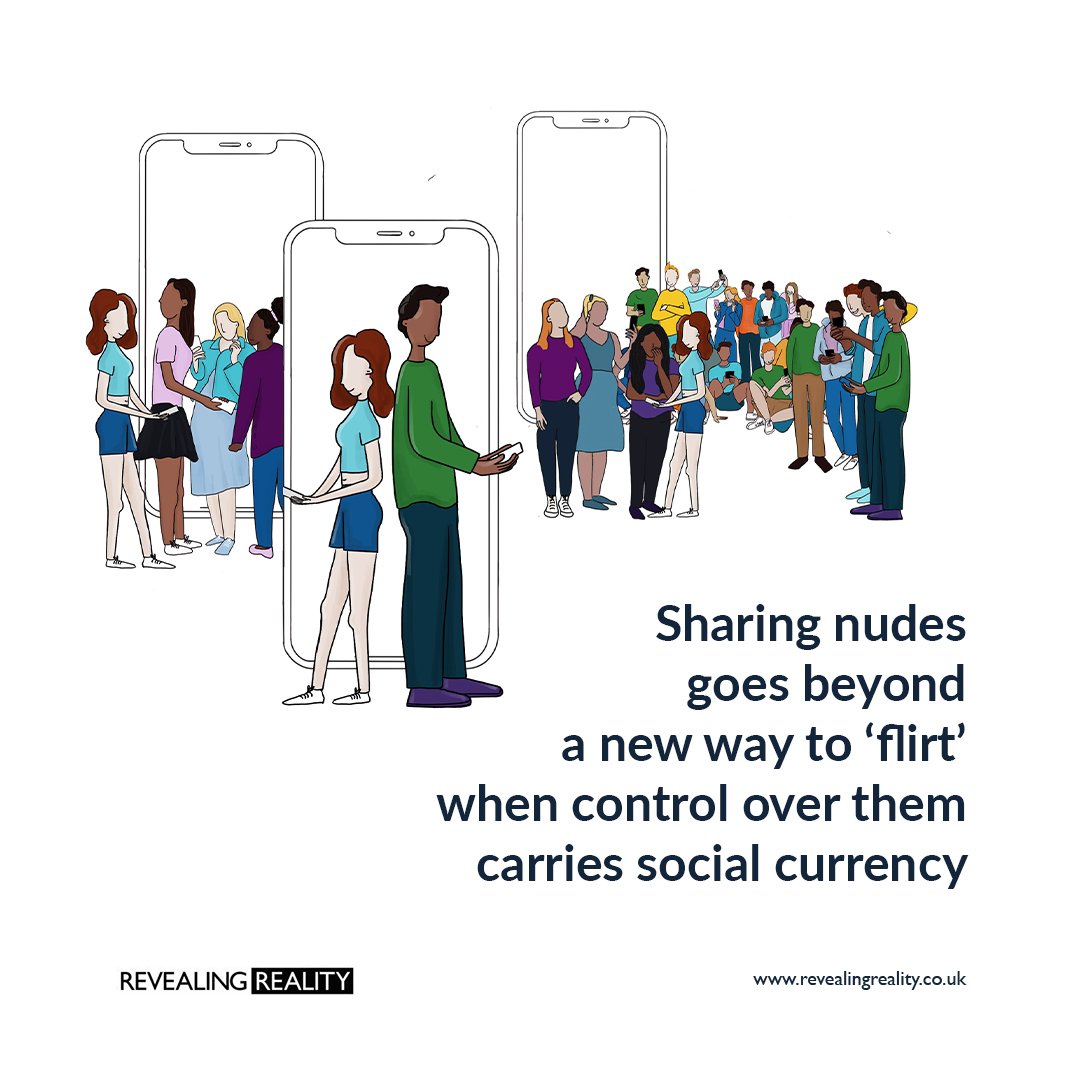
Once nude images have been shared within a relationship, men and women often have differing views about who ‘owns’ the image, what it can be used for and whether it can be kept – but these are rarely openly discussed when the image is created or shared. https://t.co/nDRhQ2m23B
For our latest self-funded research project, we interviewed content moderators to understand what they see online, how effective they felt moderation was, and how they think it drives users' behaviour. You can read our report here. https://t.co/W35zGq72un
Govt says the latest version of the Online Safety Bill will provide a “triple shield” - illegal content will have to be removed, platforms must enforce their Ts&Cs & users can filter out content they don’t want to see. This will rely heavily on content moderation. Will that work?
Today @Ofcom has published reports from two research projects we did for it.
One explores families' attitudes to online age assurance (commissioned jointly with @ICOnews) and the other sets out the risk factors that increase the likelihood of online harm.
https://t.co/rUgET740P8
Looking forward to presenting this work on Tuesday, plenty of space to discuss and ask Qs - so do join, whether you're working in online harms, child safety, or a parent trying to navigate the digital world!
A chance to discuss and ask questions about our 'Not Just Flirting' report with @RRRubyWootton, @_Rebecca_Evans and Damon De Ionno, on 2 August at 10am. Sign up here: https://t.co/VWKO1zmU5L