Ocean solutions are economic opportunities. 🌊
On #WorldOceanDay, North Carolina stands out as a place where ocean science and innovation can drive real growth.
A recent RTI report highlights how ecosystem technologies—combining ecological science with advanced tech—can unlock new opportunities across aquaculture and coastal resilience.
Learn more about how the #BlueEconomy can deliver real benefits for communities and the environment here in NC: https://t.co/g5w3buvfY4
#Aquaculture #CoastalResilience #Innovation #RTIImpact
With recent cruise ship outbreaks making headlines, RTI experts Lauren Courtney and Nisha Marles explain how visibility can shape our perception of risk and the precautions you can take to make your next cruise vacation as safe as possible.
🔗 More via @CruiseCritic: https://t.co/fihnlVr21y
Innovation matters most when it moves beyond the lab and delivers real-world impact.
As pressure grows to deploy next-generation energy and industrial solutions, innovators face a critical challenge: scaling promising technologies quickly, affordably, and with confidence.
RTI is helping turn breakthrough ideas into real-world impact through the RTI Pilot Xcelerator (RPX).
Learn more about how #RPX creates real-world infrastructure to test, validate, and advance new process technologies, supported by engineers, scientists, and project managers who help move innovations from lab to pilot scale👉 https://t.co/3yFAoUIxiU #WorldEnvironmentDay
Phthalate regulations are becoming increasingly fragmented, spanning multiple federal agencies and a growing number of states. Explore the landscape of current regulations and discover proactive steps that organizations can take to manage risk.
🔗 Read our latest blog:
https://t.co/XGRsAHrunX
As host cities around the world prepare for the FIFA #WorldCup, and North Carolina welcomes the attention of the Stanley Cup Finals (#GoCanes), it's a reminder that preparation is one of the most important parts of any major event.
RTI experts examine the science and planning behind successful mass gatherings 👉 https://t.co/54Aeylh7Cw
#FIFAWorldCup #CarolinaHurricanes #StanleyCupFinal #PublicHealth
📣RTI International will host the 2026 Early College Summit on June 9–10, 2026 at the Benton Convention Center in Winston-Salem, NC.
Join us for two days of learning, inspiration, and collaboration as we prepare #EarlyCollege learners to be truly #FutureReady 👉 https://t.co/HD3AelJi7w
#EarlyCollegeSummit #RTIInternational #EdLeadership #AIinEducation
RTI’s Matt Williams has been selected for the American Statistical Association’s Links Lecture Award, recognizing leadership and vision in statistics. He’ll be honored at #JSM2026 and deliver an invited lecture in early 2027 on the future of official statistics. 👏
https://t.co/QU5GCehxos
Flood preparedness is not just about forecasting.
It is about whether people perceive the threat early enough to act.
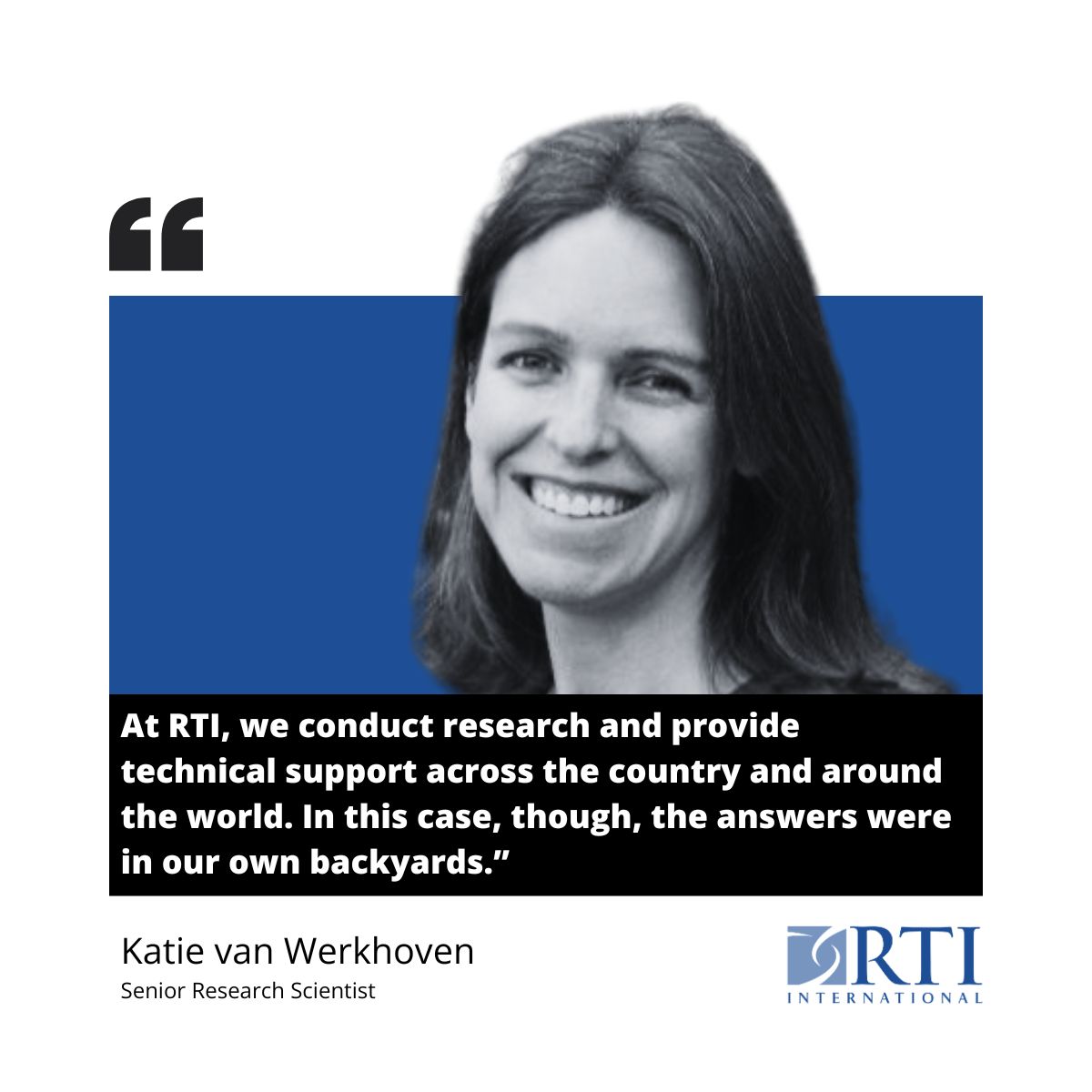
RTI experts, Bryan Luukinen, Katie van Werkhoven, Schuyler DeBree and Noëlle Richa Siegfried share new insights from post-Hurricane Helene research in Western North Carolina.
The takeaway: risk communication has to be local, actionable and built for real-world conditions.
Read more: https://t.co/uA6Y0cHWFt
Strengthening ties between @DeptofWar & NC's defense innovation ecosystem is a priority.
I'm leading a bipartisan, bicameral letter urging @DIU_x to establish an OnRamp Hub in NC—giving our companies, universities, & entrepreneurs a direct path to resources that support our warfighters.
Ebola does not wait for systems to catch up.
Within 24 hours of declaration of the latest Ebola outbreak, an RTI-developed digital surveillance platform was live in DRC—now serving as the official system for outbreak response, integrating case, contact, lab, and community data in real time. With U.S. Centers for Disease Control and Prevention (CDC) funding, RTI is leading digitization efforts to ensure critical data systems are ready when they’re needed most.
In an outbreak, delayed data can mean delayed decisions. Real-time surveillance gives public health leaders the information they need to act sooner, coordinate better and respond where the risk is highest.
Right now, that speed is helping response teams make more informed decisions that can save lives as this outbreak unfolds.
https://t.co/KkCYd4HpXe
The Source Reduction Summit is coming to RTI International on June 3–4.
Hosted at our Research Triangle Park headquarters and developed with CIRCLE, the Summit will bring SB 54 stakeholders together for a focused working session on source reduction planning.
Obligated producers, supply chain partners, NGOs, legal experts and advisors will explore what “counts” as source reduction, how source reduction and PCR strategies connect, and how real-world scenarios can be evaluated within clear antitrust guardrails.
Learn more and register: https://t.co/5kVM4ipAeF
We’re excited to announce we’re collaborating with @CarbonBridge Inc. to demonstrate their bioprocessing technology.
We'll pilot their modular bioreactor at RTI’s Pilot Xcelerator (RPX), generating independent, third‑party performance data to help reduce scale‑up risk and inform commercialization decisions.
Fun fact: CarbonBridge’s approach uses microbes housed in a novel bioreactor design to convert methane and other gases into fuels and chemical products.
“This collaboration is a great example of how RTI helps partners move promising technologies from concept to commercialization,” said Sameer Parvathikar, program director of RPX.
The work will focus on scale-up and validation, with future testing planned to support real‑world deployment scenarios, including applications at farms and wastewater facilities.
Learn more: https://t.co/keIjXgforg
After heavy rainfall, chemical activity in Durham’s Third Fork Creek increased significantly.
RTI Expert Imari Walker-Franklin, Ph.D., in collaboration with North Carolina Central University researchers, is part of the team using advanced non-targeted analysis to better understand how pollution moves through North Carolina watersheds.
Environmental contamination moves with weather, development and runoff instead and that should still work. It moves with weather, development and runoff. This is why modern watershed protection needs better monitoring, faster detection and science that can see beyond traditional testing panels.
Read more from North Carolina Health News https://t.co/VL1lS0zc10
#WaterQuality #EnvironmentalResearch #NorthCarolina #PFAS
Last week during Drinking Water Week, we highlighted on the importance of safe, clean water for future generations.
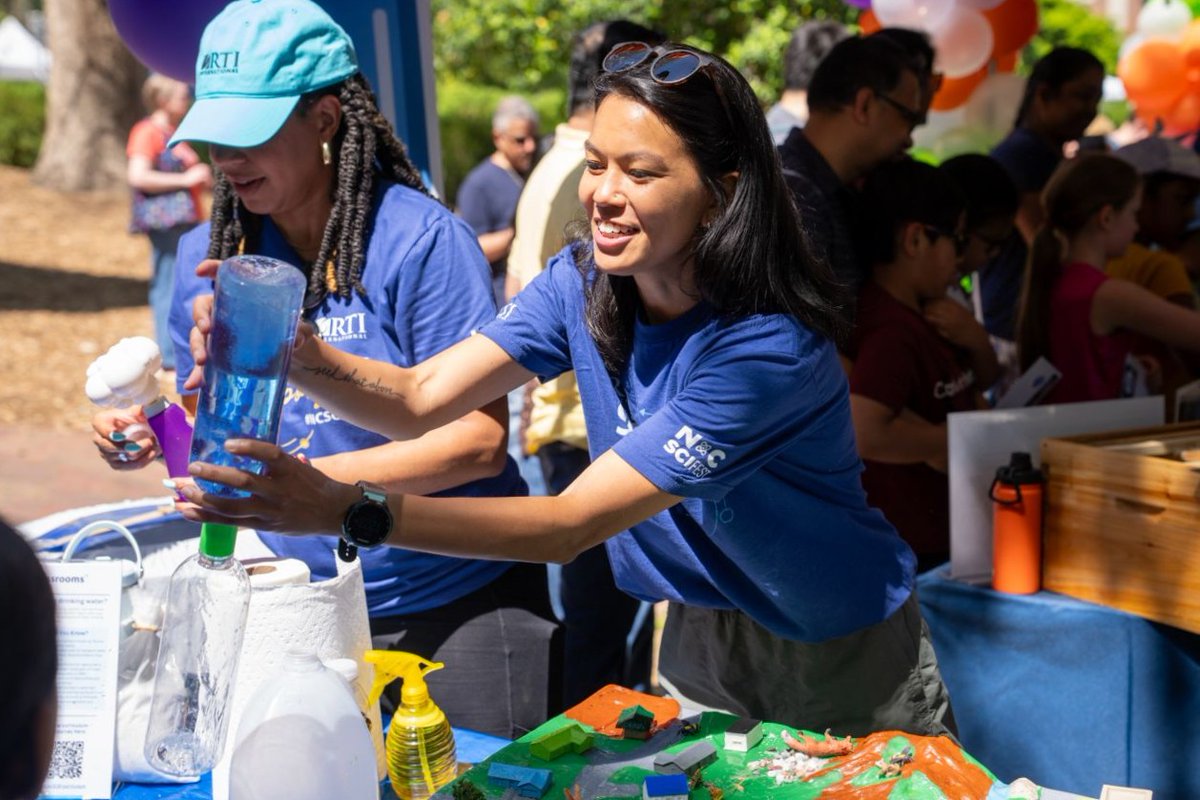
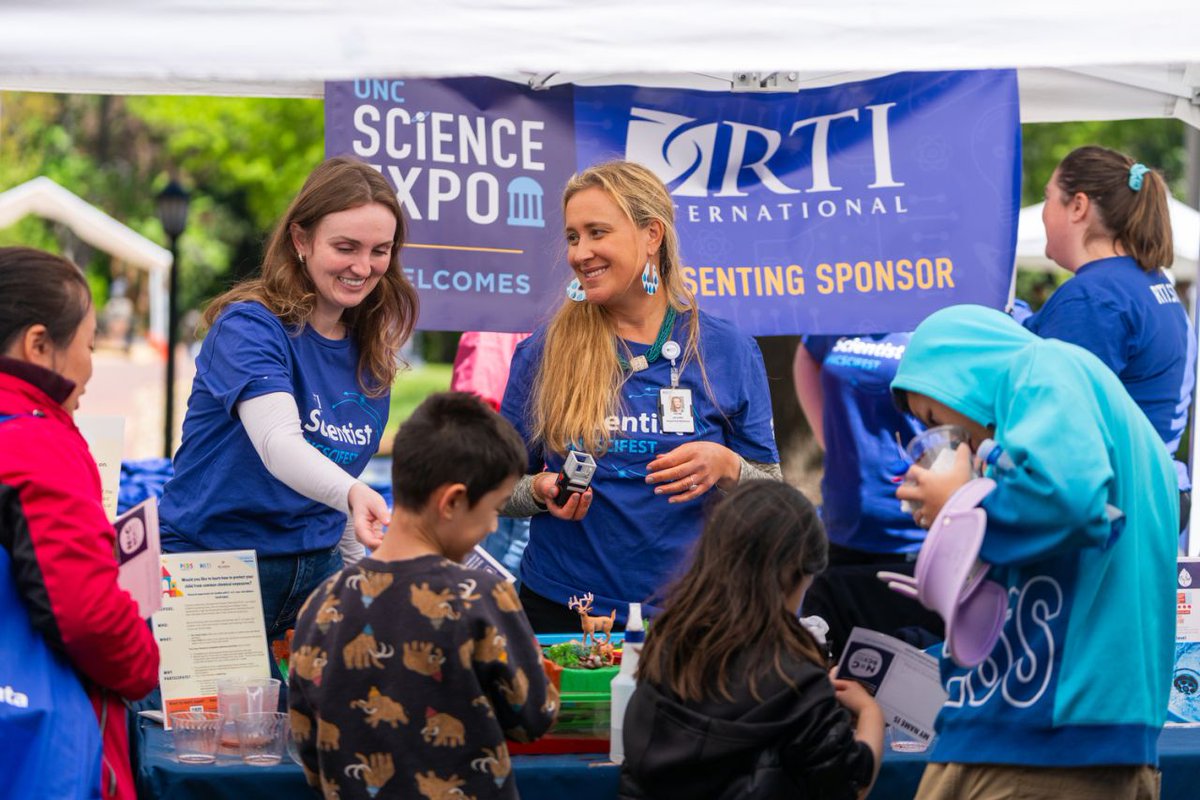
For the past 3 years at NCSciFest, we've shown how environmental contaminants can impact our drinking water.
Explore our work: https://t.co/1xuwmE7742.
What do you need to know about the hantavirus outbreak?
RTI's infectious disease experts Claire Quiner and Lauren Courtney joined CBS17 yesterday to answer common questions about rapid outbreak response, including transmission, risk, and prevention.
Their message: Stay informed, take precautions, and keep up with public health guidance.
Watch the full segment:
https://t.co/4UVM6V6jOQ
Antibiotic resistance is outpacing discovery—and the need for new solutions is urgent.
The Gram-Negative Antibiotic Discovery Innovator (Gr-ADI) is designed to help close this critical gap. This global consortium supports research exploring novel approaches to antibiotic discovery to address the growing threat of antimicrobial resistance (AMR).
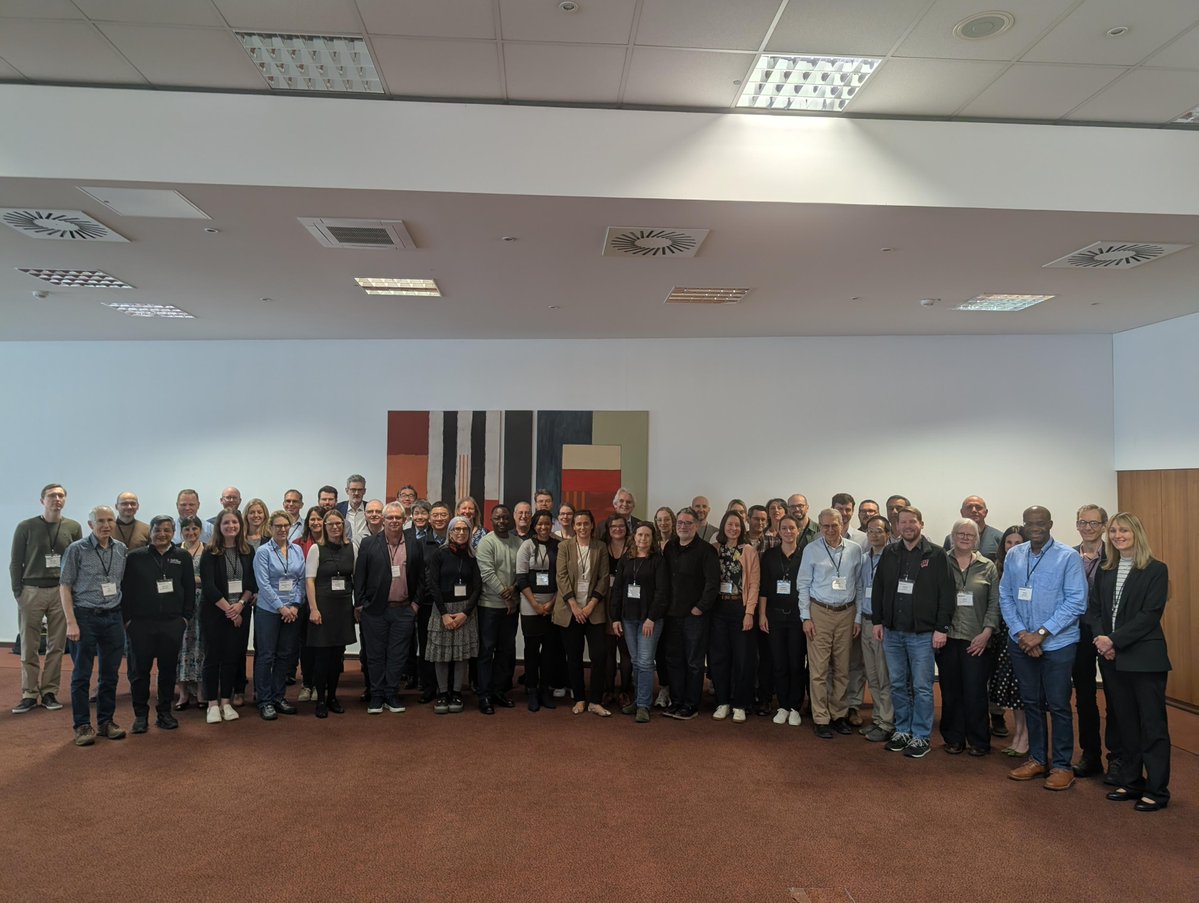
Gr-ADI convened partners in Munich to launch this first-of-its-kind initiative, bringing together funders and research teams to accelerate the discovery of urgently needed antibiotics.
Gr-ADI operates on a collaborative model in which data, insights, and learnings are openly shared to enable faster, more coordinated progress. The initiative is funded by the Gates Foundation, Novo Nordisk Foundation, and Wellcome.
RTI serves as the coordinating center for the initiative, supporting collaboration and delivery across the consortium.
#AntibioticDiscovery #GrADI #DrugDiscovery Wellcome Trust
AI-driven demand growth, electrification, and distributed energy resources are reshaping the U.S. power system—creating both opportunity and real operational complexity for utilities.
What gaps still need to be solved? And what technologies are moving the needle?
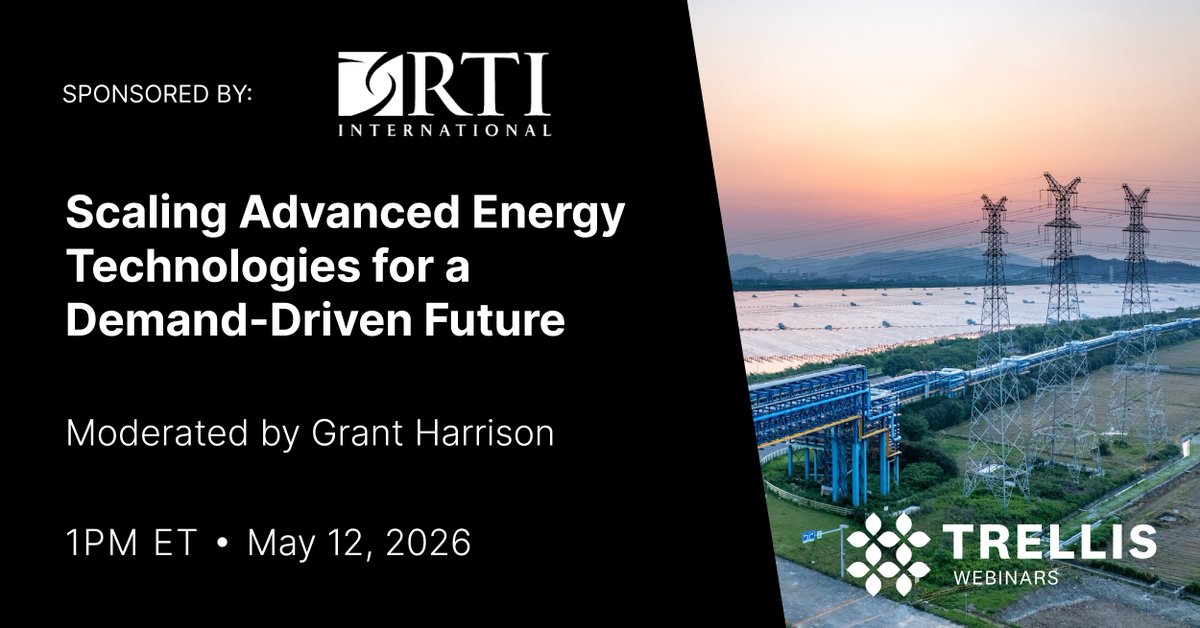
Join us May 12 at 1pm ET for a discussion on how the energy system is evolving and what it will take to scale advanced energy technologies for a demand-driven future. Register today!
40%.
That’s the estimated fatality rate of hantavirus.
For context:
• Influenza: ~0.1%
• Mpox: <1%
But severity isn’t the story.
What matters is rapid outbreak response:
• Rapid detection
• Cross-border coordination
• Advanced diagnostics
These are the systems that determine whether an outbreak stays contained or escalates.
RTI epidemiologists Claire Quiner and Lauren Courtney explain what this outbreak reveals about infectious disease risk, global movement, and public health preparedness.
https://t.co/iCG0A9obE5
Are mid‑latitude storm assumptions sufficient for tropical systems?
At #USSD2026, RTI’s Kyle Chudler shares new, storm-specific areal reduction factors for tropical storm and remnant events—showing how stochastic modeling can improve watershed-scale precipitation estimates and strengthen dam safety analyses.
See how tailored ARFs can lead to more resilient infrastructure.
https://t.co/lgHXdqPWbk
#DamSafety #TropicalStorms #FloodRisk
Attending #AAPOR26 next week? Stop by booth 314/316 to learn about cutting-edge, real-world solutions shaping the future of survey research!
Check out our presentations at this year’s conference, network with industry colleagues, and test your trivia knowledge.
https://t.co/o4dJAVE4M2