Shame - my small would be ancestors died in the Brit’s first concentration camps in The Cape Colony of Yellow Fever during the BOER WAR The diseases are different. The history is different. The politics are different. 1/3 https://t.co/44E7kOgYaE
An 11-year-old boy watched the movie Jaws. Then he helped clear the name of a dead man the US Navy had blamed for a terrible disaster.
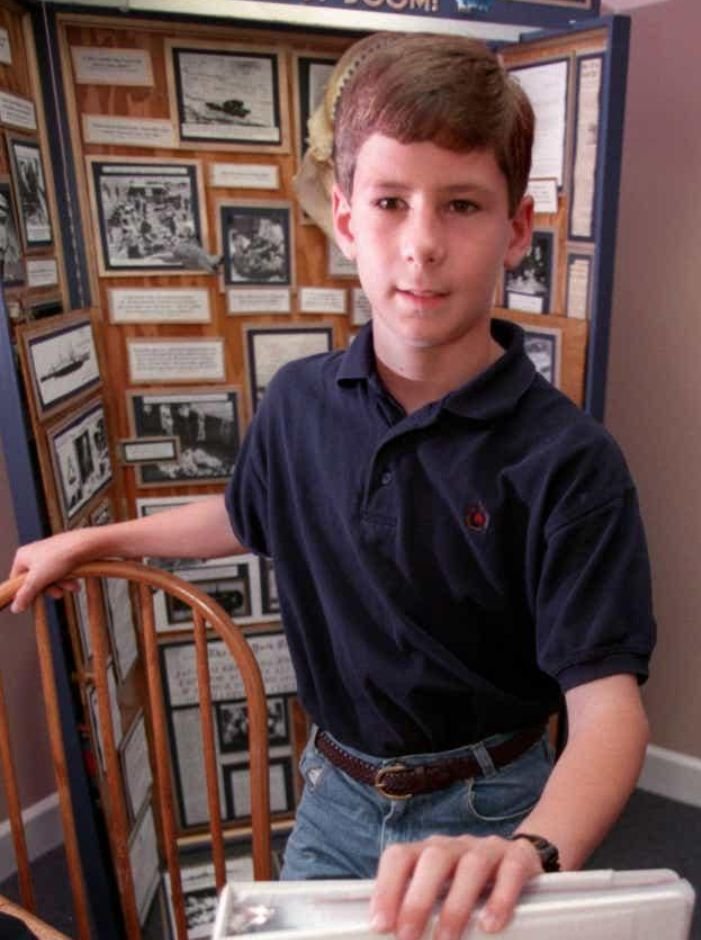
In 1996, a boy named Hunter Scott was watching the film Jaws at his home in Florida.
One scene particularly fascinated him.
The shark hunter Quint recalled the sinking of the USS Indianapolis during the Second World War.
Hunter had never heard of the ship.
He asked his father whether the story was true.
It was.
On July 30, 1945, a Japanese submarine torpedoed the USS Indianapolis in the Pacific Ocean.
The American warship had just completed a secret mission delivering components for the atomic bomb that would devastate Hiroshima.
Within approximately 12 minutes, the ship sank.
Of the 1,196 men aboard, only 316 survived.
Hundreds had escaped the sinking, only to spend days floating in the ocean, suffering from dehydration, exposure, injuries and shark attacks.
Nobody had raised the alarm when the ship failed to arrive at its destination.
The survivors were discovered almost by accident.
And then came another tragedy.
The US Navy court-martialled the ship's captain, Charles McVay, accusing him of negligence for failing to steer a zigzag course to avoid enemy torpedoes.
Yet McVay had not been informed of important intelligence concerning Japanese submarines in the area. His request for an escort had been denied.
Even the Japanese submarine commander testified that zigzagging would not have changed how he fired his torpedoes.
Many survivors considered McVay a scapegoat.
He carried the burden of the disaster for the rest of his life.
In 1968, he died by suicide.
Almost three decades later, an 11-year-old boy decided to investigate what had happened.
Hunter began what was supposed to be an ordinary school history project.
He read books and military documents. He contacted survivors, asking them to describe the disaster and what they thought of their captain.
Eventually, he reached out to all 154 survivors still alive in 1996.
More than 80 responded.
Many were elderly. Some had rarely spoken about their experiences.
They told Hunter about the men they had watched die. About their captain. About the injustice they believed had been done.
The boy kept investigating.
He wrote to President Bill Clinton. He assembled documents. He challenged the official version of events.
His research attracted national attention and helped persuade members of Congress to take up the case.
In 2000, Congress passed legislation calling for McVay's exoneration.
In July 2001, the Secretary of the Navy ordered that the congressional declaration of McVay's innocence be placed in his official military record.
More than half a century after the sinking, the captain's name had finally been officially vindicated, although the original court-martial conviction was not formally overturned.
And the boy?
Hunter Scott eventually became a US Navy officer himself.
There is something profoundly moving about this story.
Hundreds of sailors survived a nightmare. For decades, they struggled to get their captain's name cleared.
Then an ordinary schoolboy watched a film, became curious and refused to stop asking questions.
Sometimes history changes because someone powerful makes a decision.
And sometimes it changes because a child refuses to accept that the adults have already established the truth.
Francine Joy Drescher, an American actress, comedian, writer, producer, and trade union leader best known for creating and starring in the 1990s hit sitcom The Nanny...
In 1985, Drescher and a friend were raped at gunpoint in her home by an armed intruder who was out on parole, while her husband was tied and blindfolded. Using her photographic memory, she helped police create an artist sketch that led to the attacker's arrest and a 150-year prison sentence.
In 1999, Drescher was diagnosed with uterine cancer after a prolonged struggle to get a correct diagnosis. Following a radical hysterectomy, she wrote the best-selling book Cancer Schmancer and founded the Cancer Schmancer Movement to advocate for early detection and women's health legislation.
Drescher married high school sweetheart Peter Marc Jacobson in 1978. They divorced in 1999 after Jacobson realized he was gay, though the two remained close friends and later co-created the TV series Happily Divorced.
. . .
Millions knew Fran Drescher for her outrageous clothes, unmistakable voice, and infectious laugh on The Nanny. Few knew what she had survived before becoming a television star.
In 1985, Fran was at home with her husband, Peter Marc Jacobson, and a female friend when two armed men broke in.
Peter was tied up and blindfolded. Fran and her friend were r*ped at gunpoint.
Fran was just 27 years old.
The assault left her terrified. Sudden noises could make her scream. She struggled with the fear that the attacker might return. She and Peter stayed with friends Dan and Donna Aykroyd for months while they tried to recover.
But Fran had studied the attacker's face. Her description helped police identify him, and he was imprisoned.
She later admitted that she tried to be the strong one, suppressing her pain rather than allowing herself to grieve. Therapy helped, but recovery took years.
Then, in 1993, the woman who had endured that nightmare introduced America to Fran Fine.
Drescher and Jacobson created The Nanny together. Its brash, funny, working-class heroine turned the actress from Queens into an international star. The sitcom ran for six seasons.
Behind the success, however, life remained complicated. Her marriage to Jacobson ended after more than two decades together. He later came out as gay, and in time the two rebuilt a close friendship.
In 2000, another blow arrived. After two years of medical appointments and missed diagnoses, Fran learned she had uterine cancer. She underwent a hysterectomy and survived.
She later founded Cancer Schmancer, advocating for earlier diagnosis and greater attention to women's health. She also spoke openly about se*ual violence, explaining how long it had taken her to ask for help.
In 2023, as president of SAG-AFTRA, she became a prominent voice during Hollywood's actors' strike.
The woman whose laugh once filled living rooms had learned that strength did not mean pretending nothing hurt.
Fran Drescher never erased what happened to her. She built a life beyond it, and eventually made room for other women to speak about their own pain.
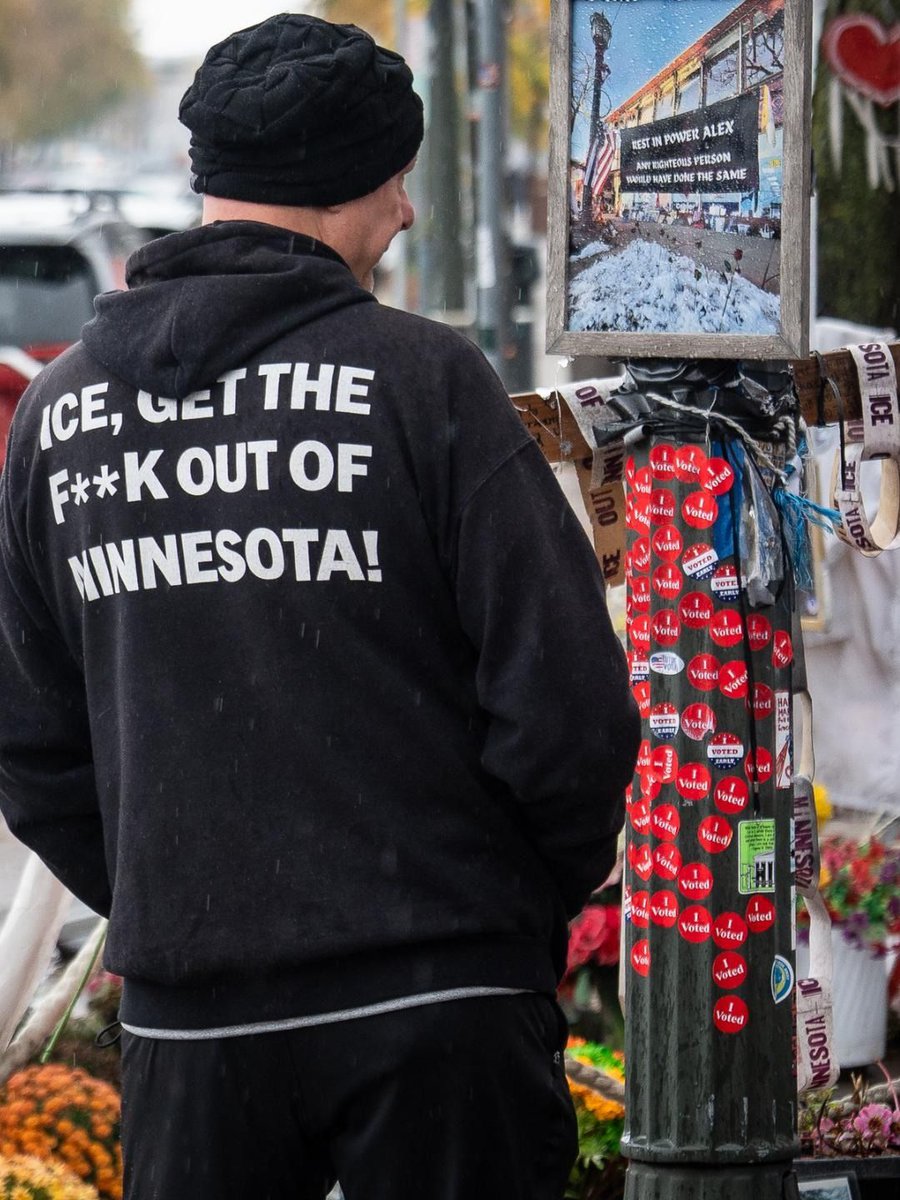
I stopped by Renee and Alex’s memorials today and was inspired to see all those who showed up to pay their respects and leave an “I voted” sticker.
We have not forgotten. Accountability is coming.
Race called! @KawakamiForLG elected Lt. Governor of Hawaiʻi! 🎉
As mayor of Kauaʻi, he cut illegal vacation rentals by 96%+, built hundreds of homes for seniors and working families, and led the island through disasters.
Congrats, Lt. Gov.-elect! 🙌
Today, I watched my daughter Yolanda cast her first ballot. Tonight, I'm thinking about the millions of young people who did the same. Your generation showed up, and you made a difference. To every first-time voter: welcome. Your voice matters. #FirstVote
https://t.co/W0YIhsdpCj
Thank you #FL22!! I am humbled and honored to represent my home state.
Thank you to everyone who knocked doors, phone banked, donated, and believed in me.
Now, the real work begins!
In 1860, an enslaved man named Sheppard Peek was listed among the possessions of William Peek. His value was placed at $1,400, according to the Atlanta Journal-Constitution.
They put a price on his body, but they could NEVER put a limit on his bloodline’s potential! THAT is the POWER of our ancestors’ resilience! Congratulations to Sheppard Peek’s great-great-granddaughter, Keisha Lance Bottoms, on making history!
For the first time in more than 15 years, Wisconsin Democrats will control the governor’s office and both chambers of the Legislature. After a decade of gerrymandered gridlock, Wisconsin finally has a government that reflects the will of its voters.
Vice Admiral Nancy Lacore defied the odds, winning the race for South Carolina’s First Congressional District. Lacore was fired by Pete Hegseth without cause after 35 years of service to our country. She could have retired, but Lacore wasn’t ready to stop serving. Now she’ll represent South Carolina in Congress, and VoteVets is proud to have had her back.
We did it, California. Thank you. I’m honored to be your next Governor, and I’ll fight for every family in this state, every single day. Let’s get to work.
@SamuraiShibaJP I ran a USA Colleges Exchange Program for 9 years in OZ- I wholeheartedly conquer on the other side of the coin - your youth worm their way into our hearts too
My wife has taught high school in Tokyo for twenty years.
Every year, a few of her students spend a year living with a family in America. When they come home, she asks each of them one question.
"What do you miss?"
She expects hamburgers.
She almost never gets hamburgers.
And these aren't old stories. Most of these kids came home in the last two years.
"Every time I left the house, my host mom said, 'Text me when you get there.' In Japan, nobody needs to know where I am. In Ohio, somebody always did." (Mina, 17, Ohio)
"If you walk toward a door, an American will hold it open. Even if you are very far away. So you have to run. I ran to so many doors." (Itsuki, 16, Georgia)
"My host brother screamed on the floor of a grocery store. A stranger walked by and said to my host mom, 'You're doing great, Mama.' She almost cried. I didn't know strangers were allowed to say that." (Aoi, 17, Texas)
"We went away for the weekend and left our trash can at the curb. When we got back, it was by the garage. Nobody said who. My host dad said if it had been there one more day, the neighbor would have knocked." (Haruto, 16, Minnesota)
"A car got stuck in the snow in front of our house. Four men came out of four houses. Nobody called them. They pushed, the car drove away, and they went back inside without saying their names." (Ren, 17, Michigan)
"Every American has jumper cables. Maybe half of them know which clip goes where. The other half help anyway." (Shin, 16, Montana)
"In July, my host family put a cooler on the porch. Cold water, snacks, and a sign: 'For our delivery drivers. Thank you!' I asked if they knew the drivers. They said no." (Nanami, 16, Arizona)
"Downtown, there are banners on the lampposts. Photos of soldiers from the town. Some old, some very young. My host grandpa walked me down the street and told me every name." (Yuna, 16, Iowa)
"I got a C-plus on my first test. My host dad said, 'I'm proud of you,' and put it on the fridge. In Japan, nobody is proud of a C-plus." (Takeru, 17, Pennsylvania)
Then the quietest girl in the class raised her hand.
Sora. Seventeen. Missouri.
"Nobody asks me 'home safe?' anymore," she said.
She was wrong.
In September, there was a typhoon warning for Tokyo. At 2 a.m., Sora's phone lit up.
It was her host mom. In Missouri. Watching the weather in a country she had never been to.
"Saw the storm. You home safe?"
Sora told my wife she cried for a long time. Then she typed the answer she had typed a hundred times, from football games and friends' driveways.
"Home safe."
Her host mom wrote back one line.
"Good. That's all I needed."
My wife has asked that question for twenty years. Not one kid has ever said they missed how big America is.
They miss how America says goodbye. And how it checks that you got home.
So, America. You think you've lost something.
You haven't. It's on a porch in Arizona. It's pushing a car in Michigan. It's awake at 2 a.m. in Missouri, watching our weather.
You don't remember doing any of it.
A kid in Tokyo will never forget.
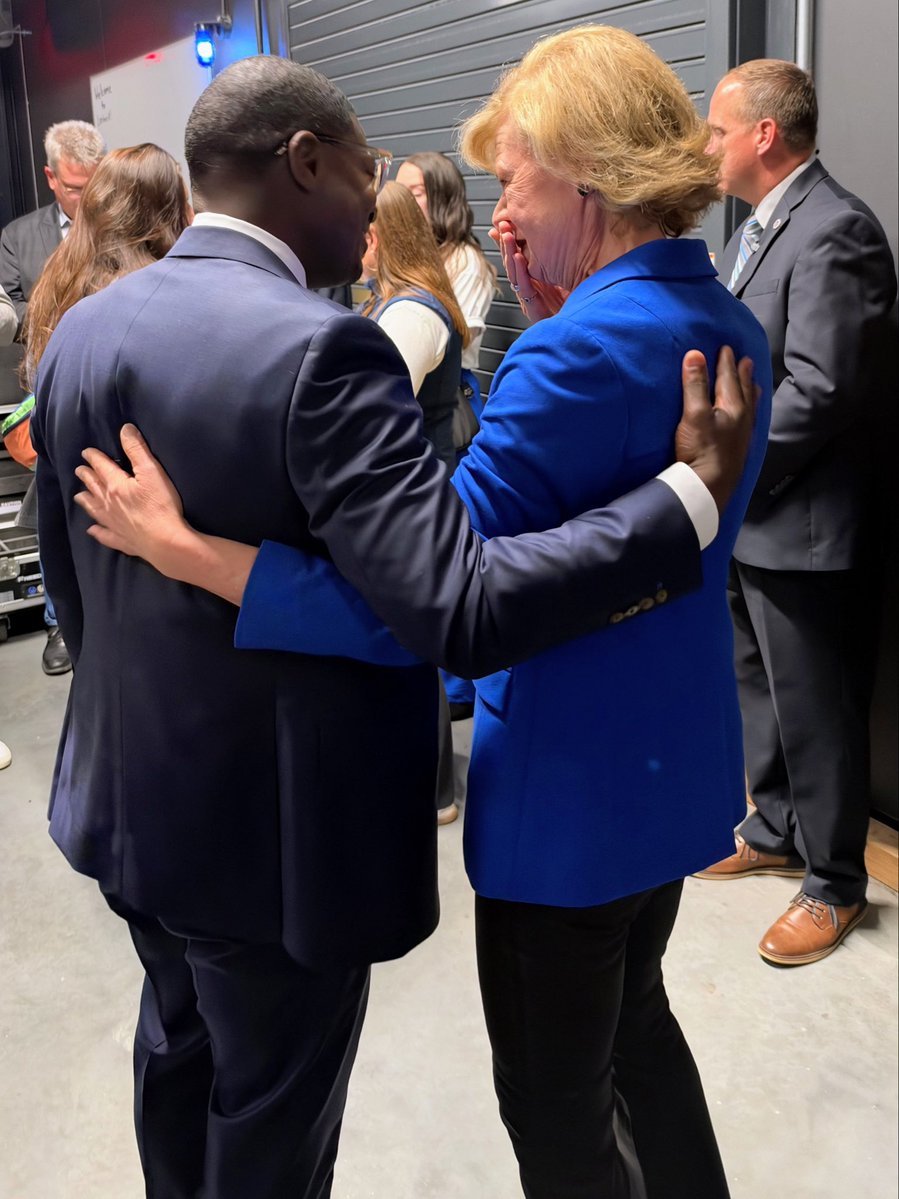
Maine, I owe you everything.
I’m ready to get to work for Mainers in the U.S. Senate, and I promise you this: I’ll never forget where I came from or who I’m fighting for.
Thank you. Let’s go build a government that works for all of us.