I have been updated that the number of persons that died in the fuel tanker explosion in Dikko, Gurara Local Government Area of Niger State, now stands at 60. I am sad and heartbroken by the scope of this tragedy. My thoughts and prayers are with the families of the deceased and the people and government of Niger State. May the souls of the departed rest in eternal peace. -AA
My recent trip to Jada was yet another opportunity to reconnect with some of my classmates at Jada Primary School. From (Left) Alh. Bello Shuaibu, Alh. Sama'ila Jauro, myself and Alh. Dahiru Bobbo. -AA
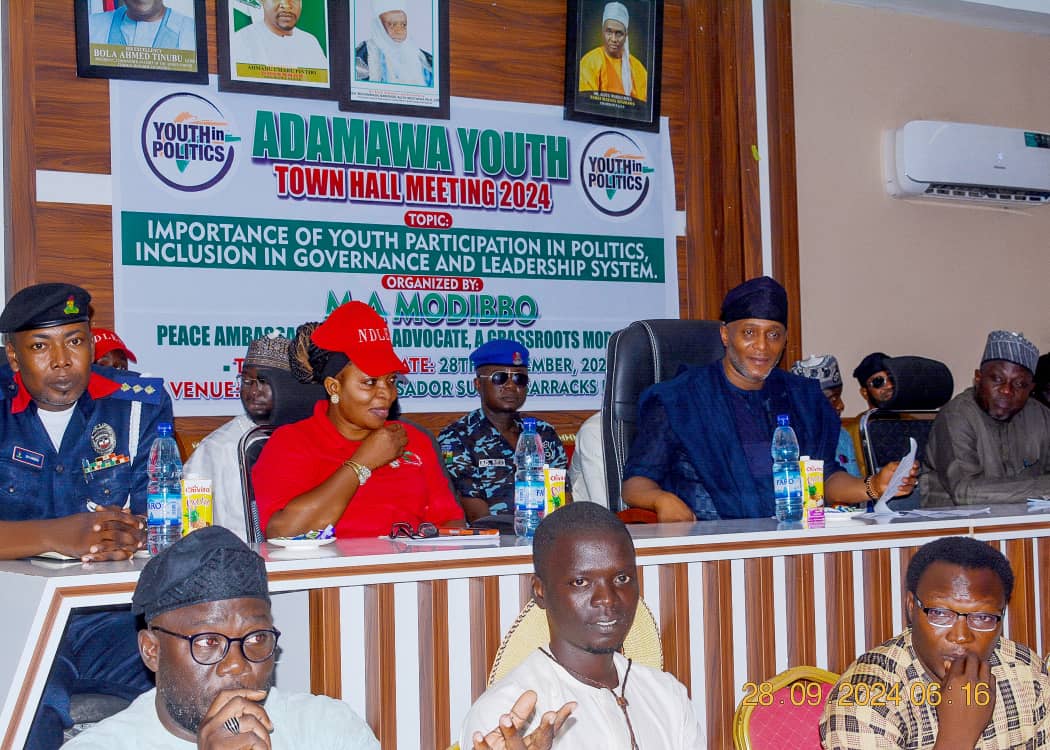
I had the honor of speaking with young minds at the Adamawa Youth Town Hall Meeting 2024, themed “Importance of Youth Participation in Politics, Inclusion in Governance, and Leadership Systems.” I emphasized the need for unity and synergy among the youth.
I condole with the family of Governor @_PastorUmoEno, and the government and people of Akwa Ibom State, over the heartbreaking loss of the First Lady, Her Excellency Mrs. Patience Umo Eno.
The news of her passing, which I received early today, has left me deeply devastated.
Mrs. Umo Eno was a remarkable woman who devoted herself tirelessly to the service of humanity and her family.
I share in the grief of the people of Akwa Ibom and urge Governor Eno to stand strong in the belief that his beloved wife has found rest in a place of eternal peace.
As I pray for the gentle repose of her soul, I also affirm that I stand with the governor and the people of Akwa Ibom in this difficult time. -AA
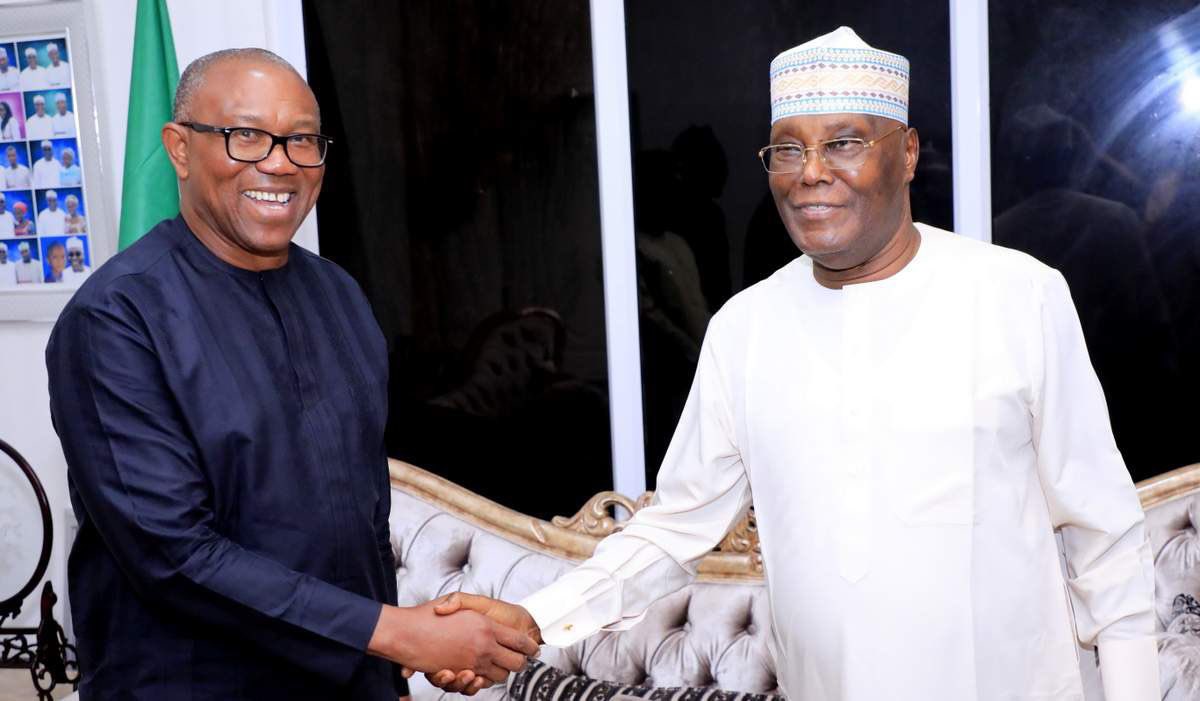
On behalf of my family, I extend hearty birthday wishes to my good friend, a dedicated patriot and former Governor of Anambra State, @PeterObi, on his 63rd birthday. May you enjoy many more years of good health and continued service to our nation. -AA
Exciting news!
The American University of Nigeria celebrates its 20th anniversary with scholarships for young students across Africa.
Scholarships offer tuition fee discounts from 10% to 50% in programs like Nursing, Public Health, and Engineering.
The message of Eid al-Adha is to remind ourselves of God's commandment to show love to one another and uphold peaceful interpersonal relationships.
The essential purpose of that message is that we must put our trust in God Almighty at all times.
Even in the face of the current hard times that many Nigerians are passing through, we must never fail to put trust in God and, more importantly, extend compassion and safety to the vulnerable people around us.
This means that as we celebrate today, we must ensure that we extend good tidings of support and charity to one another, especially those in difficulty.
As we know that the essence of the celebration today is about a restoration of God’s mercy, it is thus incumbent on government at all levels to take a cue from the divine instruction and make sure that the hardships of the people are minimized.
I urge Muslims in Nigeria and across the world to remember their responsibility of being good ambassadors of the religion by living their lives according to the practices and teachings of the noble Prophet Muhammad (SAW).
The festivities that we are undertaking today are borne out of the obedience of Prophet Ibrahim and as also exemplified by Prophet Muhammad (SAW). It is thus our responsibility as Muslims to reflect on their examples in our lives by upholding the threshold of peace at all times.
I wish every Muslim family a happy Eid celebration and pray for God’s protection and safety for everyone during and after the celebration. -AA #EidMubarak2024
The secondary purpose of declaring every June 12 as Democracy Day in our country is to commemorate the history of our long journey of becoming a stable democratic country. Truth be told, there's no substitute to democracy as a form of government.
Whereas our current democratic dispensation is a quarter of a century old, it will not be out of place to pay tributes to the sacrifices made by many patriots, chiefly among them Basorun MKO Abiola and his beloved wife, Alhaja (Mrs) Kudirat Abiola, Tafida Shehu Yar’Adua and Alfred Rewane, among many others.
The historical timeline of the struggle that birthed this democracy is abundant with a series of coalitions and alliances amongst the political leaderships of that era to flush away the vestiges of military and dictatorial governance in order to return power to the people.
It is commendable that for 25 years, we have witnessed an uninterrupted season of electoral politics. It is an unprecedented epoch in our history.
It is worthy of celebration and commendation must go to the people of our great country. I must also congratulate the political class for having embraced the rectitude of nurturing a democracy, as well as the civil society. It is important that all stakeholders continue to do their bit to ensure the sustainability of our democracy.
But our democracy is not yet virile if it continually fails to deliver the promises of prosperity and liberty to the people.
However, the past nine years has thrown up a regime of extreme hardship manifested in excruciating poverty and unprecedented levels of violence and insecurity upon our people. Sadly, the ruling All Progressives Congress is to blame for bringing forth this dawn of gloom.
But the opposition political parties are even more guilty than the ruling party for the seeming lack of capacity to come together and galvanize a coalition that will retire the ruling party and articulate a plan of good governance that will earn the conviction of Nigerians.
Today, the failings of the opposition parties to uphold the functionality of their existence is the major threat to our democracy. The earlier they realise that the fortunes of Nigeria lies in their forging a coalition, the better it will be for our country and the people. -AA
Failure, incompetence, greed, derailment,suffering,betrayal, etc. are visible, measurable.and can be felt, and are treseable to the causative agent. Tinubu is the causative agent of Nigeria's failure
Nigeria is not working: One year of Tinubu is a cocktail of trial-and-error economic policies.
On May 29, 2023, President Bola Tinubu raised the hopes of Nigerians with his pledge to “remodel our economy to bring about growth and development through job creation, food security and an end of extreme poverty.” Since then, Tinubu has also spoken about growing the economy at double-digit rates to US$1 trillion in six years, ending misery, and bringing immediate relief to Nigeria’s cost-of-living crisis. On listening to this, Nigerians must have breathed a sigh of relief after their experience with ex-President Buhari’s 8 years of economic misadventure.
Tinubu laid out no plans for the ‘remodeling’ of the economy but soon embarked on a cocktail of policies to achieve it. In May 2023, he eliminated PMS subsidies, and a month later, the CBN implemented a new foreign exchange policy that unified the multiple official FX windows into a single official market. More policies followed in rapid succession: the tightening of monetary policy to reduce Naira liquidity, a hike in monetary policy rates, the introduction of cost-reflective electricity tariff, and a cybersecurity tax.
Predictably, 12 months on, Tinubu’s pledge of growing the economy and ending misery remains unfulfilled. His actions or inactions have significantly worsened Nigeria’s macroeconomic stability. Nigeria remains a struggling economy and is more fragile today than it was a year ago. Indeed, all the economic ills - joblessness, poverty, and misery - which defined the Buhari-led administration have only exacerbated. Africa’s leading economy has slipped to the 4th position lagging behind Algeria, Egypt, and South Africa. Citizens’ hopes have been dashed (and not renewed contrary to the propaganda of the administration) as Nigeria’s economic woes have multiplied.
How and why did we get here?
In my press statement on the state of our economy, earlier this year, I expressed my concerns about the downside risks of unleashing reforms without sequencing; without any ideas on how to implement them; and without any regards to their potential and real devastating consequences. Implementing policies without proper planning and a clear destination is nothing other than trial-and-error economics.
My concerns have not diminished. I will focus on just four areas to underscore those downside risks associated with Tinubu’s reform measures and their dire consequences on Nigeria’s medium to long-term growth and development.
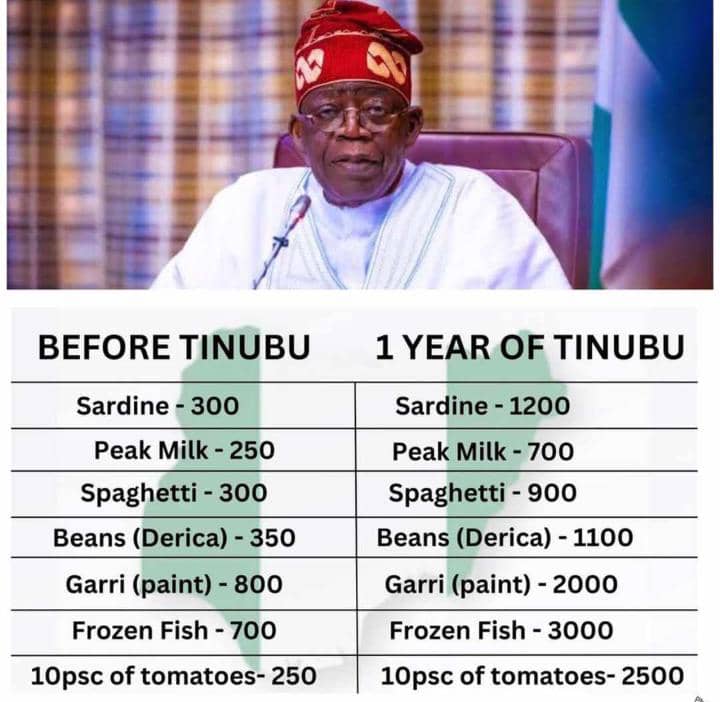
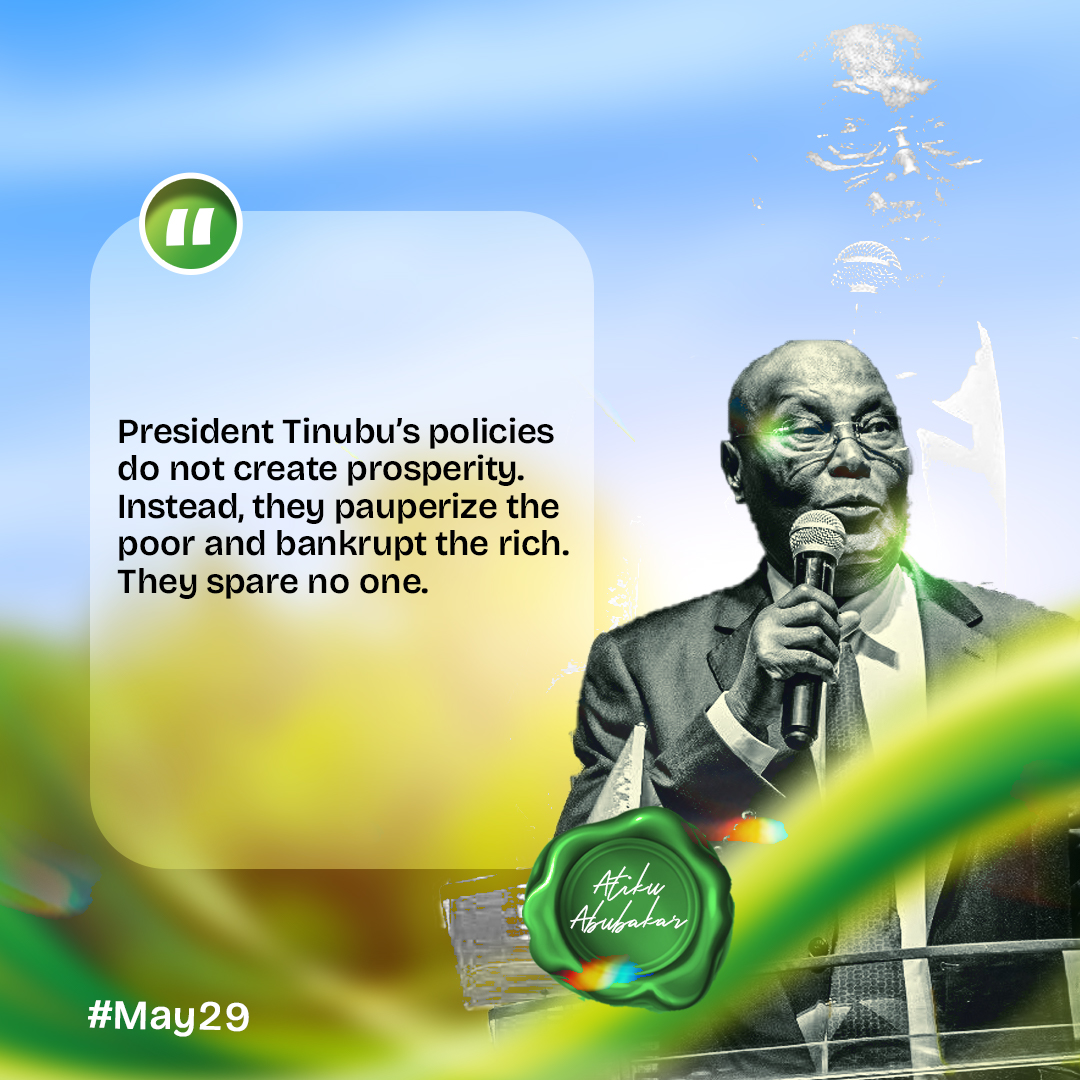
First, President Tinubu’s policies do not create prosperity. Instead, they pauperize the poor and bankrupt the rich. They spare no one. Nigerian citizens, the majority of whom are poor, are going through the worst cost-of-living crisis since the infamous structural adjustment programme of the 1980s. The annual inflation rate at 33.69% is the highest in nearly 3 decades. Food prices are unbearably higher than what ordinary citizens can afford as food inflation soared to 40.53% in April, the highest in more than 15 years.
Nigerian citizens have to pay 114% more for a bag of rice, 107% more for a bag of flour, and 150% more in transport fares relative to May 2023. Today, in some locations, motorists are paying 305% more for a litre of fuel. Yet, on a minimum wage of the equivalent of US$23 per month, Nigerian workers are among the lowest wage earners in the world. Tinubu had the ‘courage’ to remove subsidy on PMS and impose additional taxes on his people but lacks the compassion to raise the minimum wage or implement a social investment programme that would reduce the levels of vulnerability, and deprivation of workers and their families.
Second, President Tinubu’s policies create a hostile environment for businesses, big or small. The private sector is overwhelmed by Tinubu’s dismal policies and overburdened by his failure to address the policy fallouts. The manufacturing sector, which holds the key to higher incomes, jobs, and economic growth, has been bogged down by rising input prices, higher energy and borrowing costs, and exchange rate complexities. For example, since 2023, the average price of diesel has doubled to N1,600 per litre. Electricity tariff has recently been increased by 250% from N68/Kwh to N206/Kwh. As reported by the Guardian (13 May 2024), in Q1 of 2024, energy prices were up by 70%, costing manufacturers N290 billion.
Since May 2023, corporate Nigeria has lost more than a dozen enterprises to other countries. Unilever, GlaxoSmithKline (GSK), Procter & Gamble (P&G), Sanofi-Aventi Nigeria, Bolt Food, Equinor, among others had exited Nigeria citing reasons including foreign exchange complexities, security concerns, and high operational costs. According to the Nigeria Employers’ Consultative Association (NECA), nearly 20,000 jobs may have been lost due to the departure of 15 multinational companies from Nigeria.
Those enterprises that remain are struggling to survive. Vanguard Newspaper (20 May, 2024) reported a significant rise - to nearly 30% - in unsold goods in the warehouses of manufacturers of fast-moving consumer goods, occasioned by the rising cost of living and declining purchasing power of the citizens. According to the Guardian, manufacturers reported in Q1 a 10% drop in capacity utilization, a 10% drop in production, a 5% drop in investment, and more than 7% drop in sales. The Daily Trust (1 May, 2024) quoted Dangote lamenting that nearly 97% of manufacturing concerns in Nigeria will be unable to pay dividends this year.
In an economy with high rates of unemployment, a declining manufacturing sector cannot be an option.
Third, President Tinubu’s foreign exchange policies have not had any positive impact on Nigeria’s foreign trade balance, contrary to policy expectations. In particular, the free-float and the resulting devaluation of the Naira has not resulted in an appreciable improvement in Nigeria’s trade balance. Devaluation has not enhanced the competitiveness of local producers and has had no positive impact on exports of goods, primary or manufactured. In Q4 of 2023, for example, while imports surged 163.1%, exports rose at a slower 99.6%, indicating a huge foreign trade deficit. Similarly, in Q1 of 2024, Nigeria recorded a trade deficit of $7.5 billion, with exports value of $12.7 billion and import value of US$14 billion. Overall, the trade deficit as a percentage of GDP increased by 0.83% from 0.05% in May 2023 to 0.88% in May 2024.
Fourth, President Tinubu’s policies have failed to attract foreign investments into the country despite all the posturing and media hype by the President’s men. Exchange rate unification and free float of the Naira have not led to higher capital inflows (whether Foreign Direct Investment or Foreign Portfolio Investments), again contrary to policy expectations. Indeed, FDI inflows declined by 26.8%, from US5.33 billion in May 2023 to US$3.9 billion in May 2024. It is not difficult to understand why: FDI is about TRUST. It is about the investing world trusting the leadership of a country to act and deliver on promises made. Investors come when the right policies are designed and delivered timely and efficiently by public institutions.
Finally, despite deploying various monetary policy tools, inflationary pressure persists, and so does exchange rate volatility. No thanks to Tinubu’s misguided policy, the Naira’s value plummeted against the dollar and has since become the worst performing currency in the world.
It is clear from the foregoing that President Tinubu has an exaggerated understanding of the efficacy of his policies and was not ready for the potential fallouts. Tinubu and his team are not exactly sure of where the reform process is and what the next steps are. Has Nigeria reinstated fuel subsidy? Is the Naira on a free or managed float? These trial-and-error policies raise questions about the readiness of the administration and their capacity to restore the economy to a path of sustainable growth.
Time is running out for the government, and Tinubu must act fast to save the economy.
Here are six things he must do.
First, pause and reflect. It is important that the government understands what reforms must be undertaken and in what sequence. A framework is needed with clearly stated reform objectives and strategies.
Second, undertake a comprehensive review of the 2024 budget within the new reform framework. The 2024 FGN Budget, the exact size of which remains a mystery, is not designed to address the structural defects of the Nigerian economy or the cost-of-living crisis. It will neither create prosperity nor promote opportunities for our young people to lead a productive life.
The review must prioritise fiscal measures to deal with an unprecedented rise in commodity prices. Higher commodity prices have created more misery for the poor in our towns and villages and have pushed millions of people below the poverty line. One of such measures for immediate implementation will be to ease the existing restrictions on selected food imports.
Third, undertake a comprehensive review of the Social Investment Programme (SIP) to mitigate some of the impact of these policies on the most vulnerable households. The SIP must go beyond Conditional Cash Transfers to include programmes that prioritize support to MSEs across all the economic sectors, as they offer the greatest opportunities for achieving inclusive growth. In addition, a holistic programme to support medium and large-scale enterprises to navigate the stormy seas in the aftermath of the withdrawal of subsidy on PMS is also needed.
Fourth, Tinubu must be cautioned against any attempt to further pauperize the poor by introducing new taxes or increasing tax rates. We are aware of the behind-the-scenes attempts to increase VAT rate from 7.5% to 10%, re-introduce excise on telecommunication, and increase excise rates on a range of goods. It needs to be restated that we cannot tax our way out of this situation. Instead, Tinubu must see the need for expenditure rationalization and restraint - by having the budget more in sync with Nigeria’s fiscal reality, by improving efficiency in revenue utilization, improving procurement processes and trimming the size of government - and therefore reducing the cost of governance.
Fifth, provide clarity on the fuel subsidy regime, including the fiscal commitments and benefits from the fuel subsidy reform and the impact of this on the Federation Accounts. It is curious that since April 2024, fuel queues had mounted at many filling stations across Nigeria, and the infamous ‘black market’ has sprouted in several states. How much PMS is being imported and distributed, and at what cost? What is the implicit subsidy?
Sixth, tackle security headlong. President Tinubu, as a matter of priority, needs to rejig the nation's security architecture as what is currently in place is not serving the needs of the people. The state of pervasive insecurity continues to adversely impact agricultural production and the value it brings to the economy, especially in the Northern parts of the country. Insecurity resulting from terrorism, banditry, kidnapping, and cattle rustling has compelled many crop farmers and pastoralists to abandon their lands and relocate to the neighbouring countries of Niger, Chad, and Cameroun. This has drastically caused a reduction in the production of food and skyrocketed prices of foodstuffs. Food scarcity in Nigeria is so dire that a report by Cadre Harmonize warns that between June and August this year, about 31.5 million Nigerians may face severe food shortages and scarcity
I have always been a reform advocate. The Nigerian economy certainly requires a large dose of reform measures to accelerate its transformation after many years of lacklustre growth.
The difference is that I understand the appropriate reforms to undertake and what steps to take per time to mitigate their negative impact. In my Policy Document, I had anticipated that the withdrawal of subsidy and unification of exchange rates could, in the absence of fundamental interventions, impact negatively on micro and small enterprises in the informal sector and on the medium to large enterprises in the formal sector. I had also anticipated that such policies could elevate the levels of vulnerability and deprivation of poor families, including the youth and adults with no incomes. With this understanding, I had designed robust mitigation interventions that will be implemented alongside our reforms.
I was prepared for reform fallouts. Tinubu wasn’t. However, it is not too late for him to change course and do what is right for the good of our people and our nation. -AA
On behalf of my family, I wish every Nigerian child a happy Children's Day. My grandchildren and I will be specially marking the day. We shall join others at the poetry performance on Climate Change by students of Cradle2Harvard International Schools, @cradle2harvard1, at the Merit House, Abuja, at 4 pm. I encourage you to watch the live stream of the poetry presentation on my social media platforms, which is bound to play a significant role in empowering our younger generations to be advocates for positive change. -AA #ChildrensDay
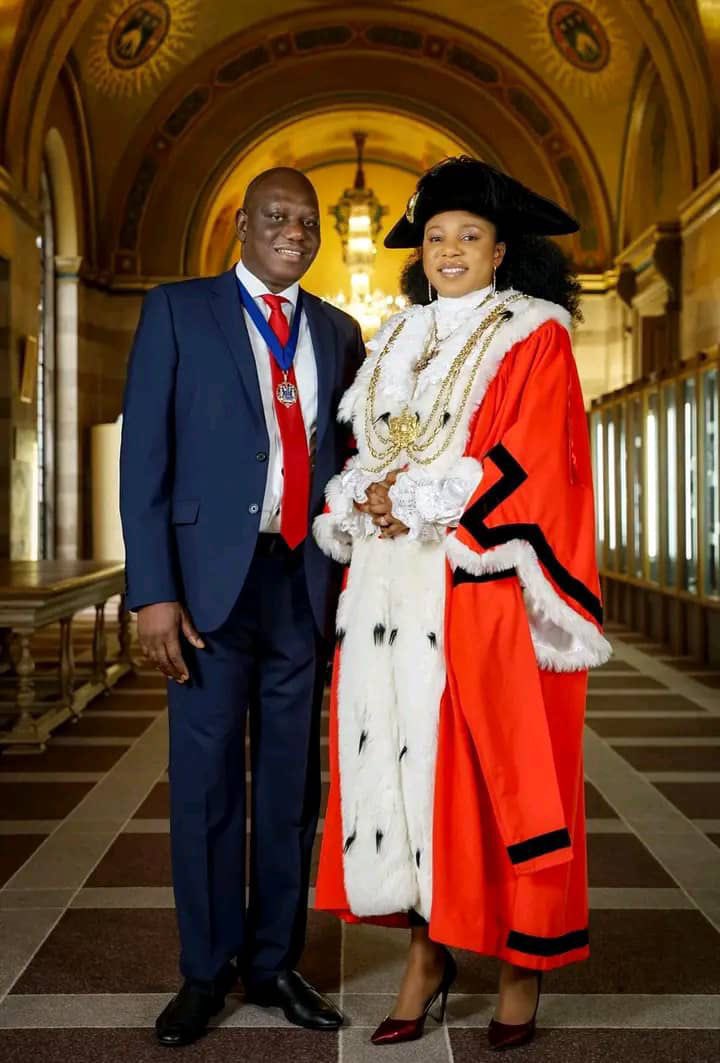
The elevation of Councillor Abigail Marshall Katung as the Lord Mayor of Leeds City is a testament that Nigeria is not short of talents and excel wherever they may find themselves. I congratulate Abigail Marshall Katung, the 130th Lord Mayor of Leeds City, the first person of African descent to hold this enviable position and the husband, Senator Sunday Marshall Katung, Senator representing Kaduna South Senatorial District. May her tenure be impactful. -AA
Yesterday, the @OfficialPDPNig Caretaker Committee of Danbatta Local Government Area of Kano State, led by Hajiya Halima Zubairu Danbatta, paid me a courtesy. We had fruitful discussions on how to redeem and reposition our great party. -AA
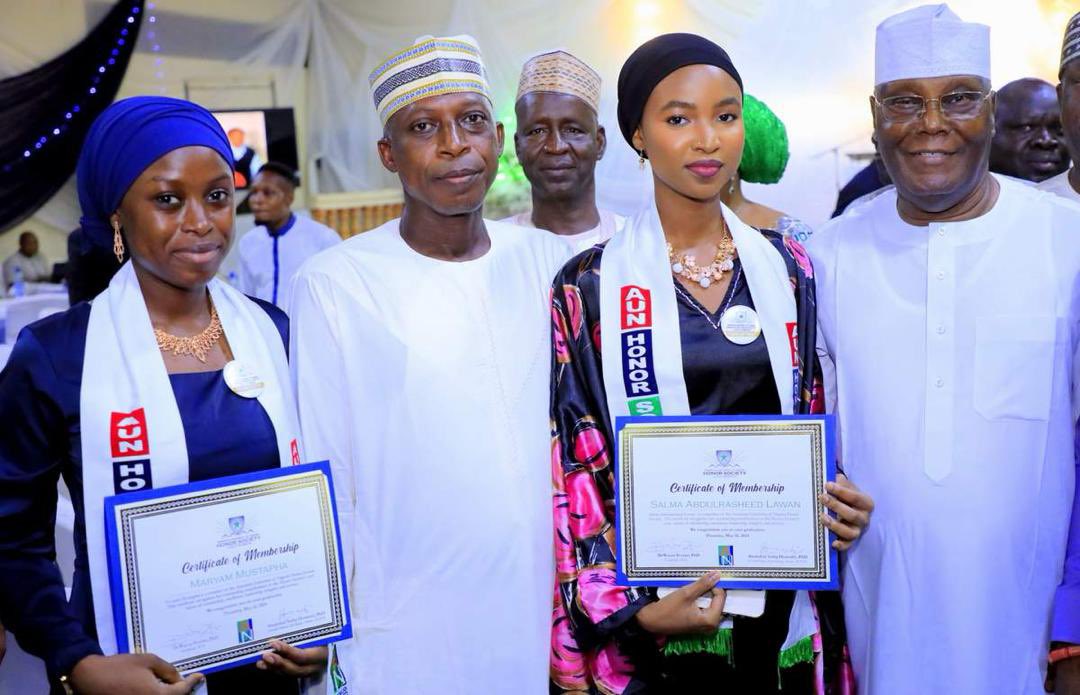
I was pleased to attend the 2024 AUN Honors Society Dinner and Award Night, held yesterday evening at the AUN Academy Yola. Special commendation to the parents, the Honours Society, and the night's Award winners, including my friends who came alongside to honour the event. -AA
On the celebration of your 64th birthday today, I must sincerely congratulate Your Excellency, Governor @AAdeleke_01 and rejoice with the people of Osun for the positive impacts that you have been able to make in being the torch bearer of progressive governance after many years of darkness.
Your spirit of humility has been an asset which enables you to have free access to the feelings of the people. I also congratulate you on your conferment with the traditional title of Asiwaju of Ede by the Timi of Ede Oba Muniru Adesola Lawal (Laminisa I). The revered title is a testimonial to your character as a foremost community leader.
It is a title that fits perfectly with your personality because, even as a party man in the @OfficialPDPNig, you are a leader who can be counted on for his unflinching commitment.
May the Almighty continue to grant you long life and wisdom to do more in the promotion of good governance, not just in Osun State but the country and humanity in general. -AA
My thoughts and prayers are with Tijjani Babangida, the former Super Eagles player, his wife, son and maid, who were involved in a ghastly car crash along the Kaduna-Zaria highway. Unfortunately, the crash claimed the life of his brother, Ibrahim. I pray that God will grant Tijani and the other victims of the accident healing. May Allah forgive the sins of the deceased and grant him Aljannah Firdaus. -AA
https://t.co/wgRfjOQ4Bg
H.E @atiku is a good and perfect description of a gentleman. No doubt people try to paint him bad but his philanthropic gesture of sponsoring so many rescued chibok girls in the University he founded really endeared me to him. Aside politics, H.E is a good and perfect gentleman.
I am deeply saddened by the report of a fire incident at Yola Main Market.
Losing a means of livelihood in the face of the current economic hardship is a troubling development.
May the Almighty replenish the losses and grant reprieve to those affected by this disaster. -AA
https://t.co/cKCII07CTX