Imagine never selling your investments at a bad time. 💵
That's the cash wedge: cash kept outside your portfolio.
Markets fall? You spend from it and leave your investments alone. You never sell in a panic.
#CashWedge#Retirement
📣 $SCHD Dividend Estimate Update!!!
Plot twist! 🤩
$UNH just announced a 5% dividend increase, and it’s coming just in time to give a small boost to SCHD’s Q2 dividend.
My estimate has increased from $0.2629 to $0.2638 per share.
That would put SCHD’s year over year Q2 dividend growth at 1.38%, up from 1.04% previously.
Not a huge change, but it’s a great example of what even a modest dividend raise from a major holding can do. $UNH is currently the 3rd largest position in SCHD at 5.09% of the portfolio.
Stay tuned for my updated official Q2 dividend estimate post.
🔥 Super Special Offer from Simply Safe Dividends - A one-month free trial (no credit card required) for anyone using the following link. I use SSD daily, so try it for yourself for a month and you’ll see why! 👉 https://t.co/rXIA6MWF0t
What Happens When an ETF Shuts Down?
Some REX Shares and YieldMax investors are about to find out.
REX Shares recently announced the closure of 7 ETFs, and now YieldMax is shutting down 4 more.
REX Shares is liquidating:
❌ $COII
❌ $CWII
❌ $HOII
❌ $LLII
❌ $MSII
❌ $PLTI
❌ $GIF
Meanwhile, these funds are staying open:
✅ $NVII
✅ $TSII
✅ $WMTI
The REX funds will stop trading after the close on June 9, 2026, and be liquidated on June 16, 2026.
YieldMax has also announced the closure of:
❌ $ABNY
❌ $DISO
❌ $FEAT
❌ $FIVY
If you own any of these funds, the cash value of your shares will automatically be deposited into your brokerage account after liquidation.
The likely reason isn’t performance. It’s assets.
These options-based ETFs are expensive to operate, and funds need sufficient Assets Under Management (AUM) to justify the costs. Even high yields can’t save a fund if investor demand isn’t there.
This was probably inevitable. There are now more ETFs than publicly traded U.S. stocks. With hundreds of new funds launching every year, they simply can’t all survive. Some will gather assets and thrive. Others will struggle to attract investors and eventually shut down.
That’s just part of a maturing ETF industry. It’s a good reminder that ETF survival often depends on AUM and investor demand, not just performance.
If you like off the beaten path companies that look cheap but are still quality, including one if the weirdest companies I’ve ever seen, check this video out- https://t.co/FlqV2TdXCP
$GIC $CHE $ALLE $MKTX
We’re going live at 7C!
It’s that time again! We’re talking about some recent dividend raises and whatever else is on your mind.
Stop by and say what’s up!
https://t.co/zPsFavnfxH
Saturday Night Special!
We’ll be live from 7C to 8C. If you aren’t busy on this Saturday evening, pop on in, say hello and let us know what portfolio moves you’re making!
See ya there…
https://t.co/Ah6Mc4aXCR
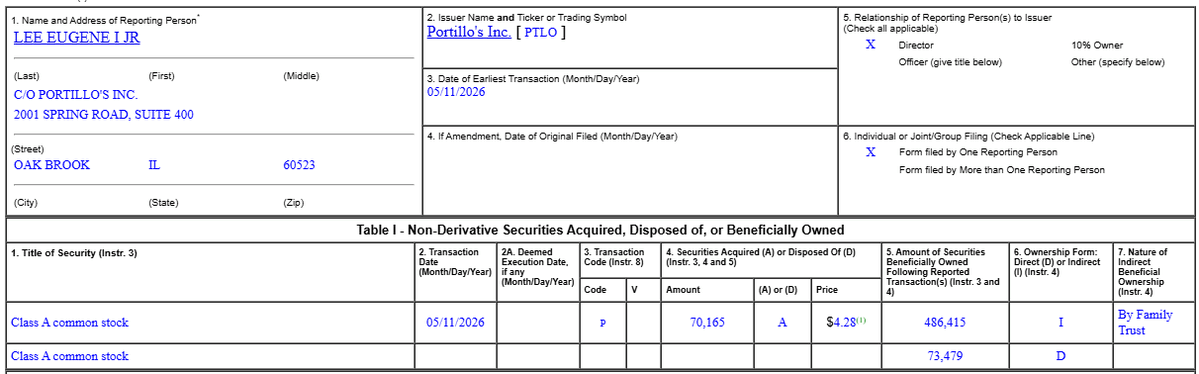
@TSOH_Investing@StoneHillWealth Hmm… I like that new CEO Brett Patterson is pulling the emergency brake on the growth at all costs of the prior regime…
Dick Portillo warned against expanding too rapidly and not focusing on training. Guess he might know a thing or two.🤣
The Dividend Barbell: Why $FDVV Works (and Where $SCHD Fits In)
The barbell strategy is simple. Skip the fragile middle and own the extremes.
In dividends, that means high-growth, low-yield on one side and high-yield, lower-growth on the other.
This is where FDVV stands out. It’s basically a rules-based dividend barbell inside one ETF.
FDVV ranks stocks using about 70% dividend yield, 15% payout ratio, and 15% dividend growth. That combination does a lot. The yield tilt pulls in higher income names. The payout ratio helps filter out weaker, unsustainable dividends. The dividend growth factor keeps exposure to quality compounders.
What that creates is a natural barbell.
On the growth and quality end you’ll find names like $NVDA, $MSFT, $AAPL, $V and $AVGO. Lower yield, but strong earnings power and long-term compounding.
On the high yield side you get names like $XOM, $JPM, $KO, and $MO. Higher yield and steady cash flow today.
This balance is what makes it interesting. The growth side keeps the portfolio from stalling, while the yield side produces real income. The filters help avoid the fragile middle that can fall apart when conditions change.
Where $SCHD fits in is a bit different. SCHD leans more into consistency, dividend growth, and balance sheet strength. It has less exposure to high-growth tech and more focus on proven dividend payers.
That’s why the combination can work well. $FDVV brings more of that barbell exposure with growth and yield extremes, while $SCHD adds stability and discipline. Together you get broader sector exposure, especially more tech through FDVV, along with a smoother balance between income and consistency.
FDVV gives you a prebuilt barbell. $SCHD helps anchor it.
Do you prefer a prebuilt approach like this, or building it yourself?
Here’s a video from @GenExDividend discussing the Barbell Investing Strategy
https://t.co/yD1uqHcq7h
We’ll be joined LIVE by Adam Kahn in the infamous Dividend Dive at 7C. We’d love to see you and hear what portfolio moves you’re making.😎
https://t.co/PoIRROooN0 si=erkLXpNU0aytVys2