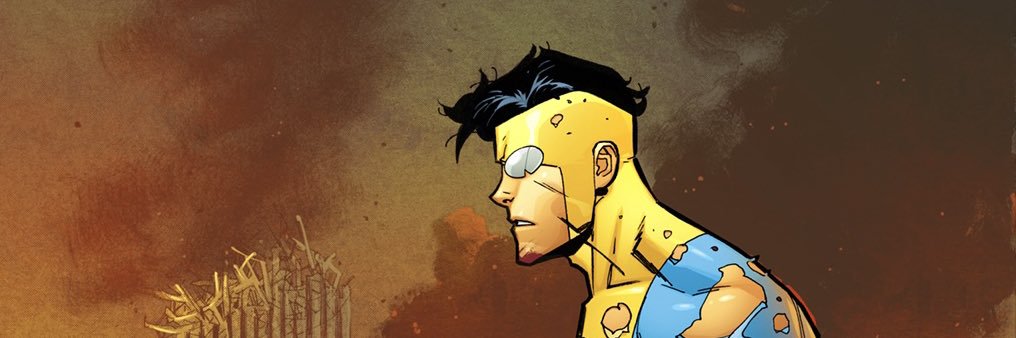
INVINCIBLE 102 cover breakdown. 1. The final inked image first, digital space added via Photoshop. 2. Finished traditional inks. 3. Finished traditional pencils. 4. Digital layouts is where it starts.
D’ORC sticks the landing! The story arc finale, Issue #5 by Brett Bean, has sold out completely at the distributor level and is being rushed back to print. The excitement builds as Story Arc #2 arrives next month!
https://t.co/1rpWq9W82d
So I just read issues 9 and 10 of I.U: Battle Beast by Robert Kirkman and @RyanOttley, and they RULE, both in writing and art! But here's an question I have: Will this series, in the future, reveal the full, days-spanning brawl between Battle Beast and Thragg in it's entirety?
It’s confusing to me that in comics, the writer is given the most credit in a similar way a director gets the most credit of a film.
When really, the comic artist is the one retelling the story in their own vision, much like a director retells the writers story in their own vision for a film.
A writer in film or comics does not write the visuals. The comic artist and director tell the story visually. Knowing this would change the perception of what a comic artist does.
A director can make or break a good screenplay. A comic artist can make or break a good comic script.
I guess I explained it.
Sorry Chris, I didn’t follow your rules exactly. 😆
Depends on how you define division of labor. Many manga books division of labor I’ve seen is writer does layouts and designs, then there is a penciller for figures, and an inker for figures, and background artists. For many American books, one artist doesn’t divide any of that. They do all of it for the issue.
On occasion we liked to play with weird formats in Invincible. For issue 80, Robert wanted to do the 16 panel grid format for the entire issue. That basically means you make 16 panels on each page, and some get combined into larger panels but it always follows that grid.
The sketchy layout is where it all starts, I’m trying to make a page with size variations in each panel with the characters, and a good back and forth between the panels so it flows nice, I’m focusing on acting, I want the dialogue to fit these guys! Then the finished pencil stage is structuring it further and adding the final line that the inks will perfect for print!
This is the scene where William comes out to Mark. Really fun scene!