Four new cases going live tomorrow at 5pm GMT on
@ValbloxGG
Frostbite, aurora, ember forge and jarl's gold.
Each comes with a different price, so there's something to check out at every level.
we already know the group chat will be busy tomorrow.
which one are you opening first on https://t.co/WdPlHQINhR?
One thing we find interesting about @onlystreetsfun is how it changes the way you look at your surroundings.
You might walk past the same place every day without paying attention, then one unusual sight catches your eye and suddenly you have a story to tell.
And that's what makes the idea interesting.
It gives people a reason to pay attention to the little things happening around them.
Not every memorable moment has to be planned.
Sometimes, the best ones just happen.
@onlystreetsfun@rarelistio
24 hours ⏳
Tomorrow, 16:00 UTC: the token's contract address, from this account only
One hour later, the seas open 🌊
Four seas. A free raft for every captain. Your first cast is one night away ⛵
HyperHaul is a living pirate sea on Elysium. Fish, sail, fight and build your fleet.
The waitlist is open:
🏆 $3,000 for the top 100 on the leaderboard (1st gets $300)
🎟️ NFT whitelist for the top 300
🪙 A numbered Founding Captain badge in the game for everyone on the list
Points for joining, for every task and for every friend you bring.
https://t.co/pi0UYWvH6H
Free alpha for everyone
Possible $30- $50 just by doing simple tasks
Worth checking out
Powered by @hyperhaulio
Connect your X ang get started
https://t.co/TlcXKT1j9d
Don't fade!
𝗔 𝗡𝗘𝗪 𝗕𝗟𝗢𝗖𝗞𝗖𝗛𝗔𝗜𝗡 𝗔𝗥𝗖𝗛𝗜𝗧𝗘𝗖𝗧𝗨𝗥𝗘 𝗠𝗨𝗦𝗧 𝗔𝗟𝗦𝗢 𝗔𝗖𝗖𝗢𝗨𝗡𝗧 𝗙𝗢𝗥 𝗪𝗛𝗔𝗧 𝗔𝗟𝗥𝗘𝗔𝗗𝗬 𝗘𝗫𝗜𝗦𝗧𝗦.
We have talked about what Starknet could gain from becoming an independent L1.
But here's another question:
𝗪𝗛𝗔𝗧 𝗛𝗔𝗣𝗣𝗘𝗡𝗦 𝗧𝗢 𝗧𝗛𝗘 𝗦𝗠𝗔𝗥𝗧 𝗖𝗢𝗡𝗧𝗥𝗔𝗖𝗧𝗦 𝗔𝗟𝗥𝗘𝗔𝗗𝗬 𝗗𝗘𝗣𝗟𝗢𝗬𝗘𝗗?
This is an important part of the post quantum transition.
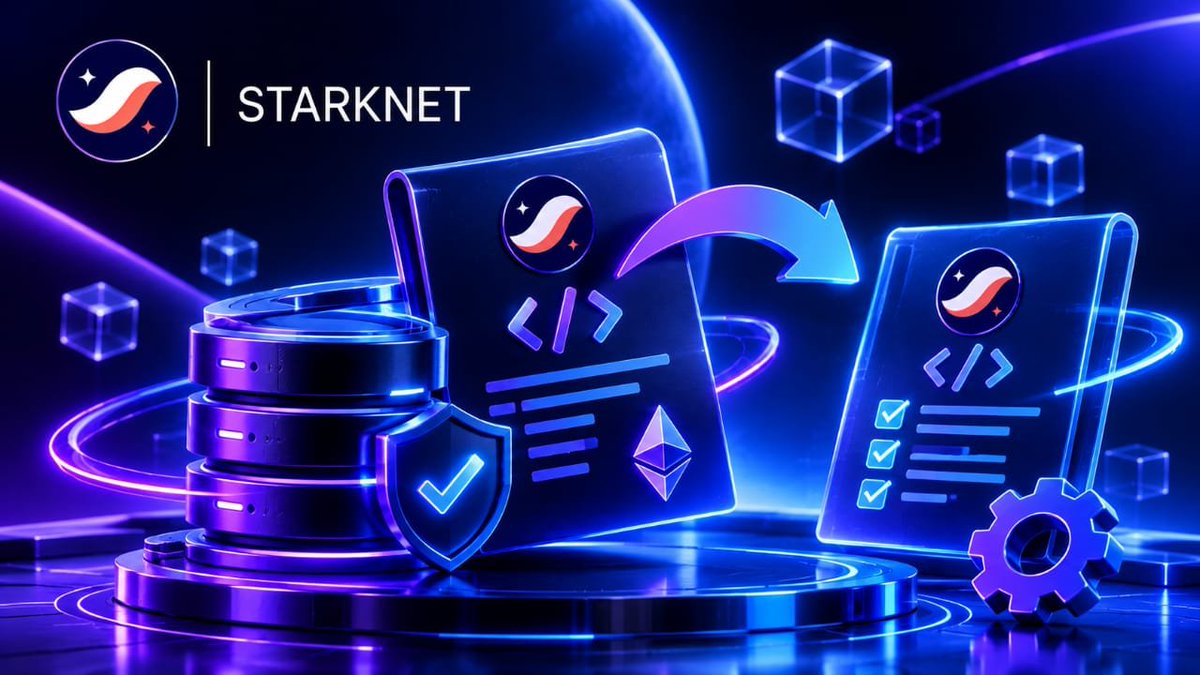
Some existing Starknet contracts use Pedersen based storage maps. Moving towards new cryptographic structures raises questions about how their existing storage and applications would be handled.
StarkWare's Quantum Hub currently lists migration tooling for these legacy deployments as research in progress.
There is no public specification or released migration toolkit yet.
Why should we care?
Because a network's future architecture is only part of the picture.
Existing applications, developers and stored data also need a carefully considered path forward.
This is another reason Starknet's independent L1 research deserves attention.
Building for the future also means thinking carefully about what we carry forward.
Explore the research:
https://t.co/Pg1uj68FHh
@KaitoStudio_
𝐖𝐞 𝐨𝐧𝐜𝐞 𝐭𝐡𝐨𝐮𝐠𝐡𝐭 𝐰𝐞 𝐡𝐚𝐝 𝐟𝐨𝐮𝐧𝐝 𝐚𝐧 𝐞𝐚𝐬𝐲 𝐰𝐚𝐲 𝐭𝐨 𝐞𝐚𝐫𝐧 𝐢𝐧 𝐖𝐞𝐛𝟑.
𝐈𝐭 𝐭𝐮𝐫𝐧𝐞𝐝 𝐢𝐧𝐭𝐨 𝐚 ����𝐫𝐲𝐩𝐭𝐨 𝐜𝐥𝐨𝐬𝐞 𝐜𝐚𝐥𝐥.
Back in July, one of us joined a referral based Telegram game that promised $2 for every successful referral.
It seemed simple.
Refer people, earn rewards and withdraw once the minimum threshold was reached.
After making enough referrals, the earnings were withdrawn to Trust Wallet.
The token was labelled USDT, so there was no immediate reason to suspect it wasn't genuine.
We even shared a post about the opportunity on X, hoping to bring more people in while earning from the referrals.
But things took an unexpected turn.
On July 28, 2026, 16 USDT was sent from Trust Wallet on BNB Smart Chain to a centralized exchange, with the intention of converting it to Naira.
The transaction showed as sent, but the money never arrived.
After reaching out to customer support, we discovered that the token was fake.
The warning was even more serious: depositing similar scam or unsupported tokens could put the exchange account at risk.
And that wasn't all.
We had already introduced other people to the opportunity through our X post.
Once we discovered what was happening, we took the post down and apologized to those who had joined or were considering joining.
That experience taught us a lesson beyond losing money: being careless about what we promote can put other people at risk too.
A token carrying the name or symbol of a familiar cryptocurrency isn't automatically genuine.
Always verify contract addresses, networks and supported assets before accepting or sending crypto.
This experience showed us why security and awareness matter.
@MEXC takes user protection seriously through its Proof of Reserves, $100M Guardian Fund, and account security features like 2FA and Anti-Phishing Codes.
We appreciate platforms that make security a priority, while recognizing that users also need to stay alert.
We took the Spot the AI Trap quiz and scored 98/100.
Test your awareness too, take the quiz and share your safety score:
https://t.co/D24sTfHM0q
We have had our close call, and we are sharing it so someone else doesn't have to learn the same lesson the hard way.
#MEXC #AICyberSecurity #MEXCPartner
𝗪𝗵𝗮𝘁 𝗵𝗮𝗽𝗽𝗲𝗻𝘀 𝘄𝗵𝗲𝗻 𝗮 𝗯𝗹𝗼𝗰𝗸𝗰𝗵𝗮𝗶𝗻 𝗶𝘀 𝗿𝗲𝗮𝗱𝘆 𝘁𝗼 𝗮𝗱𝗮𝗽𝘁, 𝗯𝘂𝘁 𝗽𝗮𝗿𝘁 𝗼𝗳 𝗶𝘁𝘀 𝘀𝗲𝗰𝘂𝗿𝗶𝘁𝘆 𝗱𝗲𝗽𝗲𝗻𝗱𝘀 𝗼𝗻 𝗮𝗻𝗼𝘁𝗵𝗲𝗿 𝗻𝗲𝘁𝘄𝗼𝗿𝗸?
This is one of the important questions behind @Starknet 's exploration of an independent L1.
Starknet already has some important foundations for adapting to future cryptographic changes.
Its hash-based STARK proofs use security assumptions that don't depend on the elliptic curve cryptography targeted by Shor's algorithm.
Its native account abstraction also gives accounts programmable validation logic, allowing new signature verification methods to be introduced without requiring a networkbwide protocol upgrade.
So where does the challenge come in?
𝗘𝗧𝗛𝗘𝗥𝗘𝗨𝗠'𝗦 𝗥𝗢𝗟𝗘.
As an Ethereum L2, Starknet still relies on Ethereum for parts of its wider security architecture, including its bridge and data availability arrangements.
These components have their own cryptographic dependencies.
This means @Starknet cannot independently change every part of its security architecture on its own schedule.
Even if the components it directly controls are ready for new cryptographic methods, Ethereum facing dependencies still require their own migration.
𝗧𝗛𝗜𝗦 𝗜𝗦 𝗪𝗛𝗘𝗥𝗘 𝗜𝗡𝗗𝗘𝗣𝗘𝗡𝗗𝗘𝗡𝗖𝗘 𝗕𝗘𝗖𝗢𝗠𝗘𝗦 𝗜𝗠𝗣𝗢𝗥𝗧𝗔𝗡𝗧.
Exploring an independent L1 could give @Starknet greater control over these core security decisions and reduce its dependence on Ethereum's cryptographic migration timeline.
This isn't about declaring Ethereum insecure or suggesting that becoming an L1 automatically solves every security challenge.
It's about recognizing that long term cryptographic security also depends on who controls the infrastructure responsible for implementing those changes.
Interestingly, @Starknet community has already voted in favour of researching this direction.
That vote supports further research, not an approved transition.
A formal governance process would still be required before any move.
The bigger question is how blockchain networks prepare for security challenges that may look very different from today's.
Building adaptable technology is important.
Having control over how it evolves is equally important.
Explore the research and migration details through StarkWare's Quantum Hub.
@KaitoStudio_
𝐏𝐔𝐁𝐋𝐈𝐂 𝐁𝐋𝐎𝐂𝐊𝐂𝐇𝐀𝐈𝐍𝐒 𝐀𝐑𝐄 𝐓𝐑����𝐍𝐒𝐏𝐀𝐑𝐄𝐍𝐓.
𝐁𝐔𝐓 𝐈𝐒 𝐄𝐕𝐄𝐑𝐘𝐓𝐇𝐈𝐍𝐆 𝐌𝐄𝐀𝐍𝐓 𝐓𝐎 𝐁𝐄 𝐏𝐔𝐁𝐋𝐈𝐂?
One of the biggest advantages of blockchain is transparency.
Transactions can be recorded on a shared ledger, allowing people to inspect activity and independently verify what happened.
That's powerful.
But when we move from everyday onchain transactions to institutional finance, another question comes up:
How do you maintain transparency without exposing sensitive financial information?
Let's break it down.
Imagine a large investment firm preparing to execute a significant trade.
Its strategy might involve entering a position gradually, managing exposure across several assets, or responding to changing market conditions.
Now imagine other market participants being able to monitor its onchain activity and connect transactions to that firm.
Depending on what they can observe, they might anticipate its next move, copy its strategy, or use that information to their advantage.
The blockchain itself isn't necessarily the problem.
The challenge is that publicly verifiable activity can also reveal information that an institution would rather keep confidential.
And this goes beyond trading strategies.
Financial institutions may need to protect client information, business relationships, transaction details, and other sensitive data.
They still need to establish trust, though.
A counterparty might need confirmation that a financial claim is valid.
An institution might need to demonstrate that certain information is accurate.
That creates an important distinction:
🔹 𝐏𝐑𝐈𝐕𝐀𝐂𝐘 is about protecting information that shouldn't be unnecessarily exposed.
🔹 𝐕𝐄𝐑𝐈𝐅𝐈𝐂𝐀𝐓𝐈𝐎𝐍 is about establishing that the information or claim being relied upon can be trusted.
These two needs don't have to be treated as opposites.
The real challenge is finding ways to protect sensitive information while preserving the ability to verify what matters.
This is the space @primus_labs is working in.
Primus is building confidentiality and verification infrastructure above existing onchain financial rails, with the goal of making onchain finance more private.
Its focus also includes verifying financial information held offchain.
Why does this matter?
Because bringing institutions onchain involves more than giving them access to blockchain networks.
It also means addressing the practical requirements that come with handling sensitive financial information.
The goal isn't to expose everything or trust everything blindly.
It's to protect what needs privacy and verify what needs trust.
That's an important conversation for the future of institutional onchain finance.
Explore Primus XP tasks here 👇
https://t.co/rZTJAJ5e77
Follow @primus_labs and @kaitostudio for more.
#Primus #InstitutionalFinance