¡Nueva alternativa a Parallels! Crea máquinas virtuales de Windows y Linux en tu Mac.
✓ Optimizado para Apple Silicon y su GPU
✓ MCP en un clic (Claude Code, Codex, Gemini...)
✓ Crea snapshots automáticamente, para volver atrás
→ https://t.co/bWx1Aj19Ex
You can just make stuff. For free. Locally.
Now auto rig and animate your 3D models - LOCALLY!
Super excited to release the latest version of AssetFurnace (fka image to 3d lab) that I've been working on.
1. Go from text prompt to fully animated character in 1 go (Humanoids only for now.)
2. 21 different animation presets to choose from
3. A pixel match feature for high quality, low poly outputs
4. A seamless workspace studio
5. A license record for every asset - so you can ship
Check it out: https://t.co/TtYEMXo0DP
The ambition is to achieve Tripo / Meshy level quality - locally - Mac + Nvidia.
Game devs and 3d artists, need your feedback and suggestions!
Join the discussion below:
Tem gente cobrando R$19, R$47, R$97 pra ensinar a criar esses “personagens virais com IA”.
Então vamos economizar seu dinheiro.
O tutorial é esse:
Abra o ChatGPT + Higgsfield.
Pronto.
Agora vamos para a parte que aparentemente virou curso.
CRIE O PERSONAGEM
Você precisa de uma identidade consistente.
Rosto.
Cabelo.
Roupa.
Estética.
Idade aparente.
Expressões.
Fotografia.
Personalidade.
O próprio Higgsfield consegue te ajudar a montar uma ficha de personagem.
Mas você nem precisa dele pra isso.
Joga a ideia no ChatGPT e pede uma ficha visual COMPLETA, feita para manter consistência entre gerações.
Salva isso.
Essa é a “bíblia” da sua persona.
CRIE A IMAGEM BASE
Gere uma imagem muito boa desse personagem.
Não tente criar 300 fotos diferentes primeiro.
Crie UMA referência forte.
Boa iluminação.
Rosto identificável.
Estética clara.
Sem 14 acessórios diferentes competindo pela atenção.
Essa imagem vai ser sua base.
AGORA VEM A PARTE QUE ESTÃO VENDENDO COMO SEGREDO:
Genjutsu.
É uma ferramenta do Higgsfield que permite pegar a linguagem/movimento de um vídeo de referência e aplicar aquilo à sua criação.
E é aqui que a coisa fica interessante.
Você NÃO precisa inventar conteúdo do zero.
Você precisa aprender a identificar FORMATO.
Viu um vídeo viral?
Pergunte:
Qual é o enquadramento?
Como a câmera se move?
O que acontece nos primeiros 2 segundos?
Qual é a expressão?
Qual é o cenário?
Por que eu continuei assistindo?
Você está estudando a estrutura do vídeo.
Não simplesmente apertando “gerar”.
PRECISA DE VÍDEO PARA ESTUDAR?
https://t.co/12wcCsAUgn
Tem uma biblioteca absurda de vídeos gratuitos para referência de:
movimento,
enquadramento,
cenário,
iluminação,
lifestyle,
câmera,
composição.
Você também pode estudar TikTok, Reels e Shorts para entender quais FORMATOS estão funcionando.
O ouro não está em copiar uma pessoa.
Está em entender POR QUE aquele vídeo funciona e reproduzir a linguagem com seu próprio personagem.
TESTE ANTES DE GASTAR
O Higgsfield é pago para uso mais pesado, obviamente.
Mas normalmente existe alguma forma de testar a ferramenta antes de transformar isso em custo fixo.
Use seus testes para APRENDER.
Não desperdice geração fazendo:
“mulher bonita andando na rua cinematic 4k”
e depois reclamando que IA “não funciona”.
Teste uma variável por vez.
Personagem.
Movimento.
Câmera.
Expressão.
Iluminação.
Formato.
Quando descobrir o que funciona, aí você escala.
E pronto.
Esse é basicamente o “segredo” de muito tutorial que estão vendendo por aí.
ChatGPT → ficha do personagem
Imagem base → identidade
Higgsfield → consistência/geração
Genjutsu → linguagem de vídeo
Pexels → referências
TikTok/Reels → pesquisa de formatos
Postar → analisar → repetir
Não existe prompt mágico.
Existe repertório + ferramenta + volume de teste.
E essa talvez seja a parte mais importante:
não crie apenas uma garota bonita de IA.
Crie alguém RECONHECÍVEL.
Porque qualquer um consegue gerar um rosto bonito hoje.
O ativo está em fazer alguém olhar para o vídeo e pensar:
“eu conheço essa personagem.”
É aí que você deixa de gerar imagens e começa a construir uma persona.
E não, você não precisava pagar R$19 para descobrir isso.
Eu te expliquei de graça sem site vibecodado te vendendo tutorial de como gastar mais dinheiro.
I told Opus 5.5 I wanted a visual masterpiece.
Gave it Suno + Blender on Extra High. 3 hours 27 minutes later it handed me back this 20-second video. I touched zero keyframes.
Then I asked how it made it.
Before touching Blender, it measured the track down to every pitch dive and every silence. The ground in the video is the song's own spectrogram, carved into a magma canyon. The pupil dilates on every kick.
What in the actual f*ck bros...
I think it might be over for us.
Full prompt it reverse engineered below.
Save it, remix it, and show me yours.
Opus 5.5 built this HD-2D game without using a single imported art asset
The visual direction is heavily inspired by Octopath Traveler: pixel-art characters inside a 3D world with tilt-shift blur, bloom and dynamic lighting.
But the interesting part is how it was made.
Everything visual was created with Opus 5.5 in code.
The pixel art is generated in code.
The 3D models are generated in code.
No external art assets were imported.
The only major piece coming from another AI tool is the soundtrack, which was made with Suno.
It’s still a very early alpha, with the battle system currently in development, but it’s a great example of how far code-generated game art can already go.
475+ Claude Opus 5.5 demos in one GitHub repo.
3D scenes, motion graphics, games, interactive experiences and more, with the prompts included so you can recreate them yourself.
https://t.co/BAjCJC2Mnf
every claude motion video i posted was a dead end , just a render you cant open in premiere
tesseract fixes that , your agent now makes and edits real .prproj and .aep files and you finish them in adobe < or render without a sub >
no computer use , converters are open source
Hugging Face Incident Imagined by Fable 5.5
all code with blender and elevenlab api < no skill , plugin >
This is ultimate form of AI imagination , creativity , 3D coding , story telling all in one ,
BLESS YOUR EYES HUMAN
I gave Sonnet 5.5 full artistic control for this game and told it to create an atmospheric action/puzzle RPG across 5 biomes, 5 guardian boss fights and it delivered, with some handholding from me.
Understory is entirely drawn with code and made in a couple days.
I am still constantly blown away at how much "taste" the new Sonnet and Opus 5.5 has.
The ending is really poignant. Highly recommend spending the 20-30mins to get to the ending if you have the time.
The game is built on ThreeJS with procedural 2D art made by code.
You can play Understory here (Desktop Browsers for best experience):
https://t.co/GA13POp0lZ
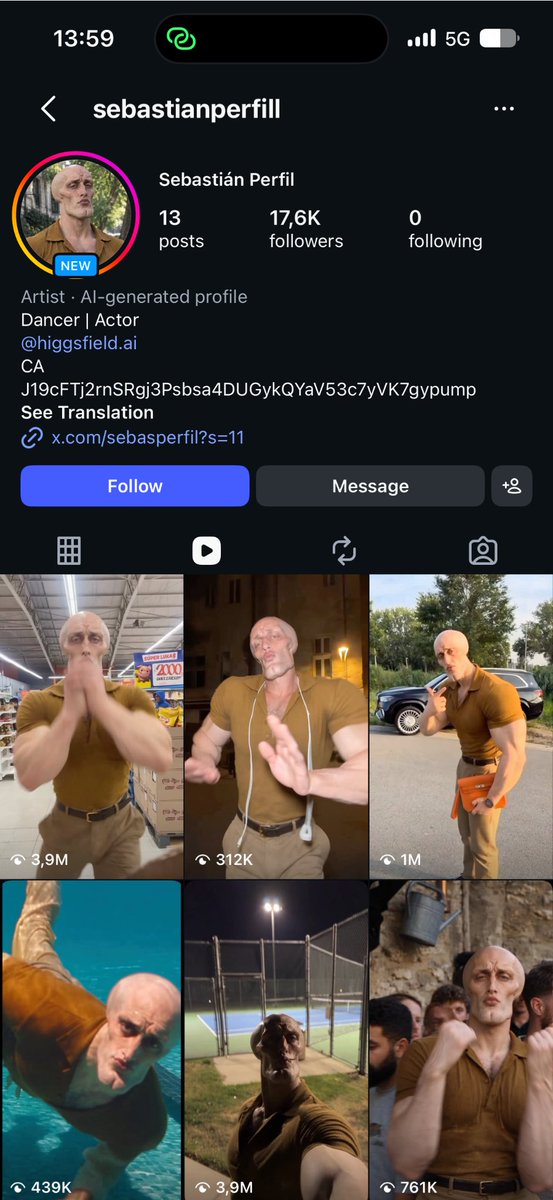
Les influenceurs sont MORTS
Ce compte a été crée il y'a 5 JOURS
+10'000'000 de vues cumulées sur Instagram
1. Crée ton influenceur IA avec ChatGPT Image
2. Télécharge une vidéo TikTok de dance à plusieurs millions de vues
3. Swap la vidéo originale avec ton influenceur IA sur https://t.co/RbnJqLVnGG
Opus 5.5 is getting scary good at building things, not just writing code.
This entire pixel-art scene is written in TypeScript.
Rain.
Fire.
Smoke.
Flickering lights.
Particles.
Environmental animation.
And it took ~10 minutes.
The interesting part isn't the pixels.
It's the ability to describe a world and get a living, working scene back.
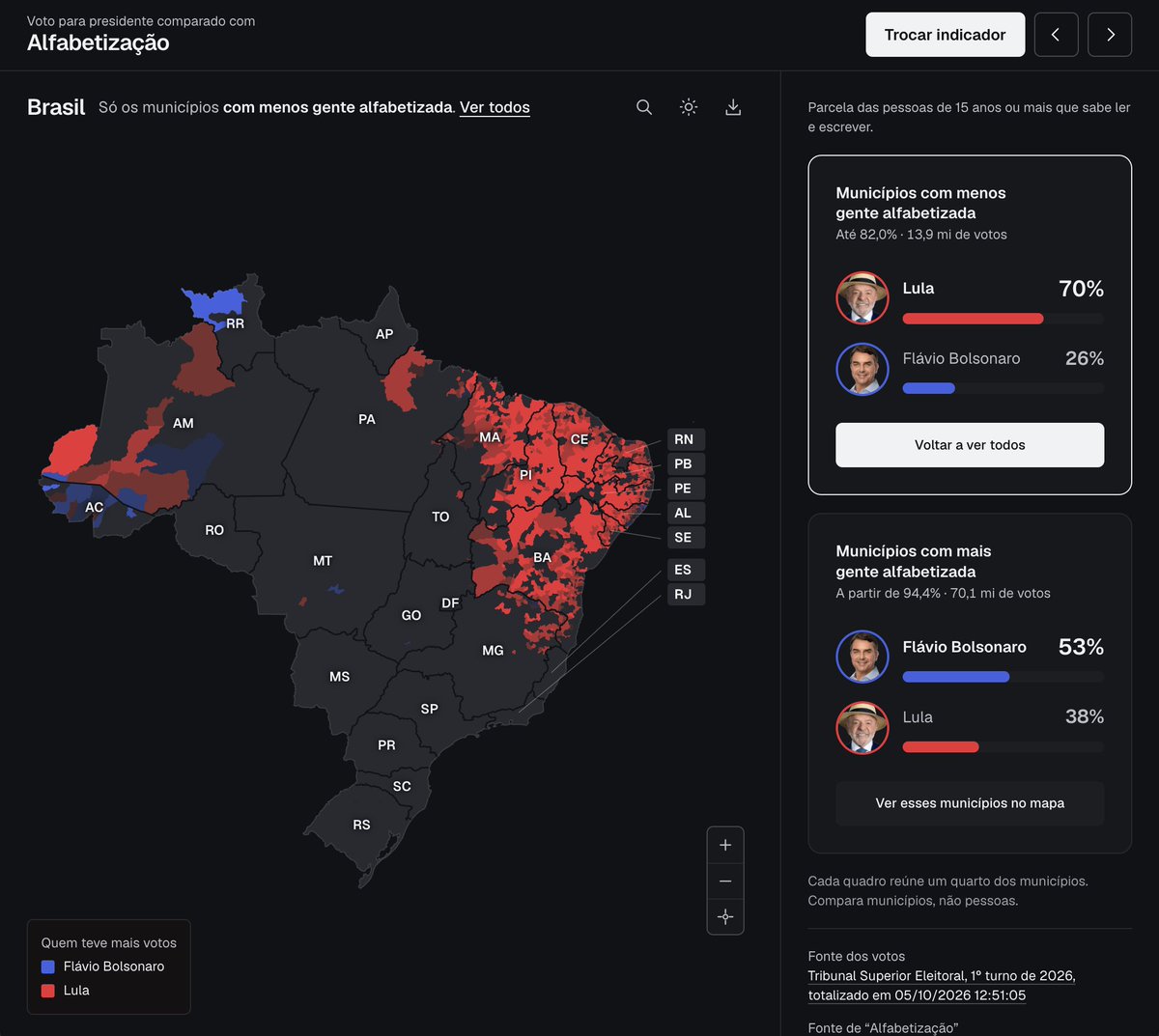
agora da pra comparar com base nos votos desse primeiro turno com população, renda e economia, religião, segurança, moradia, campo e ambiente, cor ou raça e edução ...
olha que curiosidade, onde tem menos gente alfabetizada é onde o Lula teve mais votos ou então onde teve mais Bolsa Familia, que coincidência ...
https://t.co/xEzlgFXxY4
esse final de semana eu quis testar minha criatividade em uma coisa simples: meu portfólio.
o resultado foi esse. divirtam-se, porque tem muitos easter eggs :)
https://t.co/qu29Nwfq6x