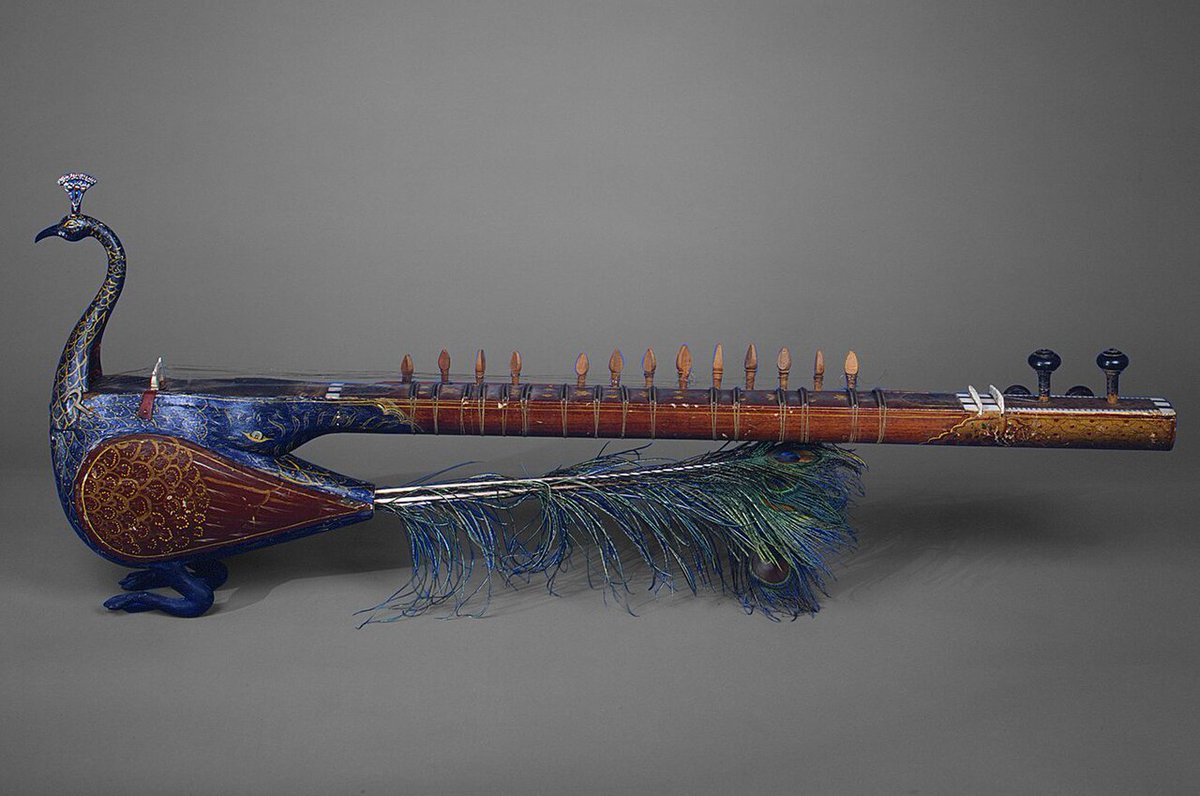
The Peacock-Shaped Stringed Instrument "Taus"
Dating back to 19th-century Northern India and the Punjab region, this traditional bowed string instrument is known as a "Taus," which translates to peacock in Persian. Masterfully carved from wood into the shape of a peacock, decorated with fine gold leaf work, and adorned with actual peacock feathers at the tail, it produces a deep, resonant sound.
Over 5,000 years ago, the people of the Indus-Saraswati Civilisation developed extensive methods of cultivation and processing cotton. Archaeological evidence from Mehrgarh, Mohenjo-daro, Lothal, and Rakhigarhi including charred seeds, delicate woven threads, and production tools highlights a specialized, region-wide textile economy.
This ancient expertise continues unbroken in India’s rich handloom traditions from Khadi and regional weaves to the timeless beauty of cotton sarees and fabrics used across the country every day. The thread of innovation and craftsmanship from the Indus-Saraswati Civilisation remains woven into the very fabric of Bharat’s living heritage.
#IndusSaraswatiCivilisation #LivingIndianHeritage #CivilisationalContinuity
“We must be careful not to consider, name, and treat our fellow believers differently according to the caste to which they belong. Instead, we should regard them as equal to Śiva.”
— Abhinavagupta, Tantrāloka (XV.576)
Badami Cave Temple Sculpture
Carved over 1,400 years ago (6th-7th century CE).
Depicts Lord Shiva with attendants...☘️🔱
Created by the Early Chalukya dynasty of Karnataka...☘️ 🔱
Mahadev says ~
One who conquers food cravings, anger, and the senses, sits in solitude with a pure mind and recites Sahasranam near Shri Vishnu, attains a four-armed form adorned with yellow garments, mounts the back of Garuda, and goes to the divine abode of Lord Vishnu.
Ancient Archaeological Evidence of the Mahabharata 🔥
Here are two silver karshapana coins dating from around the 4th to 2nd century BCE. One coin depicts Lord Krishna with a chakra, while the other depicts Lord Balarama with a plough, indicating early iconographic traditions.
This 4,500-year-old terracotta dice from the Indus-Saraswati Civilization is a powerful reminder of India’s living heritage. Dicing is also mentioned as a popular game in Rig and Atharva Vedas (two of the four sacred Vedic scriptures).
From symbols and craftsmanship to rituals, yogic practices, and collective memory, numerous elements of ancient Indian civilization continue to thrive in the daily social and religious life of Indian society across regions and communities.
Civilizational inheritance is not just about geography or ruins, it is defined by living customs, symbols, rituals, and unbroken cultural consciousness. India is the enduring living continuity of the Indus-Saraswati Civilization.
#IndusSaraswatiCivilization #AncientIndianHeritage
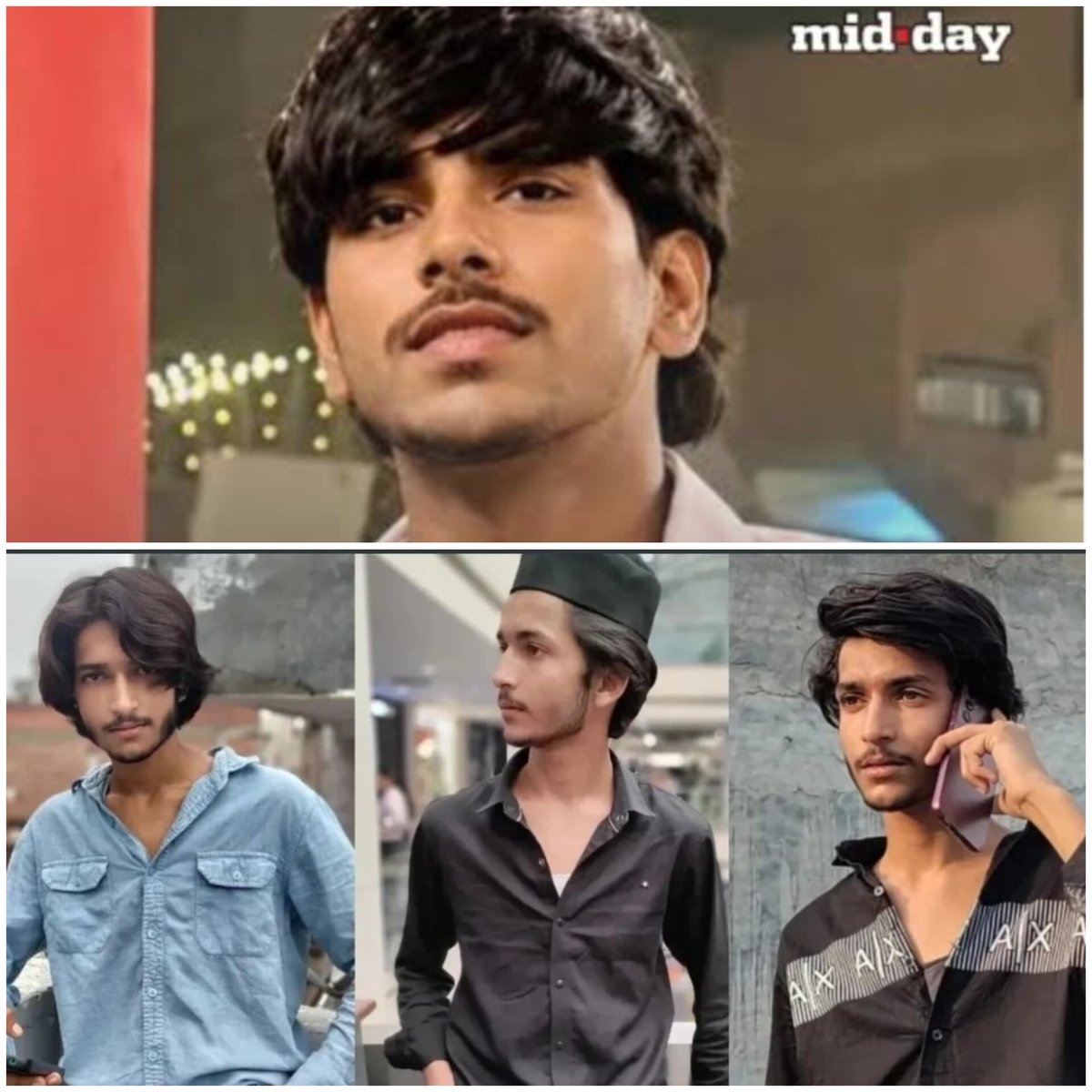
Surya Pratap Chauhan did not hate Muslims.
In fact he was friends with them. Asad, Javed, Sameer, Aqif etc were his friends. They used to play together, even watch movies. Surya saw his Muslim friends as just other humans.
That was his fatal mistake. His Muslim friends saw him as a Kafir to be converted and if not, to be eliminated.
On Eid Asad invited Surya to come join him in painful slaughter of a goat. Surya didn't want to see the painful visuals. He refused.
That convinced Asad Surya won't convert. Even at 16 they were clear what to do next. They slaughtered Surya with a knife on Eid. It was their greatest religious act.
The greatest mistake a Hindu can make is not being a human, but to assume others are human too. Islamophobia can save your life.
Did you know?
Once upon a time, Captured Hindu girls used to be distributed as part of the Eid celebration.
Before you wish anyone Eid Mubarak watch my video. [THREAD]
🌺।।The 18 Mahāpurāṇas are the principal Purāṇic scriptures of Sanatan Dharma, traditionally attributed to Maharishi Ved Vyasa।।🌺
They contain teachings on creation, cosmology, dharma, devotion, history, yoga, pilgrimage, and stories of various deities.
🚩The 18 Mahāpurāṇas
Brahma Purana
Padma Purana
Vishnu Purana
Shiva Purana
Bhagavata Purana
Narada Purana
Markandeya Purana
Agni Purana
Bhavishya Purana
Brahmavaivarta Purana
Linga Purana
Varaha Purana
Skanda Purana
Vamana Purana
Kurma Purana
Matsya Purana
Garuda Purana
Brahmanda Purana
🌺।।Traditional Classification।।🌺
These Purāṇas are sometimes grouped into three categories:
Sāttvika Purāṇas – primarily devoted to Lord Vishnu
Rājasa Purāṇas – associated with Lord Brahma
Tāmasa Purāṇas – primarily centered on Mahadev Shiva
⚜️Famous Among Them;
Bhagavata Purana — famous for the divine leelas of Sri Krishna
Shiva Purana — dedicated to the glory of Mahadev Shiva
Garuda Purana — discusses karma, afterlife, and moksha
Skanda Purana — contains extensive pilgrimage and temple traditions
Markandeya Purana — includes the revered Devi Mahatmya
🚩॥ पुराणेषु भारतं श्रेष्ठम् ॥🚩
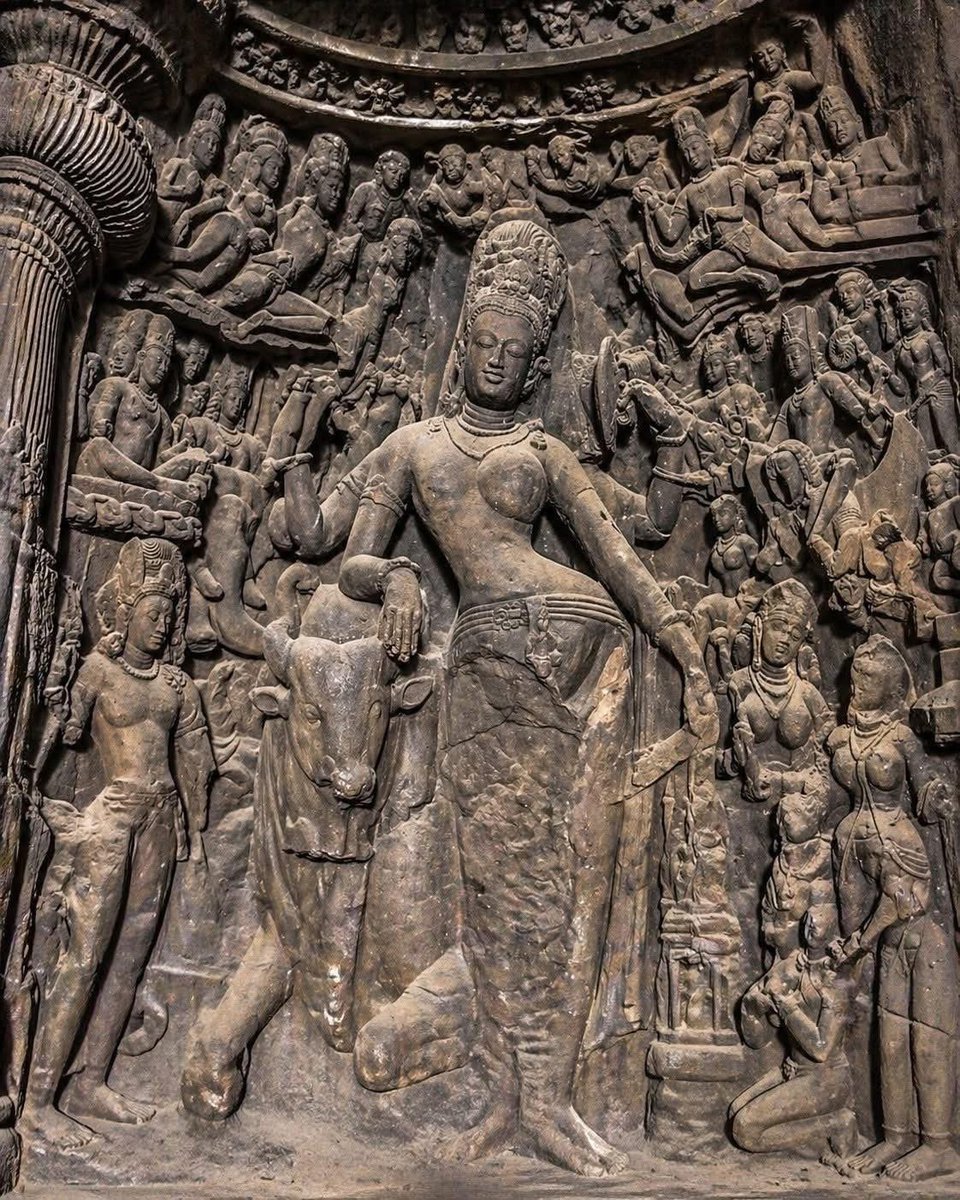
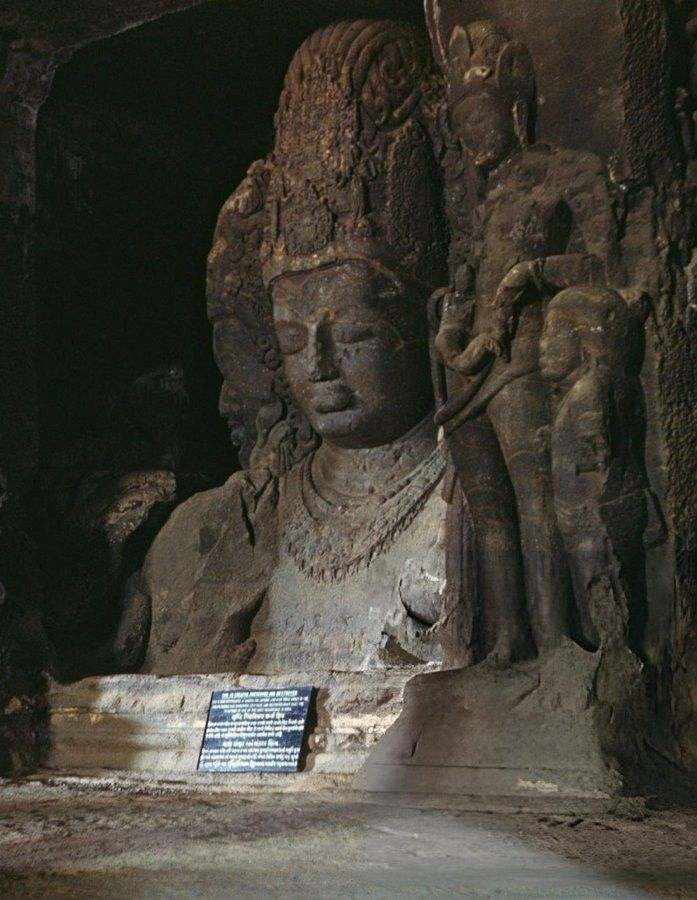
1500-year-old Ardhanarishwara from Elephanta (Gharapuri), Mumbai
The grand murti gracefully rests its right hand on Nandi, with Kartikeya standing beside him.
To the right are Hamsa Vahana Chaturmukha Brahma and Airavata-mounted Indra, while to the left stands Garuda Vahana Chaturbhuja Vishnu.
The sacred vision of ancient Rishis pouring milk upon Shiva Linga is a deeply spiritual representation of devotion, purity, and surrender to Lord Shiva. In Hindu tradition, the ritual of Abhishek with milk symbolizes the offering of a pure heart, calmness of mind, and the cleansing of negative energies before the Supreme Divine. Surrounded by the silence of forests, sacred chants, and the fragrance of incense, the Rishis perform this holy act with profound meditation and humility, recognizing Shiva as the eternal source of creation, destruction, and spiritual liberation. The flowing milk over the Shiva Linga represents the cooling of worldly suffering, ego, and inner turmoil, while also invoking divine blessings, peace, and spiritual awakening. Devotees believe that such sacred worship pleases Lord Shiva greatly, bringing harmony, wisdom, protection, and inner transformation to those who offer their prayers with sincerity and devotion.











![SagasofBharat's tweet photo. Did you know?
Once upon a time, Captured Hindu girls used to be distributed as part of the Eid celebration.
Before you wish anyone Eid Mubarak watch my video. [THREAD] https://t.co/FVpqULHVfi](https://pbs.twimg.com/media/HJVTCXja8AA5aBe.jpg)