"A person who thinks all the time has nothing to think about except thoughts. So he loses touch with reality, and lives in a world of illusion." - Alan Watts
This quote became a meme. But it's the only real way out of an overthinking rut.
F*ck the balance sometimes. F*ck the perfect discipline.
Go do something unexpected. Take a car to a random part of an island and figure it out when you get there. Start the business everyone says will fail. Stay up until 4am building something just because the idea won't leave you alone. Have awkward social interactions. Just do things without over-analyzing how you did it.
You cannot think your way out of being stuck in your head. You can only 'do' your way out.
The only real measure of intelligence is your ability to manage your own stress. Every day you have a choice to suffer or not, and the way you silence that suffering isn't more thinking. It's doing.
Find beauty in the mundane. Stop talking about your problems and stop replaying them in your head, because all that does is make them bigger.
Zoom out. Have a vision big enough that today's stress feels small.
And accept the fact that maybe things are actually going well. Your life is probably in a far better position than the version of it living in your head.
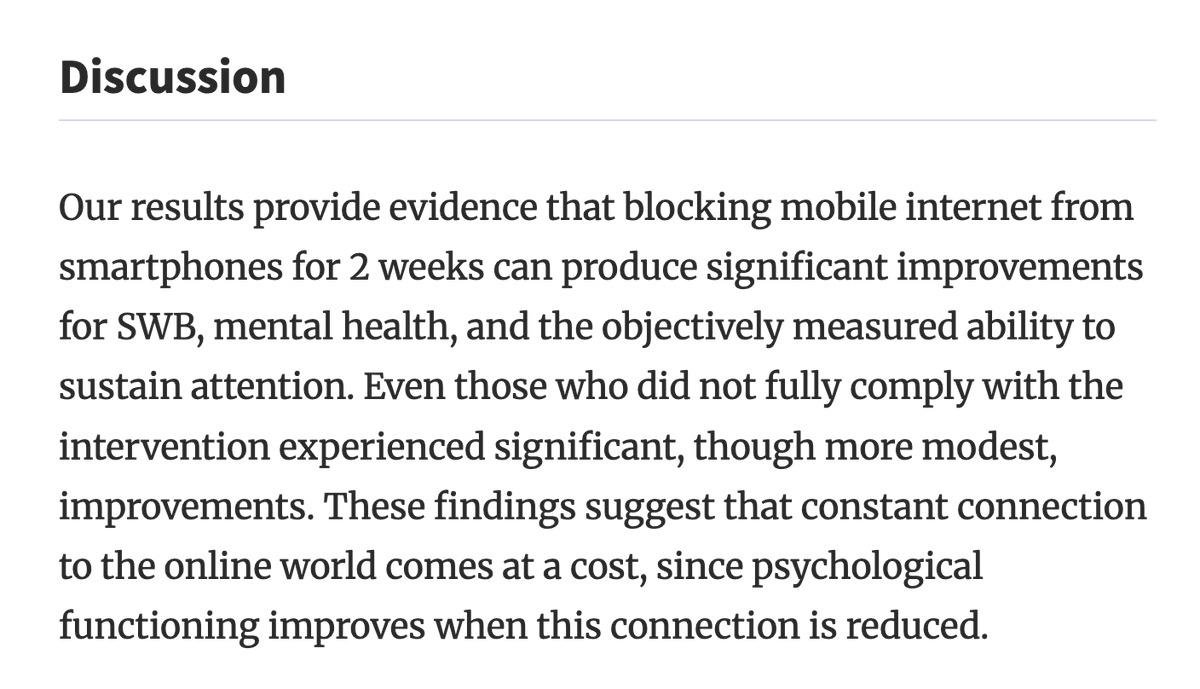
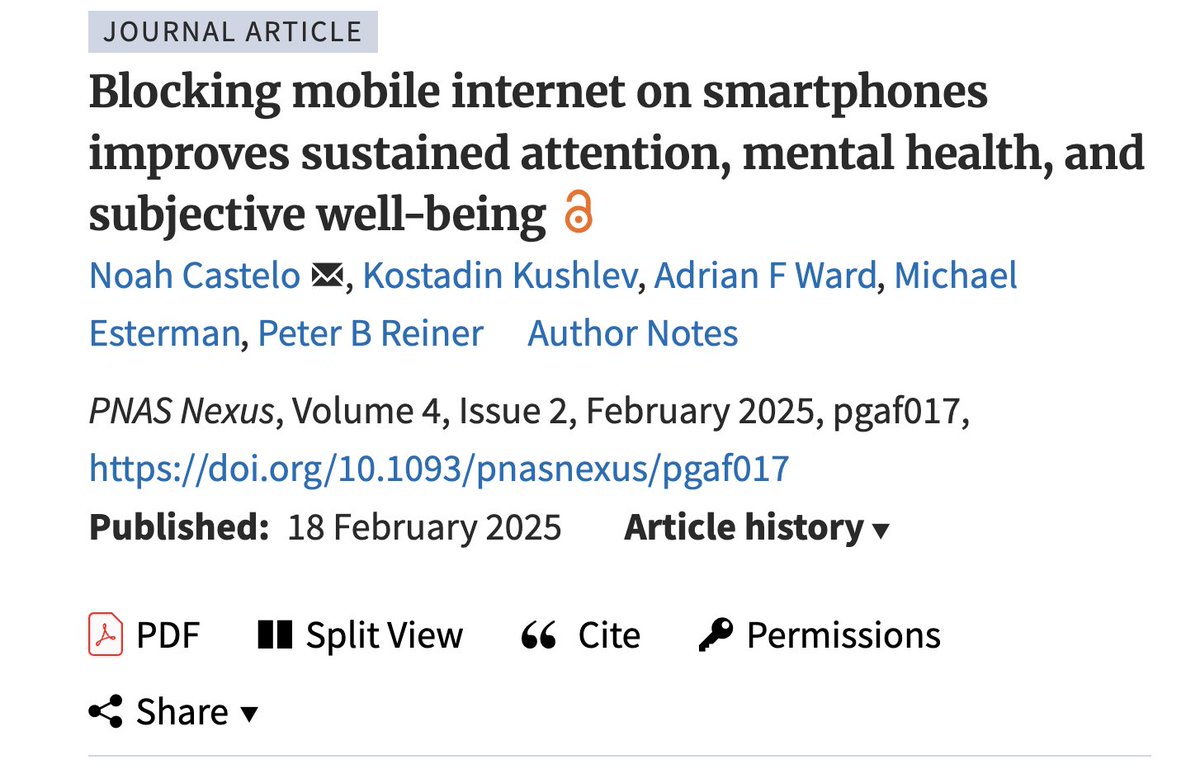
In adults, limiting smartphone functionality to texting and calls and blocking all social media and mobile internet for 2 weeks significantly improved attention, self-reported well-being and mental health. 90% of participants experienced a benefit.
Society was built to make money.
Indifferent to your health and sanity.
For example, we did not evolve to:
+ sit 10 hours a day
+ have our attention fractured 300 times daily
+ compare ourselves to millions of others
+ travel 9 time zones in 13 hours
+ tolerate sounds above 85 dB causing hearing loss
+ outsmart algorithms hijacking our reward system
+ breathe fine particulate air pollution
+ live under 16+ hrs of artificial light a day
+ have 3 courses of antibiotics before age 2
+ eat ultra-processed foods for 60% of daily calories
+ consume 17 teaspoons of added sugar a day
So if you're feeling down in the dumps, maybe fatigued, a little or a lot depressed, anxious, that's why.
Those who are more cerebrally gifted should be even more mindful of this, for while your psyche may fool you into believing that minimising time, energy, and feeling is wise, it is often paradoxical in effect as uncomfortable emotions are meant to be somatically moved through, not cognitively overcome. There is nuance to this, for marinating in rumination without courage and with subconscious resistance is not the answer either, and most cannot tell the difference when they are amidst it all.
Sit with and honour the negative emotions so that your body does not carry them for any longer than it needs to. Feel them with full force and unabashed dignity so that they are released into the ether and are not stored covertly in your body as tension, which is detrimental to your long-term health. That is what true self-honouring actually is.
The research behind this is wild. If you spent years bottling your feelings, huge chunks of your life were probably never recorded in the first place. Every time you push down a feeling, your brain has to choose: save the memory of what's happening, or shut the emotion up. It picks the emotion.
In 2000, a team at Stanford tested this. They showed people a surgical film. Half were told to react naturally, the way they would if they were alone. The other half were told to hide their reactions, like someone trying not to look upset at the dinner table. Then everyone took a surprise memory test. The suppressors did worse on every measure, on what they'd seen and on what they'd heard. The same pattern held in two more experiments in the same paper.
Brain scans later explained why. Your brain has three jobs when something emotional happens: tag the feeling, put what's happening into words, and save the scene to memory. When you reframe a feeling instead of suppressing it, all three regions fire together as a team. When you suppress, that teamwork falls apart. The memory-saving region goes quiet while the brain fights its own emotional response.
And it compounds over time. Suppression keeps cortisol (the stress hormone) high, and cortisol shrinks the part of your brain that saves memories. People under chronic stress can lose 10 to 15 percent of the volume there. Even three weeks of elevated cortisol shrinks the wiring between brain cells by about 20 percent. The damage can partly reverse once the stress drops. But not always.
The long-term cost shows up in the dementia data. A Finnish study followed 1,137 older adults for about a decade. People who said they habitually suppressed their emotions had nearly five times the risk of developing dementia. The researchers accounted for genetics, smoking, obesity, and education, and the gap still held.
There's a way out. It's called cognitive reappraisal. Instead of shoving a feeling down, you change the story you're telling yourself about what caused it. A tough meeting becomes practice. A short-tempered friend becomes a tired friend. Same event, new frame. And because reappraisal kicks in before the emotion fully fires, your brain never has to fight itself. A 2003 study from Stanford and UC Berkeley found reappraisers ended up with more positive emotion, better relationships, and higher wellbeing. Zero memory cost.
So when you say you don't remember half your life, you might be right about that. The part of you that saves the record had other orders the whole time.
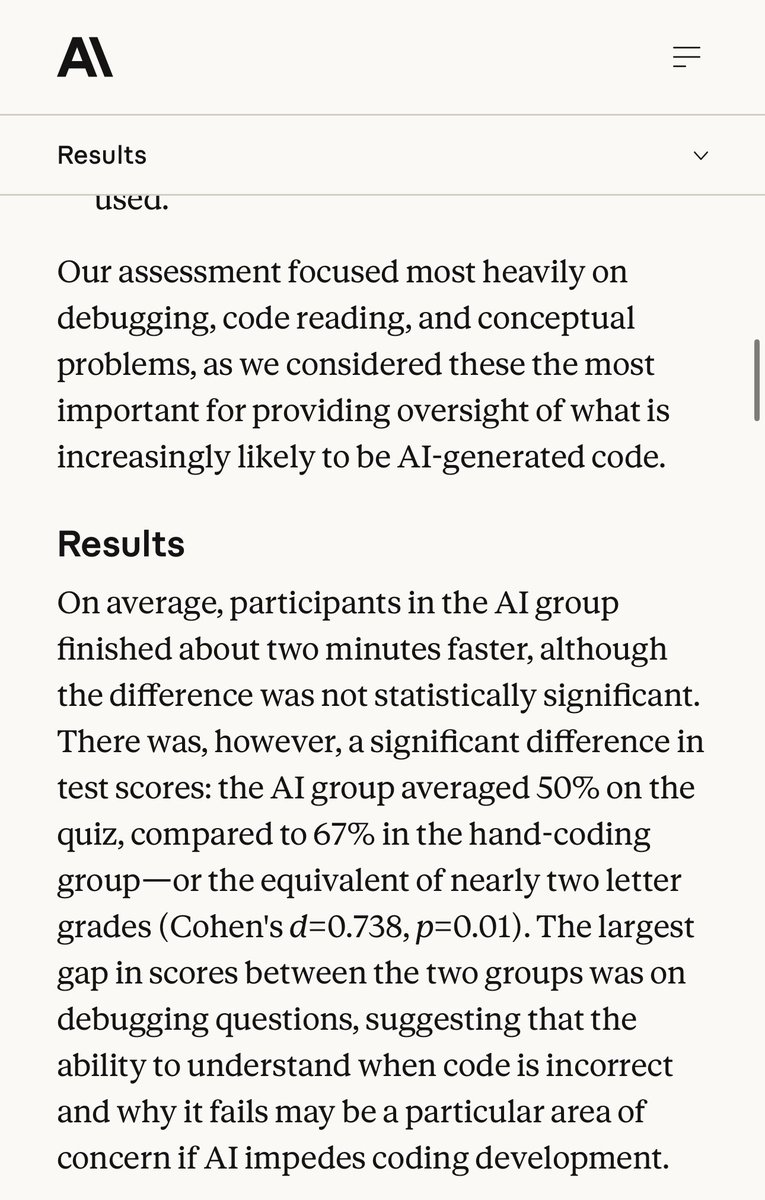
Anthropic studies how AI coding affects 52 professional developers:
> the group who used AI felt “lazy” and noticed gaps in their understanding and the group which didn’t use AI felt the task was “fun”
> AI significantly hurts skills formation of a new library by 17%
> AI didn’t actually make people faster. the time saved on not writing code was spent interacting with AI
> only people who fully delegated their work to AI were noticeably faster, but they learned the least
there are three AI usage patterns that preserved learning and three that really hurt it.
the first three patterns:
1. asking only conceptual questions
2. generating code, then asking follow-up questions
3. asking for explanations alongside writing code
and the three patterns hurting their learning:
1. complete delegation
2. starting on their own then increasingly relying on AI
3. debugging where they asked AI to fix things without understanding why
Anthropic themselves found that vibecoding hinders SWEs ability to read, write, debug, and understand code.
not only that, but AI generated code doesn’t result in a statistically significant increase in speed
don’t let your managers scare you into increased productivity. show them this paper straight from Anthropic.
الصلابة الذهنية.
القدرة على أن تكون في افضل حالاتك عندما تكون افضل حالاتك مطلوبة.
هذه مهارة يتم تدريبها.
يمكن تطويرها عبر المواقف الصعبة والمعالجة الواعية. تأمل ثم اعد التركيز.
حالة نفسية.
عندما تشعر انه لم يتبق لديك شيء، ادفع نفسك عمدا لتتجاوز هذا الحد الذي فرضته على ذاتك، وستدرك ان لديك 40٪ متبقية.
أنت أقوى مما يخبرك به عقلك.
The reason this feels so good is because your brain was taxing you for a week straight and you didn’t even notice.
Every time that undone task crossed your mind, your anterior cingulate cortex fired a conflict signal. Small. Subtle. But metabolically expensive. Your brain was running a background process on that 5-minute task 24/7 for 7 days, burning glucose and generating low-grade cortisol each time it surfaced.
Neuroscientists call this the Zeigarnik Effect. Incomplete tasks occupy more mental RAM than completed ones. Your brain literally cannot let go of open loops. So that ���5 minute task” was never 5 minutes. It was 5 minutes of execution plus 168 hours of ambient cognitive load.
That relief you feel when you finally do it? That’s a dopamine spike from closing the loop combined with a cortisol drop from removing the threat signal. Your body just stopped paying a week-long neurochemical tax on a debt of 300 seconds.
This tells you everything about how procrastination actually works. The loop runs like this: task feels slightly aversive → amygdala flags it → you avoid it → avoidance provides immediate relief → brain learns avoidance = reward → task stays open → background stress accumulates → task feels MORE aversive than it originally was.
The fix is stupidly simple and Huberman talks about this constantly. You don’t need motivation. You need a forcing function that bypasses the amygdala’s threat assessment. Set a timer for 90 seconds. Tell yourself you’ll stop after 90 seconds. Your prefrontal cortex can override 90 seconds of discomfort. Once you start, the dopamine system switches from avoidance to pursuit, and the task completes itself.
The 5-minute task was never hard. The starting was hard. And every hour you waited made starting harder.
You *really* want to read the unrevised edition of this book.
This is because Carnige's feminist wife and daughter heavily edited his book after he died to make it more politically correct
For example (among other things) they completely deleted 8 chapters on dealing with women
The unrevised edition is available here:
https://t.co/Jc38t3KTXh
> be demis hassabis
> spawn in london
> age 4, become child chess prodigy
> win chess tournaments
> reach ~2300 elo
> face danish chess champion
> game lasts hours
> position is a forced draw
> too exhausted to see it
> resign
> danish guy laughs and shows the draw
> feel sick to my stomach
> realise something is wrong
> chess is too narrow a problem
> brilliant minds wasting decades on it
> decide not to become a chess pro
> buy a computer with chess winnings
> teach self to program from books
> start hacking on games with friends
> decide to finish school early
> apply to cambridge age 16
> cambridge says you're too young
> forced to take a gap year
> enter a video game coding competition
> win
> get invited to join bullfrog game studio
> too young to be legally employed
> work there anyway
> build ai system inside theme park game
> game becomes a global hit
> turn 17
> offered £1,000,000 to stay and build games
> turn it down
> go to cambridge anyway
> decide games aren't enough
> study computer science
> interested in agi since 2007
> most people laugh at this idea
> realise brain is only form of agi we have
> want to learn more about human brain
> go back to school
> study neuroscience
> realise academia moves too slow
> decide to build a company instead
> start deepmind
> pitch “solve intelligence”
> investors don’t know what that means
> get to meet peter thiel for one minute
> wonder how to convince him
> spend one minute playing chess with him
> pitch "solve intelligence" again
> he invests
> go into total stealth mode for two years
> no website
> secret office
> candidates think it’s a scam
> start to train ai in simulated environments
> train ai with reinforcement learning
> train ai on pong first
> it sucks
> can't win a single point
> keep trying
> wait it won a a point
> wait it's winning every single point
> it actually works
> expand to train on any two-player game
> chess first, then move on to go
> beats world champion at go
> beats pros at starcraft
> games is not enough
> want to push into science
> realise compute is the bottleneck
> know this will take decades
> google offers ~$400m
> not the highest price
> but they offer unlimited compute
> accept
> refuse to become a product team
> stay in research mode
> determined to use ai for good
> need to figure out what's next
> land on protein folding
> 50-year-old unsolved science problem
> many great minds have tried and failed
> "good luck"
> start up alphafold
> try to solve protein folding
> humans take years to find 1 protein structure
> alphafold can find ~5 per day
> submit results, win competition
> not good enough
> hire more scientists
> rebuild it
> go from solving one per day to millions per day
> create invaluable system
> pharma would pay anything
> have to decide what to do with this
> could sell access for usage
> maybe make it a paid service
> remember childhood chess tournament
> remember why we built this
> decide to give it away all away for free
> publish all known protein structures publicly
> win nobel peace prize
> just the beginning towards agi
Two weeks without mobile internet restored sustained attention to levels typical of someone ten years younger.
Imagine regaining the mental sharpness you had a decade ago just by adjusting how you use your phone. A groundbreaking randomized controlled trial published in PNAS Nexus suggests this is possible. Researchers found that individuals who restricted mobile internet access on their smartphones for just two weeks experienced dramatic improvements in sustained attention and overall well-being. The cognitive gains were so significant that participants' performance on attention tests mimicked results typically seen in adults ten years younger, proving that our constant digital tethers may be taxing our brains more than we realize.
The study highlights that the benefit comes from reducing the relentless "always-on" stimulation unique to mobile devices. Interestingly, participants were not required to quit the internet entirely; they could still use computers and access basic phone features like calls and texts. By specifically cutting the umbilical cord of mobile data, participants allowed their focus and psychological health to rebound. While the effects did not extend to every aspect of cognition, the impact on sustained attention and mood offers a compelling case for periodic digital detoxes to preserve mental clarity in an increasingly distracted world.
Source: Castelo, N., & Kushlev, K. (2025). Blocking mobile internet on smartphones improves sustained attention, mental health, and subjective well-being. PNAS Nexus, 4(2), pgaf017.
we are overstimulated and we don’t even notice. netflix while eating. reels in the bathroom. music while cooking. podcasts on walks. we consume by default, not by intention. you keep filling every gap, then wonder why you feel foggy and unmotivated. boredom and silence are the real growth drivers. they give you space to think and create. that’s when solutions show up for problems that have been stuck for months. leave some room
Upskilling is free.
Use qBittorent. Torrent any educational course from 1337x.
Use Libgen, Annas Archive or Z-Library. Read any e-book online.
Use MIT OpenCourseware. Access free college lectures.
Use YouTube videos, forums, and AI to learn everything else.
Do this:
1. Open AWS and create an account.
2. Go to EC2, spin up an instance, generate a key pair, and SSH into it from your local system. Just play around install Nginx, deploy a Node app, break things, fix them.
3. Decide to launch something? Go to Security Groups open ports for HTTP (80), HTTPS (443), and SSH (22).
4. Grab your instance’s public IP, open it in your browser, and you’ll see your app running on the cloud.
5. Start scaling ? create another EC2 instance and set up an Application Load Balancer to route traffic.
6. Tired of adding instances manually? Use Auto Scaling Groups (ASG) define min/max instances, attach a launch template/AMI of your app, and AWS will scale automatically based on CPU or request load.
7. Getting millions of requests and your DB is choking? Use Kafka or SQS for buffering high-throughput workloads. Learn more about async
8. Store images, videos, or backups? Use S3 connect it from your app via the SDK, and make a file uploader.
9. Use RDS for managed databases (MySQL/Postgres). AWS handles backups, scaling, and maintenance.
10 Use CloudWatch to monitor your instances, logs, and metrics. Set up alerts when CPU spikes or memory usage is high.
11. For networking, explore VPCs subnets, route tables, gateways. This is where you learn how AWS isolates traffic securely. You will learn really well about networking here. Just create a vpc and play around
12. Once you’re comfortable, try Terraform to automate infra because that's 100X easier to manage state.
Stage 13: Say Fuck AWS for stealing money and buy your own VPS, set up Docker, or use Coolify for one-click PaaS setups.
I don't know what you're going through but I'd highly recomend:
> Cut out literally all activities from your life besides work, eating/sleep and working out for 2 or 3 weeks
> Do nothing during that free time, nothing, quite literally sit there nothing else allowed. When I say nothing I mean NOTHING. Cross your legs, breathing and blinking are fine but no other movement is allowed until it's time to eat, sleep, work, or do something like get food or set a timer
> I'm really serious do NOTHING
~Day 6 it'll be solved, pretty much any and all lack of percieved X, Y, or Z (mental clarity, will, etc) that you think you're lacking is there you're probably just overstimulated
It really is that easy!
اليوم سهرت ساعات في قراءة وتحليل واحدة من أضخم الدراسات التي تتناول التأثيرات النفسية والمعرفية للمقاطع القصيرة (Reels / TikTok / Shorts) هدفي كان أن ودي أفهم بشكل دقيق: ما الذي يحدث خلف هذه المقاطع؟ لماذا تؤثر بهذا الشكل؟ وكيف تتكون هذه التأثيرات أصلًا؟
١- الانتباه المستمر (Sustained Attention) كان أقوى المجالات تأثرًا ، وكثرة التعرض للفيديوهات القصيرة = ضعف في القدرة على ال��فاظ على الانتباه لفترات طويلة هذا يقودنا إلى الدماغ يميل على التحفيز العالي والسريع فيصعب عليه البقاء مع مهمة بطيئة أو طويلة .
٢- التحكم الكابح (Inhibitory Control) انخفاض واضح في قدرة الدماغ على كبح الاستجابات التلقائية أو مقاومة المشتتات بعطيك مثال واقعي أنت تذاكر تملّ قليلًا تلقائيًا تحصل نفسك تفتح الجوال بدون ما تشعر هذا فعل تلقائي غير مكبوح ، القدرة على كبح الاندفاع تقل + أنت تشوف 10–20 ثانية من المتعة، ثم 10–20 ثانية… ثم 10–20 ثانية ، الدماغ يتبرمج على أبي مكافأة الآن… الآن… الآن!
٣- الذاكرة العاملة (Working Memory)
انخفاض متكرر لكنه أقل قوة من الانتباه الذاكرة العاملة ماتقدر تعمل بدون انتباه مستمر ،وم��اهدة المقاطع القصيرة تخفض الانتباه فينخفض أداء الذاكرة العاملة والنتيجة: صعوبة في القراءة، الدراسة، الفهم، الحفظ، حل المشكلات، و��تابعة المحادثات ( حتى تلاحظ الفويس بالواتسب ماتقدر تسمع تؤجله :) .
٤- انخفاض بالمرونة المعرفية يعني أن دماغك يصبح أقل قدرة على تغيير الفكرة أو الانتقال من مهمة إلى أخرى بسلاسة ،الفيديوهات القصيرة تعوّد الدماغ على قفزات سريعة وعشوائية كل ثانية ، وهذا يجعل الانتقال الحقيقي بين المهام أصعب ،النتيجة: إذا تغيّر عليك شيء فجأة، أو احتجت تغيّر طريقة تفكيرك، أو تحل مشكلة من زاوية مختلفة تحس مخك يعلق وما يتبدل بسرعة !
- الحين ماعلاقة هذه الأشياء بالصحة النفسية ؟ لاحظوا شيء وهو التحفيز المتكرر والمشحون عاطفيًا Emotional overload أنك تشوف كل شوي محتوى صادم وحزين واستفزاز ومثير هذه اذا وصلت متكررة وشدتها عالية خلال اليوم يستهلك مورد انتباهك والنتيجة ارهاق عصبي ماتلاحظ ( جبهتك أحيانًا تعورّك )��! بسبب القلق والتوتر
- وندخل عالم المقارنات الاجتماعية Social Comparison الصدمة أن الخوارزميات تجعلك تميل ما تتمناه ! 😁 تشاهد محتوى مثالي، جمال، نجاح، غنى، حياة مرتبة مالاحظت الفيديوهات اللي مرتب يومه كامل هو أكثر مشاهدة ؟! وهذه تدفع الشخص يقارن نفسه ويصبح انخفاض بالمزاج + شعور بالنقص + ضغط نفسي + قد يؤدي للاكتئاب
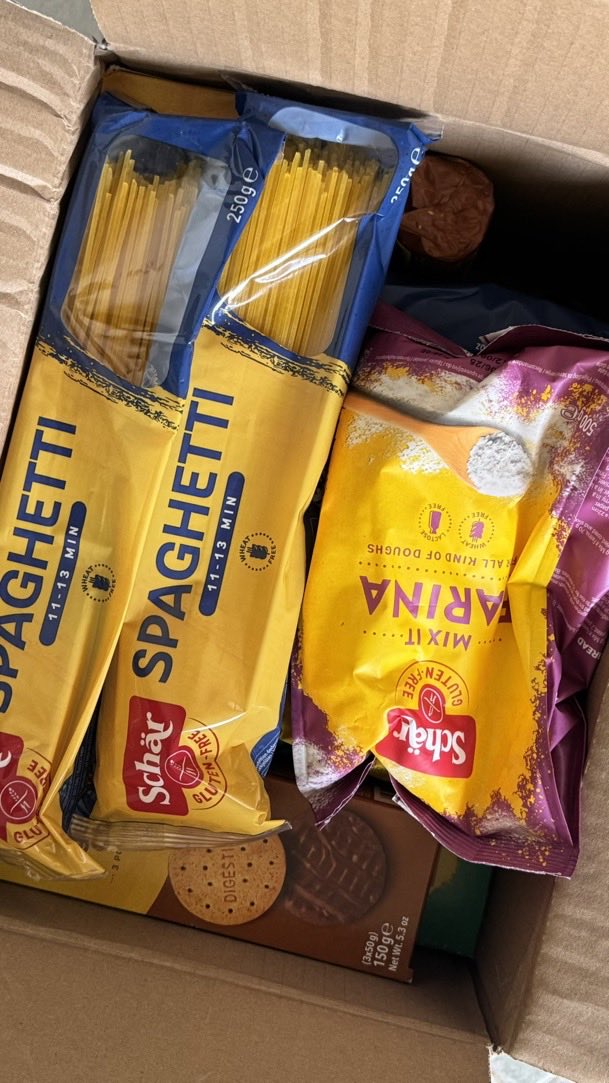
This Saudi woman after discovering that she’s gluten intolerant
She started receiving boxes of free food that fits her needs, gluten free, every month.
That’s how the government should take care of people instead of giving some money to some people who know how to scam the system!