Most traders spend hours watching charts, tracking positions and constantly switching between tools.
Quant AI takes a different approach: choose a strategy, allocate capital, and monitor its performance while keeping control of your funds.
Here’s how I approached the process.
First, fund your Q-Perps balance using the supported deposit route. If your funds are held elsewhere, check the available bridging options inside Quant AI and always verify the network and asset before depositing.
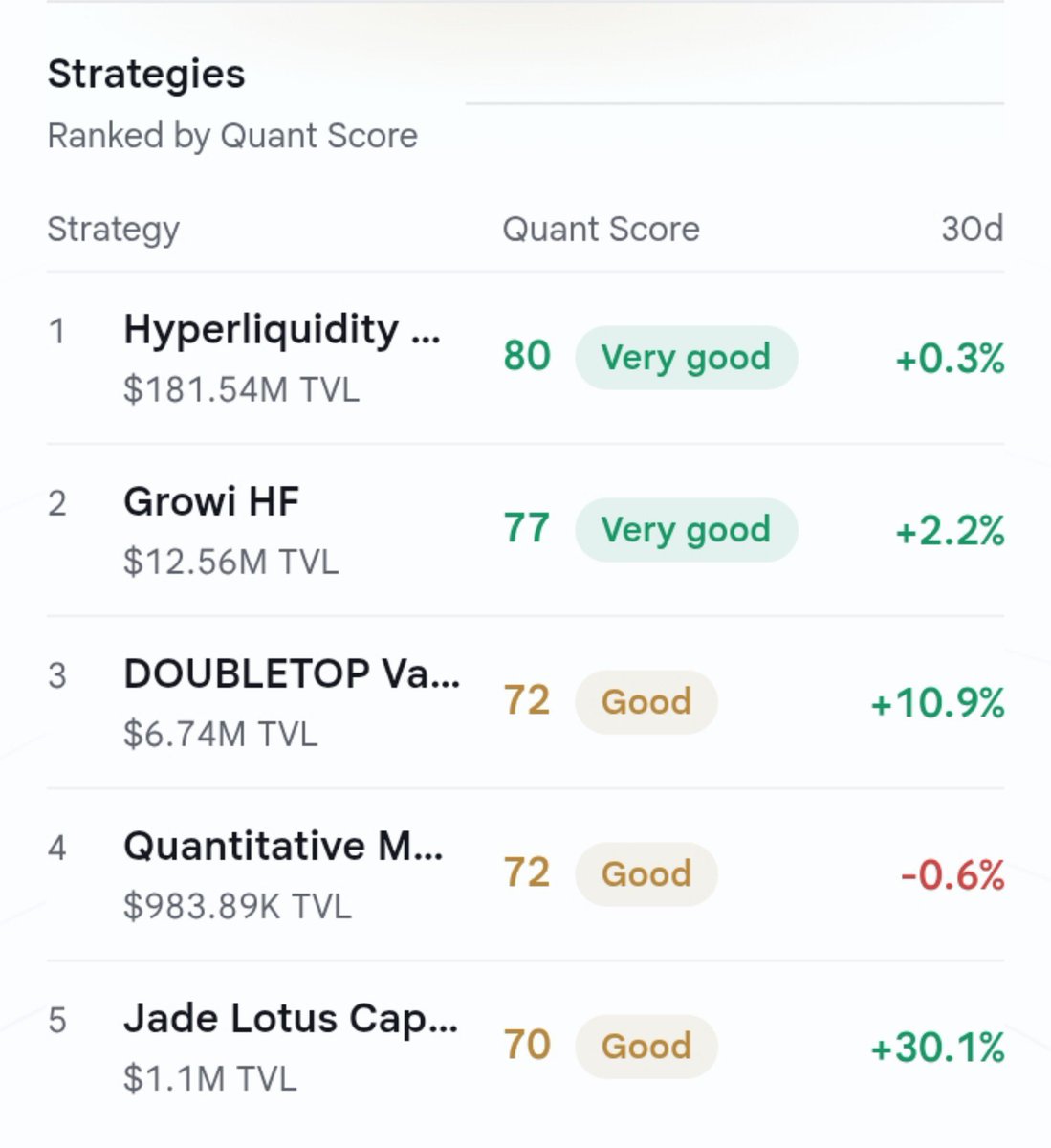
Next, choose a strategy. Quant AI lets you compare available strategies using factors such as performance, drawdown and Quant Score. I would not focus on returns alone. Performance tells you what happened, while drawdown helps you understand how difficult the strategy’s worst periods have been to sit through.
Once you find a strategy that fits your risk approach, open its strategy page, enter the amount of USDC you want to allocate, review the details and confirm. My approach is to start with an amount I am comfortable seeing fluctuate, understand how the strategy behaves, and only consider scaling after I have a clearer picture of the risk.
The monitoring process is also important. The strategy page brings key information together so you can evaluate the strategy instead of reacting emotionally to every market candle.
On the strategy I reviewed, I noticed;
That the user friendly and giving multiple choice among the different strategies of the QuantAI gave me a better understanding of how the strategy was actually behaving beyond the headline return.
There is also a rewards layer. Eligible trading activity can generate Q Points, adding another incentive to the ecosystem. But rewards should never become a reason to ignore risk.
The strategy, its behavior and the amount of capital you are comfortable risking should come first.
One important reminder: auto-trading does not guarantee profit. Strategies can lose money, and past performance does not guarantee future results.
Look beyond returns, consider drawdown and understand the strategy before allocating capital. Never risk more than you can afford to lose.
My takeaway after exploring it:
What stood out to me was the structured workflow: fund, research the available strategies, understand the risk, allocate carefully and monitor the position.
Automation can simplify execution, but good decision-making still starts with understanding what you are using.
If you want to explore Quant AI yourself, start with an amount that fits your own risk tolerance, review the available strategies and learn how they behave before scaling.
Try Quant AI through my referral link:
https://t.co/hkrAqnTulL
@tryquantio #QuantAIPioneers #QuantAI
Something spooky is brewing at Meta Earth… 🎃👀
666 USDT in rewards, hidden surprises, and secrets waiting to be uncovered. But we won't reveal everything just yet. 👻
The first secret is out: The Great Halloween Invite Campaign is LIVE! 🕸️
🔗 Bring at least 3 new verified referrals to qualify, and submit your details through the Google Form below 👉 https://t.co/zAmip6i7DO
One secret revealed, more lurking in the shadows. We'll uncover them one by one in the coming days.
Stay close. Watch carefully. The next surprise might vanish before you find it… 🎃🧵
#SpookME
Introducing the @fomopoly_rh campaign!
Live here: https://t.co/ifzPA7PmOM
Fomopoly is an onchain game built around a city divided into land plots.
Rewards:
• 2,000 USDT prize pool
• 50 free mint spots
• $DEAL airdrop
This project is already preparing for launch.
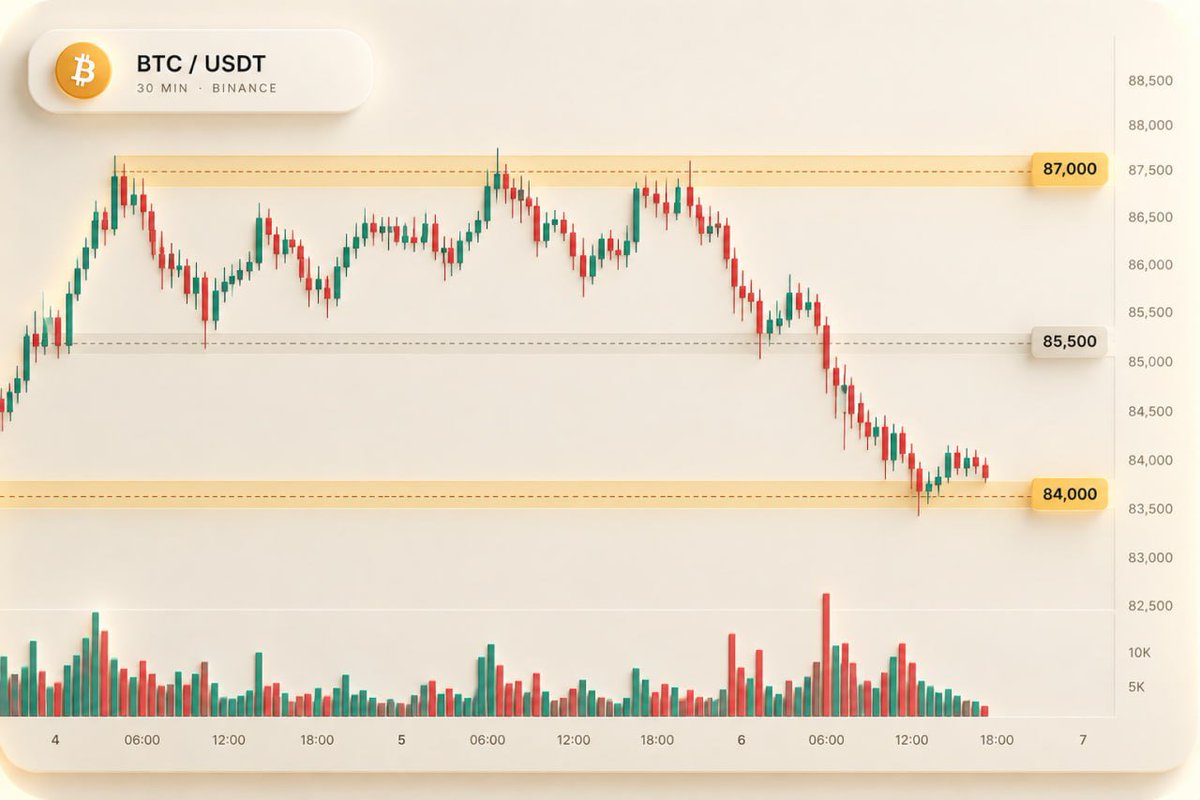
BTC went from testing the $87K breakout zone to defending $84K in just hours.
Instead of reacting to the chart, I took the setup to Quant AI and asked a more useful question:
“What happens if $84K fails, and what would need to change for BTC to reclaim $85K?”
After the rejection near $87K, the structure becomes simple:
$84K → immediate support
$85K → first level bulls need to reclaim
$87K → breakout zone that still needs confirmation
The interesting part is not predicting which level breaks first. It is understanding what the break would actually mean.
Quant AI can help turn that question into a broader market read by combining price action with signals, sentiment, on-chain data, macro context and other market intelligence. Its signals are research inputs, not guarantees or instructions to trade.
For me, the framework is straightforward:
Watch whether $84K holds.
Look for a convincing reclaim of $85K.
Treat a clean loss of $84K as a reason to reassess.
Only consider the $87K breakout meaningful if the move is supported by real confirmation.
The key lesson: a level is only useful when you understand what happens if it breaks.
My conviction: BTC remains range-bound until one side of this structure gives way with meaningful confirmation.
Patience beats prediction.
Want to run the same downside check on BTC?
Try Quant AI:
https://t.co/hkrAqnTulL
@tryquantio #QuantAIPioneers #QuantAI #BTC #Bitcoin
@REALJOSHUATIMI@PlayOnMint like seeing MINT continue to add practical incentives around the gaming experience rather than relying only on short-term attention.
@cokebwwwoy@sleepagotchi Your phone or wearable provides the data. The AI Sleep Coach looks at those patterns and turns them into personalized guidance you can actually use.
@CARTOONIST_MC1@vangrid_io Requests can cover station entrances, pedestrian streets, markets, clinics, parks, EV charging points, construction sites, roadworks, footbridges and other physical locations.