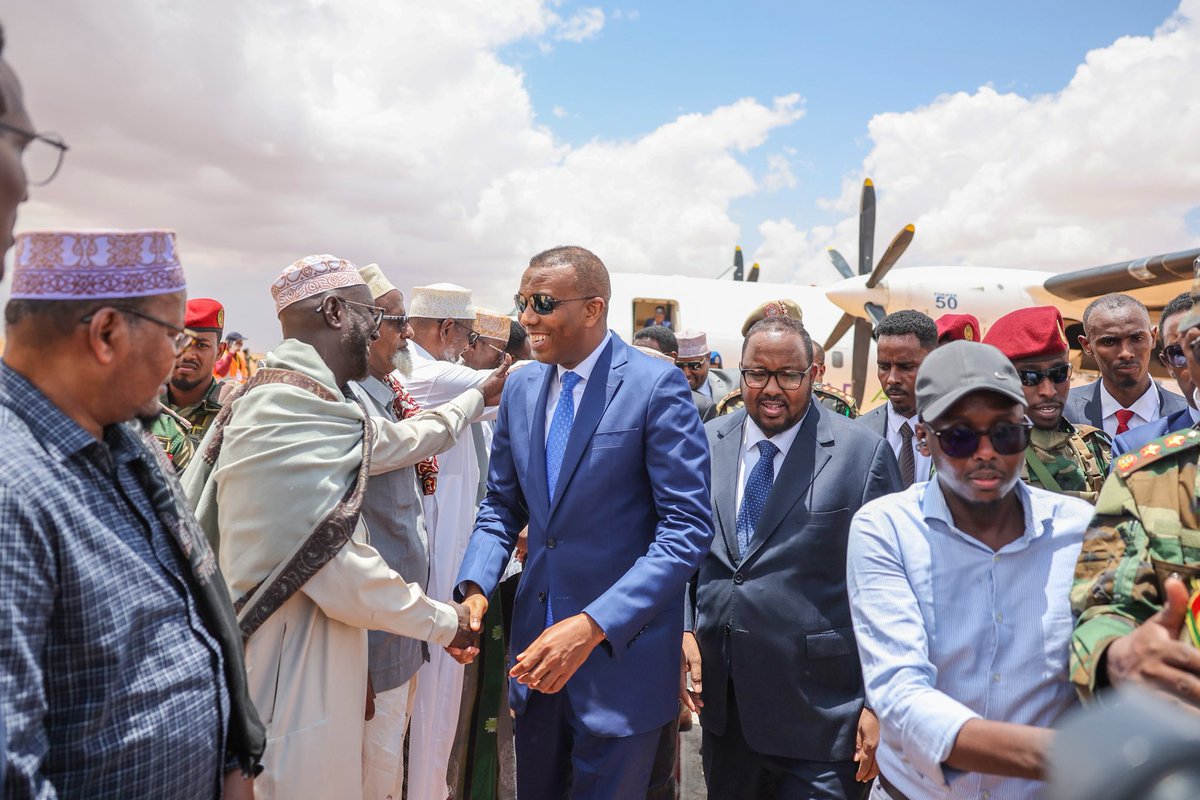
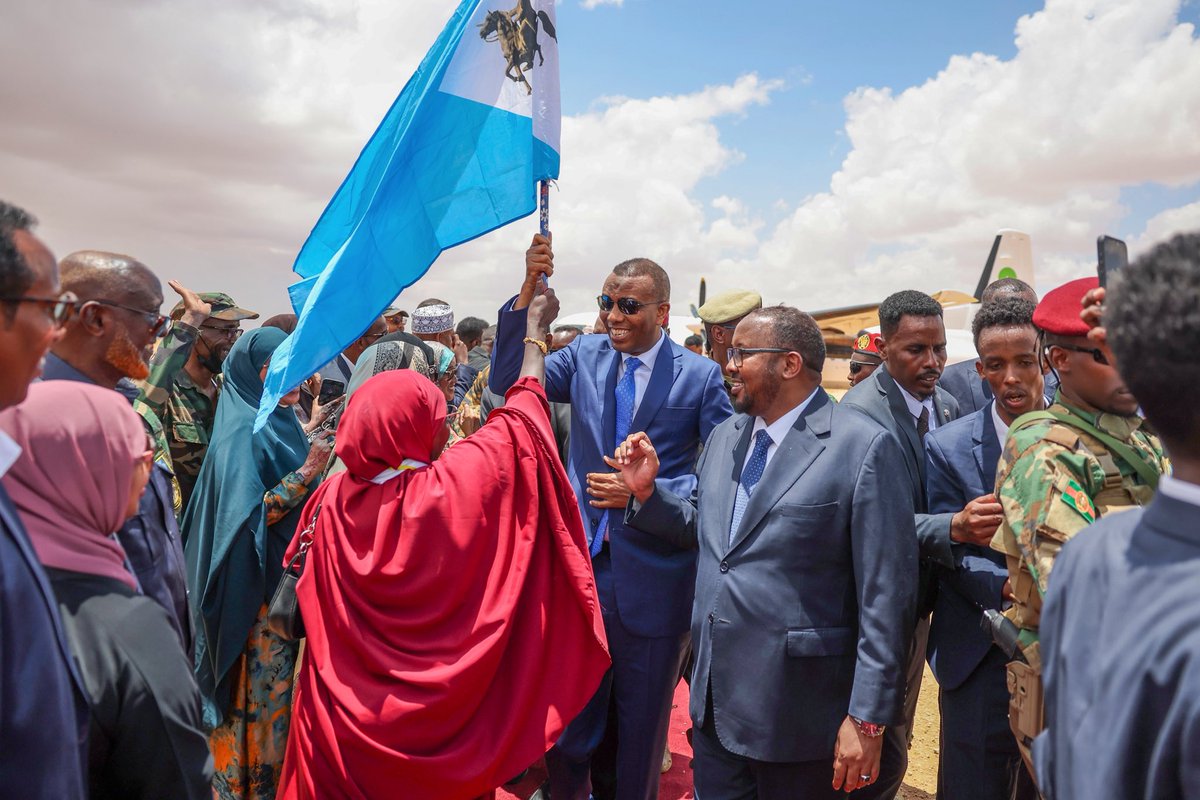
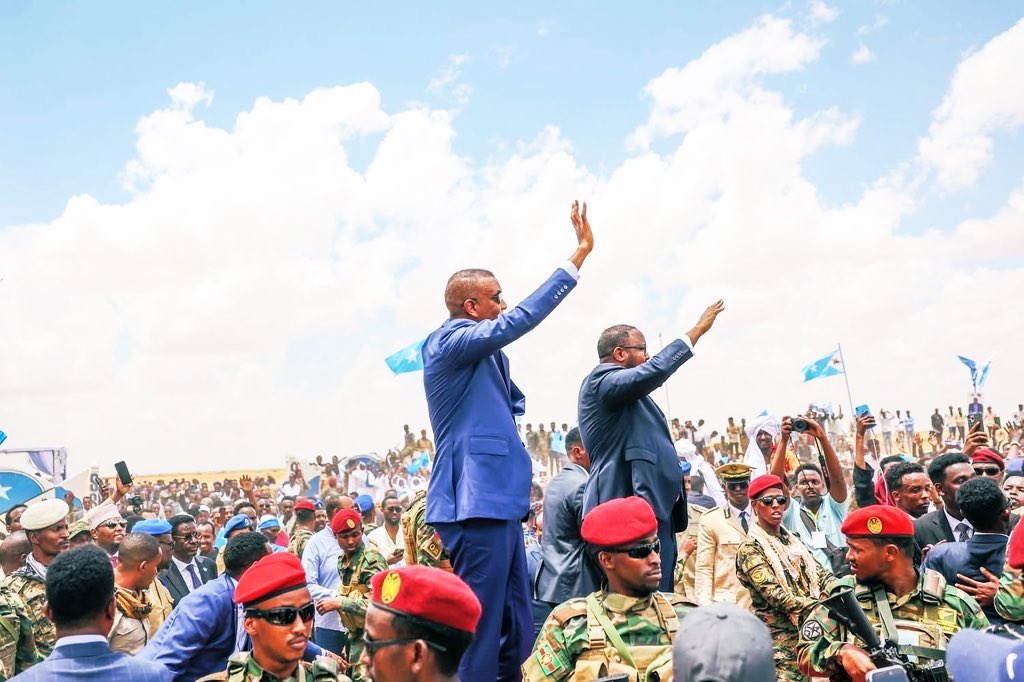
Historic day for #SSCKhaatumo
From the very beginning, SSC-Khatumo has stood firmly for a united Somalia. The regions of Sool, Sanaag, and Cayn (SSC) — often at the heart of political contention — have consistently and clearly rejected Somaliland’s unilateral declaration of independence and its claim over their land. Their allegiance has always been with the Federal Republic of Somalia (FGS), expressed not just through words, but through active political participation, community organizing, and at times, bitter resistance.
According to a 2023 report by Amnesty International, “hundreds of civilians were killed and more than 200,000 displaced” during Somaliland’s military campaign in Las Anod — a city central to SSC-Khatumo’s cultural and political identity. The UN also warned of “indiscriminate shelling of civilian areas”, leading to massive humanitarian consequences. This violence, far from strengthening Somaliland’s claim, only underlines the deep disconnect between its leadership and the people of SSC-Khatumo.
As Garad Jama Garad Ali, the grand traditional elder of the Dhulbahante community, stated during the peak of the 2023 Las Anod crisis:
“We are not secessionists. We are Somalis, and we want to be part of the Somali nation — with dignity and equality.”
What the people of SSC-Khatumo demand is simple and just: the right to choose their future, without being subjected to military aggression or political exclusion.
As someone who believes deeply in One Somalia, I stand firmly with SSC-Khatumo’s right to self-determination within the framework of the Somali federal system. No political project — including Somaliland’s — should be imposed on a people who have clearly and consistently said “No.”
Somalia’s unity cannot be built through force. It must be founded on mutual respect, inclusive governance, and justice. The people of SSC-Khatumo have paid a heavy price for their belief in a united Somalia — and their voice must not only be heard, but honored.
Two Years of Ibrahim Traore, President of Burkina Faso
1. Burkina Faso's GDP grew from approximately $18.8 billion to $22.1 billion.
2. He has rejected loans from the International Monetary Fund (IMF) and the World Bank. He said, "Africa doesn't need the World Bank, IMF, Europe, or America."
3. He reduced the salaries of ministers and parliamentarians by 30% and increased the salaries of civil servants by 50%.
4. He paid off Burkina Faso's local debts.
5. He established two tomato processing plants, the first-ever in Burkina Faso.
6. In 2023, he inaugurated a state-of-the-art gold mine to enhance local processing capabilities.
7. He stopped the export of unrefined Burkina Faso gold to Europe.
8. He built Burkina Faso’s second cotton processing plant. Previously, the country had only one.
9. He opened the first-ever National Support Center for Artisanal Cotton Processing to assist local cotton farmers.
10. He banned the wearing of British legal wigs and gowns in local courts and introduced traditional Burkinabé attire.
11. He prioritized agriculture by distributing over 400 tractors, 239 tillers, 710 motor pumps, and 714 motorcycles to boost production and support rural stakeholders.
12. He provided access to improved seeds and other farm inputs to maximize agricultural output.
13. Tomato production in Burkina Faso increased from 315,000 metric tonnes in 2022 to 360,000 metric tonnes in 2024.
14. Millet production rose from 907,000 metric tonnes in 2022 to 1.1 million metric tonnes in 2024.
15. Rice production increased from 280,000 metric tonnes in 2022 to 326,000 metric tonnes in 2024.
16. He banned French military operations in Burkina Faso.
17. He banned French media in Burkina Faso.
18. He expelled French troops from Burkina Faso.
19. His government is constructing new roads, widening existing ones, and upgrading gravel roads to paved surfaces.
20. He is building a new airport, the Ouagadougou-Donsin Airport, which is expected to be completed in 2025 with a capacity to handle 1 million passengers annually.
Your thoughts on this
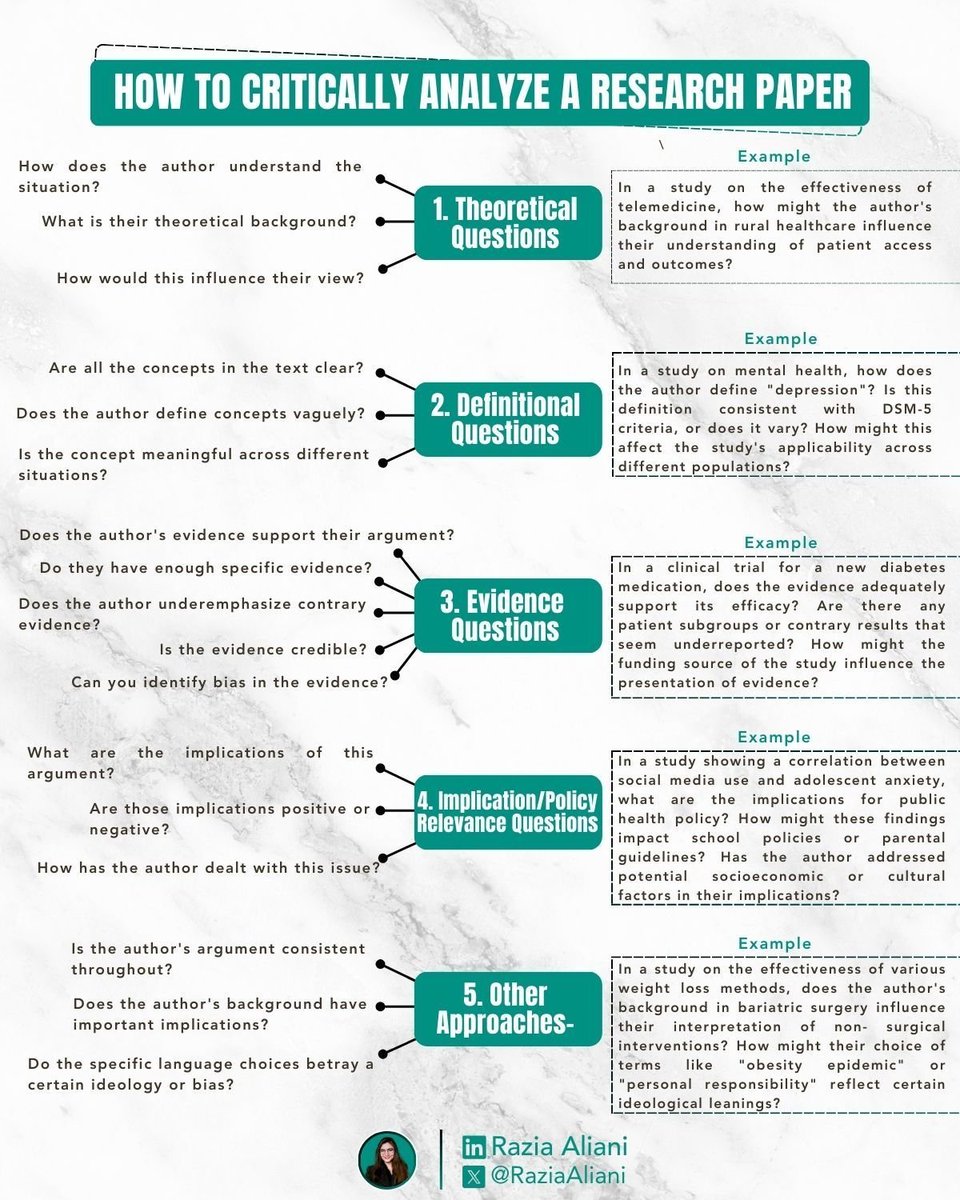
A literature review is NOT a review without a critical synthesis.
But some scholars struggle critically evaluating the sources!
Here's my easy 5-step method ⤵
1️⃣ Theoretical Questions: Peek into the author's mind
2️⃣ Definitional Questions: Are things explained clearly?
3️⃣ Evidence Questions: Is the evidence strong?
4️⃣ Implication Questions: 'So what?'
5️⃣ Other Approaches: Read between the lines!
𝗛𝗼𝘄 𝗶𝘀 𝗔𝗜 𝗵𝗲𝗹𝗽𝗶𝗻𝗴?
— Spot inconsistencies in seconds
— Flag potential biases
— Suggest alternative interpretations
💬 𝐖𝐡𝐚𝐭 𝐰𝐨𝐮𝐥𝐝 𝐲𝐨𝐮 𝐚𝐝𝐝?
---------------------------
Useful find? Pass it on!
🔄 Like and Retweet
---------------------------
✅ Follow @RaziaAliani to get more useful AI in Research content (no clickbait stuff!) in your X feed.
-----------------------------------------
Want FREE tips on using AI in research?
Join 10K+ researchers ↙️
🔗 in the bio
Are you struggling to pay a huge amount on paid courses ??
I'm giving you access to 20+ FREE Courses
1. Artificial Intelligence
2. Machine Learning
3. Cloud Computing
4. Ethical Hacking
5. Data Analytics
6. AWS Certified
7. Data Science
8. BIG DATA
9. Python
10. MBA............................Etc
To get it, just:
1. Like & Retweet
2. Comment "Free"
3. MUST be Following (so that I can dm)