@fredstaffordcs I hear you but I guess I would just argue that ratepayers were going to get stuck with these costs no matter what market construct you've created.
The Dominion wind example is a good counterpoint though.
@fredstaffordcs Fred, isn't one hypothesis that given the macro trends of that moment (supply chain shocks, inflation, interest rate hikes) any type of capital intensive power generation was either going to be repriced or canceled between those years?
One of our society's worst brainworms is this compulsive tearing down of anyone who tries to do anything good.
Bill Gates is the most ethical and pro-social billionaire that we have. If all the billionaires were like him, our world would be better in many many ways.
The US is much richer than 1970 but uses less energy per capita. Efficiency also matters. Don't use energy consumption as some measure of progress. It's not. It's an input. It's the output in energy services as quality of life that matters.
SCOOP: House plans vote on bipartisan geothermal energy permitting package next week upon return from recess. Add it to the obligatory “geothermal is so hot right now” file https://t.co/8IfRoRrFKg
Okay. We do not have a shared problem definition on “electricity.”
It’s fine to ask “are utilities greedy, “but that is not the question I think matters most.
IMHO the right question is do we need to build to power and economic growth and decarb without screwing ratepayers?
There are lots of environmental Kuznets curves, and lots of areas with leapfrogging (i.e. developing countries developing more cleanly than we did). Let's keep making progress on these and more.
This is a win for our North Country and the local communities who have been fighting for years to have a say in the landfill siting process.
I’m thrilled to see this legislation coming to my desk and look forward to signing it into law.
Here’s how Democrats should talk about climate: ground it in people’s lived experience, point out the clear villains, and describe the tangible benefits of action.
This ain’t rocket science. And it’s a hell if a lot better than staying silent.
Piece from @AaronRegunberg and me in Jacobin:
https://t.co/50jTJ7mPXx
Boston has officially reached 96° so far today!
🔥 Today's record (90°) broken
🗓️ Hottest spring day since 1944
🌡️ All-time spring high (97°) on watch...
Scoop: Amazon-backed reactor startup X-energy just won NRC approval of the environmental review for its debut plant in Texas.
It's historic, from an environmental permitting perspective. This is the first time the agency has given a project the green light after a months-long environmental assessment rather than years-long environmental impact statement.
I'll put a link to my @CanaryMediaInc story in the comments.
What a difference a year makes.
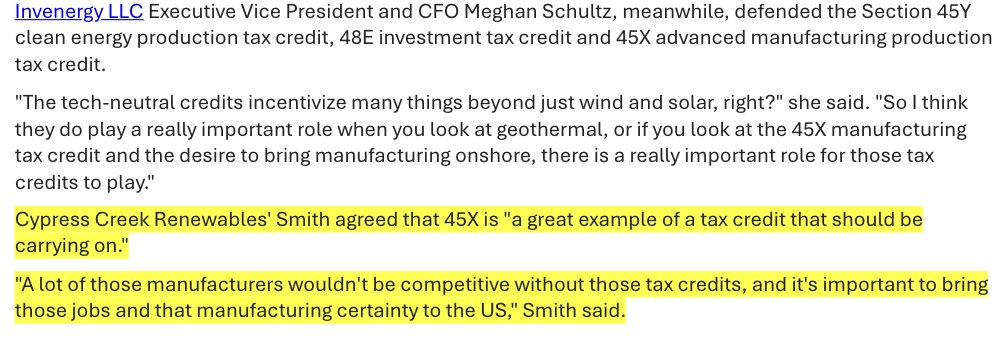
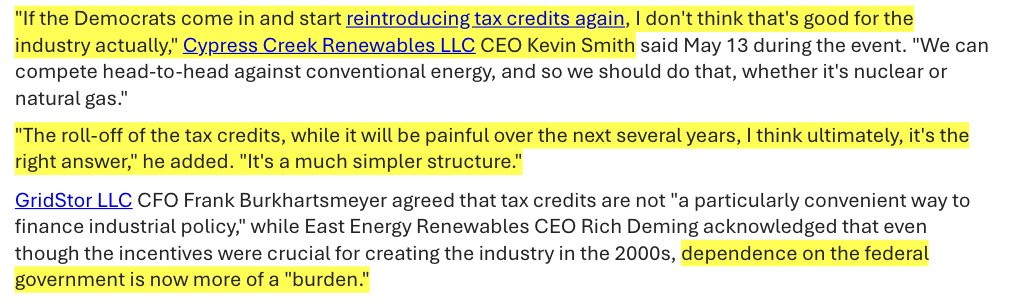
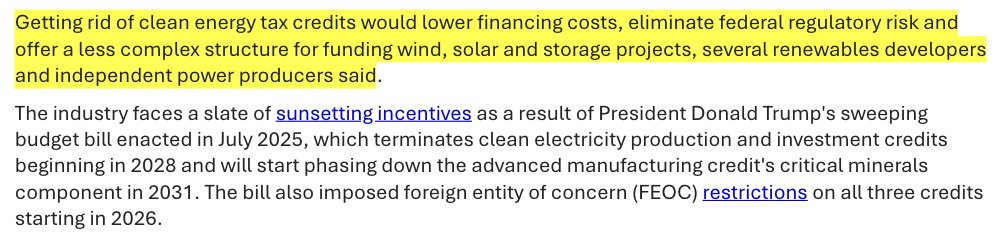
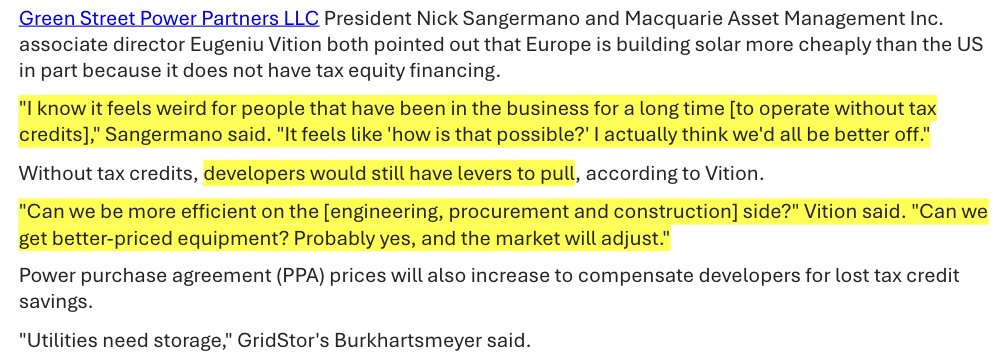
Major wind/solar developers have now come out in FAVOR of phasing out federal subsidies
- Simpler financing environment, less political headaches
- Cyprus Creek CEO: reintroducing tax credits not good for the industry
- Green Street Power: we'd all be better off without tax credits, points to European environment
- Opportunities for more efficiency in EPC, supply chain
- 45X still valuable for spurring domestic manufacturing and should be carried on
@theaichbee@RichardHanania Just saying that if you think that making an income that is pretty close to the median in the richest country on earth makes you "a failure at life" you might be out of touch with regular people.
And regarding your reply to my tweet...
Resorting to direct cost allocation for transmission network upgrades driven by large load growth is an acknowledgment that current transmission planning practices don’t work
If they did, new loads would be incentivized to site and behave in a manner which negates the need for direct cost allocation through maximally efficient utilization of existing and future network capacity
No central planning is required to effectuate a future where the public can rest assured that every new MW connected to their grid is likely to make socialized transmission costs less expensive per MWh-served instead of more expensive
Direct cost allocation chills new economic development through unnecessary friction limiting speed and affordability as prospective industrial consumers plan their fragile futures
Communities can capture economic opportunity from jobs and tax base growth while also benefiting from a more coordinated use of our shared systems
We can have it all
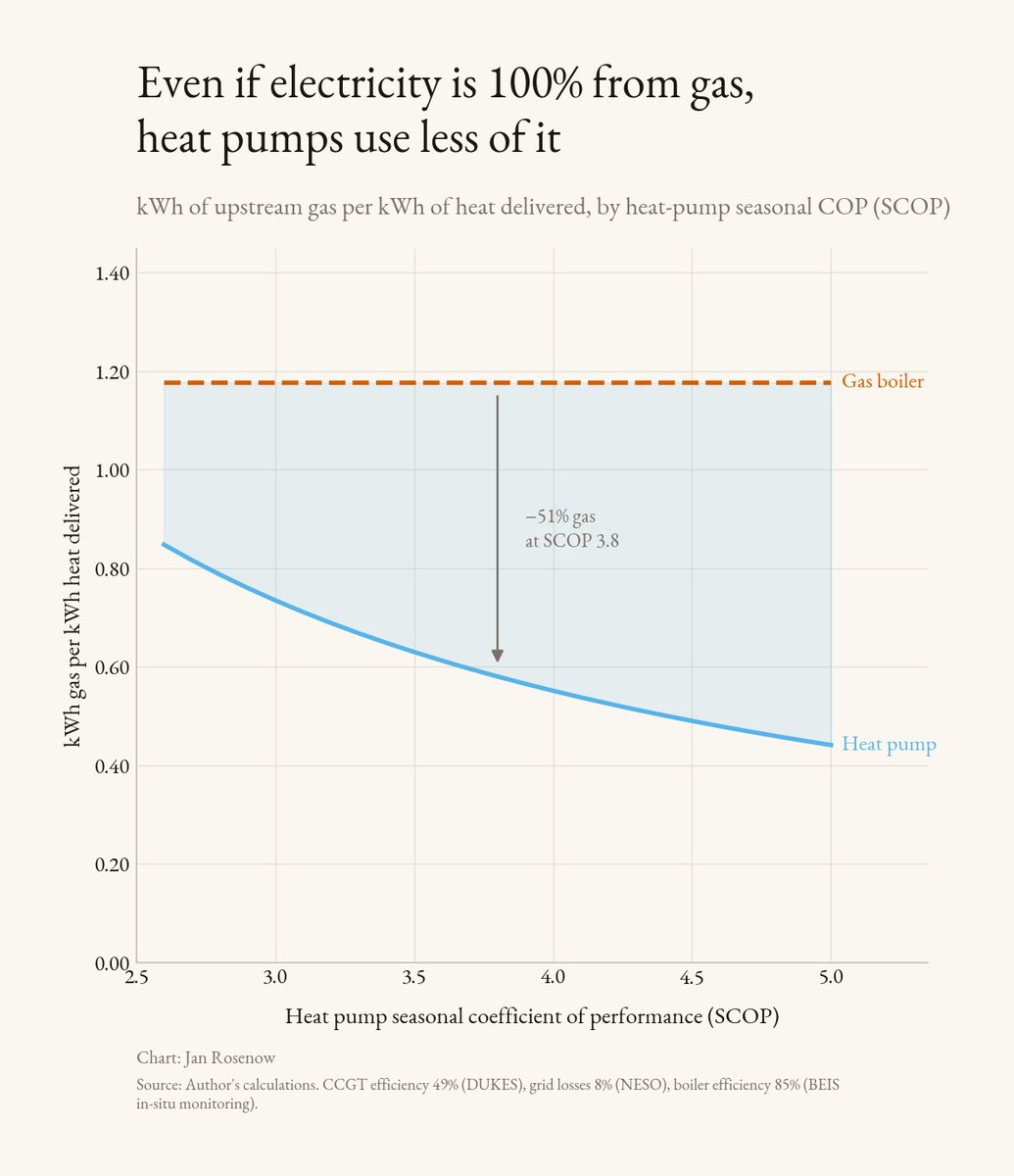
"Heat pumps just shift gas burning to the power station."
Wrong. Even if 100% of electricity came from gas, a heat pump at SCOP 3.8 uses 51% less gas than a boiler. At a terrible SCOP 2.5, still 25% less.
David MacKay made this point in 2008. The maths hasn't changed.